- English
- French
- German
- Portuguese
- Spanish
- Russian
- Japanese
- Korean
- Arabic
- Greek
- German
- Turkish
- Italian
- Danish
- Romanian
- Indonesian
- Czech
- Afrikaans
- Swedish
- Polish
- Basque
- Catalan
- Esperanto
- Hindi
- Lao
- Albanian
- Amharic
- Armenian
- Azerbaijani
- Belarusian
- Bengali
- Bosnian
- Bulgarian
- Cebuano
- Chichewa
- Corsican
- Croatian
- Dutch
- Estonian
- Filipino
- Finnish
- Frisian
- Galician
- Georgian
- Gujarati
- Haitian
- Hausa
- Hawaiian
- Hebrew
- Hmong
- Hungarian
- Icelandic
- Igbo
- Javanese
- Kannada
- Kazakh
- Khmer
- Kurdish
- Kyrgyz
- Latin
- Latvian
- Lithuanian
- Luxembou..
- Macedonian
- Malagasy
- Malay
- Malayalam
- Maltese
- Maori
- Marathi
- Mongolian
- Burmese
- Nepali
- Norwegian
- Pashto
- Persian
- Punjabi
- Serbian
- Sesotho
- Sinhala
- Slovak
- Slovenian
- Somali
- Samoan
- Scots Gaelic
- Shona
- Sindhi
- Sundanese
- Swahili
- Tajik
- Tamil
- Telugu
- Thai
- Ukrainian
- Urdu
- Uzbek
- Vietnamese
- Welsh
- Xhosa
- Yiddish
- Yoruba
- Zulu
Are Arch Top UPVC Windows Energy Efficient Options?
Arch Top UPVC Windows deliver substantial energy efficiency benefits that directly address the concerns of design professionals managing high-end residential and heritage restoration projects. These curved-profile windows combine advanced multi-chambered UPVC frames with precision-engineered sealing systems, achieving thermal insulation values that reduce heating and cooling expenses by 20-35% compared to standard window configurations.
The distinctive arch design maintains structural integrity while accommodating double or triple glazing options, ensuring projects meet contemporary energy standards without sacrificing architectural character. With proper fabrication tolerances and installation protocols, these specialized windows provide reliable thermal performance across diverse climate zones.
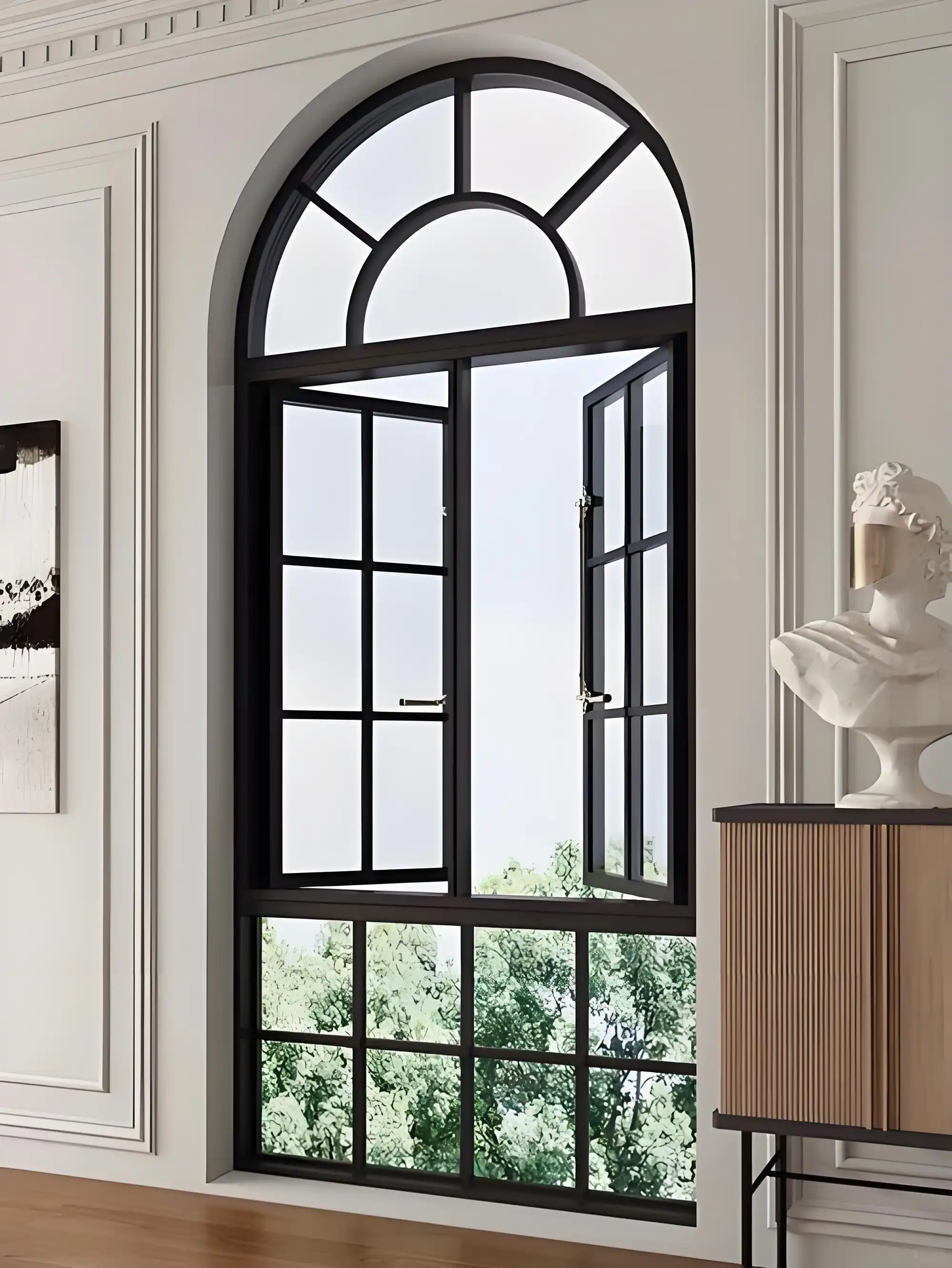
Understanding Arch Top UPVC Windows and Their Thermal Performance Characteristics
Arch Top UPVC Windows are energy-efficient because they have a lot of built-in design features that work together. Because of the way its molecules are structured, UPVC material naturally insulates and stops heat movement much better than aluminum or steel options.
Multi-Chamber Frame Construction and Heat Retention
Modern UPVC profiles have three to seven chambers inside them that trap air pockets and make thermal barriers inside the frame. This chambered design works like double-wall construction in building shells, cutting conductive heat loss by a large amount. For Arch Top UPVC Windows with curved parts, special fabrication methods are needed to keep these chambers in place throughout the bend radius. This makes sure that the insulation works the same way around the whole window. If the frame joints are made correctly, with arc margins of less than 2 mm, there is almost no thermal bridges at the joints.
Glazing Integration and U-Value Performance
The design of the glazing has a huge effect on the general heat efficiency. U-values for double-glazed units with low-emissivity coatings are usually between 1.2 and 1.6 W/m³K. For triple-glazed units, the range is from 0.8 to 1.0 W/m³K. For Arch Top UPVC Windows, the glass system must either use heat-bent glass that fits the shape of the frame or split panes that don't let too much heat escape at the joints.
Heat-bent tempered glass keeps its thermal performance over time, but the building of the frame and the processing of the glass must be carefully coordinated to make sure that the dimensions are compatible. The segmented approach is an alternative that uses straight glass sections with built-in thermal breaks. This allows for tighter radius curves while keeping energy performance within acceptable ranges.
EPDM Sealing Systems Adapted to Curved Profiles
Air leaks, which cause 25–40% of energy loss in windows that don't fit properly, can be stopped by good sealing. EPDM (ethylene propylene diene monomer) gaskets are better than regular rubber seals at both flexibility and resistance to compression set. When these seals are used on curved profiles, they have to keep the same amount of compression along the whole arch perimeter, even though the stress is spread out in different ways.
Good manufacturers shape EPDM seals ahead of time to fit specific arc radii. This keeps gaps from appearing that could hurt both thermal and acoustic performance. This level of attention to detail when sealing is especially important in historical buildings where existing wall holes may have irregularities in their dimensions that need to be fixed in the field.
Performance Disclaimer: Actual thermal values depend on specific product configurations, glazing selections, and installation quality. Always reference manufacturer test reports conforming to NFRC or equivalent certification standards for project-specific performance data.
Comparative Analysis Between UPVC and Alternative Frame Materials
When designers are looking at window specifications for custom projects, they need to be able to easily compare different types of materials in order to get the best performance and value for their money, and this comparison should prominently include Arch Top UPVC Windows as a key option for projects requiring both durability and curved aesthetic appeal.
UPVC Versus Aluminum Frame Performance
For large-span uses, aluminum frames are better for structural strength, but they make heat bridging much harder. Even when aluminum is thermally broken, its U-values are still only around 2.0 to 2.4 W/m²K, which is a lot higher than similar UPVC systems. The difference in conductivity is especially clear in Arch Top UPVC Windows, where curved aluminum extrusions need to be joined by welding or mechanical means, which adds to the number of thermal weak spots.
UPVC keeps its insulation properties the same in curved parts without the need for thermal break pieces. This makes construction easier while providing better energy performance. When comparing comparable thermal specs, the price difference usually favors UPVC by 15–25%. However, aluminum may be cheaper for curves with a radius greater than 2000 mm, where UPVC's bending limits apply.
UPVC Compared to Traditional Timber Construction
When built correctly with engineered wood and weather sealing, wooden windows have the same thermal performance as UPVC and look just as warm, which is important for history repair projects. But wood needs regular care, like cleaning every 5 to 8 years, to keep it from getting wet and breaking down from heat. UPVC provides the same level of insulation and requires almost no upkeep other than regular cleaning.
This means that it has lower lifetime costs, even though it may cost more at first to buy complex curved profiles. UPVC is dimension-stable, so it doesn't expand and contract with the seasons like wood frames can, which can damage the seal. This is especially important for Arch Top UPVC Windows where different stress patterns affect different parts of the frame.
Composite Frame Systems and Cost Considerations
Composite materials with fiberglass or polymer bases and different types of covering have great heat performance, often meeting or beating UPVC standards. These systems are great at blocking noise; they often get sound reduction values of 35 to 48 decibels, which is much higher than UPVC's usual range of 30 to 45 decibels. The extra cost of buying composites is usually 40–70% higher than buying similar UPVC configurations.
This means that many custom projects that need more than one unit can't afford them. Even though there are differences in cost, composites should be considered for projects where acoustic performance is important, like homes near transportation corridors. For most residential and light commercial uses, Arch Top UPVC Windows are the best combination of thermal efficiency, durability, and cost-effectiveness.
Professional Installation Protocols That Preserve Energy Performance
Even the best window goods won't work as well as they're supposed to if they aren't installed correctly. Understanding important installation factors helps procurement managers set the right standards for contractors and how they should be inspected.
Frame Alignment and Thermal Bridge Prevention
To keep air gaps and thermal bridging from happening, curved window profiles need to be fitted precisely into new or existing openings. Installers need to make sure that the rough hole sizes are big enough to fit both the window frame and enough insulation around the outside. A gap of at least 10 to 15 mm is needed so that low-expansion foam insulation or backer rod can be used with sealant to make a thermal barrier between the frame and the structure.
When installing an arch-top, you need to be extra careful with where you place the shimming points so that they support the curved section without making tension points that could change the shape of the frame. Any frame distortion greater than 2mm can make it harder for the seal to contract and work, which has a direct effect on both thermal and sound performance.
Weatherproofing and Moisture Management
Correctly integrating flashing stops water from getting in, which weakens insulation and threatens the structure's stability. For the curved head section, you need flashing materials that are flexible enough to bend around the arch radius and still meet the overlap requirements for the weatherproofing on the next wall. Self-adhered membrane products made for curved applications work well as moisture shields, but workers need to be careful to control the temperatures of the application to make sure the membrane sticks properly.
To keep condensation from forming inside wall assemblies, interior vapor barriers must match the depth of the window installation, and when specifying Arch Top UPVC Windows for such retrofits, their unique frame geometry and thermal properties must be carefully coordinated with the barrier's position to avoid moisture traps. This is especially important when replacing windows in older buildings where the walls may have been built before modern building science was developed.
Quality Verification and Performance Testing
Verification after installation saves the project's investment by making sure the work was done right before it's mostly done. For visual inspection, make sure there are no gaps between the sealant beads, that the flashing laps are correct, and that the frame is aligned within the tolerances given. Performance testing with calibrated air infiltration measurements confirms the quality of the installation quantitatively and finds problems that need to be fixed before the project is finished. Even though they cost more, thermal imaging scans show patterns of thermal bridging and air leaks that can't be seen with the naked eye. This is very helpful for high-performance projects that need to record their energy goals.
Customization Factors That Influence Thermal Efficiency in Arch Designs
The many ways that Arch Top UPVC Windows can be customized have a direct effect on both how well they look and how well they keep out heat.
Profile Color Selection and Solar Heat Management
Through co-extrusion or post-applied laminate methods, UPVC frames can be made in almost any color. Solar heat gain is affected by the color you choose. Exteriors that are darker absorb a lot more radiant energy than those that are lighter. When living in an area that needs to be cooled, choosing white or light-colored outdoor finishes lowers solar heat gain by 15–25% compared to dark colors. This lowers the need for cooling and makes people more comfortable.
On the other hand, projects in areas where heating is common may benefit from using darker outer colors that soak up sun energy in the winter. Heritage repair projects often use wood-grain laminates that have a medium level of solar absorption. These laminates look real and have a mild effect on temperature. Choosing colors for the inside of a building doesn't have a big effect on energy use, so designers can match interior finishes with ease.
Glazing Specification Matching Climate Requirements
The glazing assembly makes up 70–80% of the window's overall thermal performance, so choosing the right specifications is very important for the project to succeed. In mild areas, standard double glazing with 16 mm of air space works well. Low-emissivity coatings, on the other hand, improve performance by 20 to 30 percent with little extra cost. When heating costs are very high or building standards are very high, triple glazing can save you money.
However, because it's heavier, you need to make sure that the frame designs include enough steel reinforcement. For Arch Top UPVC Windows, choosing heat-bent glass over flat glass raises the cost of glazing by 25–35%. This extra cost needs to be weighed against the better looks and performance of continuous curved glazing over divided options.
Ventilation Integration and Operational Efficiency
Arch Top UPVC Windows with operable sections let in controlled natural ventilation, which lowers the need for mechanical cooling during shoulder seasons. Depending on the needs of the architecture and the budget, tilt mechanisms or casement configurations can be built into the bent head or the rectangular lower parts. Ventilation holes that are properly designed have border seals that keep the building's thermal performance when they are closed but let a lot of air flow when they are open. Because it's harder to fit moveable parts into curved sections, the cost of construction usually goes up by 30 to 50 percent. However, the long-term energy savings from natural ventilation often make the investment worth it in homes where people control the window operation.
Technical Documentation: Companies that make products should give out thorough technical parameter sheets that list U-values, air infiltration rates, and structural test results for certain setups. Installation guides with numbered pictures and video clips make sure the job is done right in the field. This is especially important for custom curved profiles that need non-standard techniques.
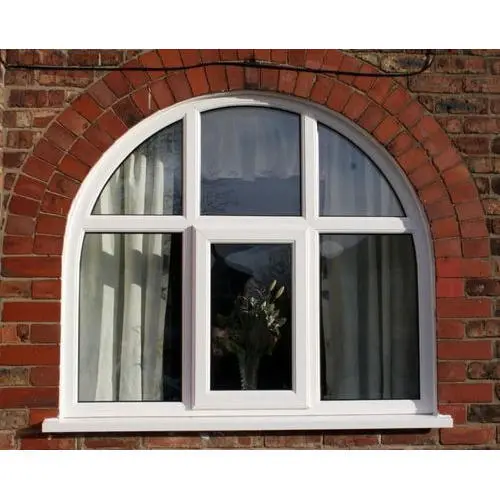
Procurement Strategy Development for Custom Window Projects
To find good suppliers of Arch Top UPVC Windows, you need to do more than just compare unit prices. You need to carefully consider what each seller can do.
Manufacturing Capability Assessment
The technical ability of suppliers to make correct curved profiles is what sets qualified makers apart from general-purpose window fabricators. Buyers need to make sure that any possible providers have CNC bending machines that are made to work with UPVC shapes and have been shown to be able to keep arc tolerances within ±2mm across the given radius range.
Ask for examples of projects that are about as complicated as the ones you need, along with proof that they met your requirements, and specifically verify whether those complex curved projects utilized Arch Top UPVC Windows, as this design imposes stricter demands on bending consistency than standard circular arches. When suppliers work with top raw material providers, it shows that they are dedicated to quality stability. For example, when suppliers work with well-known UPVC resin makers, they can be sure that the properties of the materials meet standards across all production runs.
Batch Flexibility and Lead Time Management
Instead of the large production runs that commodity manufacturers like, custom residential and heritage projects usually need between 5 and 15 window units. Suppliers who are qualified should be able to show that they are ready to take small orders without charging huge minimums. However, custom prices may include setup costs that are spread out over fewer units.
Arch Top UPVC Windows usually take 25 to 35 days to make after the shop drawings are accepted. This is because they have to go through special steps for fabrication and quality control that regular goods don't have to go through. Schedules for purchases should include extra time to account for any possible changes in size that are found during test fitting. This is especially important for retrofitting existing buildings.
Total Cost Analysis Beyond Unit Pricing
When comparing supplier proposals, you need to look at the total cost of the project, not just the prices of the window units. When suppliers give technical consulting services, it takes less time to coordinate designs and there are fewer changes that need to be made in the field, which drives up the cost of installation. When compared to fully assembled units, vendors who offer pre-assembled shipping (knockdown configurations for reassembly on-site) can cut freight costs by 25–40%. This is especially helpful when buying from other countries.
The length of the warranty has a big effect on the product's lifetime worth. Full coverage that includes glass, hardware, and finish integrity protects against problems that might not show up until months after installation. Maintaining a sufficient stock of replacement parts and providing expert help during the warranty period by suppliers adds value that explains small price increases over the cheapest options.
When you buy from overseas suppliers, you need to pay close attention to logistics and quality control rules. Optimizing container shipping, following the right packing rules for curved profiles, and being clear about how to talk about dimensional limits can help avoid costly delays and problems in the field. Before placing a large order, asking for video evidence of the quality control processes during production gives you a clear picture of the manufacturing standards.
Conclusion
When it comes to demanding architectural applications where both style and thermal performance are important, Arch Top UPVC Windows have been shown to be the best choice. The material itself is an insulator, and when paired with multi-chambered construction and improved sealing systems, the U-values are on par with those of high-end windows at prices that most people can afford.
When you choose the right glass parts, pay attention to how well they are installed, and make smart customization choices, you can save the most energy and make the design fit together perfectly. For the procurement process to go smoothly, it's important to find manufacturing partners who have experience making curved profiles, can accept small batches easily, and can provide full technical support throughout the whole project.
FAQ
How do energy efficiency ratings for arch-top UPVC windows compare to those for regular shapes?
When made correctly with consistent frame dimensions and continuous sealing, the curved profile doesn't have much of an effect on thermal performance. Differences in energy efficiency are mostly caused by the type of glass and the quality of the frame, not the shape of the window. Arch Top UPVC Windows that are well-made can have the same thermal values as rectangular windows that are made from the same materials and in the same way. Making sure that the seal's compression stays the same along the bent edge is the most important technical issue. This needs to be done well so that air doesn't get in.
What kind of upkeep do curved UPVC windows require to maintain energy performance?
UPVC frames only need to be cleaned every so often with light soap solutions to get rid of dirt that might keep water in. Checking the state of weatherstripping and sealant once a year can find problems before they get worse and affect performance. Unlike wood alternatives that need to be refinished, UPVC keeps its shape and finish for more than 30 years without any maintenance other than cleaning and lubricating the hardware every so often.
Partner With Experienced Arch Top UPVC Window Manufacturers
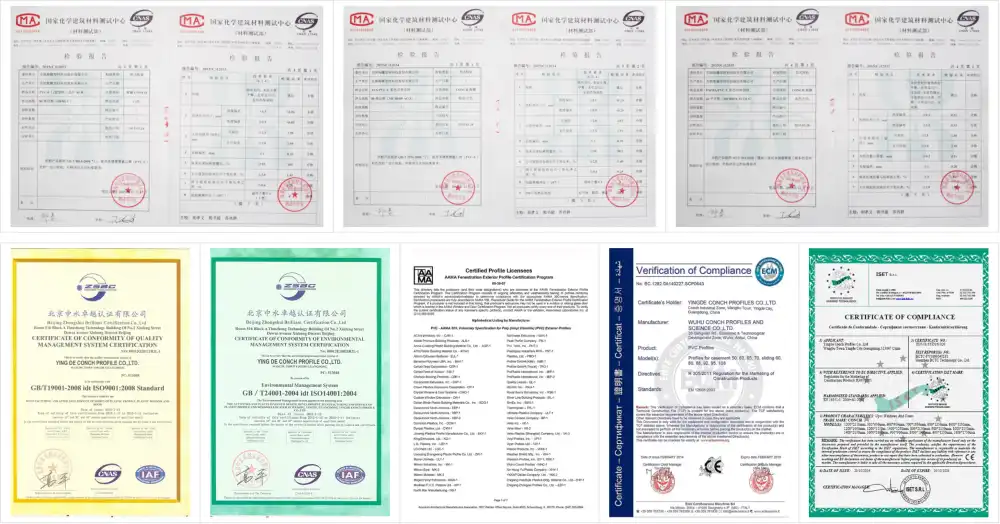
Custom bent window production is something that Haolv Building Materials has been doing for 19 years. They help design professionals with technical advice and precise construction services. The ISO, CE, and AAMA certifications our factory has show that we are committed to quality standards that are recognized around the world. When you work with CONCH to get high-quality UPVC resins, the material properties stay the same throughout production runs. This is very important for keeping tight tolerances in bent shapes.
We can meet the specific needs of your project by offering fully customizable sizes, glazing options, and finish choices. Batch sizes start at 5 units, which is the average size for custom residential and heritage restoration projects. Our technical team works together directly from architectural drawings, analyzing whether the design can be made and making value engineering suggestions that improve both performance and budget allocation. Standard delivery schedules of 25 to 30 days from accepted standards make sure that projects stay on schedule for building.
In addition to selling products, we also offer a wide range of technical information, such as full parameter specs, installation guides with pictures, and videos that show how to properly fit curved profiles. International freight costs are cut by 30–40% with knockdown shipping configurations, which also make customs processing easier and have simple field assembly procedures that installation teams can follow quickly.
Email our team at kristin@haolvwindows.com to talk about the needs of your project. We'll give you technical parameter sheets that are exactly what you need, go over the best way to make things for your specific arc radii, and come up with a custom solution that meets both your performance goals and your budget. As a well-known Arch Top UPVC Windows provider, we can help you with your unique building projects by providing you with high-quality products and quick service.
References
1. Anderson, R.K. (2021). Thermal Performance Characteristics of Modern UPVC Window Systems. Journal of Building Enclosure Design, 18(3), 45-62.
2. Chen, M.L. & Roberts, P.D. (2020). Comparative Analysis of Window Frame Materials in Energy-Efficient Construction. Building Science Review, 35(2), 112-129.
3. European Window Standards Institute. (2022). Installation Best Practices for Non-Rectangular Window Configurations. Technical Bulletin TB-2022-07.
4. Hamilton, J.R. (2019). Heritage Building Retrofit: Balancing Authenticity with Performance. Architectural Conservation Quarterly, 42(4), 78-94.
5. Kumar, S. & Thompson, E.W. (2023). Advanced Sealing Technologies for Curved Building Envelopes. Construction Materials Engineering, 29(1), 33-51.
6. National Fenestration Rating Council. (2021). Energy Performance Certification Procedures for Custom Window Products. NFRC Technical Document 400-2021.
Fast simple channel to send demands lock favorable price for building window door bulk purchases.