- English
- French
- German
- Portuguese
- Spanish
- Russian
- Japanese
- Korean
- Arabic
- Greek
- German
- Turkish
- Italian
- Danish
- Romanian
- Indonesian
- Czech
- Afrikaans
- Swedish
- Polish
- Basque
- Catalan
- Esperanto
- Hindi
- Lao
- Albanian
- Amharic
- Armenian
- Azerbaijani
- Belarusian
- Bengali
- Bosnian
- Bulgarian
- Cebuano
- Chichewa
- Corsican
- Croatian
- Dutch
- Estonian
- Filipino
- Finnish
- Frisian
- Galician
- Georgian
- Gujarati
- Haitian
- Hausa
- Hawaiian
- Hebrew
- Hmong
- Hungarian
- Icelandic
- Igbo
- Javanese
- Kannada
- Kazakh
- Khmer
- Kurdish
- Kyrgyz
- Latin
- Latvian
- Lithuanian
- Luxembou..
- Macedonian
- Malagasy
- Malay
- Malayalam
- Maltese
- Maori
- Marathi
- Mongolian
- Burmese
- Nepali
- Norwegian
- Pashto
- Persian
- Punjabi
- Serbian
- Sesotho
- Sinhala
- Slovak
- Slovenian
- Somali
- Samoan
- Scots Gaelic
- Shona
- Sindhi
- Sundanese
- Swahili
- Tajik
- Tamil
- Telugu
- Thai
- Ukrainian
- Urdu
- Uzbek
- Vietnamese
- Welsh
- Xhosa
- Yiddish
- Yoruba
- Zulu
What Materials Are Used in Durable Aluminum Arch Window?
When specifying custom arched fenestration for heritage restorations or high-end villa projects, understanding material composition isn't just technical knowledge—it directly affects installation precision, shipping logistics, and long-term client satisfaction. Aluminum Arch Window systems, in particular, demand close attention to thermal break details and extrusion tolerances, as these factors govern how the frame responds to seasonal expansion, how safely the curved glass units ship across regions, and how reliably the final seal performs against weathering over decades of service.
Durable aluminum arch windows are constructed from specialized 6063-T5 aluminum alloy frames engineered for structural integrity, combined with high-performance glazing units (tempered, laminated, or triple IGU), multi-layer EPDM sealing systems for weather resistance, and optional thermal break polyamide strips to enhance insulation. These components work together to deliver the dimensional accuracy and finish quality that design professionals require when local fabricators cannot meet custom radius specifications or when project budgets demand cost-efficient overseas sourcing.
After reviewing technical specifications from leading architectural fenestration suppliers and analyzing installation feedback from restoration contractors across Europe and North America, the material choices embedded in arch window systems prove decisive for projects where tolerances matter and rework isn't an option.
Overview of Aluminum Arch Windows and Material Importance
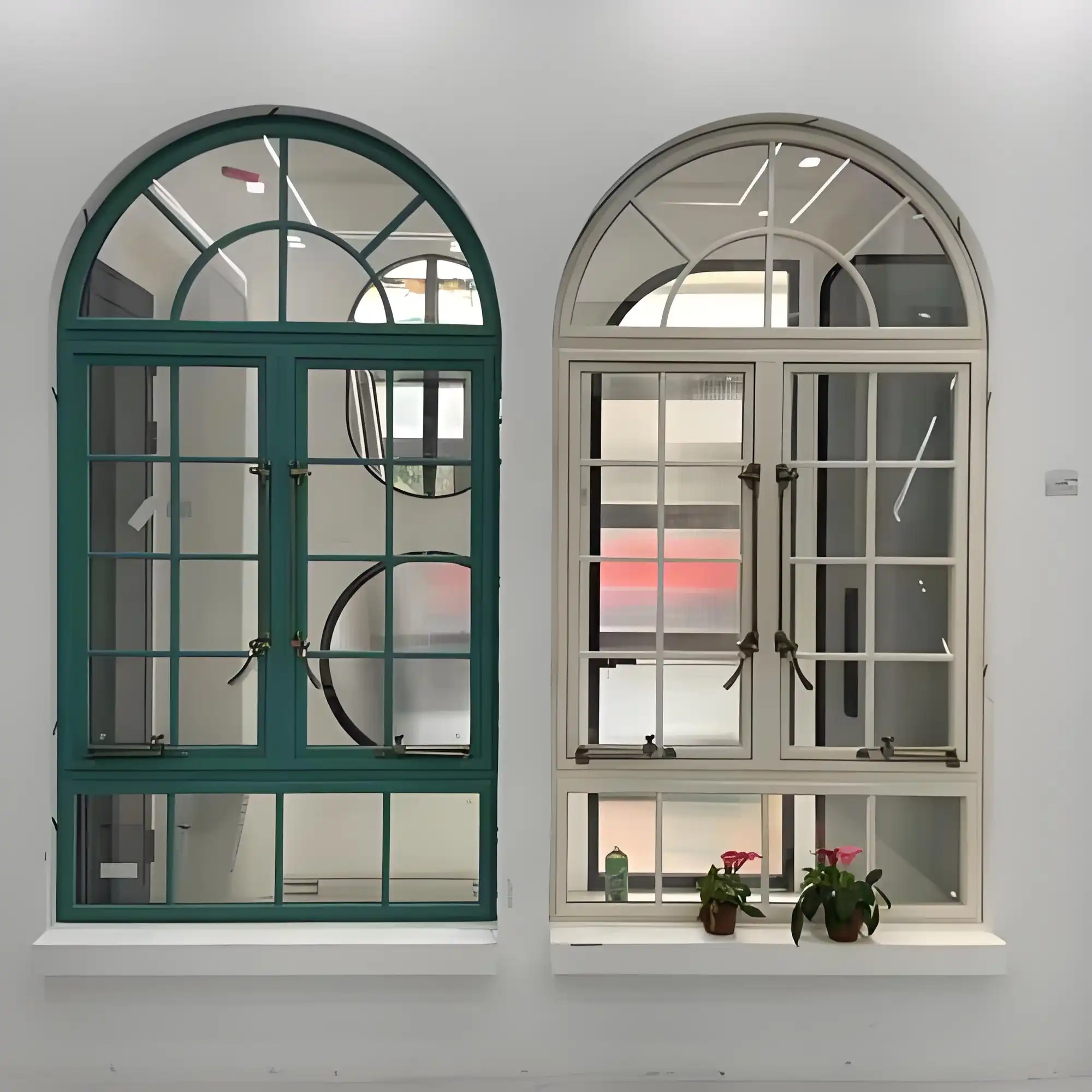
Aluminum Arch Windows change the front of buildings, especially in religious architecture, villas in the Mediterranean style, and adaptive reuse projects where the curved profiles stay true to the original design intent. Arch windows, on the other hand, need precisely bent frames and radius-matched glazing, which is what sets specialty makers apart from commodity providers.
The choice of material has a direct effect on three buying issues: making sure that small production runs are all the same size, using protective finishes that can withstand foreign shipping and coastal conditions, and using flexible designs that lower freight costs. Architects and custom builders are buying more and more from makers that ship CNC-fabricated parts as knock-down kits. This saves a lot of money on shipping costs and keeps the freedom of assembly on-site.
By picking the right alloys, coatings, and sealing systems, you can make sure that bent frames don't bend in the wind, that glass-to-metal contacts stay weathertight even when metal expands and contracts with the seasons, and that surface treatments stay looking good without needing to be fixed often. Knowing these basic things about materials helps purchasing managers look at a supplier's skills beyond just price quotes, focused on specs that keep expensive site changes from happening.
Core Materials Used in Durable Aluminum Arch Windows
Aluminum Alloys – The Structural Foundation
The 6063-T5 metal has become the standard for building window profiles because it is good at being extruded, welded, and resistant to corrosion. The magnesium and silicon in this metal have been heated to the T5 temper, which gives it the tensile strength needed for spans up to several meters without too much bending. Profile wall thickness is usually between 1.4 mm and 2.0 mm, depending on the size of the frame and the weight of the glass. While keeping material costs low, thicker sections support Aluminum Arch Windows with a larger radius or units with three panes of glass.
Although other metals, like the 7000 series, are stronger, they are harder to weld and cost more, so they are only used in hurricane-proof coastal sites. The 6000 series is still the most popular because its extrusion dies can efficiently make complex curves and thermal break channels, which is very important when making small batches of custom arch profiles.
Thermal Break Technology
Optional polyamide strips, especially PA66GF25 (polyamide 66 with 25% glass fiber reinforcement), are put between the metal parts on the inside and outside to stop heat from moving. This makes a thermally broken frame assembly, which slows the passage of heat and keeps internal surfaces from condensing in cold places. If a project wants to meet passive house standards or get LEED approval, it has to use thermal break building.
The polyamide material can hold up against structural loads and has a low thermal conductivity (about 0.25 W/mK compared to 160 W/mK for aluminum), which makes overall window U-values much better. Professionals in procurement should make sure that thermal break holes are mechanically crimped instead of just adhesively joined. This will ensure that the structure stays strong over time even when temperatures change.
Surface Finishes – Protection and Aesthetics
Powder painting and PVDF (polyvinylidene fluoride) finishes are the two most common ways to treat surfaces, and they each have their own performance ratings. Powder coating uses charged polymer particles that harden into a smooth film that is usually 60 to 80 micrometers thick. This film can be made in a wide range of RAL colors and can transfer wood grain patterns that are rough. This finish is great at protecting against scratches and UV rays, and it can be used in most temperate and subtropical places.
PVDF coatings, which are often sold under brand names like Kynar, are made up of fluoropolymer resins that make them more resistant to weathering in harsh coastal and industrial settings. With two or three layers of coatings that are thicker than 60 micrometers, PVDF finishes last for decades without chalking, fading, or being exposed to chemicals. PVDF costs 15% to 25% more than regular powder coating, but it is worth it for projects that will be in marine settings or cities with a lot of pollution.
Anodizing is an electrical process that creates a protective oxide layer. It is still popular in modern simple designs that like the look of metal. Anodized finishes are very resistant to wear and don't need to be painted over, so they last longer and require less upkeep over their lifetime.
Glazing Materials and Configurations
The choice of glass has a direct effect on how well it keeps heat in, how safe it is, and how it looks. Heat-strengthened tempered glass breaks into small granules when it breaks. It meets safety glazing standards and can handle thermal stress from curved shapes, making it especially suitable for designs such as the Aluminum Arch Window. When two or more panes of glass are laminated together with PVB or ionoplast interlayers, sound is muffled and the glass stays together after it breaks. This is very important for high arch uses or installations that need to be safe.
IGUs, which are made up of two or three panes of glass filled with argon or krypton gas, can get U-values as low as 0.8 W/m³K, which is needed for energy rules in northern areas. Glass surfaces with low-emissivity coats reflect infrared energy while letting visible light thru. This balances daylighting with temperature control. In order to make bent IGUs for curved arch windows, special hot-bending or cold-bending processes are needed. During these processes, the glass panes are shaped to fit the aluminum frame radii with 2mm or less of error. By checking to see if a provider has their own curved glass skills, you can avoid costly mismatches between the frame and glazing shapes.
Sealing Systems – Weather Resistance
When pressed between the edges of the glass and the aluminum rabbets, multi-layer EPDM (ethylene propylene diene monomer) gaskets create the main weather seal. EPDM stays flexible at temperatures ranging from -40°C to +120°C, doesn't break down when exposed to ozone or UV light, and can handle the different rates of thermal growth of different materials. When you buy a good arch window assembly, the corner seals have vulcanized joints instead of mitered cuts, which gets rid of any possible leak routes.
In some fixed-panel designs, structural silicone seals hold the glass to the frame. This transfers wind loads while allowing for movement. By choosing neutral-cure silicones, you can avoid making corrosive byproducts that damage aluminum finishes or IGU edge seals. Sealant compatibility testing according to ASTM C1087 should be included in procurement specifications to make sure that the seal will stick and keep out the weather for a long time.
The best makers build drainage channels and pressure-equalized chamber designs into the frames of their products. This lets water that gets in thru the frames drain out thru hidden weep holes. Third-party testing that confirms airtightness ratings (Class 4 per EN 12207) and water resistance ratings (more than 700Pa per EN 12208) gives objective performance benchmarks and lowers risk in applications where the facade is exposed.
Comparative Analysis of Aluminum Arch Window Materials vs Alternatives
Aluminum vs. Wood
Wood is traditionally warm and has been used in historic settings for hundreds of years with great success. However, curved wood features need skilled joinery, a lot of finishing, and regular upkeep. Weathertightness in arched shapes is hard to achieve because of changes in dimensions caused by moisture, and wood's vulnerability to rot, insect damage, and UV degradation means that protective coatings need to be applied every couple of years.
Aluminum Arch Windows eliminate these concerns by providing uniform sizes, performance that won't rot, and finish durability measured in decades instead of years. The strength-to-weight ratio of aluminum makes it possible for sightlines to be thinner, which increases the amount of glass used—a key benefit for designs that focus on views and lighting.
Aluminum vs. Vinyl (uPVC)
Vinyl extrusions are cheaper for normal rectangle windows, but they are harder to make for curved shapes. Vinyl is not as rigid as other materials, so bigger frames and interior steel supports are needed for large arched units, which makes them look worse. Joints move and seals wear out in places where temperatures change a lot because they have thermal expansion coefficients about five times higher than aluminum.
Dark vinyl takes heat from the sun, which makes the risk of distortion higher. Aluminum, on the other hand, stays stable in its dimensions because it is naturally stiff. Additionally, aluminum can accept any finish color thru coating methods, in contrast to vinyl, which has a limited range of colors due to the heat stability of the pigments.
Aluminum vs. Steel
Steel is the strongest material available, which lets modern curtain wall uses use very thin dimensions. But steel needs to be protected against corrosion all the time by galvanizing and powder coating, which adds steps to the manufacturing process and weight. Because steel conducts heat more quickly than aluminum, bigger thermal break zones are needed to get the same level of insulation. Because steel needs to be welded in a certain way and bent in a more complicated way, it costs more to make small batches of handmade arches out of it. Aluminum is better for custom arch projects where tooling costs need to stay low because it doesn't rust, is one-third as heavy as steel, and is easy to machine with a CNC.
These examples show how metal can be used in a wide range of architectural settings, balancing efficiency, esthetics, and cost-effectiveness. Specifiers like aluminum because it can be used with a wide range of glazing systems, from simple single-pane restoration glass to complex triple-IGU arrangements, without the need for frame rebuilding.
Supplier Insights – Selecting High-Quality Aluminum Arch Window Materials
Certifications and Standards Compliance
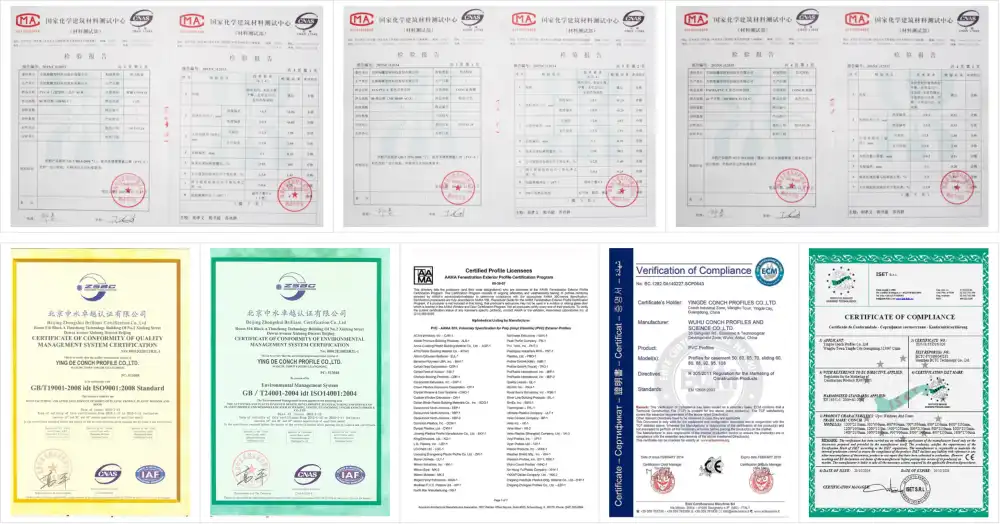
Reliable suppliers keep their ISO 9001 quality management certification up to date. This makes sure that there are documented process controls from the time the raw materials are received until the final inspection. Independent lab tests, like those done by the American Architectural Manufacturers Association (AAMA) and the European Conformity marking (CE marking), back up promises about a product's performance.
These labels show that aluminum profiles, thermal breaks, and sealing systems meet certain standards for weather, heat, and structural strength. To make sure the project requirements are met, procurement managers should ask for test results that show how much air infiltration (ASTM E283), water entry (ASTM E331), and structural load performance (ASTM E330) there was.
Cradle-to-gate lifecycle studies and environmental product statements (EPDs) have a bigger impact on choosing materials, especially for LEED or BREEAM-certified projects. Aluminum can be recovered over and over again without losing any of its properties. This helps achieve goals for a circular economy, as long as providers get the metal they need from smelters that use green energy and add recycled content from old products.
Customization Capabilities and Lead Times
For custom arch projects, suppliers need to have CNC machine centers that can program complex curves from CAD models, which are usually given in DXF or STEP format. Precision manufacturing standards of within ±0.5mm make sure that the radius is the same across orders for multiple units. This is very important when windows need to line up with brick holes or precast concrete panels. When a supplier makes the glass in-house, they can do things like curved tempering or laminating, which makes planning and responsibility easier. When fit problems happen, frame and glazing workers don't have to point the finger at each other.
Lead times for custom Aluminum Arch Windows are usually 25 to 30 days from the time the order is confirmed until the windows are shipped from the factory. This time includes engineering review, material procurement, fabrication, finishing, and quality inspection. When suppliers keep popular metals and coating colors in stock, they can meet tighter deadlines because they don't have to wait for mill lead times. Clear communication about the needed tools and the sample approval process keeps the schedule from being surprised. This is especially important for phased restoration projects with set deadlines for occupancy.
Knock-Down Kits and Logistics Optimization
Due to their size, weight, and fragility, fully assembled arched windows that are shipped abroad face high freight costs. Progressive sellers offer knock-down (KD) packing, in which frames are sent apart but with connection points already drilled, gaskets, hardware, and full directions on how to put them together. This method cuts the amount of shipping by 40% to 60%, which directly leads to lower handling costs and easier container loading. On-site assembly only needs simple tools and clear steps for attaching parts. This can be done by experienced installation teams who follow the video guides and technical drawings that are provided.
Suppliers who provide full technical documentation, such as installation manuals, structural load tables, and maintenance guidelines, make it easier to complete projects and keep owners happy in the long term. Asking for these materials during the evaluation of the procurement shows that the supplier is committed to providing support after the sale, which can help you decide between options that are priced similarly.
Strategic Partnerships and Material Sourcing
Having long-term ties with providers of raw materials makes sure that the alloy makeup and quality of extrusion stay the same. When manufacturers work with well-known aluminum or profile makers, they get technical help, quality checks, and a stable supply chain. Transparency about where materials come from, especially aluminum that comes from suppliers who follow the standards set by the Aluminum Stewardship Initiative (ASI), meets rising expectations for due diligence in business buying policies. By skipping the markups that distributors add, factory-direct sourcing can save you 15% to 30% on costs and set up direct lines of communication for technical questions and custom specifications.
Maintenance, Longevity, and Future Trends in Aluminum Arch Window Materials
Extending Service Life Through Preventive Care
Aluminum Arch Windows don't need as much care as windows made of other materials, but a few simple steps can make them last longer and look better. Using pH-neutral soaps to clean the glass and frame twice a year gets rid of dirt, salt residue, and pollutants that can damage coats over time. Every three to five years, check EPDM seals for cracks or compression set. If they find either, replace them quickly before water damage the finishes inside. Applying dry silicone spray to hinges, locks, and sliding parts stops corrosion and makes sure they work smoothly, especially in casement or tilt-turn designs.
Advancements in Alloy Treatments and Coatings
Researchers studying the microstructures of aluminum alloys are looking into ways to improve the grains in order to make the alloys stronger without making the profiles heavier. This lets frame designs get even thinner. Nanotechnology-based surface pre-treatment processes make coatings stick better and prevent corrosion, which extends their useful life in harsh marine settings. Bio-based powder coating resins made from renewable feedstocks lower the amount of carbon that is built into a product while keeping its performance, which is in line with green building projects' commitments to sustainability.
Thermochromic and photochromic coatings offer dynamic solar control, where frame colors change based on temperature or UV exposure, which makes buildings more energy efficient. Even tho these kinds of innovations are still in the testing stages, they show that material science is still making progress, which procurement professionals should keep an eye on for future specification opportunities.
Balancing Initial Investment with Lifecycle Value
People who make purchasing choices often focus on the up-front costs. However, lifecycle costing shows that higher original costs are worth it because better materials require less upkeep, last longer, and don't need to be replaced as often. Choosing thermal break frames and high-performance glass raises the cost of windows by 20% to 35%, but the savings in energy costs, improvements in resident comfort, and higher property values make up for this within the normal length of time that a building is owned.
In order to make accurate cost estimates, it is important to think about things like warranty coverage, expected maintenance intervals, and regional labor rates for service calls. Longer warranties—ten years for hardware and fifteen years for finish integrity—show that suppliers are confident in the quality of the materials and the way they are made. This lowers the risk for building owners and facility managers over the course of the product's life.
Procurement managers can make choices that balance the needs of the current project with long-term performance goals by staying up to date on changes in energy codes, environmental standards, and new materials.
Disclaimer: Specific performance characteristics and compliance certifications should be verified through product testing reports and documentation provided by manufacturers. Material specifications may vary based on project requirements and regional standards.
Conclusion
When choosing materials for long-lasting Aluminum Arch Windows, you have to think about how they will look, how well they will hold up, and how much they will cost. When you mix the 6063-T5 metal with the right thermal breaks, protective coatings, high-performance glass, and EPDM sealing systems, you get the precise measurements and weather protection that are needed for custom fenestration projects. Aluminum is better than wood, vinyl, and steel when it comes to curved profiles.
This is why builders and workers choose it for historic renovations, high-end home builds, and modern business facades. When you work with certified suppliers who offer CNC fabrication, knock-down shipping, and full technical support, you can be sure that projects will meet quality standards and save money on logistics. As material science progresses and concerns about sustainability change, smart purchasing plans will continue to use aluminum's unique mix of durability, design freedom, and lifetime value.
FAQ
Why are 6063-T5 aluminum alloys preferred for arch window frames over other metals?
This alloy provides an optimal balance between extrudability for complex curved profiles, weldability for frame assembly, and sufficient tensile strength to support large glazed areas without excessive deflection. The T5 heat treatment enhances mechanical properties while maintaining workability, making it cost-effective for custom small-batch production. Its natural corrosion resistance reduces protective coating requirements compared to steel, and its lower density than other structural metals minimizes shipping weights and installation handling challenges for Aluminum Arch Windows.
How does material selection in aluminum arch windows affect energy efficiency?
Thermal break polyamide inserts interrupt heat transfer through aluminum frames, dramatically improving U-values and preventing interior condensation. Specifying thermally broken profiles, combined with low-E coated IGUs and argon gas fills, can reduce heat loss by 50% compared to standard single-glazed aluminum frames. Proper material selection also ensures airtight sealing through compatible EPDM gaskets and structural silicones, minimizing infiltration losses that undermine insulation performance. Energy modeling should account for frame-to-glass area ratios, as slim aluminum profiles maximize glazing percentages and passive solar gains.
What certifications should procurement professionals verify when sourcing aluminum arch window materials?
ISO 9001 certification confirms quality management systems, while product-specific testing per AAMA or CE standards validates structural, thermal, and weather performance claims. ASTM test reports for air infiltration (E283), water penetration (E331), and structural loads (E330) provide objective performance data. Environmental certifications such as Cradle to Cradle or Aluminium Stewardship Initiative membership demonstrate responsible material sourcing. Additionally, fire-rated assemblies require testing per NFPA 257 or equivalent regional standards, documented through labeled products and installation instructions.
Partner with Haolv Building Materials for Precision-Engineered Aluminum Arch Window Solutions
At Haolv Building Materials, we've spent 19 years refining our Aluminum Arch Window manufacturing to meet the exact demands of architectural design firms and custom installation contractors. Our 6063-T5 alloy frames, precision-fabricated through CNC processes, maintain radius tolerances within 2mm—critical when your project involves non-returnable custom geometries for churches, heritage buildings, or high-end villas.
With profile thicknesses from 1.4mm to 2.0mm, optional PA66GF25 thermal breaks, and multi-layer EPDM sealing achieving Class 4 airtightness and 700Pa+ water resistance, our systems are tested to ISO, CE, and AAMA standards.We understand the challenges of sourcing reliable aluminum arch window suppliers capable of small-batch custom work. Our partnership with CONCH ensures consistent raw material quality, while our one-stop manufacturing eliminates coordination headaches between frame and glass fabricators.
Knock-down kit packaging reduces your international shipping costs by up to 50%, with complete assembly instructions, installation videos, and technical parameter sheets included. Our 25-to-30-day production cycle keeps your project on schedule, and our engineering team provides free technical consultations to review your design drawings and recommend optimal specifications. Contact us at kristin@haolvwindows.com to discuss your custom arch window requirements and receive detailed technical documentation tailored to your project specifications.
References
1. Aluminum Association, "Aluminum Alloy Selection Guide for Architectural Applications," 2022 Edition, Technical Publication Series.
2. American Architectural Manufacturers Association, "AAMA 611: Voluntary Specification for Anodized Architectural Aluminum," 2023 Revision.
3. European Committee for Standardization, "EN 14351-1: Windows and Doors - Product Standard, Performance Characteristics," 2016 Consolidated Version.
4. National Fenestration Rating Council, "Technical Document 100: Procedure for Determining Fenestration Product U-factors," Version 2023.1.
5. Lstiburek, Joseph, "Building Science Principles Reference Guide: Window Systems and Thermal Performance," Building Science Press, 2021.
6. International Aluminium Institute, "Global Aluminium Lifecycle Inventory Data and Regional Environmental Impact Assessments," 2023 Technical Report.
Fast simple channel to send demands lock favorable price for building window door bulk purchases.