- English
- French
- German
- Portuguese
- Spanish
- Russian
- Japanese
- Korean
- Arabic
- Greek
- German
- Turkish
- Italian
- Danish
- Romanian
- Indonesian
- Czech
- Afrikaans
- Swedish
- Polish
- Basque
- Catalan
- Esperanto
- Hindi
- Lao
- Albanian
- Amharic
- Armenian
- Azerbaijani
- Belarusian
- Bengali
- Bosnian
- Bulgarian
- Cebuano
- Chichewa
- Corsican
- Croatian
- Dutch
- Estonian
- Filipino
- Finnish
- Frisian
- Galician
- Georgian
- Gujarati
- Haitian
- Hausa
- Hawaiian
- Hebrew
- Hmong
- Hungarian
- Icelandic
- Igbo
- Javanese
- Kannada
- Kazakh
- Khmer
- Kurdish
- Kyrgyz
- Latin
- Latvian
- Lithuanian
- Luxembou..
- Macedonian
- Malagasy
- Malay
- Malayalam
- Maltese
- Maori
- Marathi
- Mongolian
- Burmese
- Nepali
- Norwegian
- Pashto
- Persian
- Punjabi
- Serbian
- Sesotho
- Sinhala
- Slovak
- Slovenian
- Somali
- Samoan
- Scots Gaelic
- Shona
- Sindhi
- Sundanese
- Swahili
- Tajik
- Tamil
- Telugu
- Thai
- Ukrainian
- Urdu
- Uzbek
- Vietnamese
- Welsh
- Xhosa
- Yiddish
- Yoruba
- Zulu
Aluminum Two Track Sliding Windows vs Other Windows Cost Comparison
When looking at window choices for both business and household projects, aluminum two track sliding window always offer the best mix between initial cost and long-term usefulness. This system slides horizontally and has two separate sashes that are mounted on parallel tracks inside a 6063-T5 aluminum frame, and the specific design of the aluminum two track sliding window lets in air and saves space. When compared to vinyl, wood, or casement options, these sliding units usually cost between $45 and $85 per square foot to install.
This puts them in the same price range as premium casement windows ($70 to $120/sq ft) and higher in terms of durability and structural integrity than basic vinyl sliders ($35 to $55/sq ft). By understanding these changes in costs, procurement managers can make sure that budget limits are met across a wide range of projects.
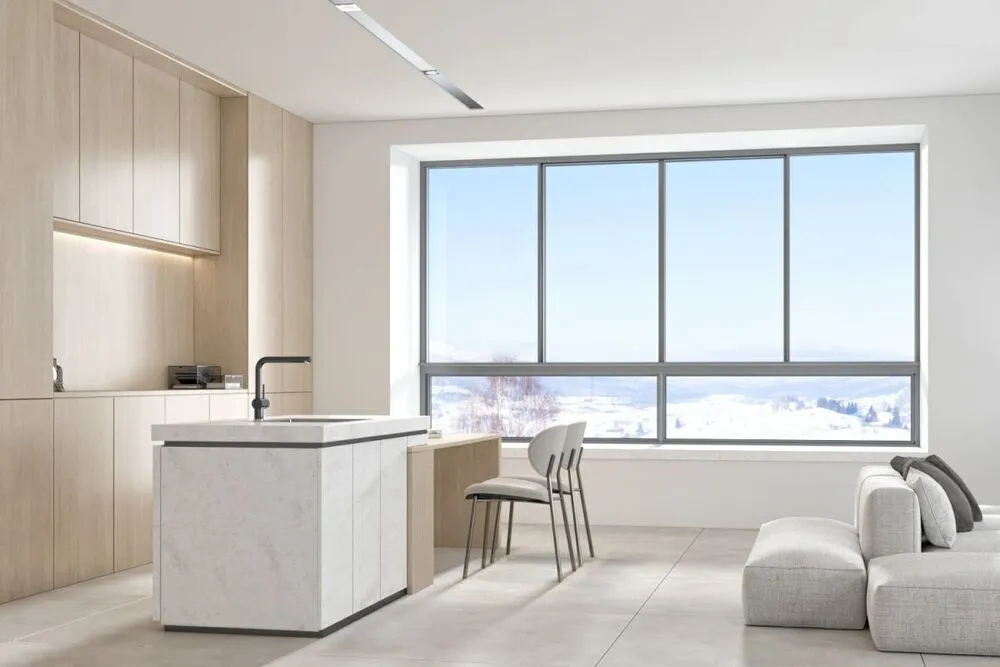
Understanding Aluminum Two Track Sliding Windows and Their Cost Factors
The prices of aluminum sliding windows are based on a number of technical and operating factors that have an effect on both the original cost of purchase and the total cost over the life of the window. Choosing the right material is what determines the cost. Architectural-grade 6063-T5 alloy has better strength-to-weight ratios than standard commercial grades. Different structural load needs can be met by profiles with thicknesses ranging from 1.4 mm to 2.0 mm. Heavier extrusions are more expensive, but they are better at resisting wind and last longer in high-rise uses.
Material Grade and Structural Engineering
Unit costs change a lot depending on whether you choose normal or thermally broken aluminum frames. Polyamide thermal break strips cost about $8 to $12 per square foot to make, but they cut heat transfer rates by 40 to 60%, meeting strict energy codes in climate zones 4 through 7. There are also different price levels for surface finishing choices. Powder coating (AAMA 2603 standard) provides basic weather protection, while PVDF finishes (AAMA 2605 compliant) increase coating warranties to 20 years or more at an extra 15% cost.
Glass Specification and Performance Upgrades
Another important cost factor is the type of glazing used. The basic requirement is standard tempered monolithic glass. On the other hand, double-glazed insulated glass units (IGUs) with Low-E coatings and argon fill raise the cost of materials by 30–50%. This investment pays off in a measured way: lower HVAC loads—independent testing shows that Low-E double glazing can cut cooling costs by 12–18% a year in businesses bigger than 10,000 square feet. Even though triple-glazed units cost 60–80% more than single-glazed units, they are a good investment in harsh climates where heating degree days exceed 7,000 per year.
Manufacturing Complexity and Customization Requirements
Unit economics is greatly changed by the size of the production. Optimized machine amortization lowers the cost per unit by 18–25% compared to fully customized dimensions when standard-size panels are made in series runs of 500 or more units. When you have complex setups with curved tracks, built-in blinds, or non-standard locking systems, the cost of making them goes up by $15 to $30 per opening. Through design-for-manufacturability principles, we've seen that these customization premiums can be lowered by early coordination between design teams and production sites across North American markets.
The method of installation is a cost factor that is often overlooked. Aluminum slide systems are made up of different modules that can be shipped knocked-down (KD), so the frame parts and sashes can be sent separately and put together on-site. Compared to pre-assembled units, this method cuts freight volumes by about 30%, which saves a lot of money on transcontinental shipments. A new mid-rise apartment block in Texas saved $14,000 on logistics costs for 240 window openings by using KD delivery along with full installation instructions and instructional videos given during technical handoff.
Cost Comparison: Aluminum Two Track Sliding Windows vs Other Common Window Types
To do a full cost analysis, you need to look at a lot of different window categories during the buying, installing, and using phases. The comparison below uses information from business building projects finished between 2021 and 2024 in different climate zones across the United States.
Aluminum Sliding vs Vinyl Sliding Systems
Vinyl sliding windows are cheaper to install; they usually cost $35 to $55 per square foot. But because PVC extrusions have thermal expansion coefficients five times higher than aluminum, they are hard to use in places where temperatures change more than 50°F. Within 8–12 years, this cycling of expansion and contraction breaks down weather seals, which means they need to be replaced with gaskets that cost $8–$12 per linear foot of perimeter.
On the other hand, aluminum profiles stay the same size at temperatures ranging from -40°F to 180°F, and EPDM gaskets don't compress even after 20 years or more. Total cost of ownership calculations over 25 years show that aluminum systems have 15–20% lower cumulative costs, even though they cost more at first.
Wood Frame Windows and Maintenance Economics
Every 4–6 years, wood frames need to be refinished, which costs about $18–$25 per window. In humid climates, exposure to water speeds up rot, and the windows need to be replaced completely every 20–30 years. By contrast, an aluminum two track sliding window features anodized or powder-coated surfaces on aluminum extrusions that protect them from corrosion. They only need to be cleaned every so often, so they don't need to be refinished for the typical 40–50 year service life.
Every 4–6 years, wood frames need to be refinished, which costs about $18–$25 per window. In humid climates, exposure to water speeds up rot, and the windows need to be replaced completely every 20–30 years. Anodized or powder-coated surfaces on aluminum extrusions protect them from corrosion. They only need to be cleaned every so often, so they don't need to be refinished for the typical 40–50 year service life.
Casement Window Operational Considerations
When fully opened, casement windows let in a lot of fresh air and let you see everything clearly, but their outward-swinging design makes them hard to use in crowded cities. Aluminum casement systems cost between $60 and $95 per square foot for materials, and the more complicated hardware makes them cost an extra $25 to $40 per unit compared to sliding systems.
Quality casement windows have better security because they have multi-point locking devices. However, sliding window systems with the same locking technology almost completely eliminate this performance gap. Installing casement windows usually takes 25–30% more work because the hinges have to be perfectly lined up and the working sash has to be adjusted. Sliding tracks don't need these changes because the roller assemblies are already set up at the factory.
Single Track vs Two Track Sliding Performance
Because the frame shapes are simpler, single track sliding windows use 12–18% less material, but this saves money comes with some useful losses. If there isn't a separate screen track, homeowners have to choose between keeping bugs out and having a clear glass area.
Two track setups, on the other hand, allow for independent screen operation. Single track designs are less good at ventilation because they can only open to 50% of their maximum area, while two track designs can open to 60–65% of their maximum area. Projects that choose natural ventilation to lower their mechanical load find that the extra cost of two track systems is worth it because they improve indoor air quality and use less fan energy.
With this information, procurement teams can make decision matrices that compare the prices of acquisition to performance factors that are specific to each type of project. For an aluminum two track sliding window, the evaluation process is sped up by detailed technical parameter sheets, installation demonstration videos, and thorough specification guides. These make it possible to directly compare U-value ratings, air infiltration rates (per ASTM E283), and structural test pressures (ASTM E330) between different systems.
Making the Right Purchase Decision: Cost-Related Considerations for B2B Clients
Effective buying includes more than just per-unit price. It also includes supply chain operations, guarantee structures, and evaluating a vendor's ability to do the job. Contractors who are working on multiple projects at the same time need suppliers who can meet tight delivery deadlines and keep the accuracy of the dimensions of large orders.
Bulk Procurement Strategies and Volume Economics
When you combine orders from different stages of a job, you can get big price breaks. When you commit to more than 200 window units, you can usually get volume discounts of 8–15%. For single-delivery consolidation, you can get even more discounts of 3–5%. Negotiating payment terms has an equal effect. Suppliers who offer net-60 terms help contractors better manage their cash flow, especially on projects where milestone billing is delayed. Our method for buying things includes these factors by using total cost modelling, which takes into account both unit prices and the effects on working capital.
Total Cost of Ownership Analysis
The cost of ownership (TCO) calculations need to take into account installation labour rates, which vary a lot from market to market. Installation costs are $35 to $50 per opening in cities with a lot of union workers, but only $22 to $32 per opening in non-union markets. Aluminum sliding systems make installation easier.
Each standard opening only takes 1.2 to 1.8 hours of work, while casement windows take 2.0 to 2.5 hours. This saves a lot of time and money on large projects. A 180-unit apartment building in Arizona saved $8,400 on labour costs by choosing sliding windows over casement windows. This was about 10% of the total budget for windows and doors.
Energy modelling tools like REScheck or COMcheck can predict how much money you will save on operations based on specific window requirements. By switching from regular double glazing to Low-E IGUs with thermally broken frames, commercial projects in climates that rely on heating can save $0.85 to $1.40 per square foot per year on HVAC costs. If you look at these saves over 30 years and assume that energy costs go up by 2.5% per year, they add up to $32 to $55 per square foot, which is often 40 to 60% more than the extra cost of high-performance glazing.
Regulatory Compliance and Certification Requirements
U.S. projects have to deal with complicated rules and regulations that involve many licensing groups. Standardized energy performance data is found on NFRC (National Fenestration Rating Council) labels, and structural and performance standards are set by AAMA (American Architectural Manufacturers Association) standards. For an aluminum two track sliding window, supplier certificates that meet the requirements of AAMA 101/I.S.2/A440 standards show that the building meets North American wind load and water penetration standards.
This lowers the risk of responsibility for developers and general builders. It should be clear in the procurement specifications that third-party test reports must show that the buildings meet all relevant building codes, such as ASTM E283 (air leakage), E330 (structural performance), and E331 (water penetration resistance).
For projects that want to get LEED or Green Globes certification, they need to find windows that meet certain environmental standards. Aluminum sliding systems made from 60–70% recycled material (common for 6063 metal) help meet Materials & Resources requirements, and low-emissivity glass helps meet Energy & Atmosphere requirements. For green building approval, you need to provide thorough material declarations and Environmental Product Declarations (EPDs). These are the skills that set established makers apart from small suppliers.
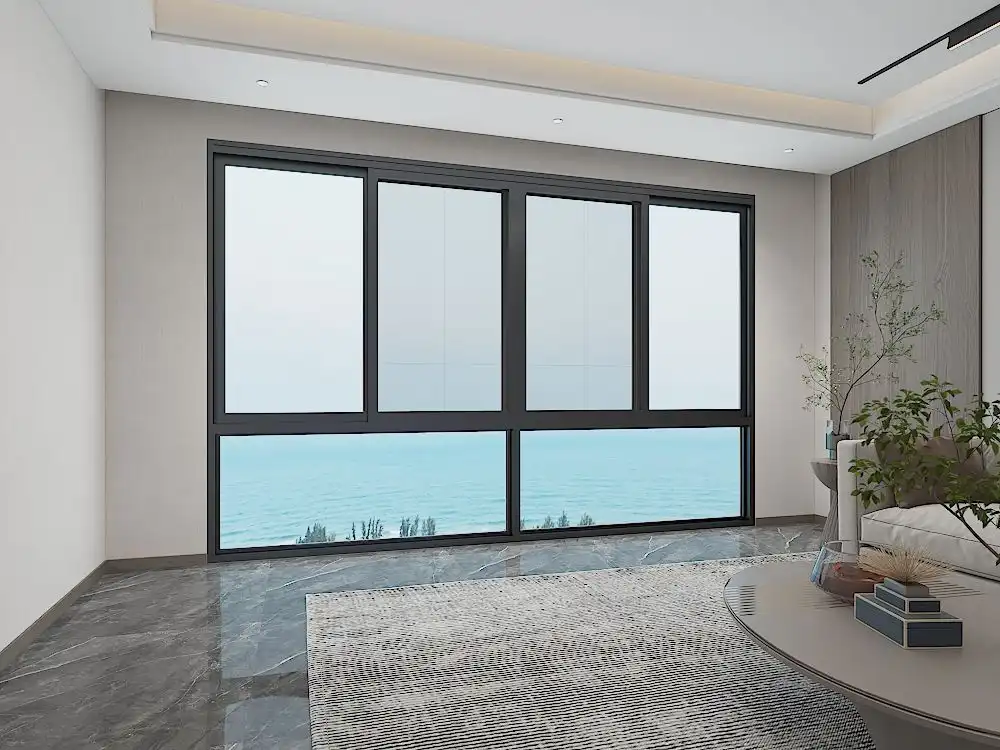
Procurement Best Practices for Aluminum Two Track Sliding Windows
When choosing a supplier for an aluminum two track sliding window, you should look at more than just price. You should also look at the supplier's manufacturing skills, quality systems, and infrastructure for help after delivery. The following framework has been used successfully on more than 50 commercial projects worth a total of $12 million in fenestration.
Manufacturing Capability and Quality Verification
Facility checks show important differences in how consistently the products are made. With a +/- 0.1mm tolerance, CNC cutting centers can make precise mitre joints that keep weather seals in place even when the temperature changes. Automated welding stations with purge gas systems make corner welds that are clean, oxide-free and stronger than the parent material by 90% or more.
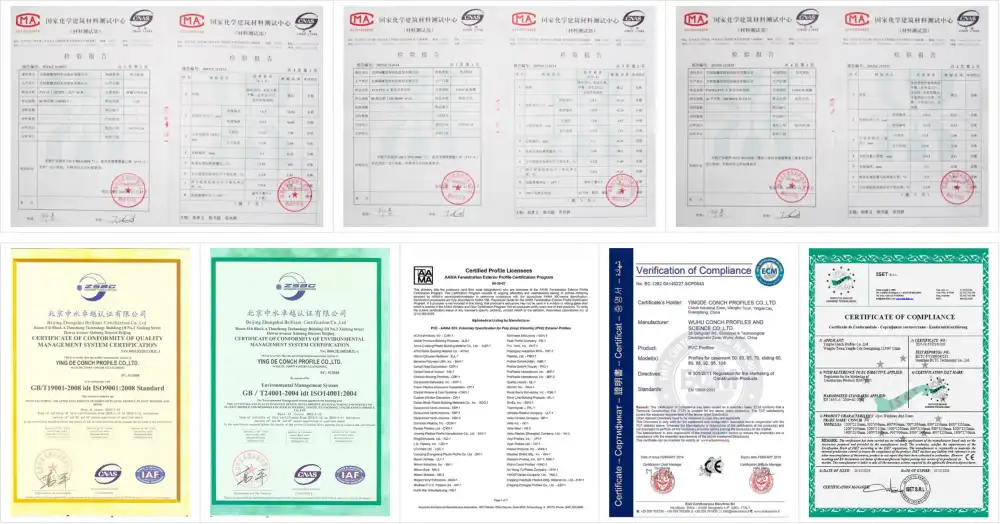
Lines for surface treatment that can consistently apply a 60–80 micron powder coat thickness give a finish that meets AAMA 2603/2604 standards for longevity. Before committing to a buy order, you can get objective proof of these skills by asking for plant walkthrough videos or third-party audit reports (ISO 9001:2015 certification).
Price Transparency and Hidden Cost Identification
For accurate cross-supplier comparison, detailed quotes should list material grades, hardware specifications, and glass configurations. Vague terms like "standard hardware" hide big differences in quality between stainless steel and zinc-alloy parts. Stainless steel parts cost 40% more than zinc-alloy parts, but they resist corrosion better in coastal environments. Shipping terms (FOB vs. delivered) have a big effect on total landed costs. This is especially true for West Coast projects that buy from foreign sources and have to pay extra for ocean freight and customs handling, which add 12–18% to the ex-factory price. Detailed Incoterms specifications in RFQ documents get rid of confusion and make sure that bids are evaluated fairly.
Delivery Performance and Supply Chain Reliability
Lead time plans need to take into account how much can be made and how stable it is to get materials. For sales under 500 units, established makers that keep standard extrusion profiles in stock can complete them in 25–30 days, while suppliers that use made-to-order extrusion runs take 45–60 days. Just-in-time delivery coordination is very important for fast-track projects because early deliveries cost $0.45 to $0.75 per square foot per month for climate-controlled storage, and late shipments cost an average of 8 to 12% of the total project value in extra costs to get things on time.
Premium suppliers are different from transactional vendors because they offer technical support after the sale. Having access to engineering staff who can look over building details and suggest installation routines keeps you from having to make expensive changes in the field. Giving CAD details in several formats (DWG, RVT, and IFC) speeds up the process of integrating designs and finding clashes in BIM workflows. Field errors cause 60–70% of warranty claims in fenestration systems. Installation training, which can be given in-person or through extensive video libraries, cuts down on these mistakes.
For our 70, 80, and 90 series product lines, our expert support package includes thorough specification sheets that show how the products work in terms of thermal performance, structure test data, and acoustic scores. Installation guides with photos and measurements show how to fix common problems in the field, and assembly videos show how to properly place the gasket, set the rollers and use the lock mechanism. This paperwork environment speeds up the learning process for contractors and makes it easier to send workers to different job sites.
The modular design philosophy that guides our product engineering lets us optimize containers in a way that lowers the cost of freight by the 30% threshold we already talked about. Putting apart frames, sashes, and bolts in nesting arrangements makes the best use of space. This means that normal 40-foot containers can hold more than 240 knocked-down units instead of just 180 pre-assembled units. This efficiency in transportation is especially helpful for projects on islands or in remote areas, where freight costs make up 20 to 35 percent of the cost of supplied materials.
Conclusion
There are real economic benefits to aluminum two track sliding window because they aren't too expensive to buy, don't need much maintenance, and last a long time. At first, the price puts them higher than basic vinyl systems, but a full TCO analysis always shows that they save 15–25% over the lifecycle because they don't need to be refinished as often, last longer, and use less energy. The ability to ship sliding windows knocked down, which is built into good designs, saves even more money on shipping when used on big jobs.
To make a good purchase, you need to carefully look at each supplier, not just compare prices per unit, but also look at their manufacturing skills, quality certifications, and technical support infrastructure. When these multidimensional criteria are used in decision frameworks, contractors and developers can get the most out of their investments in fenestration while still meeting performance standards and delivery dates.
Performance Disclaimer: The exact thermal, structural, and acoustic performance numbers rely on how the product is configured, the type of glass used, and how well it is installed. Labels that are NFRC-certified and third-party test results that meet ASTM and AAMA standards can be used to get verified performance statistics. Before making final decisions about specifications, look at detailed technical documentation and engineering analyses that are specific to the project.
FAQ
How does thermal performance compare to other window types?
Aluminum sliding windows with polyamide thermal breaks and Low-E insulated glass have U-values of 0.28 to 0.35 BTU/hr·ft²·°F, which is about the same as mid-range vinyl windows and better than aluminum that isn't thermally broken. When compared to regular aluminum frames, the thermal break technology stops the conductive aluminum path, which lowers heat flow by 40–60%.
What maintenance protocols extend operational lifespan?
Cleaning the track once a year gets rid of the buildup of debris that speeds up roller wear, and applying dry silicone lubricant to roller assemblies keeps them running smoothly. Check EPDM gaskets for compression set decline every 5 years. Good gaskets should keep their sealing ability for 20 years or more. Powder-coated finishes only need to be washed every so often with a light soap solution. They don't need to be refinished like wood frames do.
Can these systems accommodate insect screening?
The two track design lets each screen work on its own using a dedicated rail or clip-on frame system. This arrangement protects against insects and lets air flow without reducing the glass area when the screens are pulled back, which is a major problem with single track options.
What maximum sash dimensions are structurally feasible?
Size limits are set by the profile thickness and the roller load ratings. Standard 1.4mm shapes can hold windows that are up to 1200mm wide and 2100mm high, while heavy-duty 2.0mm extrusions can hold panels that are 1500mm wide and 2400mm high. If you go beyond these sizes without adding comparable profile changes, the sash could deflect, which would make weather sealing and smooth operation less effective.
Partner with Proven Aluminum Two Track Sliding Window Manufacturers for Your Next Project
Haolv Building Materials has been making specialized windows and doors for 18 years and can help builders, developers, and distributors who are looking for trusted aluminum two track sliding window suppliers. Precision CNC machining, automated powder coating lines, and strict quality control protocols in our ISO-certified production facility make sure that orders of 50 to 5,000 units or more always have the same size and finish. We have strong relationships with suppliers of high-quality materials, such as CONCH profile systems.
This lets us keep prices stable and promise access even when there are problems in the supply chain. Every order comes with a full technical support package that includes CAD detailing libraries, installation video tutorials, and engineering consultation services that speed up project execution and lower the cost of field coordination. Our knocked-down packing method makes the best use of containers for shipping goods abroad, saving up to 30% on logistics costs and improving the project's economics. Powder coat colour matching, non-standard dimensions, and specialized hardware integration are just some of the ways that our solutions can be customized to fit your exact architectural needs and performance expectations.
Email our engineering team at kristin@haolvwindows.com to talk about the details of your project and get thorough technical paperwork such as thermal modelling data, structural test reports, and case studies from similar projects. We give away free sample units and make the freight costs clear, so you can try them out before committing to a full order. Our standard production cycle, which lasts 25–30 days from deposit to shipment, works with even tight construction schedules. Full-process project coordination keeps procurement on track.
References
1. American Architectural Manufacturers Association. (2022). AAMA 101/I.S.2/A440: North American Fenestration Standard/Specification for Windows, Doors, and Unit Skylights. AAMA Publication.
2. National Fenestration Rating Council. (2023). Certified Products Directory: Energy Performance Ratings for Fenestration Products. NFRC Technical Publications.
3. Efficient Windows Collaborative. (2021). Window Technologies: Comparative Life-Cycle Cost Analysis for Commercial Buildings. Alliance to Save Energy Research Report.
4. Lstiburek, J. (2019). Building Science Digest: Window Performance and Thermal Comfort in Mixed-Humid Climates. Building Science Corporation Technical Paper.
5. Carmody, J., Selkowitz, S., Lee, E.S., Arasteh, D., & Willmert, T. (2018). Window Systems for High-Performance Commercial Buildings. Building Technologies Program, U.S. Department of Energy.
6. Construction Specifications Institute. (2020). MasterFormat Division 08: Openings—Aluminum Window Specifications and Performance Criteria. CSI Technical Standards.
Fast simple channel to send demands lock favorable price for building window door bulk purchases.