- English
- French
- German
- Portuguese
- Spanish
- Russian
- Japanese
- Korean
- Arabic
- Greek
- German
- Turkish
- Italian
- Danish
- Romanian
- Indonesian
- Czech
- Afrikaans
- Swedish
- Polish
- Basque
- Catalan
- Esperanto
- Hindi
- Lao
- Albanian
- Amharic
- Armenian
- Azerbaijani
- Belarusian
- Bengali
- Bosnian
- Bulgarian
- Cebuano
- Chichewa
- Corsican
- Croatian
- Dutch
- Estonian
- Filipino
- Finnish
- Frisian
- Galician
- Georgian
- Gujarati
- Haitian
- Hausa
- Hawaiian
- Hebrew
- Hmong
- Hungarian
- Icelandic
- Igbo
- Javanese
- Kannada
- Kazakh
- Khmer
- Kurdish
- Kyrgyz
- Latin
- Latvian
- Lithuanian
- Luxembou..
- Macedonian
- Malagasy
- Malay
- Malayalam
- Maltese
- Maori
- Marathi
- Mongolian
- Burmese
- Nepali
- Norwegian
- Pashto
- Persian
- Punjabi
- Serbian
- Sesotho
- Sinhala
- Slovak
- Slovenian
- Somali
- Samoan
- Scots Gaelic
- Shona
- Sindhi
- Sundanese
- Swahili
- Tajik
- Tamil
- Telugu
- Thai
- Ukrainian
- Urdu
- Uzbek
- Vietnamese
- Welsh
- Xhosa
- Yiddish
- Yoruba
- Zulu
Why Choose Thermal Break Aluminum for Windows and Doors?
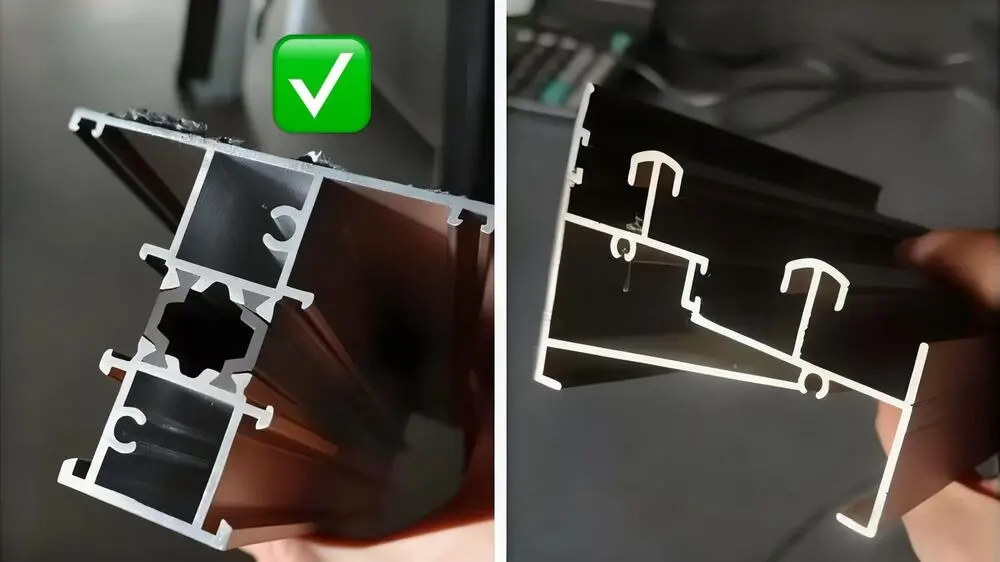
When we look at framing options for both commercial and residential projects, Thermal Break Aluminum Profiles always give us the best results in terms of energy savings, structural durability, and ease of logistics. These profiles are made up of two aluminum sections that are separated by a PA66 polyamide barrier. This stops thermal bridges and keeps the inside of the building comfortable without reducing the strength. This technology makes it easier for procurement managers, engineers, and distributors who are in charge of large-scale builds or channel replenishment to follow U.S. energy codes. It also lowers HVAC loads and speeds up the assembly process, which can cut shipping costs by about 30% through knock-down packaging.
Introduction
Glass systems are very important to the performance of any building. Thermal Break Aluminum technology solves a basic problem: aluminum quickly transfers heat, which means that energy is lost at the frames of windows and doors. By putting a non-metallic insulating strip inside the profile, manufacturers stop the flow of heat, resulting in U-values that are much lower than those of alternatives that don't break the heat flow.
This blog is for procurement managers who are looking at the skills of suppliers, technical staff who are looking at structure requirements, and wholesalers who are looking for product lines that meet both passive-house standards and budget requirements. We are going to look at important technical factors, compare Thermal Break Aluminum Profiles for traditional aluminum and uPVC, go over best practices for buying, and show how optimised packing and custom fabrication can help meet tight project deadlines.
Understanding Thermal Break Aluminum Profiles
What Defines a Thermal Break Profile
A Thermal Break Aluminum Profile puts an insulating barrier between the inside and outside aluminum parts. This barrier is usually a PA66 GF25 polyamide strip. The 1.4–3.2 mm thick strip acts as a thermal dam, stopping the transfer of heat through conductivity while keeping the frame's structure strong. The aluminum metal itself, which is usually 6063-T5 or T6, has great tensile strength and resistance to corrosion, so it can be used for both high-rise curtain walls and seaside areas.
Core Benefits for High-Performance Applications
Putting in heat barriers has a number of measured benefits. Better insulation lowers the need for heating and cooling, which lowers the building's operating costs over its lifetime. Controlling condensation keeps indoor surfaces from getting wet, which protects finishes and lowers the risk of mould. Durability stays high; aluminum is much more resistant to UV damage, bending, and rot than wood or plastic. Another benefit is that powder coating, anodising, and PVDF finishes can be used with standard or custom RAL colours, so they can meet the needs of architectural design without sacrificing performance.
Multi-Chamber Design and Glass Compatibility
Modern profiles have multi-chamber extrusions that separate air pockets, which further lowers heat loss through convection. These plans can work with 20–36 mm insulated glass units, which can be double or triple glazed. This lets the U-values meet NFRC and IECC standards. The EPDM multi-layer sealing system keeps out air and water and blocks out sound by 35 to 50 decibels, which is good for people who live in cities or near transportation corridors.
Thermal Break Aluminum Profiles vs. Other Frame Solutions
Performance Comparison with Traditional Aluminum
High U-values, often more than 2.0 W/m²·K, are found in standard aluminum frames that don't have thermal breaks. This means that they use a lot more energy than they should. Thermal Break Aluminum Profiles address this issue directly: different types of these profiles lower U-values to 1.0 W/m²·K or less, which stops heat transfer by at least half. This change has a direct effect on the size of the HVAC system, energy bills, and scores for green building certifications like LEED or ENERGY STAR.
Thermal Break Aluminum vs. uPVC
uPVC profiles are good at keeping heat in, but they can't span as far as is needed for big industrial openings. Aluminum that doesn't conduct heat lets more light through and supports heavier glass loads, which is very important for curtain wall systems. Maintenance is also different. Aluminum can handle high and low temperatures and UV light without breaking down, but uPVC can change colour and become less resistant to impact over time. There are different environmental concerns. Aluminum can be recycled over and over again, but there isn't as much infrastructure for recovering vinyl yet.
Cost and Return on Investment
The initial costs of Thermal Break Aluminum Profiles are higher than those of normal uPVC or aluminum that isn't insulated. But the energy savings add up quickly. When thermally broken systems are added to a mid-rise office building, the annual cooling loads can be cut by 15–25 percent. This will pay for the upfront costs within five to seven years. Thermal breaks are often required by law to meet Title 24 in California or the International Energy Conservation Code (IECC). This means that they are not just an extra that you can choose to add.
When figuring out the lifetime value, you should look at things like fewer warranty claims, shorter upkeep times, and better resale value. Buildings with high-performance envelopes get higher rents and tenants who care about the environment, which makes the investment even more worthwhile from a portfolio point of view.
Key Technical Specifications and Installation Guidance
Materials and Standards
When you buy good Thermal Break Aluminum Profiles, they should be made of aluminum alloy 6063-T5 or T6, which has a yield strength high enough to withstand wind loads and impacts. The PA66 polyamide strip needs to meet standards for glass-fiber support (PA66 GF25 is common) so it doesn't creep when it's under load and keeps its shape when temperatures change. Some surface treatments are powder coating for different colour options, anodising for marine environments to prevent corrosion, and PVDF coatings for high-altitude or tropical areas to keep things stable in the sun.
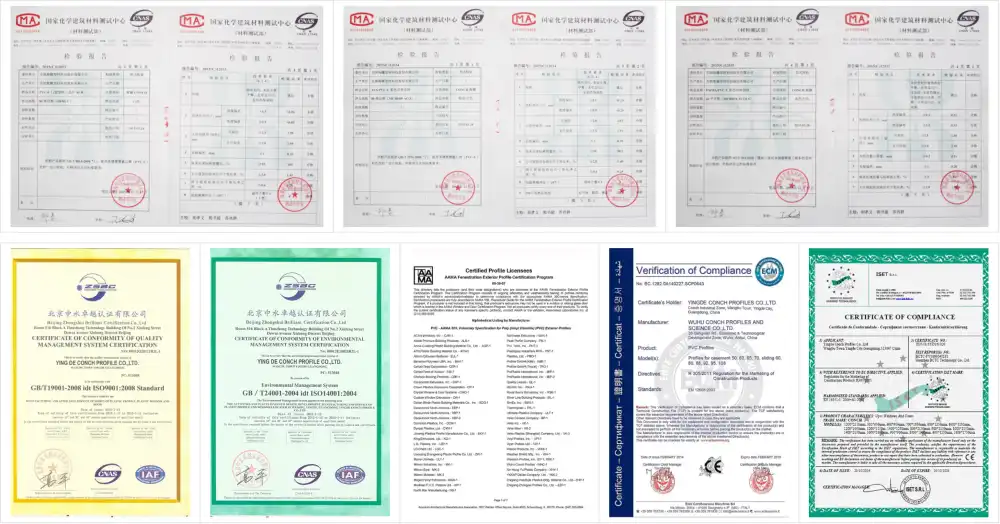
Certifications like CE, ISO 9001, and AAMA should be on profiles to show that they meet European, foreign, and North American quality standards. NFRC signs give accurate U-values, sun heat gain factors, and visible transmittance data, which lets buyers make fair comparisons when they're shopping.
Energy Efficiency Ratings
U-values measure how much heat is transferred; lower numbers mean better insulation. Depending on the type of glass and the depth of the cavity, thermal break assemblies usually have U-values between 0.8 and 1.2 W/m²·K. In some North American situations, R-values are used instead of U-values; an R-5 assembly is similar to a U-1.0 assembly. Instead of just believing what the maker says, technical staff should check these measures through reports from independent testing groups.
Installation Best Practices
When installed correctly, the design's performance is kept. Installers must carefully line up the thermal breaks while putting together the frame so that the insulation barrier doesn't get short-circuited. To keep chemicals from breaking down, sealants used around the sides of glass must be compatible with EPDM seals. Anchoring methods should take thermal expansion into account. Thermal Break Aluminum Profiles require particular attention here: slot-and-pin systems allow for movement without putting too much stress on the polyamide strip. By teaching installation teams these details, you can cut down on callbacks and make sure your guarantee stays valid.
Disclaimer: Actual performance parameters depend on final assembly, glazing selection, and site conditions. Always reference product-specific test reports and certification documentation when specifying systems.
Procurement Insights: How to Choose and Source Thermal Break Aluminum Profiles
Defining Project Requirements
Clear specifications are the first step to a successful procurement. Set minimum U-values to meet local energy codes, profile thickness ranges to meet wind-load calculations for structures, and surface finishes that match the style of the building. Suppliers are chosen based on their budget and lead times. Shorter lead times may favour domestic makers or those with regional storage, while projects that need to save money can benefit from bulk-order prices and container-load negotiations.
For complex builds, being able to customise things is important. Can the provider cut Thermal Break Aluminum Profiles to lengths that aren't standard? Do they have drainage holes that are already punched out or built-in support lines for heavy-duty uses? Checking early on to make sure it works with your current hardware (hinges, locks, operators) will save you a lot of money on redesigns.
Evaluating Suppliers and Certifications
Reliable sellers follow ISO 9001 quality standards, have their systems audited by a third party, and give test results from approved labs. Make sure that the AAMA certification covers the profile series you want to buy. Visits to or virtual tours of the factory show how the extrusion is done, how well the surface is treated, and how the inventory is managed. Export experience with projects like yours, like residential buildings, hotel developments, and school sites, shows that you can handle the size and complexity of your project.
Credentials for sustainability are becoming more and more important in buying decisions. Green-building goals are met by suppliers who use recycled aluminum and low-VOC coatings. Documentation that is clear about the supply chain helps with LEED material credits and corporate ESG reporting.
Logistics and Packaging Strategies
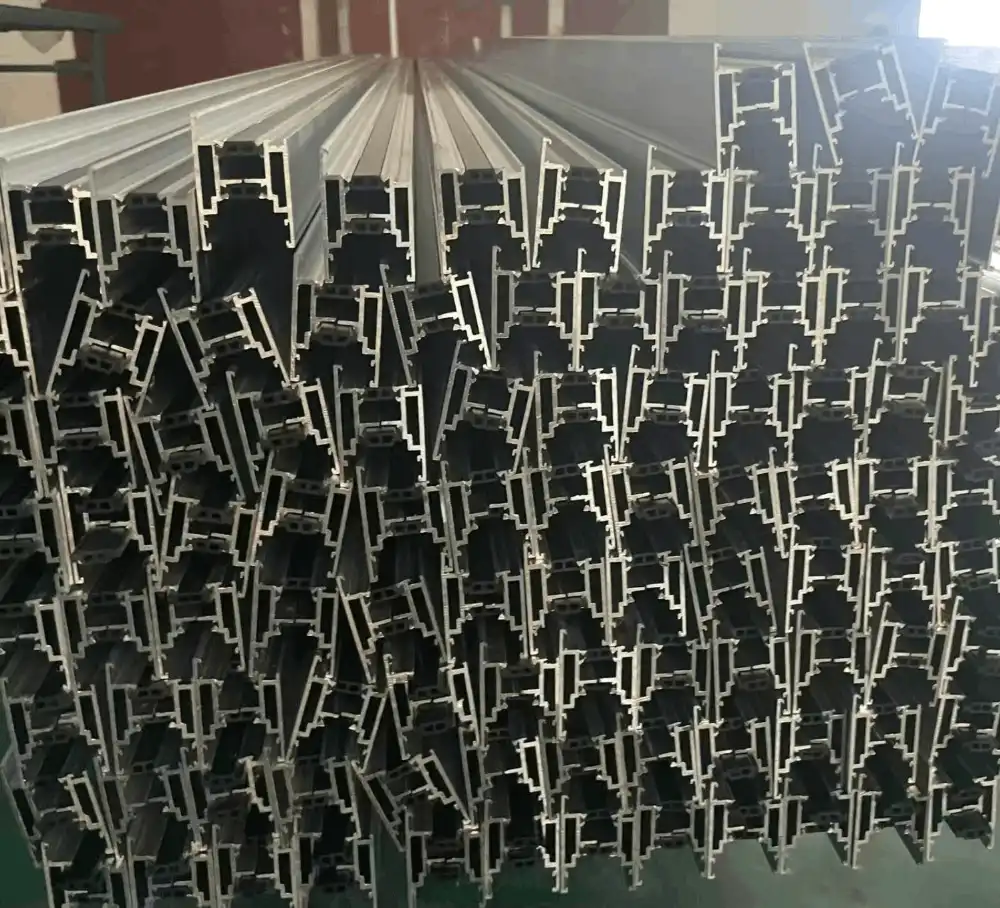
Shipping prices are a big factor in the buying process. Thermal Break Aluminum Profiles that come in knock-down kits, which are pre-cut lengths with corner connectors and assembly tools, take up less space in containers than frames that are fully built, which can save up to 30 percent on freight costs. This method also makes clearing customs easier and reduces the amount of storage needed on-site. Make sure that your provider gives your manufacturing team thorough assembly directions, installation videos, and technical parameter sheets. Coordinated delivery schedules are necessary for projects to stay on schedule. Suppliers who offer phased shipments that match construction milestones avoid costly delays on the job site.
Case Studies and Future Outlook
Real-World Applications
Denver's mixed-use development got rid of old aluminum windows that were only single-glazed and put in Thermal Break Aluminum Profiles with triple-pane IGUs. Post-occupancy monitoring showed that heating energy use dropped by 22% and tenant comfort scores went up, with fewer complaints about drafts and condensation. The project got LEED Gold certification, which was partly due to better envelope performance.
In a hotel makeover in coastal Florida, thermally broken curtain walls stood up to hurricane-force winds and kept their scores for air and water infiltration. Because aluminum doesn't rust, it didn't need as much upkeep as steel or wood frames in places with a lot of dampness, which meant lower costs over the life of the building for the owner.
Emerging Trends and Market Demand
Newer forms of polyamide offer even less heat conductivity without affecting the strength of the structure. Bio-based polymers and aerogel inserts are being looked at by manufacturers as ways to lower U-values below 0.7 W/m²·K. Automated extrusion and CNC machining make fabrication tolerances smaller, which improves the accuracy of assembly and cuts down on on-site labour hours.
Energy rules around the world keep getting stricter. High-performance frames are in high demand because of the Energy Performance of Buildings Directive in the EU and changes to ASHRAE 90.1 in North America. Passive House certification used to be a niche issue, but now it affects many commercial projects. Because of these changes in regulations, Thermal Break Aluminum Profiles are now a smart investment that will protect portfolios against changing regulations and rising energy costs in the future.
Conclusion
Thermal Break Aluminum Profiles combine the structural benefits of metal framing with the insulation benefits that were once only found in less durable materials. Procurement managers have to balance costs, regulations, and project deadlines. These systems offer proven energy savings, regulatory alignment, and organisational freedom through modular assembly.
Standardised certifications and measurable U-values give technical staff trust, and wholesalers like product lines that meet both passive-house requirements and general market demand. As energy codes get stricter and building owners put more emphasis on operational efficiency, specifying thermally broken aluminum is expected to be the norm rather than the exception.
FAQ
Can Thermal Break Profiles Be Fully Customized for Unique Projects?
Of course. Leading manufacturers can cut Thermal Break Aluminum Profiles to the exact lengths needed for a project. Standard lengths include 5.8 m and 6.0 m extrusions, but custom cuts can be made to fit odd-shaped profiles. Surface finishes go beyond standard RAL colours; clients can choose from different textures, gloss levels, and even wood-grain powder coats to make the finished product look like it was made with the same materials. Profiles can be made to fit performance and installation needs by pre-drilling for hardware, incorporating drainage channels, and adding reinforcement inserts.
How Much Energy Can Thermal Break Systems Actually Save?
It depends on the climate zone, how well the existing envelope works, and how efficient the HVAC system is. Modelling studies show that switching from Thermal Break Aluminum Profiles that don't break down when heated or cooled to insulated profiles can cut heating and cooling costs by 15 to 30 percent in warm areas. Payback times vary from four to eight years, depending on how the building is used and how much energy it uses. The actual results depend on the type of glazing used, the quality of the installation, and how the people living in the building behave, so independent energy audits give the most accurate predictions.
What Certifications Should We Verify When Vetting Suppliers?
Put ISO 9001 for quality control, CE marking for getting into the European market, and AAMA approval for meeting North American standards at the top of your list. NFRC stickers show that the thermal efficiency has been checked by a third party. Environmental Product Declarations (EPDs) and Health Product Declarations (HPDs) are documents that suppliers of green building materials use to show how their products are safe and healthy over their whole life. Ask for pictures of these awards and check the certification numbers with the organisations that issued them to make sure they are real.
Partner with a Trusted Thermal Break Aluminum Profiles Manufacturer
Haolv Building Materials has been specialising in aluminum and uPVC window and door systems for 18 years. They work with real estate developers, general contractors, and distribution networks all over North America and beyond. Our cutting-edge extrusion lines make Thermal Break Aluminum Profiles from quality 6063-T5 and T6 alloys and PA66 GF25 polyamide strips. These profiles have U-values that are higher than the standards set by AAMA and NFRC. We can make a lot of changes, like non-standard lengths, custom RAL finishes, and pre-machined hardware channels. At every step of the production process, we make sure the quality is ISO-certified.
Our all-in-one service includes technical advice, solution design, and free samples to make sure the fit and performance are right before full orders are placed. Our 25–30 day lead times work with building plans, and knock-down packaging lowers the cost of containers and speeds up assembly on-site. Whether you need to buy a lot of things for a project or unique curtain wall profiles, our engineering team works with your instructions to make sure you get approved, reliable systems. To get technical parameter sheets, installation videos, and a quote that fits your needs for your next project, email kristin@haolvwindows.com or go to haolvbuilding.com.
References
1. American Architectural Manufacturers Association. AAMA TIR-A8-04: Structural Performance of Composite Thermal Barrier Framing Systems. Schaumburg: AAMA, 2018.
2. Asdrubali, Francesco, and Giorgio Baldinelli. "Thermal Transmittance Measurements of Windows: A Round Robin Test in Europe." Building and Environment 46, no. 5 (2011): 1141–1151.
3. Passive House Institute. Criteria for the Passive House, EnerPHit and PHI Low Energy Building Standard. Darmstadt: Passive House Institute, 2020.
4. U.S. Department of Energy. Windows and Building Envelope Research and Development: Roadmap for Emerging Technologies. Washington: DOE, 2019.
5. Yudelson, Jerry. The Green Building Revolution. Washington: Island Press, 2008.
6. Zanghirella, Fabrizio, et al. "Energy Performance of Windows: A Comparative Study on Frame Materials." Energy Procedia 78 (2015): 2834–2839.
Fast simple channel to send demands lock favorable price for building window door bulk purchases.