- English
- French
- German
- Portuguese
- Spanish
- Russian
- Japanese
- Korean
- Arabic
- Greek
- German
- Turkish
- Italian
- Danish
- Romanian
- Indonesian
- Czech
- Afrikaans
- Swedish
- Polish
- Basque
- Catalan
- Esperanto
- Hindi
- Lao
- Albanian
- Amharic
- Armenian
- Azerbaijani
- Belarusian
- Bengali
- Bosnian
- Bulgarian
- Cebuano
- Chichewa
- Corsican
- Croatian
- Dutch
- Estonian
- Filipino
- Finnish
- Frisian
- Galician
- Georgian
- Gujarati
- Haitian
- Hausa
- Hawaiian
- Hebrew
- Hmong
- Hungarian
- Icelandic
- Igbo
- Javanese
- Kannada
- Kazakh
- Khmer
- Kurdish
- Kyrgyz
- Latin
- Latvian
- Lithuanian
- Luxembou..
- Macedonian
- Malagasy
- Malay
- Malayalam
- Maltese
- Maori
- Marathi
- Mongolian
- Burmese
- Nepali
- Norwegian
- Pashto
- Persian
- Punjabi
- Serbian
- Sesotho
- Sinhala
- Slovak
- Slovenian
- Somali
- Samoan
- Scots Gaelic
- Shona
- Sindhi
- Sundanese
- Swahili
- Tajik
- Tamil
- Telugu
- Thai
- Ukrainian
- Urdu
- Uzbek
- Vietnamese
- Welsh
- Xhosa
- Yiddish
- Yoruba
- Zulu
Best Aluminum Arch Window Designs for Premium Building Projects
When architects and custom window installers search for specialized fenestration solutions, they're often solving a precise challenge: achieving flawless curved profiles that local fabricators either can't produce or price beyond reach. Aluminum Arch Window systems deliver that critical combination of geometric precision, decorative flexibility, and structural integrity demanded by churches, heritage restorations, and luxury villas.
These engineered assemblies utilize 6063-T5 aluminum alloy extrusions, thermal-break cavities, and CNC-bent profiles to match any design blueprint—whether a gentle Romanesque curve or a complex Gothic tracery—with curvature tolerances held within 2 mm across spans exceeding three meters.
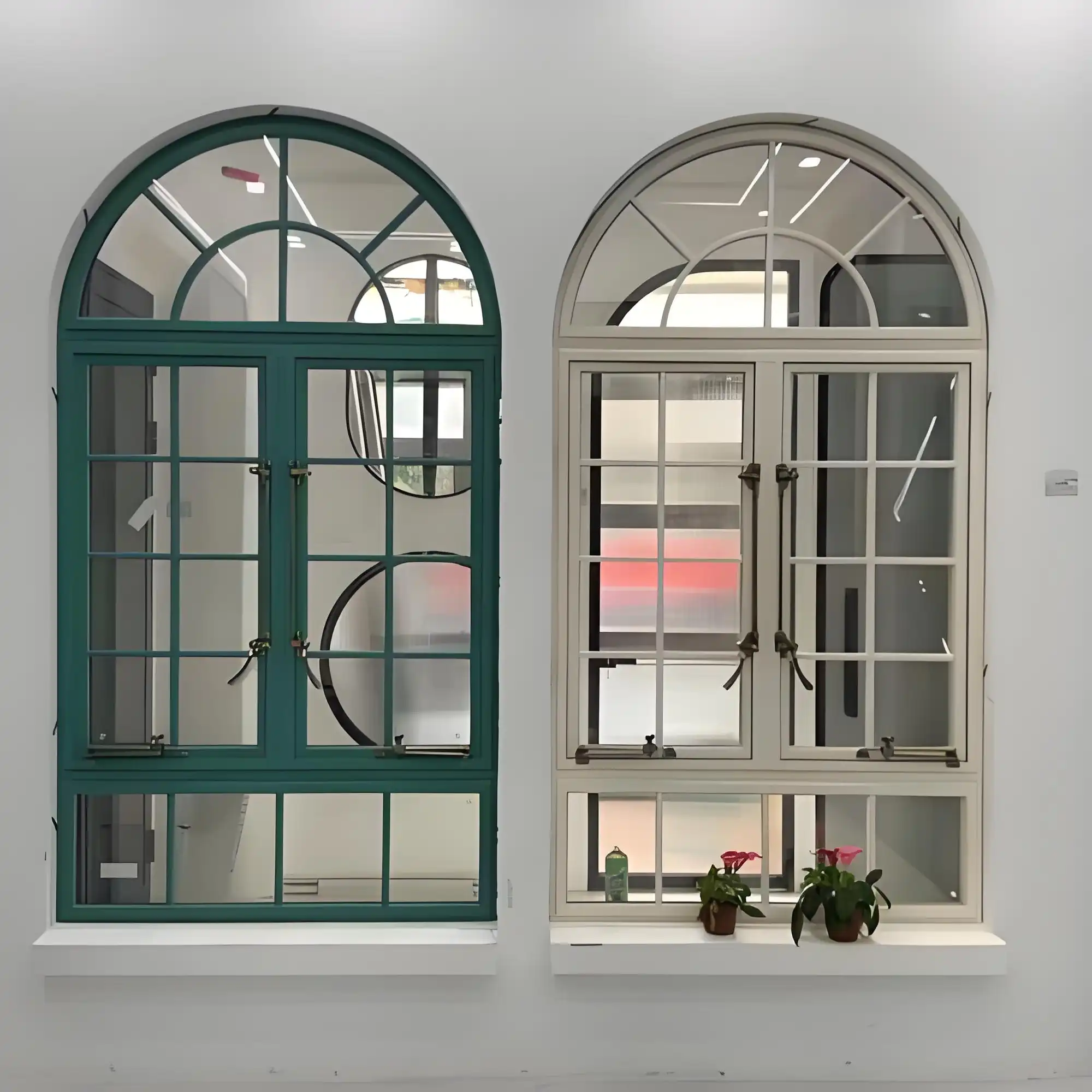
Understanding Aluminum Arch Windows: Features and Benefits
Curved fenestration is a special kind of window that can be used in both modern and historic buildings. It can meet both artistic and technical needs that flat assemblies can't. To specify these goods, you need to know a lot about material science, how to make them, and how well they work.
What Makes Aluminum Ideal for Arched Profiles
Because aluminum is both flexible during manufacturing and strong after extrusion, producers can make shapes that go on forever without having to weld or cut them up. Steel or wood need to be laminated and joined together in a lot of steps. Aluminum profiles, on the other hand, can be roll-formed or CNC-bent to angles as small as 300 mm while keeping the wall width the same, at 1.4 mm to 2.0 mm.
Following the ASTM B221 standards for architectural extrusions, the 6063-T5 alloy makes sure that the frame keeps its structural integrity and resistance to corrosion even after it has been bent. This feature is very helpful for projects that need to match multiple units to the same curvature specs. It cuts down on field change time and installation risk.
Durability and Performance Advantages
The choice of material and the design of the system affect how long something lasts in an exposed environment. Layers of aluminum oxide form naturally, protecting against rust even in seaside or industrial settings. According to ISO 9227 testing guidelines, these windows can withstand salt spray for more than 1,000 hours when they are finished with powder coat or PVDF that is more than 60 μm thick.
Using PA66GF25 polyamide strips between the inside and outside profiles as part of thermal-break technology separates the lines of heat flow, resulting in U-values that are comparable to wood while preventing rot, warping, and bug damage. Multiple layers of EPDM gaskets and structural silicone sealing provide airtightness ratings of up to Class 4 and water resistance exceeding 700 Pa. This protects the envelope during wind-driven rain events that are common in exposed elevations.
With these efficiency measures, lifecycle costs go down and maintenance plans get shorter. Unlike wood panels that need to be refinished on a regular basis or vinyl systems that often don't match up with thermal expansion, properly specified aluminum arched units keep their shape and look for decades of use.
Comparing Aluminum to Alternative Materials
Picking the right material has a direct effect on how hard it is to make, how well it fits together, and how long it lasts. Wood has a classic look, but it needs to be joined by skilled craftsmen for curved pieces, and movement caused by water makes weatherproofing harder. Steel has better strength-to-depth ratios, but it can cause thermal bridging problems and needs coatings to stop corrosion.
Fiberglass composites can be shaped into complicated shapes, but they aren't as precise or have as few sightlines as extruded aluminum. Vinyl is inexpensive for standard shapes, but it can't be safely shaped into tight curves without stress cracks or segmented construction that makes it less weatherproof.
Aluminum is the best material for projects that need repeatable accuracy, low maintenance, and the ability to fit thermal breaks and high-performance glazing into thin profiles. Over 90% of architectural aluminum can be recycled and used again. This makes it compatible with green building certifications and circular economy goals that clients and code authorities are pushing for more and more.
Top 7 Aluminum Arch Window Designs for Premium Construction Projects
It's helpful for procurement professionals to know which design archetypes fit with different project needs and architectural language. Solutions that are often asked for in the business, institutional, and high-end domestic sectors are shown below.
Traditional Full-Circle Arch
Classic rounded shapes are still a big part of restoring churches and other historic sites. These styles have a circle that goes around the whole opening and has a radius that is usually half of the span. Slim metal profiles, which usually have a face width of 50 mm to 70 mm, allow for the most glazing while still meeting structural load standards. Most windows are fixed, but casement panels that can be opened and closed can be built into the arch or in the transom sections next to it. Powder-coated finishes in bronze, matte black, or special heritage tones make it easy to match the new stonework or brickwork to the old.
Contemporary Minimalist Arch
Asymmetric curves and less frame visibility are popular in modern residential and small commercial projects. To keep the sightlines clear, these assemblies use insulated glass units that are either double or triple glazed with Low-E coatings and concealed drainage channels. The outside surfaces are also flush. The 1.8 mm to 2.0 mm profile walls have thermal-break holes that make sure they meet energy rules in both warm and cold areas. Architects like that they can choose RAL or custom PVDF colors that go with curtain-wall systems or cladding palettes and keep the building's look consistent across large elevations.
Industrial-Inspired Robust Frame
Adaptive-reuse projects, brewery tap rooms, and loft conversions often need frames with strong shapes that look like steel windows. In these forms, the aluminum extrusions have deeper face measurements (80 mm to 100 mm) and clear shadow lines. Even though they look heavy, these profiles still have the material's weight advantages and resistance to corrosion. Powder-coated matte finishes in charcoal or graphite look like old steel without the upkeep that comes with it. Divided-light arrangements with muntin bars inside or outside can add to the industrial feel even more.
Thermal-Break Energy-Efficient Arch
Pay close attention to U-factors and air leaks in projects that want to meet LEED, Passive House, or local energy-performance standards. Polyamide thermal-break strips, which are usually 24 mm to 34 mm wide, separate the inside and outside metal shells of these specialized units. Center-of-glass U-values below 0.8 W/m²·K can be reached with triple-glazed insulated glass units filled with argon or krypton.
Continuous EPDM seals and multi-point locking gear make sure that the airtightness levels are good for pressurized building envelopes. Aluminum Arch Window designs integrate seamlessly with these systems, so upfront costs go up, but savings on energy over the lifetime and the chance to participate in incentive programs more than make up for it.
Custom Geometric and Polygon Shapes
Openings that are circular, parabolic, or faceted polygonal may be needed for landmark projects like museum atriums, corporate halls, or signature homes. These custom shapes are possible with CNC manufacturing, which turns CAD models straight into bent profiles and custom jigs. Curved glass, which can be made by hot-bending or cold-forming, fits the shape of the frame and keeps the optical clarity of the whole surface. Fabricators work closely with structural engineers to confirm load lines and deflection limits. This is done to make sure that the desire for beauty doesn't come at the cost of safety or longevity.
Acoustic-Insulated Arch for Urban Settings
Noise control can be hard for buildings next to transit corridors, entertainment districts, or industrial zones. When properly sealed frames are used with laminated glazing—two or more layers of glass joined together with acoustic interlayers—sound waves can't pass through. It can achieve Sound Transmission Class (STC) rates of 38 to 42 dB.
Aluminum extrusions can handle the thicker glass without making the sightlines look like they're expanding. If you specify asymmetric glass thicknesses (for example, 6 mm on the outside and 10 mm on the inside), you can further improve attenuation across a wider frequency range. This makes people more comfortable in noise-sensitive environments.
Recyclable and Sustainable Arch Frames
Environmental product declarations and material health certificates are becoming more and more important in the buying process. Circular economy strategies are supported by the fact that aluminum can be recycled naturally and keeps all of its mechanical properties after being melted down many times. Fabricators who buy alloy from suppliers that use a lot of recycled materials and renewable energy to melt the metal can show that the embodied carbon is lower. Low-VOC powder coatings and solvent-free structural glass materials meet standards for indoor air quality and can help you get certified for WELL Building or Green Globes.
Each of these design groups focuses on a different set of esthetic and useful goals. When you match the type of window to the project's goals, like preserving history, saving energy, or controlling noise, it makes the specification process easier and lowers the chance of having to make expensive changes during the building documentation.
How to Select the Best Aluminum Arch Window Design for Your Project
A structured analysis of site factors, performance goals, and budget limits is the first step in effective buying. The following framework for making decisions helps teams make the right choice.
Defining Project-Specific Requirements
How much insulation and weatherproofing you need depends on the climate. Coastal locations need better corrosion protection, like AAMA 2605 PVDF finishes and stainless steel fasteners. High-altitude sites, on the other hand, need resistance to UV degradation and temperature cycles.
Investing in laminated glazing is a good idea in places with a lot of noise, but views may be more important in rural areas. Depending on the type of building (residential, hospitality, or institutional), the operational preferences change. For example, fixed glazing is fine for lobbies, but operable casement or tilt-turn configurations are better for occupied spaces that need air flow.
Knowing these parameters early on stops specification drift and makes sure that the finished product matches the design intent. Including makers in the schematic design process lets you check how well the design can be built, finding any problems that might arise between the desired radii, the structure holes, and the extrusion tools that are currently available.
Prioritizing Performance Criteria
The job of procurement managers is to balance different needs, such as cost, thermal efficiency, structural capacity, and esthetic refinement. How these factors are weighted depends on the type of job. In a heritage restoration, profile thinness and finish authenticity may be more important than thermal-break cavities that are too wide. A business office has strict energy goals, which is why it has triple glazing and wider frame depths. Creating a scored matrix, which means giving each criteria a number value, makes it easier to compare supplier proposals in an objective way.
Expectations for durability also vary. People who live in high-end homes want systems that won't need any repairs for 30 years, so they choose high-end tools and finishes. Commercial developers on a tight budget may be okay with standard powder coatings and replacing the gaskets every so often, as long as the initial costs are in line with what the pro forma estimates are.
Technical Comparisons: Frame and Glazing Solutions
Frame extrusions include cheap shapes that don't break when heated or cooled that work well in mild climates and high-tech polyamide-separated systems that meet strict energy codes. The thickness of the profile—1.4 mm for light-duty residential uses and 2.0 mm for commercial wind-load zones—has a direct effect on how much it bends under pressure and how much it sags over time. Fabricators need to show that their structural calculations meet AAMA/WDMA/CSA 101/I.S.2/A440 or similar regional standards.
You can choose from toughened monolithic glass, which is cheap but doesn't offer much insulation, or triple-insulated units with Low-E coats and inert gas fills, which are more effective but heavier. Curved glass makes it harder to make things. Cold-bent lites (with radii above 1,500 mm) don't need to be heated, but they might have visual distortions. Hot-bent units (with smaller radii) need special kilns and longer lead times. When you choose laminated choices for safety, security, or soundproofing, they add thickness and weight that needs to be taken into account when choosing tools and designing the frame.
Procurement Considerations: Budget and Lead Times
Because they have to be bent, jigged, and made with curved glass, custom arched windows cost more per unit than normal square windows. Aluminum Arch Window designs add further complexity due to their specific framing and sealing requirements, so depending on how complicated the profile is and what kind of tooling is used, mold fees can be anywhere from USD 2,000 to USD 8,000.
For orders of 5 to 20 units, it's hard to spread out these fixed costs over time, so the price per unit depends on the number of units ordered. Costs can be cut by combining several project openings into one production run or by choosing semi-custom profiles that can be made from existing tools.
Lead times are longer than flat-window plans. From the time the order is confirmed until it is delivered, it should take 8 to 14 weeks. This includes 1 to 2 weeks for engineering approval, 2 to 3 weeks for making samples, and 4 to 5 weeks for production. Shipping techniques also affect delivery times and costs: air freight is faster and more expensive than containerized freight. By timing delivery with site readiness, you can avoid expensive storage or handling twice.
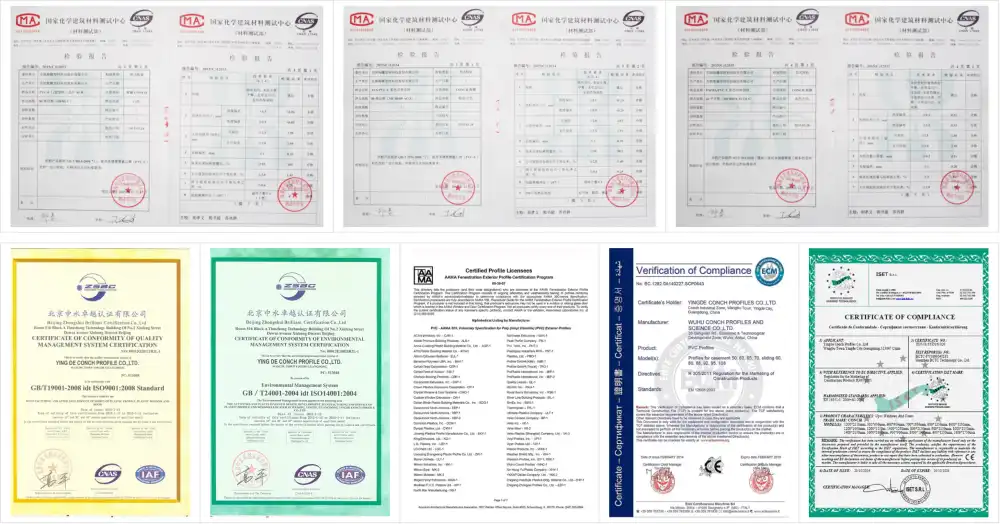
To figure out how trustworthy a supplier is, you need to look at their certifications (ISO 9001, CE marking, AAMA Gold Label), warranty terms (10 to 20 years for finish, 5 to 10 years for insulated glass seals), and references from projects that are similar to the one you're looking at. Site visits to fabrication sites use a lot of time and money, but they show how quality control works and how much can be made.
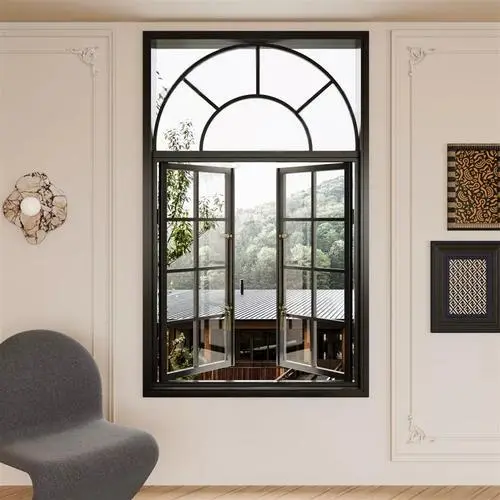
Installation and Maintenance Tips for Aluminum Arch Windows
Without proper installation and ongoing care, even the most carefully made units don't work as well as they should. The following actions will get you the best return on your investment.
Professional Installation Best Practices
Before construction can begin, structural openings must be surveyed to make sure that the dimensions and curves are correct. Discrepancies bigger than 5 mm might need field shimming or, in the worst cases, unit refabrication. Adjustable fixing systems, like slotted clamps or threaded rods, are needed to set curved frames because they let you line them up in three dimensions before they are permanently attached. Installers should use laser levels and trammel gages to make sure that the work is straight, level, and square (or true-to-radius for non-rectangular shapes).
The first step in weatherproofing is perimeter airseal, which involves putting a closed-cell backer rod into the gaps between the frame and the rough opening. Next, low-modulus polyurethane or silicone sealant is used to push water away from the frame. Vapor-permeable sealer or spray foam is used to fill in interior gaps. This stops condensation from forming inside wall spaces while still allowing for differential movement. When self-adhered membranes are layered over head jambs and tied into water-resistant barriers, they form flashing integration. This sends any accidental moisture to the outside, saving the frames and finishes inside.
Routine Maintenance Protocols
Aluminum really does live up to its image for being low-maintenance as long as basic care instructions are followed. Checking the gasket's integrity, the hardware's functionality, and the drainage path's clarity should be done once a year. Weep holes, which are small holes in the sills, need to stay clear of trash so that water from mist and wind can escape. Blockages can be removed with a soft brush or compressed air, which won't hurt the gaskets.
Mild, pH-neutral detergents and soft cloths or sponges are best for cleaning. Abrasive cleaners or steel wool will scratch protective finishes, which will speed up the aging process. Powder-coated and PVDF surfaces keep their look the longest when they are rinsed off after storms on the coast or industrial fallout, which keeps acidic layers from building up. Using dry PTFE or silicone spray to grease hinges, lock points, and roller tracks is better than using oil-based products that collect dust. This keeps things running smoothly and increases the life of the hardware.
Troubleshooting Common Issues
Condensation on the inside of glass surfaces usually means that the humidity inside is too high, not that the unit has broken down. Make sure that the HVAC systems keep the relative humidity below 40% during the heating season, and make sure that the weep holes can drain properly. If there is persistent fogging between the glass panes, it means that the insulated glass seal has failed, and the sealed unit needs to be replaced. This can usually be done without damaging the frame.
Misaligned hinges or worn lock-points can make it hard to use casement or tilt-turn hardware. It's often possible to get smooth operation back by adjusting the hinge nuts or striker plates. If your gaskets are worn out, you can replace them by peeling off the old material and fitting new extrusions into frame holes. This is a job that can be done by skilled repair staff or hired glaziers.
For big portfolios or projects that get a lot of attention, hiring professional service contracts makes sense. Maintenance visits once a year, which cost between USD 150 and USD 300 per unit depending on how accessible they are, record the condition, make adjustments, and let you know about problems early on, before they get worse and need expensive repairs.
Leading Aluminum Arch Window Suppliers and Brand Insights for 2026
To find the right provider, you need to know the strengths, weaknesses, production skills, and service styles of each area. Manufacturers who have a history of making custom fenestration show a few important traits.
Evaluating Supplier Credibility
Certifications give you a basic level of confidence. The ISO 9001 mark proves that a quality management system is in place; the CE mark shows that it meets European health, safety, and environmental standards; and the AAMA Gold Label proves that performance testing followed North American rules. Check the production infrastructure as well as the certificates. For example, does the facility have CNC bending equipment?
They can hot-bend glass in-house, but do they hire outsiders to do it, which adds time and organizational risk? Aluminum Arch Window production further complicates this decision, as its curved frame and glazing integration often require specialized bending coordination. Having access to high-quality raw materials, like through partnerships with well-known aluminum sources like CONCH, makes sure that the composition and mechanical qualities of the alloy are the same from one production batch to the next.
The manufacturer's trust is shown by the warranty covering. Standard terms include 10 to 20 years for finishes that won't peel or fade, 5 to 10 years for the integrity of the insulated glass seal, and 2 to 5 years for the function of the hardware. Check to see what isn't covered. For example, are sites near the coast covered, or does salt exposure cancel the coverage? Does the guarantee cover future owners, or is it only good for the first buyer?
Bulk Purchase and Customization Programs
When a project calls for 50 or more units, savings of scale can be used. When you buy more than 25 units, 50 units, or 100 units, the price per piece goes down by 10 to 25 percent compared to when you buy in small lots. Some makers ship just the frame, so local glaziers can find and install the glass. This saves money on freight weight and customs fees compared to sending whole assemblies. This method works well in places where glass fabrication networks are already set up and tariffs are set up to encourage the import of semi-finished goods.
Customization isn't just about color and hardware. By making containers as dense as possible, knock-down kits—frames that are already cut and drilled and shipped disassembled—reduce the cost of ocean freight by 30% to 40%. On-site assembly needs simple tools (like pop riveters and sealant guns) and clear instructions, but the time saved on logistics often makes it worth it. Technical support packages with installation videos, step-by-step guides, and dimensional CAD files make this process easier and less likely to go wrong.
Initiating Supplier Engagement
Requests for Quotations (RFQs) that work include architectural drawings with elevations, sections, and information about curves; performance requirements (U-value, SHGC, air/water/structural ratings); preferred finishes; types of hardware operations; and delivery dates. Attaching reference photos or case studies makes it clear what the expected esthetic is. Requesting samples, such as stock profiles or small-scale models, lets you feel the quality of the finish, how the gaskets feel, and how the hardware works before committing to full orders.
Cost, quality, and danger must all be balanced during negotiations. People are willing to pay more for shorter lead times, and standard production queues save them money. Payment terms that protect both parties—a 30% payment, 60% when the work is done, and 10% after delivery—are common. Even though they come with bank fees, letter-of-credit agreements lower the risk of not being able to pay a new supplier. This reassures producers who don't know if the customer is creditworthy.
Conclusion
Curved fenestration problems need accuracy, knowledge of materials, and the ability to quickly make things that aren't usually possible in window production. These needs are met by Aluminum Arch Window assemblies, which use alloy properties, advanced forming methods, and designed thermal performance. For a procurement to go well, suppliers must be involved early on, performance standards must be clearly stated, and geometric and artistic goals must be communicated clearly.
When you choose designs that are in line with the needs of the project, like energy efficiency, noise reduction, heritage preservation, or environmentally friendly sourcing, you can be sure that the units you install will look great right away and last for decades. Installing these things correctly and keeping up with regular maintenance will protect your investments, and using strategic sourcing can help you save money on customization and shipping.
Note: The performance numbers used here are typical of systems that were tried in controlled environments. Actual fixed performance relies on factors unique to the spot, the quality of the installation, and the exposure to the outdoors. During final specification, look at test reports and engineering calculations that are specific to the product.
FAQ
What Maintenance Schedule Preserves Window Quality?
Most installations only need to be inspected once a year. Every six months, use a mild detergent to clean the frames and glass. Every year, grease the hardware, and every spring, clear the weep holes. Coastal or industrial areas may need service every six months to deal with fast soiling or acidic layers.
How Do Energy Ratings Compare to Wood Windows?
Thermal-break aluminum panels with triple glazing have U-values (0.8–1.2 W/m²·K) that are about the same as high-performance wood units, but they don't break down because of wetness. Because wood doesn't carry electricity as well as aluminum, wood edges protected glass a little better, but in lifetime analysis, aluminum's longevity and dimensional stability often made up for small thermal differences.
Can Unusual Shapes Be Fabricated?
Ellipses, parabolas, polygons, and compound curves can all be made with CNC. When you quote, you should send CAD files or full-size models. Tooling prices and wait times go up for complex geometries, but they are still possible for projects that are worth the custom expense. Curved glazing is available depending on the radius tightness and the type of glass. For radii less than 1,500 mm, hot-bent choices work best.
Partner with Haolv Building Materials for Precision Custom Arch Solutions
To deliver perfect curved profiles on time and on budget, the maker needs to have both deep fabrication knowledge and quick access to technical help. Haolv Building Materials uses 6063-T5 aluminum alloy frames, CNC precision bending, and ISO/CE/AAMA-certified production methods in all of their custom projects. They have 19 years of experience with architectural fenestration. Our Class 4 airtightness ratings, thermal-break systems, and multi-layer EPDM sealing meet the needs of high-end residential, religious, and commercial restoration work in North America and Europe.
We focus on small to medium-sized orders (5 to 50 units) that bigger companies turn down. Our MOQs are open, and we don't skimp on quality or accuracy of measurements. Our 25- to 30-day production cycle keeps projects on track, and our partnership with CONCH guaranties steady performance of raw materials. Up to 35% less freight costs can be incurred with knock-down kits, and full technical packages that include assembly videos, installation manuals, and AutoCAD details make on-site integration easier.
Email our team at kristin@haolvwindows.com to get detailed parameter sheets, curved-profile models, or engineering advice tailored to your project. You can see all of our customizable Aluminum Arch Window options at haolvbuilding.com. These are made for builders and specialty workers who know what they're doing.
References
1. Aluminum Association, "Aluminum Design Manual: Specification for Aluminum Structures," 2020 Edition, Washington, DC.
2. American Architectural Manufacturers Association, "AAMA 101/I.S.2/A440: North American Fenestration Standard/Specification for Windows, Doors, and Skylights," 2017.
3. Lstiburek, Joseph W., "Builder's Guide to Cold Climates: Details for Design and Construction," Building Science Press, Westford, Massachusetts, 2018.
4. Straube, John F. and Burnett, Eric F. P., "Building Science for Building Enclosures," Building Science Press, Westford, Massachusetts, 2005.
5. Glass Association of North America, "Curved Glass Design and Installation Guidelines," GANA Technical Document, Topeka, Kansas, 2019.
6. European Committee for Standardization, "EN 14351-1: Windows and Doors – Product Standard, Performance Characteristics – Part 1: Windows and External Pedestrian Doorsets," Brussels, Belgium, 2016.
Fast simple channel to send demands lock favorable price for building window door bulk purchases.