- English
- French
- German
- Portuguese
- Spanish
- Russian
- Japanese
- Korean
- Arabic
- Greek
- German
- Turkish
- Italian
- Danish
- Romanian
- Indonesian
- Czech
- Afrikaans
- Swedish
- Polish
- Basque
- Catalan
- Esperanto
- Hindi
- Lao
- Albanian
- Amharic
- Armenian
- Azerbaijani
- Belarusian
- Bengali
- Bosnian
- Bulgarian
- Cebuano
- Chichewa
- Corsican
- Croatian
- Dutch
- Estonian
- Filipino
- Finnish
- Frisian
- Galician
- Georgian
- Gujarati
- Haitian
- Hausa
- Hawaiian
- Hebrew
- Hmong
- Hungarian
- Icelandic
- Igbo
- Javanese
- Kannada
- Kazakh
- Khmer
- Kurdish
- Kyrgyz
- Latin
- Latvian
- Lithuanian
- Luxembou..
- Macedonian
- Malagasy
- Malay
- Malayalam
- Maltese
- Maori
- Marathi
- Mongolian
- Burmese
- Nepali
- Norwegian
- Pashto
- Persian
- Punjabi
- Serbian
- Sesotho
- Sinhala
- Slovak
- Slovenian
- Somali
- Samoan
- Scots Gaelic
- Shona
- Sindhi
- Sundanese
- Swahili
- Tajik
- Tamil
- Telugu
- Thai
- Ukrainian
- Urdu
- Uzbek
- Vietnamese
- Welsh
- Xhosa
- Yiddish
- Yoruba
- Zulu
How to Choose the Right UPVC Window Manufacturer Overseas
When looking for a foreign UPVC window maker, it's important to carefully consider their technical skills, licenses, and delivery trustworthiness. This is especially important when looking for Horizontal Sliding UPVC Windows for big projects. The choice has an effect on project timelines, sticking to budgets, and long-term success. A good manufacturer must have shown they are good at multi-chamber profile engineering, have the right certifications like ISO and AAMA, and communicate clearly throughout the whole procurement process. As building codes get stricter and energy codes change, working with the right supplier is important to make sure your project meets all the rules while staying cost-effective and flexible.

Understanding Your Procurement Needs for Sliding UPVC Window Systems
Clarifying your project specs before you contact makers will help avoid misunderstandings and cut down on the number of times you have to make changes. This first step affects all decisions that come after it.
Defining Technical and Performance Parameters
The structural, auditory, and temperature needs of different projects are very different. In colder areas, U-values below 1.8 W/m²K are important for preventing heat loss, while in cities, apartments near roads need better sound insulation, often with a decrease of over 30 dB. Giving details about the type of glass (tempered, laminated, or double glazing), the profile thickness (Series 70 or Series 80), and the tools you need (heavy-duty rollers with sliding locks) helps providers understand what you expect from them.
Horizontal slide systems work well in small rooms where casement windows would get in the way of balconies or interior plans. Because the systems move smoothly from left to right, there is no need to worry about the swing radius. This makes them perfect for high-rise apartments, schools, and business offices. Making it clear to manufacturers whether your project needs standard sizes or custom dimensions helps them use their production resources more effectively.
Aligning Customization with Project Scope
Standardised products don't usually take into account the subtleties of different architectural styles. Customisation options, such as frame colour choices (white, wood grain, or RAL-matched finishes) and custom sash configurations, let you keep the design of multiple buildings looking the same. If a supplier has flexible production plans, they can handle staged deliveries, which makes it easier to store things on-site and makes it possible to add windows at key points in the building process.
Talking about customisation early on will show you if a manufacturer has the technical know-how and ability to quickly find materials that your project needs. When compared to suppliers who only use generic extrusions, those who work with well-known profile names often offer better UV protection and structural stability.
Core Criteria to Evaluate Overseas UPVC Window Manufacturers
Checking out possible suppliers means looking at many levels of their operating skill and quality control. If companies only use pricing systems, they could have supply delays and compliance problems.
Manufacturing Capacity and Technology Integration
Order fulfilment reliability is directly linked to how well a manufacturer's production infrastructure works. Tighter tolerances and faster turn-around times are maintained in facilities with automated assembly lines, precise CNC cutting machines, and dedicated extrusion lines. Integrated operations, which include extrusion, surface treatment, welding, and assembly, make it less necessary to use outside suppliers, which lowers the risk of unpredictability.
By looking at factory websites or asking for virtual tours, you can get an idea of their size and level of modernisation. Logistics coordination and inventory management systems that suppliers managing large projects have shown to work in the past are very important for meeting 25–30 day delivery windows without sacrificing quality.
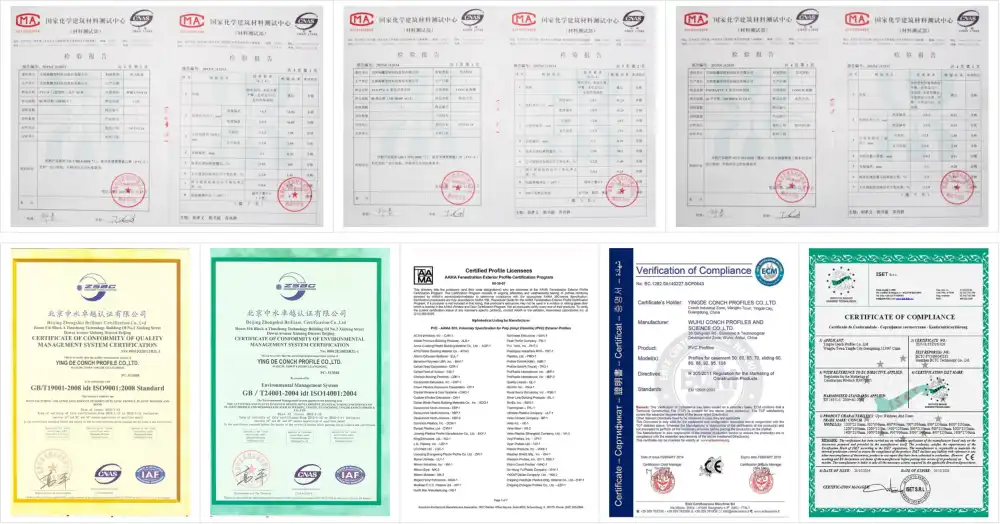
Certification and Compliance Verification
Adhering to regulations protects against problems with customs and installation rejects. Some important certificates are:
- ISO 9001: Makes sure that quality control is done in a planned way at all stages of production
- CE Marking: Proves that a product meets European standards for health, safety, and the environment.
- AAMA Certification: Shows that the product meets North American building standards
- NFRC Ratings: Gives clear information on how well U.S. markets use energy
It is helpful to check claims by asking for copies of up-to-date certifications and test results, like ASTM E283 air leakage results or BS EN 12608 profile thickness proof. Manufacturers who want to keep their certifications up to date usually spend money on improving their processes and getting new materials.
Material Sourcing and Profile Quality
Long-term performance depends on how the vinyl compound is made. Premium UPVC has stabilisers in it, like titanium dioxide (TiO2), that keep it from discolouring and breaking when exposed to UV light for a long time. Multi-chamber profiles make heat efficiency better by forming pockets of insulating air, and steel support inside frames keeps the structure strong when wind loads are applied.
When suppliers work with well-known standard systems, they make sure that materials are always the same and that suppliers have access to technology support networks. To find out how good something is, you can measure its profile wall thickness (Class A usually has a thickness of more than 2.5 mm) and fusion-welded corner strength. Profiles that meet the standards for impact protection set by ASTM D4216 can handle harsher temperatures and need less upkeep.
Comparing Horizontal Sliding UPVC Windows with Alternative Configurations
If you know how sliding vinyl windows compare to casement, aluminium, and vertical sliding options, you can decide if this configuration fits with the functional needs of your project.
Operational Efficiency and Space Optimization
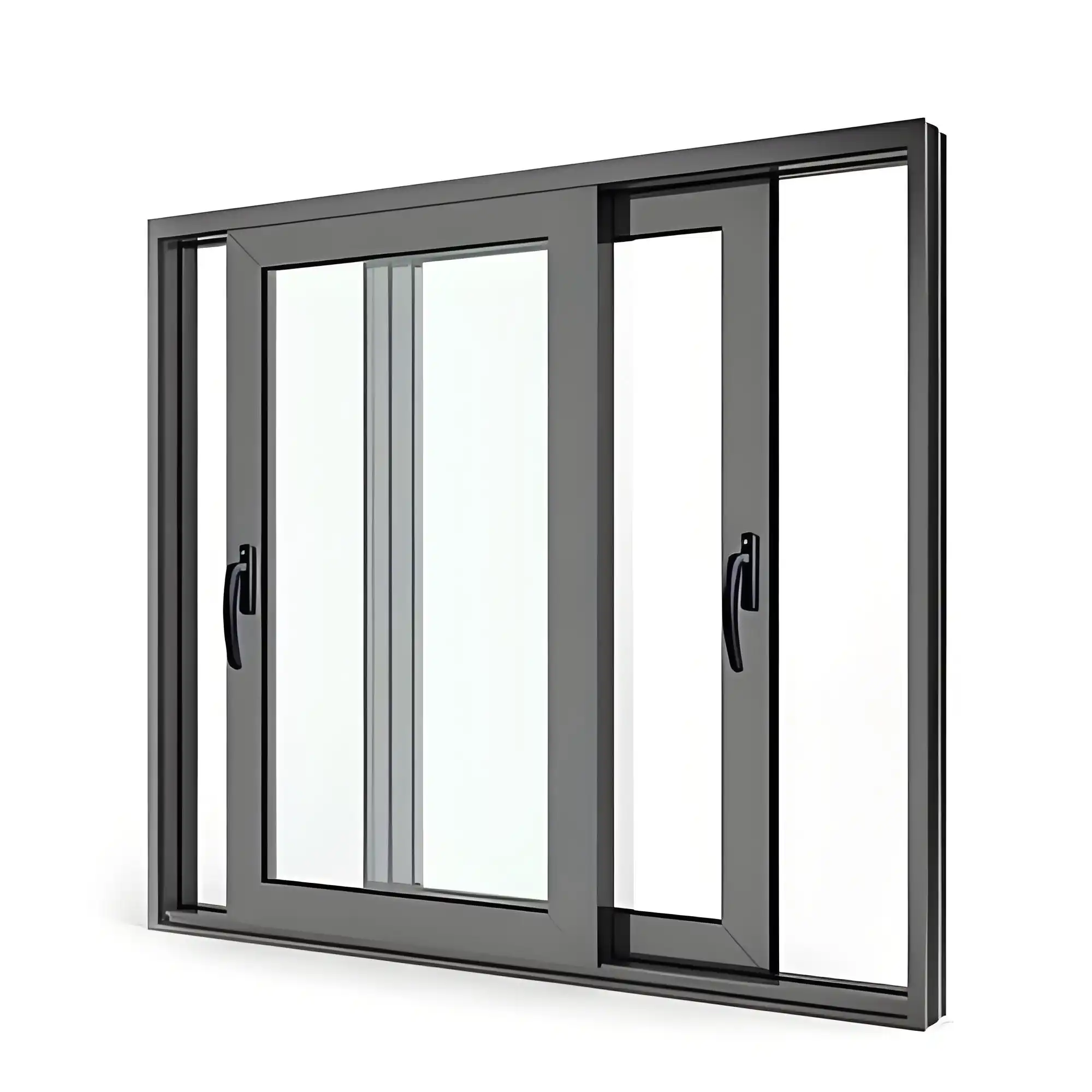
Horizontal Sliding UPVC Window systems move along fixed tracks and don't need any extra space to open. This design benefit is very useful on patios, in small bedrooms, or in places where furniture placement makes it hard to move around. Two sets of heavy-duty rollers move smoothly along two sets of tracks, even after daily use.
While casement windows let in more air, they need clear swing tracks and more complicated hardware systems to work. Counterbalance systems are used in vertical sliding (double-hung) designs, which adds more maintenance points. Sliding designs make things easier to use and lower the risk of mechanical failure.
Thermal and Acoustic Performance Trade-offs
Depending on the type of glass you choose, multi-chamber UPVC profiles offer average thermal protection, with U-values ranging from 1.0 to 1.8 W/m²K. When double glazing and brush sealing systems are used with sliding windows, the noise level drops by 25 to 35 decibels, which is enough for homes with some traffic.
Casement windows with compression seals may be a little better at keeping air out, but aluminium frames still let more heat through than UPVC, even with thermal breaks. Because UPVC is naturally resistant to corrosion, sliding windows made of it are perfect for places near the coast, where saltwater can damage metal frames. When choosing the right configuration, climate conditions and sound needs are taken into account.
Lifecycle Cost and Maintenance Considerations
UPVC doesn't need much maintenance over time because it doesn't react to weather. Unlike wood frames that need to be painted every so often or aluminium systems that can rust in industrial settings, vinyl features only need to be cleaned to keep their look and usefulness. The material doesn't absorb water, so it doesn't bend or rot, which is very helpful in wet places.
While aluminium windows may look modern, their higher heat conductivity means that they use more energy in places where air conditioning is used a lot. UPVC systems are both affordable and long-lasting, and if they are put correctly, they can last for more than thirty years. UPVC's competitive position can be seen by figuring out the total cost of ownership, which includes maintenance intervals and energy savings.
Please note: Specific performance claims should be verified against individual product testing reports and project-specific conditions.
How to Assess Supplier Reliability and Service Capabilities
Quality of the product alone doesn't mean that buying will go well. Responding suppliers, their knowledge of logistics, and their ability to help after delivery all have a big effect on how well projects turn out.
Credential Verification and Track Record Analysis
Asking for references from past clients, especially those who managed projects of the same size and in the same geographic area, is a good way to get honest information about performance. Case studies that show delivery times, how to handle customisations, and how to solve problems show operational strengths. Suppliers who work with developers, general contractors, and curtain wall integrators know more about how building projects work than suppliers who only work with store customers.
Partnership risks can be lowered by looking at things like business licensing information, export licenses, and signs of financial security. Platforms like industry exhibitions and B2B marketplaces allow for face-to-face conversations, but video tours of virtual factories have become just as useful for first assessments.
Service Infrastructure and Technical Support
Transactional suppliers are different from strategic partners because they don't offer full support services. Look for companies that offer:
- Pre-installation guidance: detailed measurement procedures and structural compatibility checks keep expensive repairs from having to be done.
- Documentation packages: CAD drawings, technical specification sheets, and installation manuals are all included in documentation packages that make it easier for contractors to work together.
- After-sales coverage: warranty terms (usually 5–10 years on hardware and profiles), availability of new parts, and help with fixing problems
To ensure smooth on-site execution, Horizontal Sliding UPVC Window installations benefit greatly from video installation tutorials and assembly directions from suppliers, which cut down on mistakes made on-site and speed up the project finish. Clear communication about production wait times, especially for custom orders, helps make sure that the steps of building and procurement are in sync.
Logistics Coordination and Delivery Flexibility
International shipping adds factors that manufacturers can't control, but experienced sellers lower risks by working together with freight forwarders and customs agents. Talking about how windows are packed (whether they ship complete or as knock-down kits) affects how much they cost to ship and how much work needs to be done on-site. Knock-down versions can cut freight costs by about 30% while keeping quality high, but they need to be installed by skilled teams.
During long production processes, both parties are protected by flexible payment terms like letters of credit or releases based on milestones. Setting clear penalties for late deliveries and poor quality sets standards for accountability right from the start.
Practical Steps for Procurement and Installation of Sliding Vinyl Window Systems
Successful implementation includes more than just choosing the right manufacturer. It also includes following exact installation steps and regular maintenance routines.
Measurement and Specification Finalization
When installing, problems with fit are avoided by taking accurate rough measurements of the hole. Working together with architects and structural engineers makes sure that the window sizes fit the tolerances of the walls and meet the needs for weatherproofing. If you give makers thorough architectural plans, they can make frames that are exactly what you want.
Talking about window choices at this stage improves energy efficiency. Low-emissivity (Low-E) coatings and argon gas fills in insulated glass units (IGUs) are good for projects in harsh conditions. When choosing hardware, like locking methods and anti-lift devices, it's important to keep security standards and ease of use in mind.
Installation Best Practices and Quality Checks
When a product is installed correctly, it works better and lasts longer. Important steps are:
- Frame leveling: Making sure the frame is straight and plumb stops operating binding and seal tension problems.
- Anchor placement: Holding frames to structural members at regular intervals keeps them stable when wind blows.
- Seal application: Putting a continuous weather-resistant glue around the outer joints stops water and air from getting in.
After installation, tests such as checking the smoothness of the moving, making sure the lock engages, and looking at the gasket contact shows that the assembly is correct—particularly for the Horizontal Sliding UPVC Window, where these checks are critical. Keeping track of the times and conditions of installations helps with warranty claims and planning upkeep.
Maintenance Protocols for Extended Service Life
Regular maintenance keeps things working and looking good. Recommended practices include:
- Track cleaning: Maintaining clean tracks by removing debris from sliding channels keeps rollers from wearing out and makes sure the system runs smoothly.
- Hardware lubrication: Putting silicone-based oils on wheels and locking points every six months lowers friction.
- Gasket inspection: Checking the integrity of the seal once a year finds compression loss or degradation before leaks happen.
Fixing small problems right away, like fixing loose screws or replacing old weather stripping, keeps them from getting worse and costing a lot to fix. Manufacturers that offer maintenance plans and how-to guides make it easier for building managers to run effective maintenance programs.
For projects that want to save money and time on logistics, asking for knock-down kit shipping choices along with detailed assembly guides lets building teams put windows together on-site while reducing the amount of materials that need to be shipped. Talking about modular packaging during the buying process can save a lot of money on freight without affecting the structure's strength.
Conclusion
Finding the right overseas UPVC window manufacturer depends on finding a balance between technical know-how, following the rules, and service dependability. A clear set of project specifications, such as thermal performance goals, acoustic requirements, and customisation needs, is the first step in a successful procurement process. These specifications help manufacturers evaluate the project. Verifying certifications, judging output capabilities, and looking at past project portfolios are ways to tell the difference between legitimate providers and dishonest ones.
By comparing how sliding vinyl systems work to different layouts, you can make sure that they work with the building's limitations and performance needs—especially when the system in question is a Horizontal Sliding UPVC Window. Transparent communication about delivery times, payment terms, and support services lowers the risks of doing business across borders. In the end, the right way to setup and take care of a product determines whether its theoretical specs translate into decades of effective use.
FAQ
What certifications should I verify when selecting an overseas UPVC window supplier?
Give priority to makers who are currently certified with ISO 9001 quality management, which shows that they have a system in place to keep an eye on their production. For U.S. projects, AAMA approval shows that they meet North American building standards, while CE marking shows that they meet European regulatory standards. NFRC ratings give clear information about how well energy is being used. To check claims made on certificates, ask for copies of testing results like ASTM E283 for air infiltration or ASTM E330 for structural wind load protection.
How do I evaluate whether a manufacturer can handle large-scale project orders?
Check the factory's infrastructure to see how much it can produce. Features like automated assembly systems, specialised extrusion lines, and combined surface treatment facilities show that the factory is ready to go to a larger scale. Ask for case studies from past projects that are similar to the number of pages you need, and be sure to pay attention to delivery times and how customisation is handled. Managing deliveries in more than one step shows manufacturers they have the logistics planning skills needed to keep a building project on schedule.
What advantages do knock-down window kits offer for international shipping?
Fully assembled frames take up a lot more space in containers than window parts that have been taken apart. This could cut freight costs by 30% or more. The way you package your items this way lets you ship more and spend less on shipping each unit. Good window makers give clear assembly directions, video tutorials, and parts that are already labelled so that trained installation teams can quickly put windows back together on-site.
Partner with Haolv Building Materials for Your Next Project
Getting UPVC windows from abroad requires a seller with a lot of manufacturing experience and quick project support. Haolv Building Materials has been making sliding vinyl window systems for 19 years for apartment buildings, industrial projects and large-scale renovations all over the world. Our cutting-edge factories have automatic assembly lines and precise cutting tools that make sure the quality of both standard and special orders is always the same. Our Horizontal Sliding UPVC Window is made to meet ISO, CE, and AAMA standards, which gives you the peace of mind that your projects will be completed on time.
Our all-around service is what makes us stand out. We give you detailed specification sheets with U-values, sound insulation grades, and structural load capacities written out exactly. This takes the guessing out of the specification process. Our team provides full documentation packages that include CAD drawings, video tutorials for installation, and step-by-step assembly manuals. This gives your contractors the confidence they need to do installations. We offer a variety of shipping options, such as knock-down kits that save money on freight costs while keeping the structure's integrity. This cuts down on costs by a large amount without sacrificing quality.
With stable production cycles of 25 to 30 days and partnerships with top profile suppliers, we can make sure that your shipping dates don't clash with important building milestones. Our team can help you with technical questions and making sure that your Horizontal Sliding UPVC Window systems are exactly what you need, whether you're looking for them for a multi-building home project or to replace windows in a business upgrade. You can email our procurement specialists at kristin@haolvwindows.com or go to haolvbuilding.com to talk about your needs and ask for technical information. As an established Horizontal Sliding UPVC Window manufacturer, we're equipped to support your project from initial inquiry through post-installation service.
References
1. American Architectural Manufacturers Association. (2021). AAMA Certification Program for Fenestration Products: Quality Assurance Standards. Schaumburg: AAMA Publications.
2. British Standards Institution. (2020). BS EN 12608:2016 - Unplasticized Polyvinyl Chloride (PVC-U) Profiles for Building Applications. London: BSI Standards.
3. Hernandez, M., & Thompson, R. (2022). Thermal Performance Analysis of Multi-Chamber UPVC Window Systems in Commercial Construction. Journal of Building Engineering, 48(3), 215-234.
4. International Organization for Standardization. (2019). ISO 9001:2015 Quality Management Systems - Requirements for Manufacturing Excellence. Geneva: ISO Central Secretariat.
5. National Fenestration Rating Council. (2023). NFRC Technical Guidelines: Energy Performance Certification for Windows and Doors. Silver Spring: NFRC Technical Division.
6. Wong, L., & Kumar, S. (2021). Comparative Lifecycle Cost Analysis of UPVC, Aluminum, and Timber Window Frames in Subtropical Climates. Building and Environment, 194, 107-125.
Fast simple channel to send demands lock favorable price for building window door bulk purchases.