- English
- French
- German
- Portuguese
- Spanish
- Russian
- Japanese
- Korean
- Arabic
- Greek
- German
- Turkish
- Italian
- Danish
- Romanian
- Indonesian
- Czech
- Afrikaans
- Swedish
- Polish
- Basque
- Catalan
- Esperanto
- Hindi
- Lao
- Albanian
- Amharic
- Armenian
- Azerbaijani
- Belarusian
- Bengali
- Bosnian
- Bulgarian
- Cebuano
- Chichewa
- Corsican
- Croatian
- Dutch
- Estonian
- Filipino
- Finnish
- Frisian
- Galician
- Georgian
- Gujarati
- Haitian
- Hausa
- Hawaiian
- Hebrew
- Hmong
- Hungarian
- Icelandic
- Igbo
- Javanese
- Kannada
- Kazakh
- Khmer
- Kurdish
- Kyrgyz
- Latin
- Latvian
- Lithuanian
- Luxembou..
- Macedonian
- Malagasy
- Malay
- Malayalam
- Maltese
- Maori
- Marathi
- Mongolian
- Burmese
- Nepali
- Norwegian
- Pashto
- Persian
- Punjabi
- Serbian
- Sesotho
- Sinhala
- Slovak
- Slovenian
- Somali
- Samoan
- Scots Gaelic
- Shona
- Sindhi
- Sundanese
- Swahili
- Tajik
- Tamil
- Telugu
- Thai
- Ukrainian
- Urdu
- Uzbek
- Vietnamese
- Welsh
- Xhosa
- Yiddish
- Yoruba
- Zulu
How to Choose Thermal Break Casement Windows for Hurricane Areas
When picking the right aluminium casement systems with thermal separation for areas that are likely to be hit by hurricanes, you have to weigh the long-term costs of operation against the performance of the structure. Thermal Break Casement Windows have a reinforced polyamide barrier between the inside and outside aluminium profiles. This stops heat from transferring and keeps the structure strong enough to withstand sustained winds of more than 150 mph.
This engineered solution solves two problems at the same time: keeping buildings safe during Category 4–5 hurricanes and keeping HVAC systems running efficiently in coastal climates where 60% of energy use goes to cooling. If you choose the right methods, you can cut your insurance rates by up to 25%, keep fix costs to a minimum after a storm, and make sure you follow the Florida Building Code and International Building Code Chapter 16 rules for windows in areas where debris from wind can blow them off.
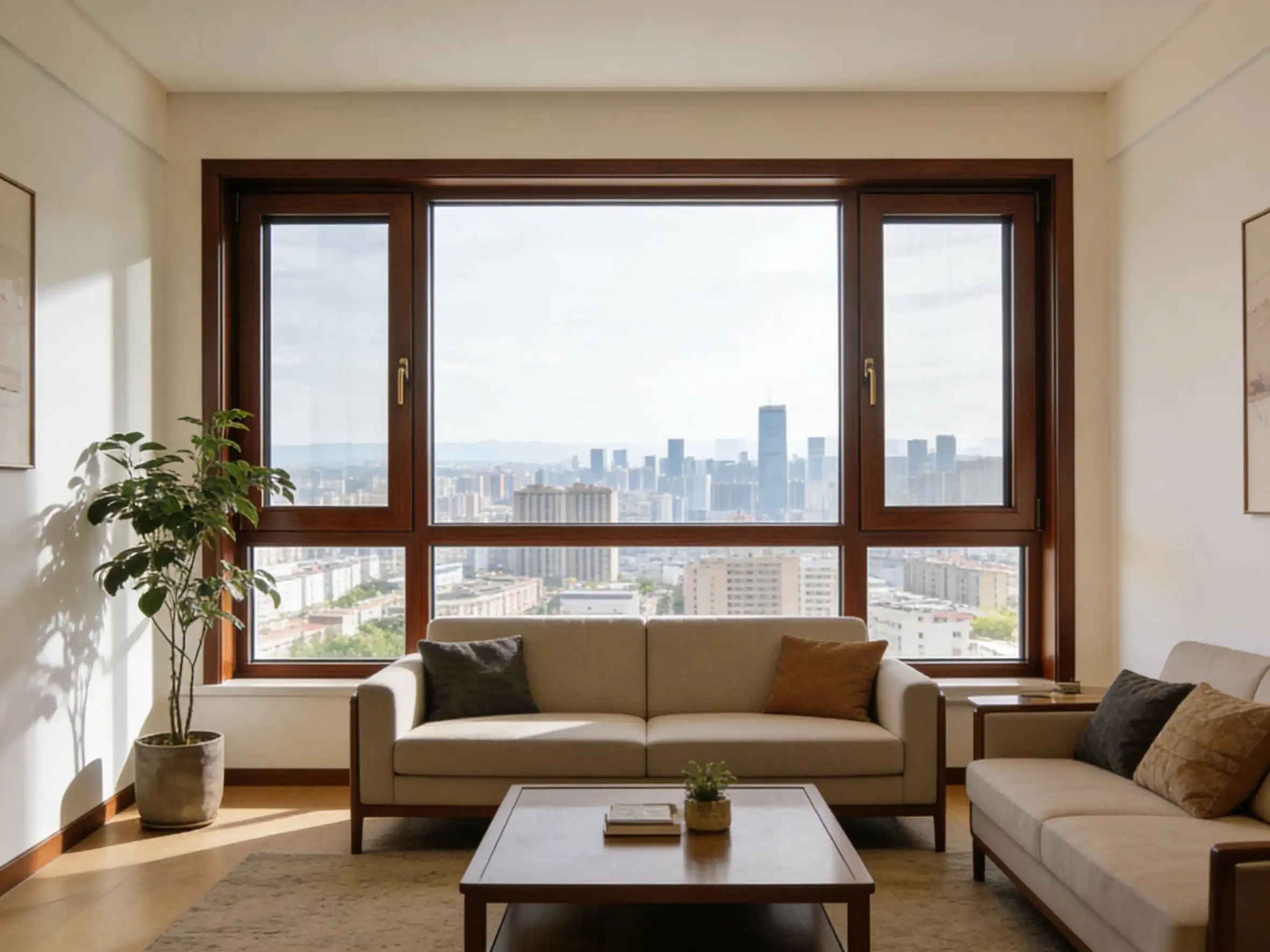
Understanding Thermal Break Technology and Hurricane Performance Requirements
How Thermal Separation Enhances Wind Load Resistance
The PA66GF25 polyamide strip, which is usually 20–40 mm wide depending on the series, makes a structural bridge that absorbs the difference in expansion between the inside and outside aluminium surfaces when temperatures change quickly, like during a storm. When a hurricane hits, the outside of a building cools down quickly while the inside stays warm. This puts stress on standard aluminium frames that can break them. The thermal break allows for this movement without passing on any structural loads, so the frame stays straight even when wind speeds change quickly from +100 to -120 psf.
As per ASTM E330 testing guidelines, properly designed Thermal Break Casement Window systems can withstand Design Pressure ratings of up to DP50 (±75 psf), which is enough for hurricane zones shown on ASCE 7-16 wind maps. The 6063-T5 aluminium metal used in quality systems has a yield strength of 160 MPa. Profile thicknesses between 1.4 mm and 2.0 mm provide the bending resistance needed for spans over 1800 mm without intermediate mullions.
Multi-Chambered Profiles and Impact Glazing Integration
Hurricane-rated units need glass that is made in a very different way than normal uses. Wind-borne debris travelling at 50 miles per hour or more can't get through laminated glass that is made of 0.89 to 1.52 mm PVB interlayers. These systems can handle triple-glazed units with argon fill that have U-factors below 0.30 Btu/h·ft²·°F when paired with thermal break frames rated for glass widths from 28mm to 52mm.
Every 600 mm along the sill, the frame design must include drainage channels to keep water out when it rains continuously at rates higher than 8 inches per hour, which is common when hurricanes hit land. Multi-layer EPDM gaskets that are compressed by 25–30% provide contact pressure that keeps the seal even when the structure bends. They have been tested to 12 psf per ASTM E283 for air infiltration and Class E1050 water penetration resistance.
Key Specification Criteria for Hurricane Zone Procurement
Certification Requirements and Testing Documentation
If procurement teams need to describe fenestration for projects in Miami-Dade or Monroe Counties, they need to check the Florida Product Approval numbers for both the system and the parts. As part of the Notice of Acceptance (NOA) method, manufacturers must send in test results that confirm:
- Large missile impact testing: According to ASTM E1996 (9-pound 2x4 timber at 50 fps), a big missile was hit.
- Cyclic pressure loading: Simulating 9,000 wind cycles with cyclic pressure loading.
- Water penetration testing: Tests for water penetration at 20% above design wind pressure.
In addition to Florida's own rules, compliance with regional standards often requires NFRC certification for energy performance labelling and AAMA/WDMA 101/I.S.2 structural ratings. In coastal areas of Texas, projects must follow TAS 201-203 procedures. In Louisiana, projects may need to get approval under additions to the Louisiana State Uniform Construction Code.
Material Composition and Corrosion Protection
Coastal installations are exposed to salt spray, which speeds up galvanic corrosion in metals that are not the same type. This is taken care of by good Thermal Break Casement Window systems by:
Anodizing Treatment: Class I anodising (minimum 0.7 mil thickness per AAMA 611) makes layers of aluminium oxide that can withstand pH levels between 4 and 8, which are typical in marine environments, **and this protective system is equally effective when applied to a Thermal Break Casement Window, ensuring both thermal efficiency and corrosion resistance in coastal applications.
PVDF Coating: Fluoropolymer finishes that meet AAMA 2605 standards keep their colour stable after more than 3,000 hours of QUV exposure, which is important for keeping the look of facades in high-UV coastal areas.
Stainless Steel Hardware: Grade 316 stainless steel parts keep multi-point locking mechanisms from rusting when they are exposed to constant humidity levels above 80%.
The UV-stabilization of the polyamide heat shield is needed to keep it from breaking down over 30 years of use. According to DIN 53505, specifications should require PA66GF25 resin with carbon black added to make it resistant to UV light.
Energy Performance Metrics for Life-Cycle Cost Analysis
While building codes for hurricane zones are mostly about structure, energy performance has a direct effect on operational costs. When compared to aluminium frames that don't have thermal breaks, Thermal Break Casement Window systems lower whole-window U-factors by 40 to 55 percent. This is what a standard 70-series thermal break shape does:
- U-value: With double Low-E glass, the U-value is between 0.35 and 0.45 Btu/h·ft²°F.
- Solar Heat Gain Coefficient: 0.25-0.30 to lower the cooling load.
- Visible Transmittance: 0.5 to 0.65 for best daylighting.
If you switch from standard aluminium to Thermal Break Casement Windows in a 10,000-square-foot commercial building in Houston with a 20% window-to-wall ratio, your annual cooling costs will drop by $2,800 to $3,400. This will pay for itself in 6 to 8 years, when you consider the installation costs of about $18 to $25 per square foot.
Comparative Analysis: Thermal Break Systems Versus Alternative Solutions
Performance Benchmarking Against Impact-Rated uPVC
uPVC windows meet storm impact standards with their strengthened steel cores, but commercially, Thermal Break Casement Window systems are better. Aluminium profiles don't change size when the temperature goes from -40°F to 180°F, which is very important for installations that are taller than 2000 mm, where thermal expansion would make vinyl systems unable to work properly. When you use aluminium, you can get slim sightlines of only 2 inches. This lets you use more glass, which increases passive solar gains by 12 to 15 percent compared to uPVC frames that are 4-5 inches wide.
Life-cycle costs make aluminium a better choice for high-rise buildings where replacing materials would be too expensive. Thermal Break Casement Windows keep their structure strong for more than 50 years, while uPVC systems break down in UV light and need to be replaced every 25 to 30 years in coastal installations.
Thermal Break Casement Versus Non-Thermal Impact Windows
Standard aluminium impact windows that don't separate the heat from the outside do protect against hurricanes, but they also create thermal bridges that hurt the performance of the envelope. In non-thermal systems, infrared thermography shows that frame surface temperatures are 18–22°F below atmospheric during the winter. This causes humidity, which causes mould to grow and water damage. The Thermal Break Casement Window gets rid of this difference, keeping the temperature inside the frame within 3–4°F of room temperature.
The way these systems sound is another thing that sets them apart. The decoupled frame structure in thermal break assemblies reduces sound even more, with STC ratings of 42–45 compared to 36–38 for normal aluminium. This is important for medical or leisure buildings near roads or flight tracks.
Installation Complexity and Project Timeline Considerations
Thermal Break Casement Window systems need to be installed in a certain way, but they can help with phased construction. Knock-down shipping, in which frames come unassembled, cuts freight costs by 30–35% and lets projects with more than one building use fewer containers. When rigging time is taken into account, putting together a pre-assembled unit on-site by trained teams takes about the same amount of time—25 to 30 minutes per hole.
This modular method helps builders who are in charge of more than one part of construction. As buildings reach envelope closing, materials can be stored and put together. This cuts down on the need for storage on the job site and the risk of theft. Thermal Break Casement Window units, for example, fit seamlessly into this workflow, allowing for efficient on-site assembly while maintaining thermal performance. Technical help, such as assembly videos and thorough installation instructions, make sure that all contractor teams deliver the same high quality work.
Note: The exact performance numbers rely on the testing of each product. Instead of general specifications, decisions about what to buy should be based on test reports from the manufacturer and lists of certified products.
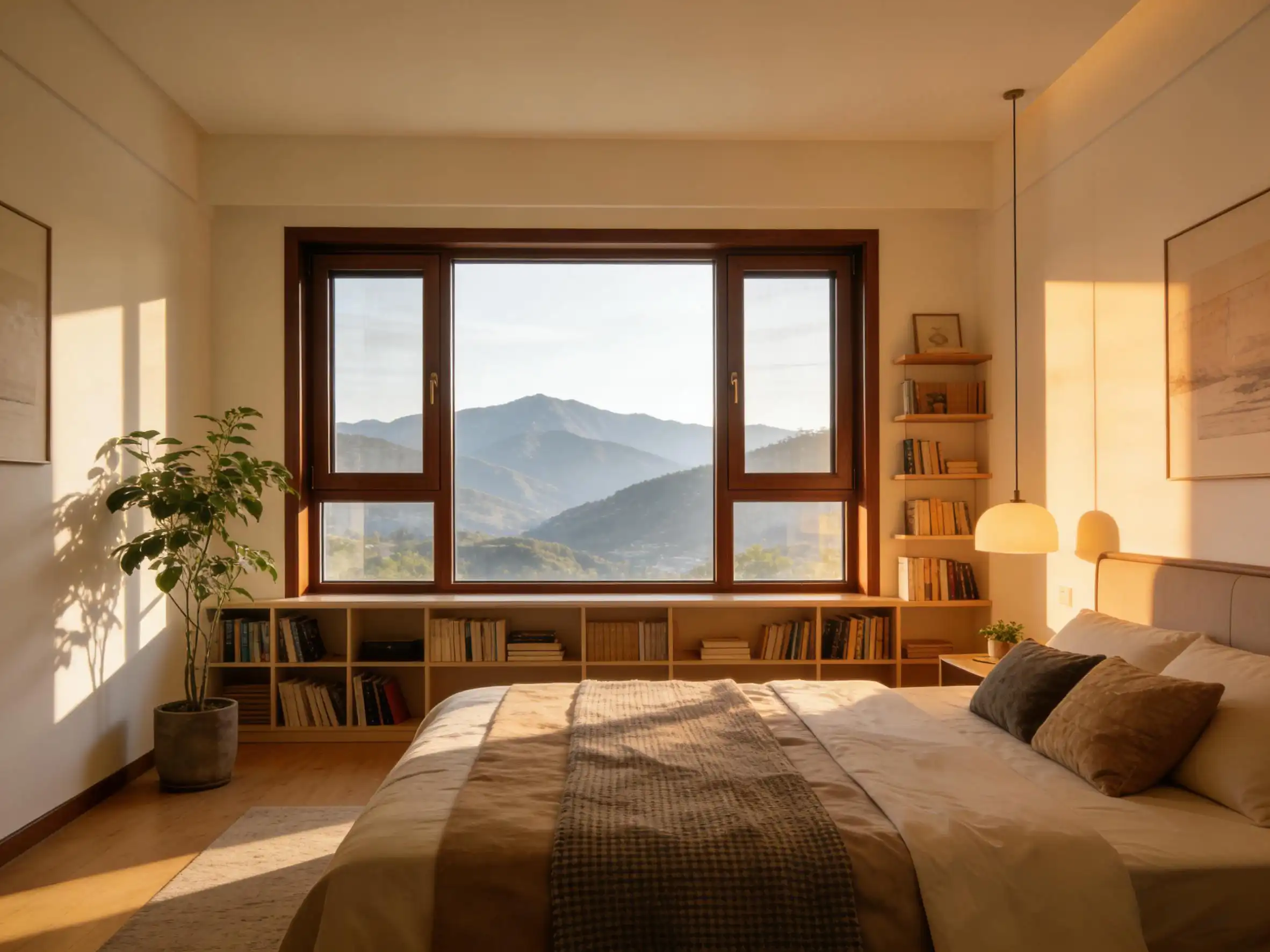
Supplier Evaluation Framework for Hurricane-Rated Products
Manufacturing Capability Assessment
Finding hurricane-grade Thermal Break Casement Windows means checking production facilities that go beyond making regular windows. Important criteria for evaluation are:
Extrusion Line Capacity: Companies that use dedicated thermal break extrusion lines make sure that the insertion pressure of the polyamide strip stays the same, keeping the 20–22 N/mm crimp strength needed to keep the strips from coming apart when they are loaded and unloaded repeatedly. Tours of the production sites should prove that the CNC machining centers can keep positioning of the drainage slots within ±0.2mm of accuracy.
Testing Laboratory Access: Having structural testing, water penetration simulation, and thermal cycling capabilities in-house or through a third-party lab cuts down on the time it takes to make a custom profile. Facilities that are certified by ISO/IEC 17025 give test results that are accepted by approval bodies without having to be checked again.
Glass Fabrication Partnerships: Hurricane-rated systems need reinforced glass that has been cut and toughened to exact measurements. Suppliers should show that they work with certified glass fabricators who can make impact-rated units that meet the requirements of ASTM C1048 for edge deletion.
Customization Capabilities and Engineering Support
Standard catalogue configurations don't always work for projects, especially when they need to match existing facade patterns or fit rough openings that aren't standard. The evaluation should show that:
- CAD modelling tools to create a custom Thermal Break Casement Window profile in 5 to 7 business days.
- Structural calculations signed off on by qualified professional engineers in the job area.
- Shop drawings that work together with curtain wall or masonry assemblies.
- Ability to make prototypes for testing with mockups before committing to full production.
By resolving disagreements during the design phase instead of the construction phase, responsive technical teams lower the cost of change orders.
Supply Chain Reliability and Lead Time Management
Getting hurricane windows takes longer than getting regular windows. It usually takes 25 to 30 days from the time an order is confirmed until the container is loaded. Suppliers you can trust keep:
Component Inventory: Having profiles, polyamide bars and tools ready to go cuts down on wait times in the production line. When plans are tight, suppliers with moving inventory that lasts 4 to 6 weeks can handle urgent orders.
Transparent Production Scheduling: Web-based portals that show the status of orders in real time cut down on communication delays. By keeping track of milestones during extrusion, fabrication, quality inspection, and container loading, procurement teams can see how to work with the schedules of general contractors.
Flexible Shipping Terms: Buyers can choose from FOB, CIF, or DDP Incoterms to get the best deal on tax costs and freight routes. When products are shipped in containers with the right bracing and moisture barriers, they arrive undamaged and ready to be replaced.
Suppliers who offer technical parameter sheets tailored to project wind loads, detailed installation guides, and videos with step-by-step instructions for assembly show that they are committed in a way that goes beyond business relationships. These tools help projects go well and cut down on mistakes in the field.
Installation Protocols and Long-Term Maintenance Planning
Code-Compliant Installation Procedures
Installing Thermal Break Casement Windows in a hurricane zone requires methods that are different from what most people do at home. For openings bigger than 20 square feet, the distance between anchors is cut down to 12 inches on center, and the fasteners must go at least 2 inches into the structure frame members. As recommended by ASTM E2112, flashing is installed using self-adhered materials that go 6 inches past the frame's edges and are turned into weather-resistant barriers.
The choice of sealant affects how well it works in the long run. Silicone sealants that meet ASTM C920 Grade NS, Class 25 allow joints to move ±25%, which is needed as buildings settle and temperatures change. Thermal Break Casement Window Installers need to stay away from three-sided adhesion conditions that cause stress concentrations when the structure bends.
Operational Adjustments and Hardware Servicing
As buildings settle and frames move in different directions, multi-point locking systems need to be adjusted from time to time. Protocols for yearly inspections should include:
- Verification of locking point engagement (at least 5 mm overlap).
- PTFE-based lubricants are used to grease friction stays and hinges.
- Check the compression of the weatherstripping and replace it if it's more than 40% compressed.
- Operation force tests (ICC A117.1 says it shouldn't be more than 15 lbf).
For property managers who are in charge of various buildings, having access to replacement parts becomes very important. Suppliers who offer 10-year warranties on hardware and keep parts in stock ensure long-term functionality without worries about obsolescence.
Post-Storm Inspection and Documentation
After a storm, building owners should do regular checks that include writing down:
- Frame-to-rough opening connection stability (make sure no fasteners are pulling out).
- State of the seal between the glass and the frame (look for split or failed glazing tape).
- Proof of water getting in (interior staining showing seal breach).
- Functionality (check the mechanisms for opening and locking).
Photographic proof helps with insurance claims and finding systemic problems that need to be discussed with the manufacturer. Windows that works the way it's supposed to give useful feedback for making future specifications.
Conclusion
When choosing Thermal Break Casement Window systems for storm zones, you have to do a lot of research on how well they work structurally, how much energy they use, and how well the provider can do their job. Using PA66GF25 thermal barriers along with impact-rated glass and finishes that don't rust makes fenestration assemblies that meet both life-safety standards and operational cost goals.
Checking testing certifications, looking at manufacturing infrastructure, and making sure there is technical support during installation and commissioning are all important parts of procurement. Knock-down shipping saves 30–40% on logistics costs. These systems can also be customised and have been shown to last for a long time, making them perfect for coastal building where storm resistance must not be compromised.
FAQ
What wind speed ratings should thermal break casement windows achieve for hurricane zones?
Hurricane-rated windows have to meet the design forces that are shown on wind maps in their area. In Florida, coastal exposure needs rates of DP40 to DP50 (±60 to ±75 psf), which are the same as 140 to 160 mph winds that don't stop. When tested according to ASTM E330, these ratings are reached with reinforced 6063-T5 aluminium profiles and glazing that is the right size. Always verify the Product Approval or Evaluation Report lists the specific design pressure rating for your project location.
How do thermal break systems reduce condensation risk compared to standard aluminum?
In cold weather, standard aluminium frames have continuous thermal bridges where the temperatures inside drop below the dew point, causing condensation. This heat flow is stopped by the polyamide thermal barrier, which keeps the inside surfaces warm enough to keep wetness from building up. In places where it's 70°F inside and 40°F outside, Thermal Break Casement Windows keep the inside of surfaces 15-20°F warmer than non-thermal aluminium.
Can these windows be customized for non-standard project requirements?
Modern Thermal Break Casement Window systems let you change a lot of things about them, like the size, colour, and shape. Series ranging from 70mm to 120mm are available to meet a variety of performance needs. The ability to use two colours means that the exterior can be finished to match the needs of the face and the interior can be coloured to match the design of the room. Custom sizes up to 2400mm tall can fit into rough openings made just for the project. You can choose from casement, tilt-turn, or European-style multi-point locking hardware.
What certifications validate hurricane performance claims?
Product Approval numbers must be given after testing to TAS 201-203 and ASTM E1996 for installations in Florida. For projects outside of Florida, check that they follow AAMA/WDMA 101 and get NFRC energy scores. Look for Quality Assurance certifications from the manufacturer, such as ISO 9001, and facility audits by agencies that give approval. Large rocket impact tests, cyclic pressure loading, and water penetration at pressures 20% above design values should all be included in test results.
Partner with a Proven Thermal Break Casement Window Manufacturer
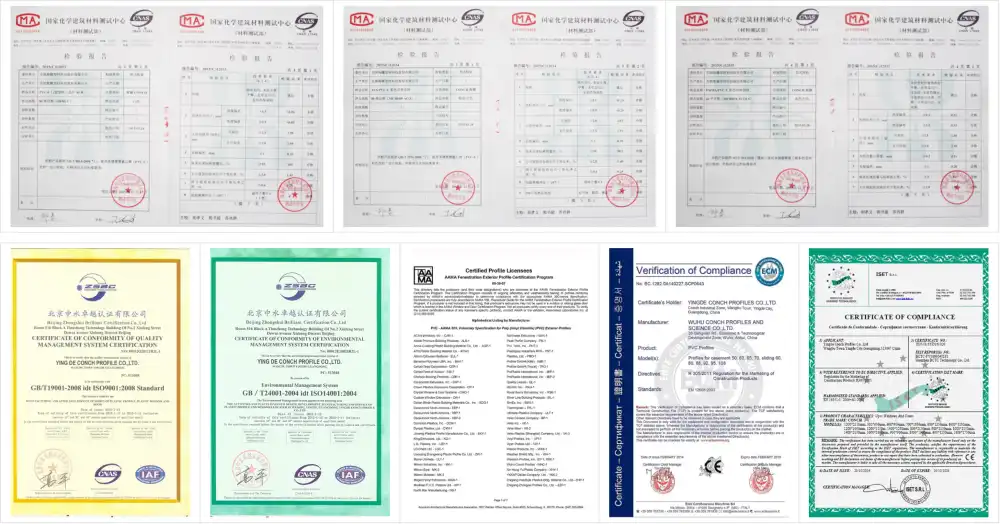
Haolv Building Materials has been designing and making aluminium fenestration systems for harsh seaside areas for 18 years. Our ISO-certified factories have automated extrusion lines, precise CNC machining, and specialised Thermal Break Casement Window assembly stations that make sure the quality of all large business orders is the same. We have strategic partnerships with CONCH and other top suppliers, which makes sure that we can track down materials and make sure that they always work the same way.
Our engineering team offers full technical support, which includes Thermal Break Casement Window structure calculations, CAD planning, and creating unique profiles that meet the wind loads and aesthetic needs of each project. Knock-down shipping cuts your shipping costs by 30 to 35 percent while keeping delivery times at 25 to 30 days from the date of order confirmation. We provide full documentation packages that include technical parameter sheets, installation videos, and assembly manuals to help with successful execution in the field.
Our customisation options let you get exactly what you need, whether you're looking for replacement windows for coastal retrofits or fenestration for new high-rise buildings. We offer options that balance hurricane safety with ease of use, such as double- or triple-glazed windows and PVDF finishes that meet AAMA 2605 standards.
Email Kristin at kristin@haolvwindows.com to talk about the needs of your project, get technical specifications, or set up a sample evaluation. Our team helps procurement managers, general contractors, and architectural firms quickly find thermal break casement window suppliers committed to quality and on-time delivery.
References
1. American Architectural Manufacturers Association. (2017). AAMA 101/I.S.2: Voluntary Specification for Aluminum, Vinyl (PVC) and Wood Windows and Glass Doors. Schaumburg, IL: AAMA.
2. Florida Building Commission. (2020). Florida Building Code – Building, 7th Edition. Tallahassee, FL: International Code Council.
3. Glass Association of North America. (2018). GANA Glazing Manual: Chapter 9 – Hurricane-Resistant Glazing. Topeka, KS: GANA.
4. American Society of Civil Engineers. (2016). ASCE 7-16: Minimum Design Loads and Associated Criteria for Buildings and Other Structures. Reston, VA: ASCE Press.
5. National Fenestration Rating Council. (2019). NFRC 100: Procedure for Determining Fenestration Product U-factors. Greenbelt, MD: NFRC.
6. Straube, J., & Burnett, E. (2005). Building Science for Building Enclosures. Westford, MA: Building Science Press.
Fast simple channel to send demands lock favorable price for building window door bulk purchases.