- English
- French
- German
- Portuguese
- Spanish
- Russian
- Japanese
- Korean
- Arabic
- Greek
- German
- Turkish
- Italian
- Danish
- Romanian
- Indonesian
- Czech
- Afrikaans
- Swedish
- Polish
- Basque
- Catalan
- Esperanto
- Hindi
- Lao
- Albanian
- Amharic
- Armenian
- Azerbaijani
- Belarusian
- Bengali
- Bosnian
- Bulgarian
- Cebuano
- Chichewa
- Corsican
- Croatian
- Dutch
- Estonian
- Filipino
- Finnish
- Frisian
- Galician
- Georgian
- Gujarati
- Haitian
- Hausa
- Hawaiian
- Hebrew
- Hmong
- Hungarian
- Icelandic
- Igbo
- Javanese
- Kannada
- Kazakh
- Khmer
- Kurdish
- Kyrgyz
- Latin
- Latvian
- Lithuanian
- Luxembou..
- Macedonian
- Malagasy
- Malay
- Malayalam
- Maltese
- Maori
- Marathi
- Mongolian
- Burmese
- Nepali
- Norwegian
- Pashto
- Persian
- Punjabi
- Serbian
- Sesotho
- Sinhala
- Slovak
- Slovenian
- Somali
- Samoan
- Scots Gaelic
- Shona
- Sindhi
- Sundanese
- Swahili
- Tajik
- Tamil
- Telugu
- Thai
- Ukrainian
- Urdu
- Uzbek
- Vietnamese
- Welsh
- Xhosa
- Yiddish
- Yoruba
- Zulu
Sliding vs Bi-Fold Doors: Which is Better for Your Interiors?
You should choose between Multi-Panel Folding Door based on your project's design goals, efficiency needs, and available room. Slipper doors are great since they are simple and simple to use. They open up to about half of the room and slide along horizontal tracks. Multi-Panel Folding Door, on the other hand, let you do a lot of different things. You can add panels to either side, which can make an area up to 90% wider. This is why folding door systems are great for places like hotels, big houses, and meeting rooms where being able to mix indoors and outdoors without any issues is important for the building's value.
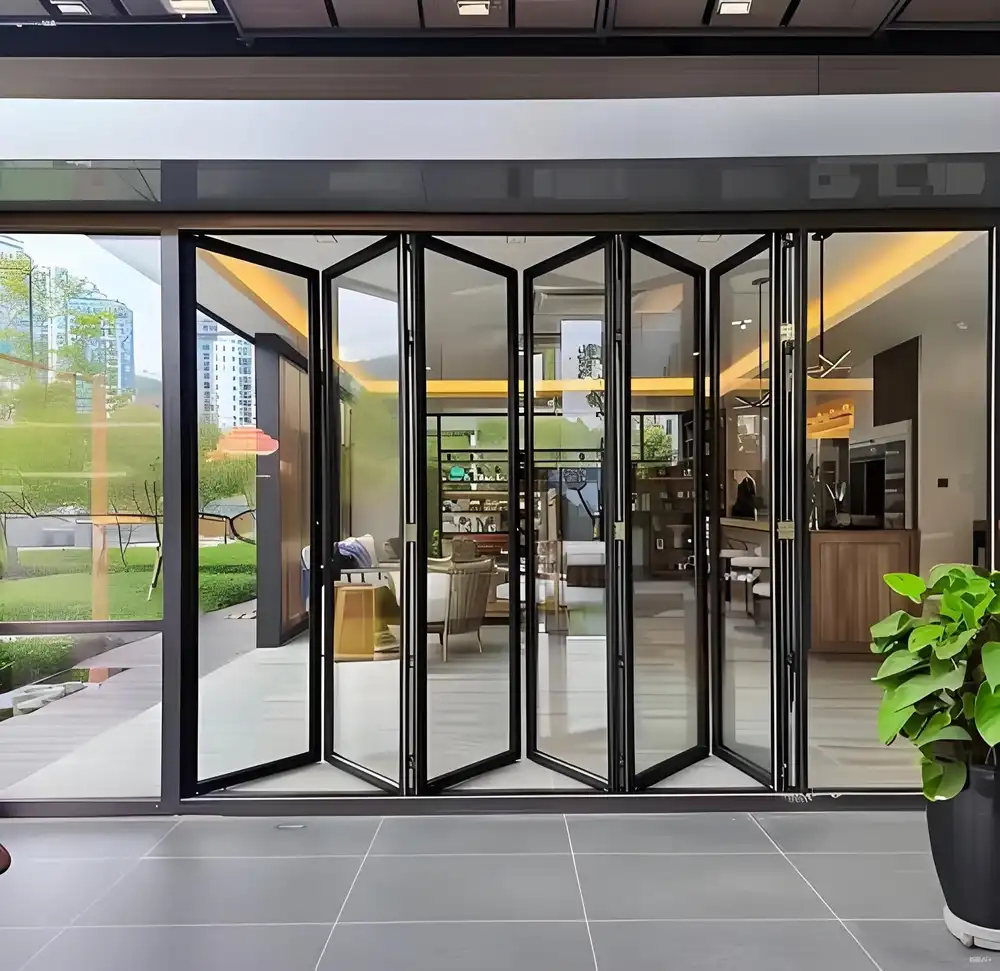
Understanding Sliding Doors and Bi-Fold Doors
What Defines Sliding Door Systems?
Panels slide horizontally along tracks that are either on top of the floor or recessed into it. This is how sliding doors work. Most of the time, these systems' frames are made of metal or wood, and the glass can be flat or double-glazed with insulation. The best thing about them is that they don't take up much space and are simple to use at home or at work. When there isn't much room on the walls and a smooth, understated look is desired, sliding systems work well. When cost-effectiveness and ease of use are important, real estate developers often choose porches, patios, and room dividers inside that fold up.
The Mechanics of Bi-Fold and Multi-Panel Folding Doors
Some other names for bi-fold doors are accordion doors or Multi-Panel Folding Door. They are made up of three or more movable panels that are held together by heavy-duty track systems and joined by industrial-grade joints. Not like slide doors, these doors fold and stack tightly against one or both sides of the opening. You can choose from different panel counts, usually between 4 and 10, so it can fit through doors that are wider than 50 feet.
Modern sliding door systems have metal features that are stronger and have thermal breaks, EPDM combined sealing, and closing devices that work in more than one place. These look good and are strong, which is what you need. As a general rule, builders and curtain wall integrators like this. This is especially true for big business projects that need to look good and work well.
Material and Configuration Options
A lot of people still choose aluminum metal because it is strong for its weight, doesn't rust, and can be used with thermal break technology. Thick aluminum profiles, which are usually made from architectural-grade extrusions 6063-T5, make large spans sturdy and can hold up to 36 mm of double or triple glass. There are a lot of different surface finishes that can be used to make things last longer and fit with certain building styles.
Forms of panels are based on the project's size and scope. If you stack panels on one side, you save space on the walls next to them. If you stack panels on two sides, the panels are spread out more evenly, which makes the gaps bigger. So that they can make sure that standards meet both client needs and building codes in the area, procurement managers need to know about these changes in shapes and materials.
Comparative Analysis: Sliding Doors vs Bi-Fold Doors
Spatial Efficiency and Operational Footprint
Sliding doors are good for small rooms because they only need a little space around the crack. That being said, they only let a few people into the hole at a time. This problem is solved by Multi-Panel Folding Door that stack panels tightly against one or both sides. This makes the space much bigger. As much natural light as possible should be let in, and it should be easy for a lot of people to walk by. This quality is useful in places like shops, hotel halls, and living rooms. When making sliding doors, you should think about how much space you'll need to stack them. This is very important in business settings that need low-profile levels that are ADA-compliant.
Energy Efficiency and Thermal Performance
Short-term costs and the safety of the people who live or work in a building are both affected by how well it keeps heat out. When it comes to sliding doors with metal frames, heat may move through more quickly if you don't have thermal breaks and good weather stripping. It is possible to get U-factors as low as 0.30 with Low-E triple glass and Multi-Panel Folding Door made with PA66 nylon thermal breaks and EPDM rubber seals.
Heating and cooling costs go down because of this better performance. This is something that developers who want to get LEED approval or meet green building standards are focused on more and more. Also, there are different grades for how well they block sound. As an example, STC ratings for folding door systems with advanced closing technologies are generally between 35 and 50 dB. This means that they can be used in meeting rooms and offices where sound privacy is important.
Security, Durability, and Code Compliance
Because they have different protection features, home systems and business systems were made in different ways. Multi-point locking systems and anti-lift hardware work well together to keep people from breaking in, which is something that owners and property managers often worry about. How long the building lasts depends on how well the tools were made. It is best to use industrial-grade hinges and rollers that can hold 120 to 150 kg of panels for smooth operation over a long period of time.
Approvals from groups like AAMA, ISO, and CE make sure that systems meet high standards for how well they protect against wind, water, and damage to the building. To make sure that rules are followed and to lower the risk of a project, procurement experts should make sure that sellers give them thorough test results and other paperwork.
Aesthetic Appeal and Customization Potential
Today's building styles favor straight lines, big windows, and flexible room arrangements. These tastes can be met by folding door systems, which let you change the style of the glass, the number of panels, and the finish on the outside. It might be better to use fully flexible folding panels instead of sliding doors if you want to make a dramatic opening between indoor and outdoor areas with no walls at all. They can do more than just change how something looks like. To fit the needs of each job, they can also change the hardware, profile strengthening, and barrier designs. For instance, this can be done in seaside areas that need to be resistant to salt spray and in cities that want to lower noise levels.
Multi-Panel Folding Doors: Installation and Maintenance Insights
Installation Planning and Execution
The first steps to a good installation are to accurately measure the spot and evaluate the structure. To hold up the weight of all the panels, which can be over 1,000 kg for big sets, heavy-duty top-hung track systems need strong foundations. In order to make things easier on-site, installation teams often use CNC-cut mounting clamps, precision leveling tools, and panel pieces that have already been put together. How long it takes to install depends on how many panels there are and how hard they are to install.
For example, a Multi-Panel Folding Door setup may take one to two days for home installations. However, big business jobs may need to be spread out over several weeks to make sure everything works together smoothly. Partnering with companies that offer "turnkey" solutions, like pre-installation talks, technical sketches, and on-site help, speeds up the project and makes sure the end result meets the needs of the design.
Routine Maintenance and Longevity
How much upkeep is needed has a direct effect on the total cost of ownership. Even though aluminum folding door systems don't rust, the stainless steel tracks and rollers still need to be cleaned and oiled regularly to keep them working well and stop dirt and dust from building up. Every six months, you should check to see if the EPDM seals are worn. This is especially important in places with a lot of foot traffic or near the coast, where the weather speeds up the wear process.
Powder-coated items last longer and stay colored if they are stored according to AAMA 2605 guidelines. This means they don't need to be cleaned as often, which costs more money. Buyers should check the warranties that sellers offer and see if new parts are readily available to keep things running smoothly and make systems last longer.
Note: The actual numbers for performance and durability depend on how each object tested and the factors of its environment.
Cost Analysis: Initial Investment vs Long-Term ROI
In the beginning, Multi-Panel Folding Door usually cost more than slide door systems. This is because they have more complicated gear, thicker profiles, and better closing technologies. When you make long-term ROI predictions, on the other hand, you need to think about things like lower energy costs, less maintenance, and better property values. The cost of heating and cooling is less with systems that use thermal break technology and high-performance glass. Also, metal parts that last longer don't need to be changed as often. More and more real estate firms are learning that high-end door systems help them stand out and make sales happen faster. There are more customers interested in design differences in high-end homes and businesses, so this is especially true there.
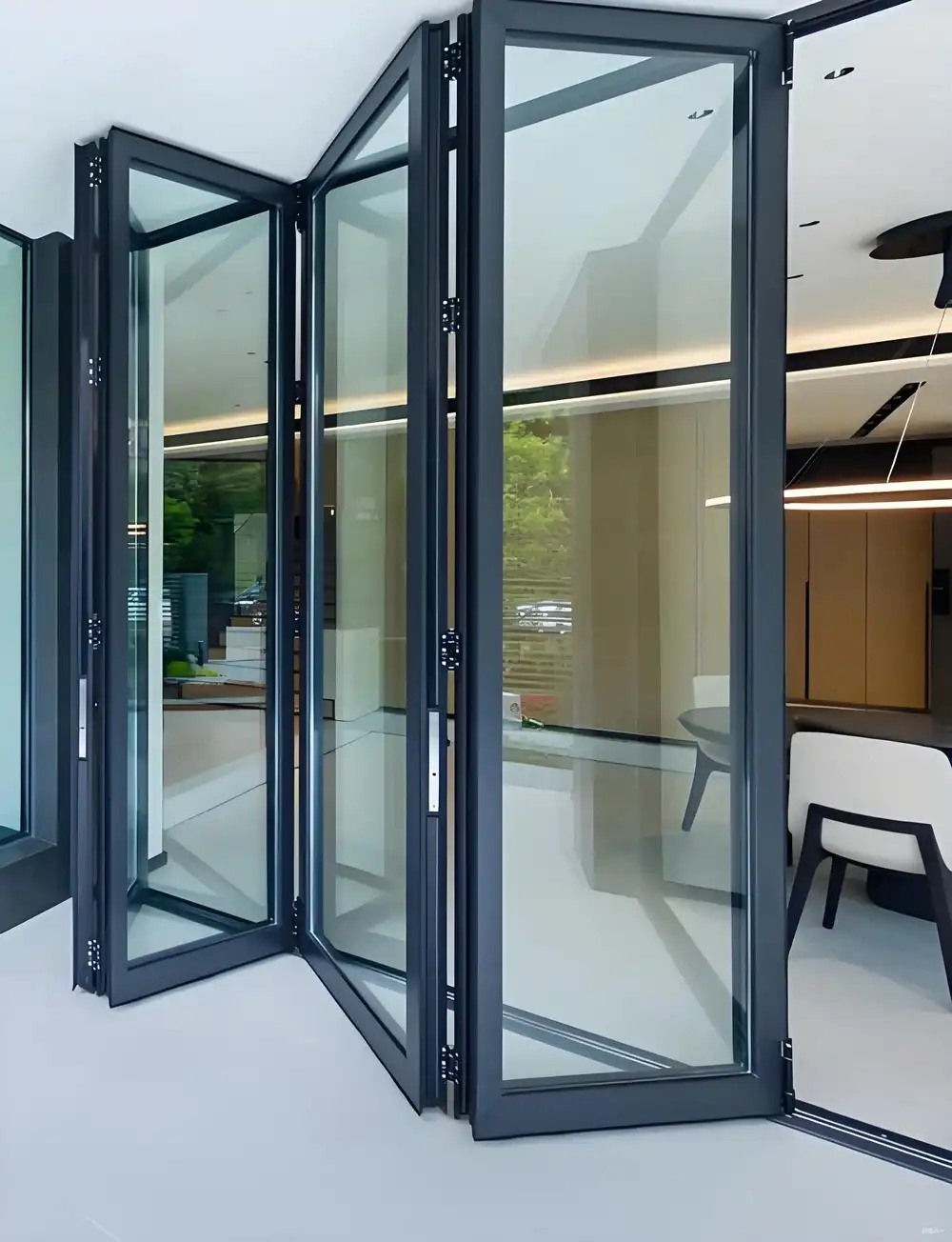
Decision-Making Framework for B2B Procurement of Doors
Defining Core Decision Criteria
Making buying plans that work starts with having clear rules that are in line with the project's goals. This is one of the most important things to think about: is it a home, work, or school project? Each has its own goals for how well it does. Shops on the ground floor or places that are open to the public need better security, which means they need multi-point locks and impact-resistant glass.
Guidelines for glass and thermal break integration are set by goals to save energy, which are often needed by building codes or green certification programs. There is more to cost-effectiveness than just the price of the item itself. Along with the guarantee coverage and skilled help from the seller, it also includes maintenance over the product's lifetime. Aesthetics in design are subjective, but they need to fit with the goal of the building and the client's name.
Matching Door Systems to Specific Applications
Sliding doors are still the most affordable choice for porches in homes, room dividers inside, and mid-level business uses where price and ease of use are the most important factors. Multi-Panel Folding Door are a good choice when you need high performance standards, a lot of opening access, and architectural flair. Places that serve food and drinks, like hotels, restaurants, and rooftop bars, have areas that can be changed to fit the season or an event.
This is done with moving doors. For big homes and meeting rooms, folding systems are great because they let you see a lot and make changes easily. Choosing tools and materials that have been tested and cleared by TAS or a similar area standard is important when it comes to the environment. This is because of things like being close to the coast, storm zones, and big differences in weather.
Supplier Evaluation and Partnership Criteria
If you pick the right production partner, the project will be less risky and more likely to work. As you judge a product, you should think about how flexible it is. For example, you should think about whether it can make non-standard sizes, work with certain hardware names, and fit specs based on models. It has been shown through referrals and case studies from similar geographic markets that being able to count on shipping has a direct effect on timelines and customer satisfaction.
A basic way to make sure that quality control methods and goods work well is to make sure that they are in line with certifications like CE, ISO, and AAMA. Some suppliers offer technical help, like pre-sales advice, detailed shop plans, and installation training. These suppliers are different from those who only sell standard goods because they can handle difficult projects. Manufacturers who have been around for a while and have exported a lot know how to deal with changes in area codes, shipping methods, and customer service standards after the sale. These are all important for business-to-business relationships.
Future Trends in Door Solutions for Interiors
Sustainable Materials and Green Certifications
Being aware of the environment is becoming more and more important when deciding what to buy. Manufacturers are now offering aluminum profiles made from recycled materials that come with low-VOC powder coats and papers that prove they came from responsible sources. In line with the cycle economy, it's easier to recycle when doors fold up and are easy to take apart. LEED, BREEAM, and Green Star are all green building rating systems that give points to goods that have less carbon in their construction, use less energy, and have clear supply chain practices. Developers who care about the environment should give more weight to buyers who offer Environmental Product Declarations (EPDs) and performance data that has been checked by a third party.
Smart Integration and Automated Operation
Alarms, lights, and security systems can now be controlled by door systems that are part of larger automation systems. Multi-Panel Folding Door with motorized motors can be controlled from away using smartphone apps or building management systems. This makes them easier to get to and more useful. ADA standards are met by sensor-driven technology, and physical gear doesn't wear out as fast. As time goes on, predictive repair messages may be sent out based on cycle counts, and AI may change the environment to make the best use of energy based on weather forecasts and occupancy trends.
Design Evolution and Open-Plan Architecture
Open floor plans are still popular in homes and businesses, which means there is a greater need for clear dividers that can be moved. With Multi-Panel Folding Door, you can make areas that can change to suit the needs of different people. They can be used as both set walls and flexible openings. Simple hardware and thin forms make the most of the window space, which is in line with biophilic design concepts that value natural light and connections to the outside world. As builders try to make buildings with wide faces and cantilevered roofs, door systems need to adapt to support longer lengths without hurting the building's heat performance or stability.
Conclusion
There are two types of door systems: slide and bi-fold. You should think about how they look, how well they work, and how much they cost. In places where entry needs to be simple, sliding doors are cheap and easy to use. When it comes to opening choices, Multi-Panel Folding Door are the most flexible. They also perform the best in terms of soundproofing and temperature control, and they look great in high-end home and business projects. For buying professionals, it's best to work with makers that offer full customization, strict quality control, and expert help at all stages of a project. You can make a choice that meets both the client's needs and the project's success standards if you know about the material's features, the rules that must be followed, and the long-term maintenance needs.
FAQ
Q1: Which door type offers better energy efficiency?
A: The energy efficiency of a door depends on the materials used and how they are sealed, not the type of door. Standard slide doors that don't have thermal breaks, EPDM combined sealing, or Low-E triple glass don't work as well as sliding systems with more than one panel. If the U-factor is less than 0.35, it means that the insulation is good, which means that heating and cooling costs are lower.
Q2: Can folding door systems handle high-wind coastal environments?
A: A lot of tests are done on systems that are meant to be used near the ocean to make sure they can handle damage from wind and salt spray. Look for items that meet TAS 201/202/203 standards or area licenses that are the same or similar if you want to use them for a long time in tough conditions. Some of these should be made of stainless steel, which won't rust.
Q3: Do suppliers provide installation services?
A: A well-known company will usually offer full installation services or hire experienced workers to make sure the system works well with everything else. Site studies, technical plans, and on-site guidance are common types of installation help. This makes the project safer and makes sure that guarantees and performance standards are met by the maker.
Partner with Haolv Building Materials for Your Next Project
For more than 18 years, Haolv Building Materials has been making Multi-Panel Folding Door. They are a dependable business that works with builders, developers, and system designers all over North America. We use CNC tools for exact work, automatic assembly lines, and ISO-certified quality control methods to make sure that all of our systems meet the standards set by AAMA, CE, and NFRC. The best thing we do is make heavy-duty Series 100/120 folding systems. Stronger aluminum alloy profiles, heat breaks, and industrial-grade gear that can hold up to 150 kg of panels are used to make them.
You can pick from 4 to 10 panel setups that can be custom made with up to 36 mm of double or triple glazing, powder-coated or metal finishes, and locking systems with more than one point. As part of our promise, we will give you free expert advice, help you coordinate plans, ship samples, and keep in touch with you about the project from the planning stage to the installation stage. With shipping times of 25 to 30 days and full customer service after the sale, we lower the risk of buying while still giving you great performance, durability, and looks. Send our team an email at kristin@haolvwindows.com to tell us about your project and get a price that fits your needs.

References
1. American Architectural Manufacturers Association. (2021). AAMA/WDMA/CSA 101/I.S.2/A440: North American Fenestration Standard/Specification for Windows, Doors, and Skylights. Schaumburg, IL: AAMA.
2. National Fenestration Rating Council. (2020). Energy Performance Ratings for Residential Doors. Silver Spring, MD: NFRC.
3. Carmody, J., Selkowitz, S., & Heschong, L. (2018). Residential Windows: A Guide to New Technologies and Energy Performance (4th ed.). New York: W.W. Norton & Company.
4. ASTM International. (2019). ASTM E330: Standard Test Method for Structural Performance of Exterior Windows, Doors, Skylights and Curtain Walls by Uniform Static Air Pressure Difference. West Conshohocken, PA: ASTM International.
5. Green Building Council. (2022). LEED v4.1 Building Design and Construction: Material and Resources Credits. Washington, DC: U.S. Green Building Council.
6. Wilson, A. (2020). Thermal Bridging Solutions: Improving Energy Performance in Window and Door Systems. Environmental Building News, 29(3), 1-12.
Fast simple channel to send demands lock favorable price for building window door bulk purchases.