- English
- French
- German
- Portuguese
- Spanish
- Russian
- Japanese
- Korean
- Arabic
- Greek
- German
- Turkish
- Italian
- Danish
- Romanian
- Indonesian
- Czech
- Afrikaans
- Swedish
- Polish
- Basque
- Catalan
- Esperanto
- Hindi
- Lao
- Albanian
- Amharic
- Armenian
- Azerbaijani
- Belarusian
- Bengali
- Bosnian
- Bulgarian
- Cebuano
- Chichewa
- Corsican
- Croatian
- Dutch
- Estonian
- Filipino
- Finnish
- Frisian
- Galician
- Georgian
- Gujarati
- Haitian
- Hausa
- Hawaiian
- Hebrew
- Hmong
- Hungarian
- Icelandic
- Igbo
- Javanese
- Kannada
- Kazakh
- Khmer
- Kurdish
- Kyrgyz
- Latin
- Latvian
- Lithuanian
- Luxembou..
- Macedonian
- Malagasy
- Malay
- Malayalam
- Maltese
- Maori
- Marathi
- Mongolian
- Burmese
- Nepali
- Norwegian
- Pashto
- Persian
- Punjabi
- Serbian
- Sesotho
- Sinhala
- Slovak
- Slovenian
- Somali
- Samoan
- Scots Gaelic
- Shona
- Sindhi
- Sundanese
- Swahili
- Tajik
- Tamil
- Telugu
- Thai
- Ukrainian
- Urdu
- Uzbek
- Vietnamese
- Welsh
- Xhosa
- Yiddish
- Yoruba
- Zulu
Sliding, Swing or Bi-Fold Doors? Types of Aluminium Glass Doors Explained
When picking doors for business or private projects, the choice between sliding, swing, and bi-fold configurations has a direct effect on how room is used, how traffic flows, and how much it costs to run the building. The aluminum glass swing door is a standard choice for main entrances because it allows full-width entry and is very durable. When wall space is limited, sliding methods work best. For hospitality and shop settings, bi-fold doors offer large openings. If you know about the structural principles, thermal performance metrics, and installation standards of each system, you can be sure that the one you choose will meet the needs of the project, the building codes, and your long-term upkeep budget.
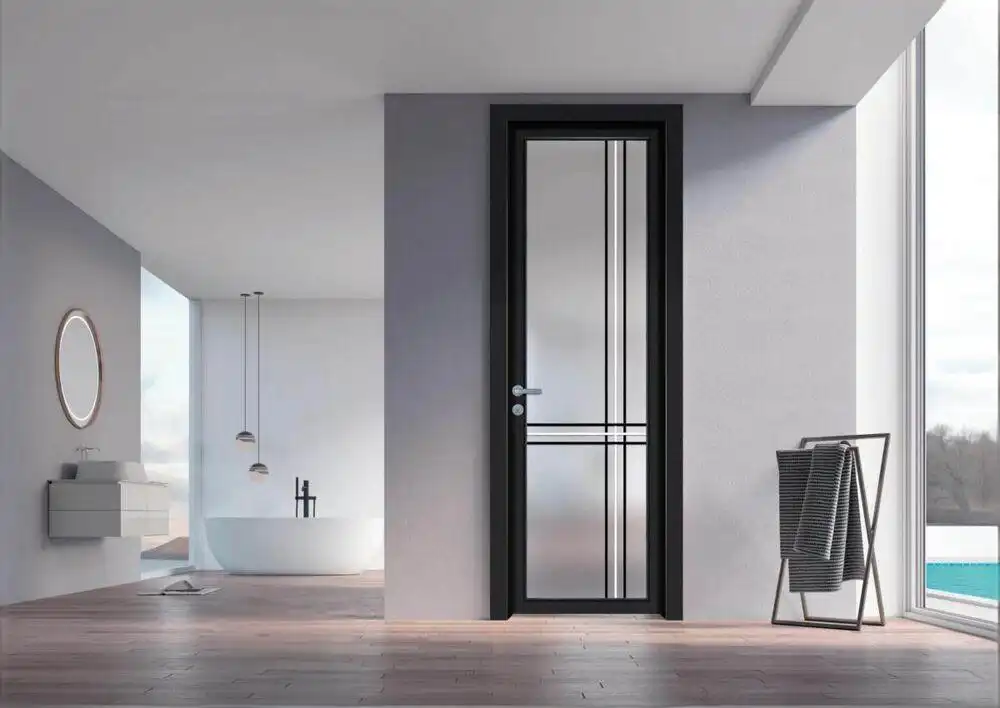
Understanding Aluminium Glass Doors: Sliding, Swing, and Bi-Fold Types
To choose the right door mechanism, you need to look at both the working needs and the design limitations. Each system has its own tech features that affect how well it uses energy and how the user feels about it.
Swing Door Systems: Traditional Reliability Meets Modern Engineering
With side-mounted hinges, swing doors can open all the way to the top. They do this by turning on a vertical plane. These systems use frames made of a high-strength aluminum alloy (usually 6063-T5) and thermal break technology to lower the thermal conductivity to as low as 1.0 to 1.6 W/m²K. The frames can hold glass with thicknesses ranging from 8mm to 28mm, so Low-E finishes can be used on double or triple windows.
High-end swing systems have locking mechanisms that act in three or more places at the same time, which goes beyond the basic security standards for business use. The frame profile thickness runs from 1.4mm to 2.0mm, which gives the structure the strength needed for high-traffic areas while keeping the sightlines thin to make the most of the glass area that can be seen. When you mix EPDM rubber gaskets with brush sealing, you get scores for air and water tightness that are good for installations near the coast.
Sliding Door Configurations: Space Optimization for High-Traffic Areas
Track systems let sliding doors move horizontally, which saves important floor room that swing mechanisms would need. These methods work well in hallways that aren't very wide or where furniture makes it hard for doors to swing open. The track-mounted system spreads the weight across several rollers, which lets the panel be big without affecting how smoothly it works.
These days, sliding systems have hidden track profiles and soft-close filters that help with noise problems in offices. However, because there are contact places along the tracks, thermal performance is usually worse than with swing systems. This makes them less ideal for climate-controlled areas with strict energy rules.
Bi-Fold Systems: Maximum Aperture for Flexible Spaces
Bi-fold doors have several pieces that are linked together and fold out to one or both sides like an accordion. This arrangement makes openings wider than six meters, which can be used for events or during certain times of the year. The panel-to-panel link needs to be perfectly lined up during fitting so that it doesn't get stuck when it's being used.
Even though bi-fold systems look great, they need more upkeep than easier swing mechanisms because their hardware is more complicated. Multiple pivot points and moving parts increase the number of possible failure points, which is something to think about in places that don't have a dedicated repair team.
Comparing Aluminium Glass Door Types: Pros, Cons, and Use Cases
When procurement teams understand practical trade-offs, they can better match door types, such as aluminum glass swing door, to the needs of a building and the funds they have.
Performance Analysis Across Operating Systems
When fully gasketed, swing doors offer excellent sound insulation, with Sound Transmission Class (STC) values of 35 to 45 dB. When the door shuts, it creates a compression seal that makes continuous touch around the whole edge. This stops sound from traveling. Because of this, swing configurations are better for places like medical facilities, recording studios, and senior office spaces where private is important.
Similar benefits can be seen when measuring thermal efficiency. Independent tests show that when swing doors with thermal breaks are put correctly, air leakage rates are less than 0.1 cfm per square foot, which meets AAMA 101 standards. Even though track design has gotten better, sliding systems still have trouble matching these numbers because panels need to move through gaps.
When it comes to durability, simpler systems are better. The science behind swing door hinges is very old and has been used for many years. Stainless steel pin hinges that can be used 1.5 million times are effective in harsh settings with high and low temperatures. With their linked panels and combined operation, bi-fold systems add complexity that leads to higher costs over their entire life.
Material Comparison: Aluminum Versus Alternative Frame Materials
In places where there is a lot of moisture, aluminum frames last longer than wood ones. Wood frames soak up water, which changes their shape, causes them to rot, and eventually causes them to break. Aluminum's ability to fight rust is especially useful near the coast, where salt spray speeds up the breakdown of materials. Powder coatings of grade C4 offer extra security in marine settings, making their service life longer than the normal 30-year expectation for regular installations.
Steel frames are stronger, but they are heavier, which makes fitting harder and puts more stress on the tools. The difference in density—steel weighs about three times more than aluminum of the same strength—affects how it is handled and how much weight it can hold on a base. The good strength-to-weight ratio of aluminum makes logistics easier while still providing good structural performance for business door uses.
Application-Specific Selection Criteria
Main entrances to buildings usually have swing doors because they are safe, don't get damaged by the weather, and are easy for people with disabilities to use. The clear opening width makes it easy for wheelchair users to get in and out, and it meets ADA standards with standard gear. This pattern is constantly seen in high-rise apartment lobbies, business offices, and hotel main entrances.
Sliding systems are better for interior office walls than swing doors because they take up less room. To make the most of the space on the floor, folding layouts are used in conference rooms, private offices, and storage areas. In these situations, where sound separation is not as important as around outer boundaries, the lower acoustic performance is fine.
Bi-fold systems are used by restaurants and event places to change the layout of rooms based on the time of year. Exterior walls with bi-fold doors make it easy to move from inside to outside in the summer, but they close fully in the winter. In these use cases, the operating flexibility is worth the higher cost and need for regular upkeep.
Disclaimer: The actual performance qualities depend on how the product is tested and installed. When looking at choices for your job, you should always look at certified test results and manufacturer specs.
Procurement Insights: How to Choose and Buy Aluminium Glass Doors for Your Business?
When making strategic sourcing choices, you have to compare technical specifications to the needs of the project and the skills of the seller. For example, selecting an aluminum glass swing door requires ensuring the technical features match the design requirements and that the supplier has the expertise to deliver a high-quality product.
Functionality Assessment Framework
Start by writing down the opening's size, the expected amount of traffic, and its openness to the surroundings. For main doors that get more than 500 cycles a day, you need commercial-grade hardware with higher cycle rates. Coastal buildings that are less than 1,000 meters from saltwater need C5-M surface treatments to keep them from rusting too quickly. For buildings to get LEED approval, they have to meet certain U-value requirements that limit the products that can be used.
The choice of glass affects both how well it keeps heat in and how safe it is. Compared to annealed glass, tempered glass breaks into small pieces when it breaks. This makes it safer for people to be hurt. Laminated versions offer extra safety by keeping the panel's structure even if it breaks. The best thermal efficiency is achieved with triple glass systems, but they are heavier and cost more.
You should pay close attention to the hardware specs. Multi-point locking systems with three or more contact points spread force across the frame better than single-point locks, making it harder to break in. When it comes to rust, stainless steel parts do better than zinc-plated ones in damp places. Hidden latches keep mechanical parts from being tampered with while maintaining a clean look.
Supplier Evaluation Criteria
The ability to manufacture directly affects the regularity of the product and the dependability of delivery. The tolerances for dimensions are smaller in places that use automated CNC cutting tools than in places that do manufacturing by hand. With integrated extrusion lines, the frame shape stays the same from one production run to the next, so there are no problems with compatibility when putting the frame together.
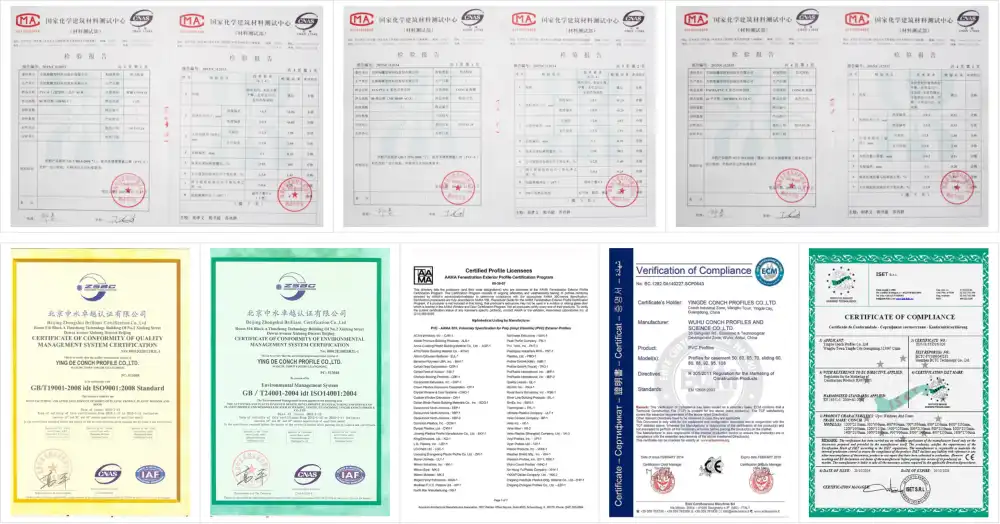
Quality management systems show that production is done in a disciplined way. With ISO 9001 approval, there are written processes for inspecting materials, testing them while they are being made, and checking them for quality at the end. Products that are certified by the AAMA have been tested and found to meet North American performance standards. When compared to suppliers who only offer maker claims, those who offer test results from accredited facilities lower the risk of the purchase.
Production ability has a big effect on project timelines. Manufacturers who keep enough raw materials on hand can usually fill normal orders 25 to 30 days after accepting the purchase order. Lead times are longer when you need a custom color or a size that isn't common. Making production plans clear when choosing a seller keeps schedule delays during the building phases from being too expensive.
Bulk Purchasing Considerations
When you commit to a certain amount of goods, you can get better price and more flexible schedule for production. Projects that need 50 or more door parts can often get savings of 15 to 20 percent off of small-lot prices. Standardizing specifications across different openings makes manufacturing simpler, which cuts costs and speeds up production processes.
Payment times depend on the value of the order and the relationship with the seller. Most of the time, new accounts need 30–50% payments, and the rest is due before the mailing. Customers who have been with you for a while and have a past of paying can arrange net-30 or net-60 terms. Letters of credit protect both parties' interests and provide security for foreign deals.
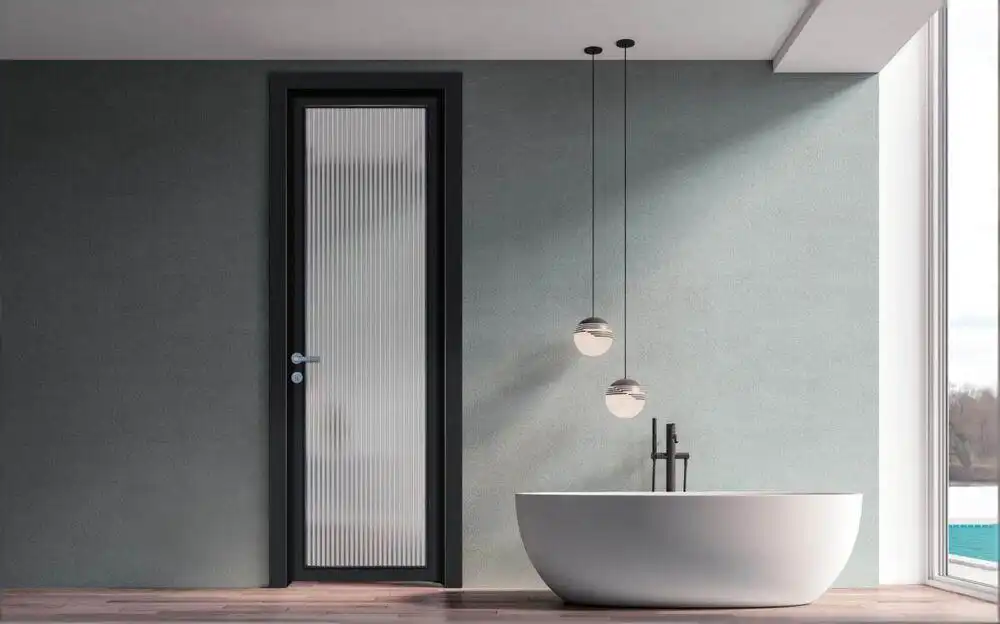
Maximizing Performance: Maintenance, Durability, and Safety Features of Aluminium Glass Swing Doors
Following the right repair procedures will increase the service life and keep the aluminum glass swing door working well throughout its entire lifecycle.
Routine Maintenance Requirements
Every three months, the drainage tube should be cleaned, the hardware should be tightened, and the state of the gaskets checked. Over time, EPDM seals may become less flexible, which could allow air to leak in and lower their heat performance. Changing the gaskets every 5 to 7 years keeps the sealing working well. Lithium-based grease needs to be used once a year to lubricate hinge pivot points and keep them from sticking.
Drainage weep holes in the bottom frame get rid of water that gets through the seals on the outside. Over time, dirt and other things get stuck in these small holes, which lets water build up inside the frame spaces. When you do yearly maintenance and clear out the weep holes, you stop moisture damage to the inner finishes and frame rust.
How to clean a surface depends on the type of finish. Powder-coated frames can handle soft bristle brushes and light detergents. To keep the surface from scratching, anodized products need cleaners that are not alkaline. Stay away from rough substances that remove protection coatings and leave base metal open to damage from the environment.
Durability Factors Influencing Lifespan
Frame wall width is directly related to how long a structure will last. Profiles that are 1.8mm thick are rigid enough for most household uses, while parts that are 2.0mm thick are better for business setups because they don't bend when wind blows on them. When there is a lot of stress, reinforced corner joints with mechanical screws work better than welded links.
Thermal break materials keep structures strong even when temperatures are very high or very low. Between -40°C and +80°C, polyamide barriers don't change much in size, so differential growth doesn't cause seal failure. This steadiness is very important in climate zones where temperatures change by more than 40°C from season to season.
Treating the edges of glass changes how well it resists contact and how well it handles heat stress. Arrised edges (edges that are smooth instead of sharp) lessen the places where chips start and grow into bigger cracks. When you heat glass, it creates compressive surface forces that make it four to five times stronger than tempered glass. This makes it less likely to break from impacts or changes in temperature.
Security and Safety Compliance
At the same time, multi-point locking mechanisms act at the frame header, threshold, and lock stile points. This spread-out contact stops doors from bending, which can happen with single-point lock systems. Grade 1 deadbolts that meet ANSI/BHMA A156.5 standards will work reliably for 10 years or more when used in a business setting.
In order to meet emergency egress standards, gear must work naturally in an emergency. The International Building Code (IBC) says that panic bars and touchscreen exit devices must be used in places where more than 50 people are gathered. These devices open latches with a single move, which takes away the need to think while emergency evacuations are happening.
Glazing safety rules say that toughened or laminated glass must be used in dangerous places, like 18 inches from the edges of doors or below 18 inches from the floor. Additionally, laminated glass improves security by keeping the hole intact during efforts to break in. The polymer barrier keeps the glass pieces together, so they don't break through even after multiple hits.
Design and Innovation: Modern Trends in Aluminium Glass Door Solutions
Today's architecture styles favor thin lines and large windows, and they often use smart building technologies. Aluminum glass swing door systems align perfectly with this trend, offering sleek designs that complement modern aesthetics while providing durability and functionality.
Aesthetic Customization Options
Powder painting technology lets you match almost any color using RAL, Pantone, or your own custom color formulas. The electrostatically applied covering makes products that are long-lasting and don't break down in UV light, so the color stays the same even after decades of being in the sun. Textured finishes, like wood grain or brushed metal, look like natural materials and add warmth to the room without the upkeep that comes with them.
Instead of applying coats, anodizing changes the surface electrochemically to make the color part of the metal itself. When this is done, the finish is very long-lasting because it becomes part of the metal instead of a different layer. Anodized finishes in bronze, champagne, and black go well with modern building styles and are less likely to scratch than painted surfaces.
With minimal sightline profiles, the obvious frame width is cut down to 35–50mm, which increases the window area and views. To keep the structure strong even though the material parts are smaller, these thin profiles need careful engineering. In more advanced extrusion designs, reinforcement ribs are placed in key places to focus the material where stress analysis shows that the most pressure is happening.
Technology Integration for Enhanced Functionality
Building management platforms can talk to smart lock systems, which lets you control who can get in and see how much time is being spent there. Using proximity cards, biometric readers, or smartphone apps for credential-based access gets rid of the need to handle real keys. Access logs keep track of who logged in and when, which is useful for security investigations and tactical analysis.
With automated operators, manual swing doors can be turned into ADA-compliant openings that are easy for everyone to use, without having to set aside fixed space for powered operators. Because low-energy operators only use enough force to beat shutting resistance, high-speed automatic doors pose fewer safety risks. Infrared sensors in these systems find objects and stop the door from moving as soon as a person walks into the swing path.
Integrated sensors let the building respond in different ways depending on the conditions outside. Exterior temperature sensors tell HVAC systems to lower their output when doors are opened a lot. This keeps the inside comfortable even though air is getting in temporarily. Occupancy tracking through door sensors makes the best use of lighting and climate control in rooms that aren't used very often, saving energy without affecting the comfort of the people who are there.
Performance Case Applications
A Class-A office building in Chicago asked for swing doors with triple glazing and thermally broken frames. These doors had U-values of 0.95 W/m²K for the whole door. This performance helped the building get its LEED Gold approval and cut the cost of heating the hallway by 18% compared to single-glazed installations that were used before. The practical savings over 10 years were three times the extra paid for better thermal performance.
A hotel on the coast of South Carolina put in powder-coated swing doors with a C5-M marine-grade finish. An outside check after eight years of salt spray exposure showed that there was no corrosion or coating loss that could be measured. The lifetime cost study showed that the costs of repainting and fixing things that were damaged by normal commercial coatings would be cut by 40%.
Conclusion
Choosing between slide, swing, and bi-fold aluminum glass door systems relies on the needs of the project, such as available space, traffic patterns, weather exposure, and budget. Aluminum glass swing door designs have been shown to be reliable, work well at sealing, and be easy to maintain. This makes them ideal for major entrances and climate-controlled limits. When swing clearance isn't possible, sliding systems make the best use of space, and bi-fold doors can make big changes to spaces in store and restaurant settings. Because it doesn't rust, is strong for its weight, and can be recycled, aluminum is the best material for frame construction because it will last for a long time. To be successful at procurement, you need to look at the skills of the seller, confirm their certifications, and make sure you get the right hardware and glazing for the job.
FAQ
Q1: What advantages do aluminum glass swing doors provide over other entry systems?
A: When compared to slide systems, which keep some panels in the way, swing mechanisms offer full opening width with no panels remaining in the way. In terms of thermal and auditory separation, the compression sealing of the aluminum glass swing door is better than track-based options. Proven hinge technology makes operation stable over millions of rounds with little upkeep needed.
Q2: How long does installation typically require for commercial projects?
A: Standard installs of a single door take between 4 and 6 hours, which includes preparing the frame, hanging the door, installing the hardware, and making sure it works right. For doorways with more than one door or unique designs, the time frame may be extended to 8 to 12 hours per opening. Conditions at the site, especially the squareness of the opening and the quality of the rough opening preparation, have a big effect on how long the installation takes.
Q3: Can these systems withstand high-volume commercial traffic?
A: Commercial-grade swing doors with strong frames and heavy-duty springs can handle more than 500 passes a day. When used in this way, hardware that is designed for 1.5 million processes will last for about 8 years before it needs to be replaced. Regularly adjusting and lubricating parts makes them last longer than their rated specs.
Partner With a Trusted Aluminum Glass Swing Door Supplier
Haolv Building Materials has been making business doors across North America for 18 years and has a lot of knowledge with building doors. Our factory is ISO-certified and uses automated CNC cutting systems and combined extrusion lines. Tolerances are kept to make sure that big orders all have the same fit and finish. We offer full technical support, from reviewing the initial specifications to providing installation instructions. This helps buying teams deal with the complicated approval requirements and performance standards.
Our Series 100 and 120 high-end metal swing systems have thermal break technology, multi-point locking, and powder-coated styles that can be changed to perfectly match the needs of any building. Full product customization lets you meet non-standard performance and size needs without having to wait longer for delivery. We can send normal orders 25 to 30 days after receiving a confirmed purchase order because we keep enough inventory on hand and have established relationships with suppliers.
Contact our technical sales team at kristin@haolvwindows.com to discuss your project needs. We offer free review services for specifications that help you find the best aluminum glass swing door options for your needs. You can get samples of our products to directly compare the quality of the build and the finish choices; we'll even pay for shipping for qualified project requests. Find out why general builders and developers choose Haolv Building Materials as their manufacturer for projects that need the highest quality and the most reliable delivery.
References
1. American Architectural Manufacturers Association. (2017). AAMA 101: Voluntary Performance Specification for Windows, Skylights and Glass Doors. Schaumburg: AAMA Publications.
2. Carmody, J., Selkowitz, S., Lee, E. S., Arasteh, D., & Willmert, T. (2004). Window Systems for High-Performance Buildings. New York: W.W. Norton & Company.
3. International Code Council. (2021). International Building Code. Washington, D.C.: ICC Publications.
4. National Glass Association. (2018). Glazing Manual: Glass Selection and Installation Guidelines. Vienna: NGA Technical Publications.
5. Parekh, A., & Mattock, C. (2005). "Evaluation of Energy Performance of Windows and Glazing Systems for Commercial Buildings." ASHRAE Transactions, 111(2), 345-358.
6. Straube, J., & Burnett, E. (2005). Building Science for Building Enclosures. Westford: Building Science Press.
Fast simple channel to send demands lock favorable price for building window door bulk purchases.