- English
- French
- German
- Portuguese
- Spanish
- Russian
- Japanese
- Korean
- Arabic
- Greek
- German
- Turkish
- Italian
- Danish
- Romanian
- Indonesian
- Czech
- Afrikaans
- Swedish
- Polish
- Basque
- Catalan
- Esperanto
- Hindi
- Lao
- Albanian
- Amharic
- Armenian
- Azerbaijani
- Belarusian
- Bengali
- Bosnian
- Bulgarian
- Cebuano
- Chichewa
- Corsican
- Croatian
- Dutch
- Estonian
- Filipino
- Finnish
- Frisian
- Galician
- Georgian
- Gujarati
- Haitian
- Hausa
- Hawaiian
- Hebrew
- Hmong
- Hungarian
- Icelandic
- Igbo
- Javanese
- Kannada
- Kazakh
- Khmer
- Kurdish
- Kyrgyz
- Latin
- Latvian
- Lithuanian
- Luxembou..
- Macedonian
- Malagasy
- Malay
- Malayalam
- Maltese
- Maori
- Marathi
- Mongolian
- Burmese
- Nepali
- Norwegian
- Pashto
- Persian
- Punjabi
- Serbian
- Sesotho
- Sinhala
- Slovak
- Slovenian
- Somali
- Samoan
- Scots Gaelic
- Shona
- Sindhi
- Sundanese
- Swahili
- Tajik
- Tamil
- Telugu
- Thai
- Ukrainian
- Urdu
- Uzbek
- Vietnamese
- Welsh
- Xhosa
- Yiddish
- Yoruba
- Zulu
Vinyl Sliding Patio Doors vs Aluminum Doors: Which Is Better?
Choosing between vinyl and aluminum sliding patio doors isn't just about materials—it's about profit margins, market positioning, and operational efficiency for building material distributors. Vinyl Sliding Patio Doors, with their multi-chamber PVC profiles reinforced with galvanized steel, deliver superior thermal insulation (U-values as low as 0.28 W/m²K) and require minimal maintenance, making them ideal for residential renovation markets.
Aluminum doors offer slim sightlines and modern aesthetics but demand thermal breaks to match vinyl's energy performance. For distributors prioritizing cost competitiveness against brands like Andersen while maintaining quality, understanding these differences shapes inventory decisions and customer satisfaction.
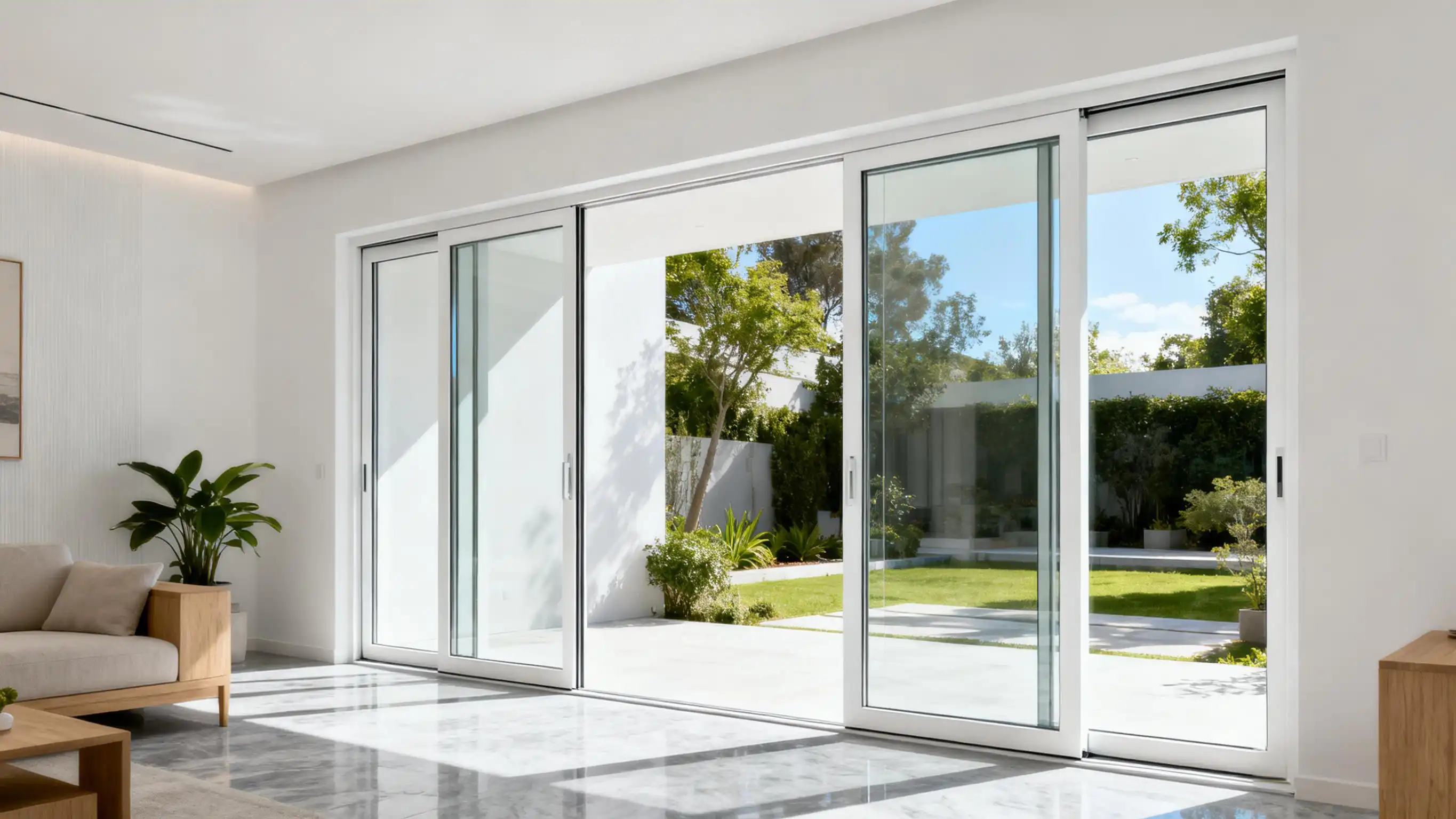
Understanding Vinyl and Aluminum Sliding Patio Doors
Material Composition and Manufacturing Standards
Vinyl doors are made of rigid PVC materials that are pushed out into multi-chamber shapes that are usually between 70 mm and 88 mm deep. These chambers make air pockets that naturally stop heat from moving. Internal galvanized steel reinforcement in sections that hold weight keeps the structure strong without affecting the insulation. AAMA (American Architectural Manufacturers Association) standards are followed during production, which guarantees consistent wall thickness and fusion-welded sides that keep air out.
Aluminum frames are made from extrusions of alloys that are usually 2.0 mm to 3.0 mm thick. They are then powder-coated or anodized to meet the UV resistance standards set by AAMA 2604. Polyamide thermal barriers, which are basically plastic strips that separate the inside and outside of metal surfaces, are used in modern aluminum systems to lower conductivity. Aluminum's high heat conductivity (about 200 times greater than vinyl) means that it can't be used in markets that care about saving energy without these breaks.
Applications in North American Renovation Projects
The home renovation market, which is worth hundreds of billions of dollars every year in North America, needs ways to save room. When they're open, sliding doors don't take up any floor space, but swing doors do need clearance zones. Most retrofit projects in suburban homes are done with vinyl systems because they work with standard rough openings (5ft, 6ft, 8ft widths and 80-inch heights) and can be installed with a wide range of tolerances. Aluminum doors are popular for business stores and high-end homes with thin frame designs that make the most of the glass area and make the shift from indoors to outdoors smooth.
Distributors who work with builders say that vinyl's success is due to how easy it is to install (no special tools are needed) and how flexible it is when the size of the job changes. To avoid thermal bridging or gasket misalignment, aluminum needs to be measured carefully and installed by skilled workers. This makes labor costs 15–25% higher than when vinyl is used.
Supplier Landscape and Procurement Realities
Standard-sized vinyl sliders from well-known North American brands like Milgard and Andersen usually cost between $800 and $1,500 each. If you buy directly from certified manufacturers in Asia, you can get prices that are 60–70% lower than these standards without giving up certifications like AAMA/WDMA compliance. Procurement managers rate suppliers based on how fast they can produce (can they meet orders for 500 units within 30 days?), how well they package items so that glass doesn't break during ocean freight, and how easy it is to get replacement parts like rollers, locks, and weatherstripping, all of which affect how long a customer stays a customer.
The price of materials is better for vinyl than for aluminum alloys, which cost $2.50 to $3.00 per kilogram for raw PVC mixtures. But aluminum is lighter, which means it costs less to ship, which is something that dealers who manage warehouse management should think about. The trade-off is whether saving money on materials up front or cutting down on freight costs works better for business plans.
Performance Comparison: Vinyl vs Aluminum Sliding Patio Doors
Thermal Efficiency and Energy Code Compliance
In places with strict building rules, the market's success depends on how well products use energy. If you use Low-E double glass and argon fills with vinyl's multi-chamber system, the U-value will be between 0.25-0.30 W/m²K. This meets or goes beyond what Energy Star requires in northern temperature zones without any other changes being made. According to ASTM E283, air infiltration rates are below 0.30 cfm/ft². This stops drafts that make heating costs go up.
To make aluminum doors work properly, engineers have to plan ahead. Polyamide thermal breaks that are 20 to 30 mm wide lower U-values to 0.35 to 0.45 W/m²K. They're fine in mild areas, but when it gets really cold, vinyl sliding patio doors are still better. Distributors who sell vinyl in places with hard winters, like Michigan, Minnesota, and some Canadian provinces, say that customers don't worry about condensation or ice building up on the inside of the panels, which means fewer guarantee claims.
Durability Across Environmental Conditions
Coastal environments test how strong things are. Vinyl will never rust from salt air because its chemical structure is neutral, which stops oxidation. Even with protective coats, aluminum pits and changes color in marine environments unless marine-grade finishes (AAMA 2605) and 316-grade stainless steel parts are specified. These changes cost an extra $80 to $120 per unit, which cuts down on price benefits.
Extremes of temperature show different flaws. Vinyl grows and shrinks quickly, so frames longer than 8 feet need to have expansion gaps. If it gets too hot (above 140°F), the vinyl could become stiff and not work properly. Aluminum is better at handling thermal cycling because its dimensions stay the same, but it transfers heat quickly, making bikes too hot or too cold to touch. Multi-point locking systems with anti-lift blocks, which come standard on high-quality vinyl and metal products, offer the same level of security and can withstand ASTM F588 forced-entry tests.
Maintenance Demands Over Product Lifespan
Vinyl needs very little maintenance. It only needs to be cleaned with soap and water every so often, the weatherstripping needs to be checked once a year, and the stainless steel wheels need to be oiled every so often. Frames keep their color without having to be painted again, and even colored vinyl doesn't fade for decades. When selling to property managers who are in charge of several units, distributors like this low-maintenance image.
More care needs to be taken with aluminum. Powder-coated finishes are strong, but they chip when they get hit, leaving the metal exposed to rust. Touch-up paint kits are now things that every business needs to have. Better finishes last longer, but they cost 20–30% more. Clearing out debris from track systems on a regular basis is important to keep rollers in good shape, and the thermal break integrity should be checked every three to five years to make sure it keeps working well. These things raise the total cost of ownership, which is something that dealers stress when they talk about vinyl as a value.
Design, Customization, and Aesthetic Options
Color Palettes and Surface Finishes
Vinyl manufacturers let you choose from different colors by co-extrusion or lamination. They can make shades like white and beige or woodgrain patterns that look like oak or walnut. The consistency of the colors stays the same, and newer formulations don't break down in UV light like older vinyl did. Customization is limited—metallic finishes aren't possible—but for home users, affordability and energy savings are more important than fancy looks.
Aluminum comes in a wide range of finishes. Anodizing makes brushed or satin metal surfaces that are famous in modern building, while powder coating can give you almost any RAL color. This adaptability is good for business projects and high-end housing developments that need to match colors in a certain way. Aluminum's wide range of looks lets distributors reach higher-margin market groups, but they have to keep track of bigger SKU stocks.
Glass Technologies and Glazing Configurations
Both materials can be used with modern glass. When it breaks, tempered glass that meets ASTM C1048 standards keeps you safe. Laminated glass improves protection and reduces noise, with STC (Sound Transmission Class) values of 35 to 40, which is helpful in cities. U-values drop below 0.20 W/m²K when triple glass is used with Low-E coatings and krypton fills. However, triple-pane units are heavy (over 50 lbs per square foot), so they need strong roller systems and frames.
Distributors say that the thicker profiles of vinyl make it easier to use different glazing thicknesses (from 1-inch to 1.5-inch IGUs) without having to redesign the frame. Because aluminum profiles are thinner, heavier glass sometimes needs to be engineered with changes that affect lead times and customization costs. In competitive markets, providers stand out by offering a range of glass choices, such as clear, tinted, and patterned.
Panel Configurations and Track Systems
Two-panel, three-panel, and four-panel systems on double or triple tracks are standard configurations. Because they are so easy to use, two-panel sliders (one fixed and one operable) are most common in homes. Two-panel designs (one fixed and one movable) work best for bigger spaces because they keep sightlines proportional. Track systems with two stainless steel rollers per bottom rail evenly distribute weight, so even panels that weigh more than 200 pounds can move smoothly.
Customization includes panel lengths, and flexible providers will work with non-standard rough openings without charging extra. This feature is important for renovation jobs where the measurements are set by the current framing. Vinyl Sliding Patio Doors are a common choice in such projects, and when distributors work with makers that offer OEM/ODM services, these requests are processed more quickly and without the delays that come with dealing with sellers who only have a catalog.
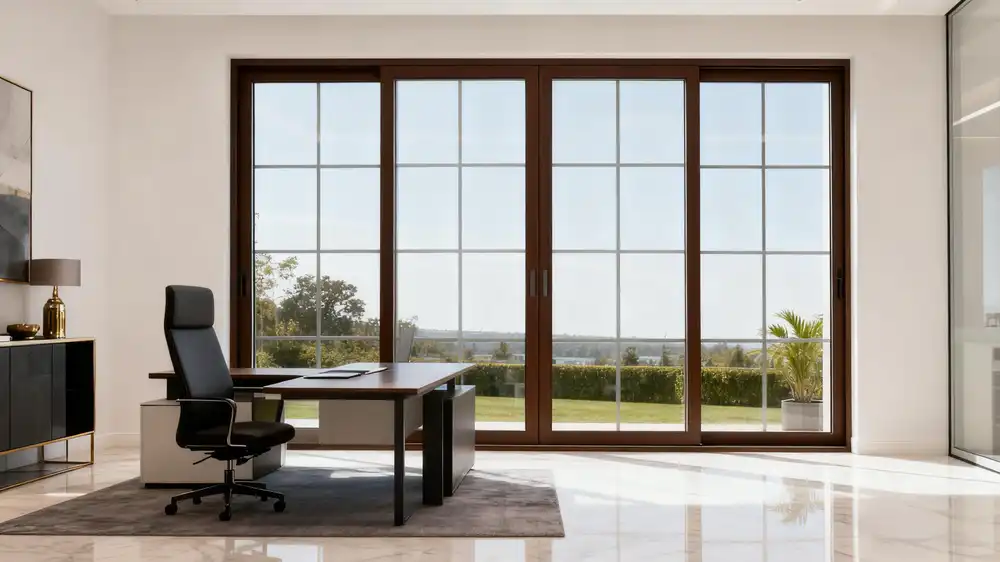
Procurement and Installation Considerations
Cost Analysis: Purchase, Installation, and Lifecycle Expenses
When buying vinyl sliders from reputable Asian suppliers, the initial costs range from $280 to $450 per unit (FOB), based on the size and type of glass. Shipping in 40-foot containers can hold 80 to 120 units, and the freight costs about $3,500 to $5,000 to the main ports in North America. Cost to land: $320 to $490 per unit. Aluminum alternatives cost $340 to $520 FOB, a little more because of how complicated the thermal break is, but the weight savings make the per-unit freight a little less.
Vinyl installation takes three to four hours per unit for a skilled crew of two, and costs $250 to $350 in places like Texas and Florida where labor is cheap. Due to its exact needs, aluminum takes an extra 4–5 hours, which costs an extra $80–$120 per installation. Vinyl doesn't need much care over its 25-year lifespan (about $50 overall), but metal does, needing $200 to $300 in refinishing and seal repairs. Lifecycle cost analysis shows that vinyl is $400 to $600 cheaper per unit, which is a strong case for customers who are trying to save money.
Logistics: Knockdown Shipping and Assembly Efficiency
Shipping doors that are already put together costs a lot and there is a chance that they will break while being handled. When frame parts, glass panels, and tools are shipped separately as knockdown (KD) systems, the volume of the container is cut by 35–40%, which lowers shipping costs by the same amount. Clear instructions are needed for assembly at the destination. Suppliers who offer thorough video lessons and multilingual manuals help keep installation mistakes to a minimum.
With KD's flexibility, distributors can store less in their warehouses and make sure that just-in-time assembly fits in with project plans. For contractors, getting parts in stages keeps the job site from getting crowded. The trade-off is more work to put it together, but experienced teams can keep the time under 90 minutes with simplified designs that have holes already drilled and parts that are color-coded. This business plan works especially well in places where shipping costs a lot, cutting overall buying costs by 20 to 30 percent.
Certification, Warranty, and Supplier Reliability
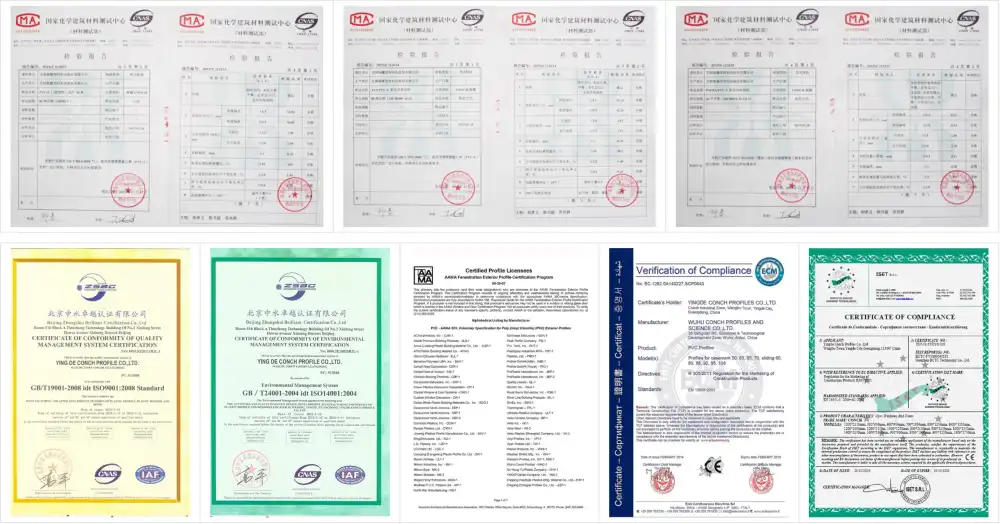
For goods to be sold in the North American market, they must still have AAMA/WDMA approvals, which show they meet standards for air, water, and structural performance. ISO 9001 certification shows that quality management is consistent, and ASTM E283/E331 test results back up promises of specific performance. Distributors don't just accept documents from the factory; they ask for reports from a third-party lab. This keeps them from having compliance issues during inspections.
Different sources offer different warranty terms. Reliable sellers cover frames for 10 years and tools and finishes for 5 years. Most glass guarantees cover seal failure for two to three years. Managers of procurement check to see how quick suppliers are—do they keep North American parts in stock? Can replacement parts be sent out in 7–10 days?—as signs of how well the partnership will work. If a supplier is ready to send sample units (with the buyer paying for the freight), it shows that they are confident in their products and makes it easier to test them before placing big orders.
Making the Right Choice for Your Project
Climate-Specific Material Selection
Vinyl is very popular in cold places (IECC Climate Zones 5-7). Because it doesn't carry electricity well, the temperature of the inside surfaces doesn't drop below dew points, which stops condensation that causes mold. Vinyl Sliding Patio Doors perform especially well under these conditions, as their thermal properties align with the material's natural advantages. Aluminum works better in hot, dry places (Zones 1-2); too much heat on vinyl surfaces can cause them to bend slightly if frames don't have enough expansion gaps. Both materials work well in mixed weather (Zones 3–4), so the choice comes down to price and personal preference.
Restaurants and hotels with views of the ocean tend to use aluminum with marine-grade finishes, even though it costs more, because the thin profiles make the buildings look better. Vinyl's low cost and proven performance are important to residential development in suburban areas, as homeowners want low-maintenance, energy-efficient goods.
ROI Frameworks and Case Study Insights
A medium-sized distributor in Texas looked at sales data from two years ago and found that vinyl sliders had 18% better gross margins than metal sliders because they had lower cost of goods sold (COGS) and faster inventory turnover. 2.1% of vinyl customers called back to complain about operating issues, while 4.7% of aluminum customers did the same. These problems were caused by thermal break failures and finish wear. When warranty service costs were taken into account, vinyl had a 22% higher net profit per SKU.
In another case, there was a renovation contractor who specialized in working with multi-family homes. By choosing vinyl sliders that meet Energy Star standards, projects were eligible for utility rebates of up to $75 per door, which effectively lowered the cost of the materials. These refunds, which weren't available for metal systems that didn't follow the rules, made the project more cost-effective and made customers happy, which led to repeat business.
Environmental Considerations and Sustainability Goals
Vinyl can now be recycled better; post-consumer PVC programs reuse profiles to make new products, but outside of major cities, infrastructure is still limited. Aluminum can be recycled over and over again and uses 95% less energy than original production. This makes it appealing to distributors who want to get LEED or Green Building certifications for their business clients. Lifecycle carbon footprints rely on where the products are made. For example, metal can be recycled if it is made with coal power, but buyers who care about the environment are worried about PVC's petrochemical base.
When distributors tell stories about sustainability, they find that being honest is more important than being strict. In markets where green qualities affect buying choices, giving Environmental Product Declarations (EPDs) or working with suppliers who are committed to lowering manufacturing emissions makes products stand out.
Performance Disclaimer: Specific thermal, structural, and durability metrics depend on individual product testing and certification reports. Buyers should request ASTM/AAMA test documentation corresponding to their climate zone and project requirements to ensure compliance.
Conclusion
When choosing between vinyl and metal sliding patio doors, you need to think about how well they keep out heat, how easy they are to maintain, how flexible the style options are, and the total cost of ownership. Vinyl Sliding Patio Doors exemplify this balance, as their natural insulation, resistance to corrosion, and low maintenance make them a good choice for residential renovation markets that value value and energy efficiency. Aluminum's design flexibility and structural stability make it a good choice for commercial uses and high-end residential projects where the extra cost is worth it for the look.
Distributors who want to get the most out of their goods should think about what the local environment requires, what each customer group wants, and what the seller can do, such as offering knockdown shipping choices that cut logistics costs by a huge amount. When bought from certified makers, both materials meet North American safety and performance standards. Making smart purchasing choices is the key to staying ahead in this high-volume, low-margin market.
FAQ
How does vinyl insulation compare to aluminum for energy savings?
Vinyl's multi-chamber PVC profiles get U-values of around 0.28 W/m³K without any other changes. This is better than aluminum systems that need 20–30 mm polyamide thermal breaks to get to 0.35-0.45 W/m³K. In areas where heating is common, this difference means that 12–18% less heat is lost, which, based on normal home use, cuts yearly energy costs by $80–$150 per door.
What maintenance do these doors require over their lifespan?
Color-integrated vinyl doesn't need to be painted over, but it does need to be cleaned every so often and have its rollers oiled once a year. To keep aluminum from rusting in coastal areas, the finish needs to be touched up where the powder coating chips, and the thermal break needs to be inspected every few years. Over 20 years, plastic care costs 60–70% less than wood maintenance.
Can I order custom sizes with fast turnaround times?
Custom widths, heights, and glazing arrangements can be made by certified makers who give OEM/ODM services. Standard production cycles take 25 to 30 days from the time an order is confirmed until the container is loaded. Sample units can be ordered to make sure they meet specifications before bulk orders are placed. Giving detailed technical drawings speeds up the engineering reviews and quotes process.
Partner with a Trusted Vinyl Sliding Patio Doors Manufacturer
Haolv Building Materials brings 19 years of specialized manufacturing experience to distributors and retailers seeking reliable, certified sliding door solutions. Our multi-chamber PVC profiles with galvanized steel reinforcement deliver tested thermal performance (U-value ≤ 0.28 W/m²K) and mechanical durability (100,000+ operation cycles), meeting AAMA, WDMA, and ASTM standards required for North American markets. We maintain strategic partnerships with leading material suppliers, ensuring consistent quality and competitive pricing that positions your inventory at 60-70% below premium brand equivalents.
What sets us apart: comprehensive technical support including installation video guides, multilingual assembly manuals, and detailed parameter specifications tailored to your market's building codes. Our knockdown shipping configurations reduce container costs by 30%, improving your landed pricing while minimizing breakage risks. Whether you need standard 6ft × 80in units or custom configurations for unique projects, our OEM/ODM capabilities and 25-30 day delivery windows keep your supply chain agile.
Reach out to our team at kristin@haolvwindows.com to discuss your specific requirements, request sample units, or access our full product catalog. Let's build a supply partnership that enhances your market competitiveness and customer satisfaction.
References
1. American Architectural Manufacturers Association (AAMA). Performance Standards for Vinyl and Aluminum Sliding Patio Doors. 2021 Edition.
2. National Association of Home Builders (NAHB). Residential Renovation Market Analysis: North American Trends 2020-2025. 2023.
3. ASTM International. ASTM E283-04: Standard Test Method for Determining Rate of Air Leakage Through Exterior Windows, Skylights, and Doors. West Conshohocken, PA.
4. Window and Door Manufacturers Association (WDMA). Material Comparison Guide: Vinyl vs. Aluminum Framing Systems. 2022.
5. Building Science Corporation. Thermal Performance of Sliding Glass Doors in Various Climate Zones. Journal of Building Enclosure Design, 2021.
6. National Fenestration Rating Council (NFRC). Energy Performance Ratings and Certification Procedures for Residential Doors. Technical Bulletin 2023.
Fast simple channel to send demands lock favorable price for building window door bulk purchases.