- English
- French
- German
- Portuguese
- Spanish
- Russian
- Japanese
- Korean
- Arabic
- Greek
- German
- Turkish
- Italian
- Danish
- Romanian
- Indonesian
- Czech
- Afrikaans
- Swedish
- Polish
- Basque
- Catalan
- Esperanto
- Hindi
- Lao
- Albanian
- Amharic
- Armenian
- Azerbaijani
- Belarusian
- Bengali
- Bosnian
- Bulgarian
- Cebuano
- Chichewa
- Corsican
- Croatian
- Dutch
- Estonian
- Filipino
- Finnish
- Frisian
- Galician
- Georgian
- Gujarati
- Haitian
- Hausa
- Hawaiian
- Hebrew
- Hmong
- Hungarian
- Icelandic
- Igbo
- Javanese
- Kannada
- Kazakh
- Khmer
- Kurdish
- Kyrgyz
- Latin
- Latvian
- Lithuanian
- Luxembou..
- Macedonian
- Malagasy
- Malay
- Malayalam
- Maltese
- Maori
- Marathi
- Mongolian
- Burmese
- Nepali
- Norwegian
- Pashto
- Persian
- Punjabi
- Serbian
- Sesotho
- Sinhala
- Slovak
- Slovenian
- Somali
- Samoan
- Scots Gaelic
- Shona
- Sindhi
- Sundanese
- Swahili
- Tajik
- Tamil
- Telugu
- Thai
- Ukrainian
- Urdu
- Uzbek
- Vietnamese
- Welsh
- Xhosa
- Yiddish
- Yoruba
- Zulu
Why Thermal Break Casement Windows Are Ideal for Modern Homes?
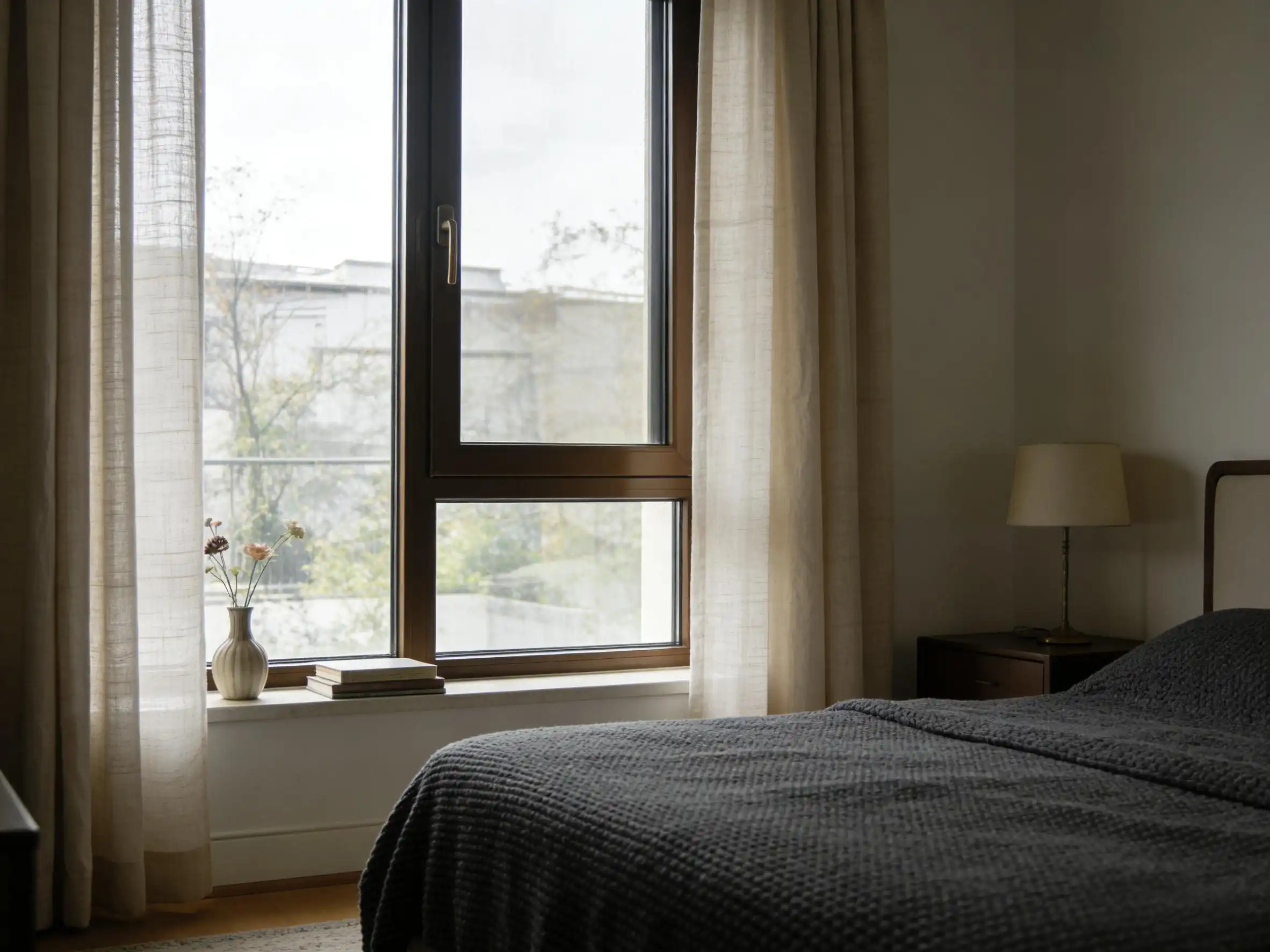
Modern homes increasingly demand fenestration solutions that balance energy efficiency with durability and aesthetic appeal. Thermal break casement windows answer this challenge by incorporating a polyamide barrier within aluminum frames, interrupting thermal conductivity and drastically reducing heat loss. This engineered separation between interior and exterior aluminum profiles maintains structural integrity while achieving U-values comparable to traditional wood or uPVC systems, making them particularly effective for projects targeting strict energy codes or green building certifications. Their superior insulation minimizes HVAC dependency, translates to lower operational costs, and enhances occupant comfort across diverse climates.
Understanding Thermal Break Casement Windows
What Defines a Thermal Break System?
An aluminum fenestration assembly is broken up by a low-conductivity polyamide strip, usually PA66GF25 (polyamide strengthened with 25% glass fiber). This is what a Thermal Break Casement Window is at its core. The strip literally separates the inside and outside aluminum extrusions, stopping metal from touching metal. Without this barrier, aluminum's high thermal conductivity (about 205 W/m·K) makes it easy for a lot of heat to move, which wastes energy and causes condensation to form inside. The polyamide liner lowers the frame's conductivity to about 0.3 W/m·K, making it a good insulation.
Modern systems use 6063-T5 architectural grade aluminum metal, which was picked because it is strong for its weight and doesn't rust. Depending on the series (70, 80, 100, or 120 series), profile widths run from 1.4mm to 2.0mm. Deeper profiles can fit glass units up to 52mm thick. Surface treatments like powder coating, anodized finishes, or PVDF make the product last longer than 30 years and give designers more design choices by letting them choose unique colors and two-tone looks for the inside and outside.
Key Performance Parameters
Understanding technical specs helps people make smart decisions about what to buy. Usually, U-values are between 1.0 and 1.8 W/m²K, and lower values mean better insulation. Ratings for air permeability up to Class 4 make sure that there aren't many leaks, and ratings for water tightness up to E1050 keep water out even in bad weather. The acoustic performance is also impressive. If the systems are set up correctly, they can cut noise by up to 45dB, which is very important in cities or on properties near traffic routes.
The wind load resistance goes up to 4000Pa, which makes it good for high-rise buildings and areas near the coast that are prone to typhoons. Multi-layer EPDM sealing systems allow compression at the points of closing, keeping their performance integrity even when the temperature changes and the material expands and contracts. These standardized measures let expert staff figure out if the design meets the needs of the project and the local building rules.
Core Benefits for Modern Construction
Energy economy is still the main reason why thermal break systems are chosen. By limiting heat movement through frames, these windows lower heating and cooling loads by large amounts. In extreme climate uses, these windows have been shown to reduce loads by as much as 40% compared to alternatives that don't have thermal breaks. This means that building owners will save money on utilities and get their money back faster.
Another important benefit is that condensation doesn't form. The thermal barrier keeps the inside of the frame close to room temperature. This keeps moisture from hitting its dew point and condensing on metal surfaces, which is a common issue with normal aluminum frames that causes mold to grow, materials to break down, and people to feel uncomfortable. Better thermal comfort keeps the temperature inside the building stable near windows, so there are no cold drafts in the winter and less solar heat gain in the summer.
Comparing Thermal Break Casement Windows with Other Window Types
Thermal Break vs. Non-Thermal Break Aluminum
Standard aluminum casement windows are made up of metal extrusions that don't break. Their longevity and low sightlines are good points, but their heat performance is much worse. A thermal bridge lets heat move easily between the inside and outside surroundings thanks to the continuous metal frame. This leads to higher U-values (often more than 3.0 W/m²K) and big problems with condensation in places where it gets warm.
These problems can be fixed in Thermal Break Casement Windows by engineering a delay. Extreme temperatures make the performance gap even bigger. Places that are cold have lower heating costs and better comfort, while places that are hot have lower cooling loads. The difference in price usually means a 15–25% premium when buying, but based on energy costs and climate severity, practical saves will cover it within a few years.
Thermal Break Casement vs. Sliding Windows
Casement windows have sashes that are fixed and can swing outward or inward. When the windows are closed, they make tension seals. This mechanical closing keeps air out better than sliding systems, which use weatherstripping or brush seals that wear down over time. The performance of compression sealing in terms of air leakage stays the same over the life of a product.
Sliding methods are easy to use in some situations, but they don't work as well in terms of sound and heat. The design of the overlapping frames naturally causes thermal bridging, which can't be completely fixed by thermal breaks. Casement designs also make it easier to clean and control the flow of air, which is especially helpful for mid- and high-rise buildings where maintaining the outside can be hard.
Comparison with uPVC Systems
uPVC (unplasticized polyvinyl chloride) windows are popular in home building because they are good at keeping heat in and aren't too expensive. However, they aren't very strong when it comes to structure, especially when there are big spaces or high-rise uses where wind loads and bending are a problem. The material also expands and contracts more when heated than metal does, which could affect how smoothly it works over time.
Thermal break metal systems offer insulation performance similar to that of uPVC while also having better structure capabilities. The reinforced metal profiles keep their shape over a wide range of temperatures and allow for bigger glass areas with thinner sightlines, which is a big plus for modern design that values openness and natural light. Aluminum is also more likely to last in harsh settings, like coastal or industrial ones, because it can withstand UV light and natural stress.
Disclaimer: Actual performance metrics vary based on specific configurations, glazing selections, and installation quality. Procurement decisions should reference certified test reports and product-specific technical documentation to verify compliance with project requirements.
Procurement Insights: How to Choose and Buy Thermal Break Casement Windows?
Essential Selection Criteria
The technical review starts with U-value standards that are in line with the climate zone and energy code rules. For projects in northern climates, triple glazing is best (U-values are often less than 1.2 W/m²K), while for projects in milder climates, double glazing with low-E coatings may be enough. Choosing the frame depth has a direct effect on the glass choices. For example, the 70mm series can hold up to 28mm units, and the 120mm series can handle triple glazing with insulated spacers for each Thermal Break Casement Window.
Ratings for airtightness and water protection must match the conditions of exposure. Coastal projects need Class E1050 watertightness, gear made of corrosion-resistant 304 or 316 stainless steel, and powder coatings that are safe for use near the water. Validated wind load protection with the right safety factors are needed for high-rise uses. Acoustic needs determine the specs for glass lamination and seal design. STC grades are set based on noise sources outside the building.
Evaluating Manufacturers and Supply Chain
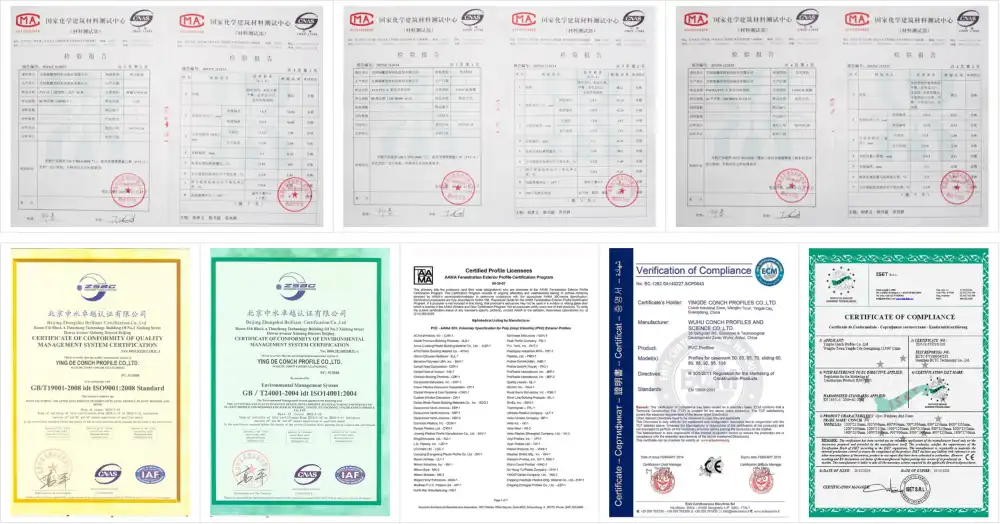
Assessing suppliers lowers the risk of buying things by checking their quality processes and ability to make things. Standardized processes are shown by ISO certification, and code compliance is shown by product-specific approvals like NFRC scores for U.S. markets and CE marking for Europe. Factory checks show how much can be made, how advanced the equipment is, and how quality control is done. For example, automatic assembly lines and CNC precise cutting show that the company can handle complex changes and keep standards.
Export knowledge and collections of finished projects show that the person is reliable. References from temperature zones or building types that are similar can help you understand how well something will work in real life and how good the professional support is. Stable lead times rely on production capacity and inventory management systems, especially for sales with a lot of items. Established manufacturers usually quote production times of 25 to 30 days for normal specs. If you need your order faster, you can negotiate a different price.
Bulk Ordering and Cost Management
When you buy in bulk, you can get better prices, but the minimum order amounts depend on the maker and the complexity of the series. Total cost analysis looks at more than just unit prices. It also looks at things like shipping operations, dealing with customs, and how hard it is to setup. Larger profile series with better performance command higher prices, which are supported by lower energy costs and longer service lives. Lifecycle cost models should include utility rates, repair intervals, and replacement cycles.
Lead times and prices are affected by the choices for customization. Custom formulas that need to be made in a new batch take longer to ship than standard powder coat colors. Custom aluminum tools are needed for sizes that aren't standard, which takes more time and costs more money. Upgrades to hardware like multi-point locks, hidden hinges, and built-in blinds affect both how well it works and how it looks. Clear recording of the specifications that leaves little room for confusion avoids expensive explanations and production delays.
Installation, Maintenance, and Lifespan of Thermal Break Casement Windows
Installation Best Practices
If stated performance is translated to real building performance, it depends on how well the building was installed. Preparing window openings is needed to make sure they are the right size within a certain range, which is usually ±2mm for business installs. The structural hole needs to be big enough to fit the frame, installation shims, and continuous surround sealing for the Thermal Break Casement Window. Schedules for fastening must take into account wind load needs and keep heat bridges from forming through frame penetrations.
For perimeter closing, you need materials that are suitable and can be used in a range of temperatures. Polyurethane foam fills in gaps initially, but it needs to be backed up with protective sealants, which can be silicone or polyurethane formulas, applied according to the manufacturer's instructions. If you don't close properly, air can leak through, which defeats the purpose of a thermal break and could trap moisture in wall sections. Installation teams need to be trained on the unique needs of each system because methods vary by maker and series.
Routine Maintenance Requirements
Long-term performance relies on regular upkeep that takes care of worn parts and exposure to the environment. Hardware lubrication keeps things running smoothly and stops them from breaking down too soon. Hinges, locking mechanisms, and operators need to be oiled every six months using oils recommended by the maker. It is important to clear out drainage weep holes so that water doesn't build up inside frames, especially in places where it rains a lot.
When the seal is inspected, any compression set or damage that lets air in is found. EPDM seals keep working well for a long time, but they need to be checked on when they are exposed to extreme circumstances. A glass inspection checks the quality of the seal and finds possible unit breakdowns before condensation forms inside the unit. Using pH-neutral solutions to clean the frame protects the surface finishes. Abrasive cleaners or high-pressure washing can damage powder coating or anodized layers.
Expected Lifespan and Warranty Considerations
When properly kept, thermal break aluminum systems usually last longer than 30 years, and some setups have been known to last well over 40 years. How long a material lasts depends on how it is exposed to the climate. For example, sites near the coast which don't have the right surface treatments and metal standards experience faster corrosion. Coatings and sealants that are made for chemically-rich industrial settings are needed. Comprehensive guarantees usually cover flaws in the way the product was made for 5 to 10 years, but some parts can get longer coverage.
Glass units come with two different guarantees that cover different things: seal failure and heat performance. Hardware guarantees depend on the grade of the seller. For example, expensive European hardware systems often come with 10-year mechanical warranties. Reputable makers offer expert help during the warranty time and keep new parts in stock, which are both important factors for managing lifecycle costs.
Future Trends and Innovations in Thermal Break Casement Windows
Advanced Materials and Coatings
Material science keeps improving performance by making polyamide formulas that are stronger and better at conducting electricity. More U-value decreases within current frame depths are expected from research into aerogel-filled thermal breaks for the Thermal Break Casement Window. In addition to conductive barriers, low-emissivity layers on metal surfaces stop radiant heat from moving. Self-cleaning glass coatings that use photocatalytic features cut down on upkeep needs, which is especially helpful for places that are hard to get to.
Nanotechnology uses create coatings with changing qualities. For example, electrochromic glazing changes the tint based on sun exposure or the person's taste, letting more light in while keeping heat gain in check. When natural air and industrial systems are integrated with building energy management systems, they can be controlled together, which makes them more efficient.
Sustainability and Regulatory Evolution
Demand for higher-performance fenestration is driven by stricter energy rules. Title 24 in California and similar laws in northeastern states set U-value limits that can only be met with modern glass and thermal break technology. As a result of the Energy Performance of Buildings Directive, European standards are getting stricter. Nearly zero-energy building requirements support thermal break specs. Material choices and lifetime estimates are affected by how much carbon is contained in the material.
Aluminum can be recycled, which is good for the environment when recovered content is used in the production process. Closed-loop systems that recover aluminum from used products have a much smaller effect on the environment than main production. As green building rating systems give more weight to material sources, manufacturers that show supply chain transparency and EPD (Environmental Product Declaration) certifications will have an edge in the market.
Smart Building Integration
When sensors are added to inactive fenestration, they become active parts of the building system. Contact sensors keep an eye on the position of the window, which lets the HVAC system make changes automatically that cool the air outside less. Weather stations close buildings automatically before storms, keeping people safe inside and lowering the risk of losing your insurance. Integration with access control systems adds security features, which are especially useful for business setups on the ground floor.
Predictive maintenance algorithms look at working trends to find problems that are about to happen before they do. For example, a higher closing force could mean that a hinge is wearing out or a seal is breaking down. Remote tests cut down on downtime and service costs. As construction adopts Industry 4.0 ideas, connected fenestration systems provide data streams that help improve the experience of building occupants and make buildings run more efficiently.
Conclusion
When it comes to modern building goals like energy efficiency, occupant comfort, longevity, and design freedom, Thermal Break Casement Windows offer measured performance benefits. Their designed thermal interruption completely gets around aluminum's limited conductivity while keeping the material's strength. To properly specify something, you need to know about its technical features, how it compares to other options in terms of performance, and its total lifecycle value, which includes installation and upkeep costs.
The success of procurement relies on how well the maker is evaluated, how well the specifications are communicated, and how reliable the supply chain is. Thermal break systems are still the best high-performance window systems because they meet rising energy standards and support design vision, even though new materials and coupling methods are being developed all the time.
FAQ
Q1: Can thermal break casement windows perform effectively in extreme cold climates?
A: When properly defined, thermal break systems work great in very cold places. U-values below 1.0 W/m²K can be reached with warm-edge spacers, triple windows with argon or krypton fill, and thermal break depths of 34 mm or more. Even when temperatures outside hit -40°C, the thermal barrier keeps the surface temperatures inside from going below the point of condensation. To get the performance that was promised for your Thermal Break Casement Windows, proper fitting and constant border sealing are still very important.
Q2: What level of energy savings can be expected compared to standard aluminum windows?
A: Based on temperature zone, building direction, and glazing specs, energy modeling shows that heating and cooling loads can be cut by 25% to 40%. Actual savings depend on how well the current windows work, how well the HVAC system works, and how the building is used. In places where heating or cooling needs are high, payback times are usually between 5 and 10 years. However, longer payback times can be caused by higher energy costs or utility incentive programs.
Q3: Are customization options available for non-standard project requirements?
A: Modern production allows for a lot of customizing, such as non-standard sizes, custom color matching (using RAL or powder coat formulas), unique parts, and performance improvements. Lead times and minimum order numbers may change for custom setups. Detailed shop sketches and a study of the specifications make sure that the product can be made and meets performance standards before it is committed to production. This lowers the cost of changes and their effects on the schedule.
Partner with a Trusted Thermal Break Casement Window Manufacturer
For 18 years, Haolv Building Materials has been making high-quality aluminum and uPVC window systems for difficult business and domestic jobs. Our 70, 80, 100, and 120 series Thermal Break Casement Window product lines are made with 6063-T5 aluminum metal and PA66GF25 thermal barriers, which give them U-values between 1.0 and 1.8 W/m²K. Multi-layer EPDM sealing provides Class 4 air permeability and E1050 water tightness. This is made possible by high-quality European hardware systems and a range of glass choices, such as double, triple, and laminated panels.
Our 25,000-square-meter production center has automated assembly lines, precise CNC cutting, and metal extrusion capabilities. This makes sure that both standard and special orders get the same high quality work done quickly. Every step of the production process, from choosing the raw materials to the final inspection, is governed by quality management that is ISO-certified. Technical support teams offer technical advice, performance models, and thorough shop drawings that make it easier to specify and install.
Connect with our engineering team at kristin@haolvwindows.com or visit haolvbuilding.com to discuss your project requirements. We provide free technical consultation, sample coordination, and competitive volume pricing structures designed for developers, general contractors, distributors, and system integrators seeking a dependable supplier committed to quality, innovation, and partnership success.
References
1. American Architectural Manufacturers Association. "Thermal Performance of Fenestration Systems: Testing and Rating Standards." AAMA Technical Manual Series, 2022.
2. National Fenestration Rating Council. "Certified Products Directory: Energy Performance Ratings for Windows, Doors, and Skylights." NFRC Publication 2023.
3. Department of Energy. "Energy-Efficient Window Technologies for Commercial Buildings." Building Technologies Office Technical Report, 2021.
4. European Committee for Standardization. "Thermal Performance of Windows and Doors: Determination of Thermal Transmittance." EN ISO 10077 Standard, 2020.
5. Aluminum Association. "Aluminum Design Manual: Specifications for Aluminum Structures in Building Construction." Architectural Aluminum Products Division, 2023.
6. Green Building Council. "Fenestration and Glazing Requirements in High-Performance Building Certification Systems." LEED v4.1 Reference Guide, 2022.
Fast simple channel to send demands lock favorable price for building window door bulk purchases.