- English
- French
- German
- Portuguese
- Spanish
- Russian
- Japanese
- Korean
- Arabic
- Greek
- German
- Turkish
- Italian
- Danish
- Romanian
- Indonesian
- Czech
- Afrikaans
- Swedish
- Polish
- Basque
- Catalan
- Esperanto
- Hindi
- Lao
- Albanian
- Amharic
- Armenian
- Azerbaijani
- Belarusian
- Bengali
- Bosnian
- Bulgarian
- Cebuano
- Chichewa
- Corsican
- Croatian
- Dutch
- Estonian
- Filipino
- Finnish
- Frisian
- Galician
- Georgian
- Gujarati
- Haitian
- Hausa
- Hawaiian
- Hebrew
- Hmong
- Hungarian
- Icelandic
- Igbo
- Javanese
- Kannada
- Kazakh
- Khmer
- Kurdish
- Kyrgyz
- Latin
- Latvian
- Lithuanian
- Luxembou..
- Macedonian
- Malagasy
- Malay
- Malayalam
- Maltese
- Maori
- Marathi
- Mongolian
- Burmese
- Nepali
- Norwegian
- Pashto
- Persian
- Punjabi
- Serbian
- Sesotho
- Sinhala
- Slovak
- Slovenian
- Somali
- Samoan
- Scots Gaelic
- Shona
- Sindhi
- Sundanese
- Swahili
- Tajik
- Tamil
- Telugu
- Thai
- Ukrainian
- Urdu
- Uzbek
- Vietnamese
- Welsh
- Xhosa
- Yiddish
- Yoruba
- Zulu
5 Luxury Home Inspirations with Aluminium Sliding Doors
The way architects and builders handle high-end home projects has changed because of aluminium sliding external doors. These systems provide floor-to-ceiling visibility with low sightlines, blending the comfort of the inside with the beauty of the outside without any noticeable gaps. Thermal break shapes and multi-chamber glass units are used in modern designs to make them look good and work well. Specification teams test these systems by looking at how strong the profiles are, how long the hardware lasts, and how well they seal against the weather to protect valuable properties in a range of conditions. This piece looks at five design ideas for high-end home projects that use sliding aluminium door systems to improve both the look and the usefulness of the buildings.
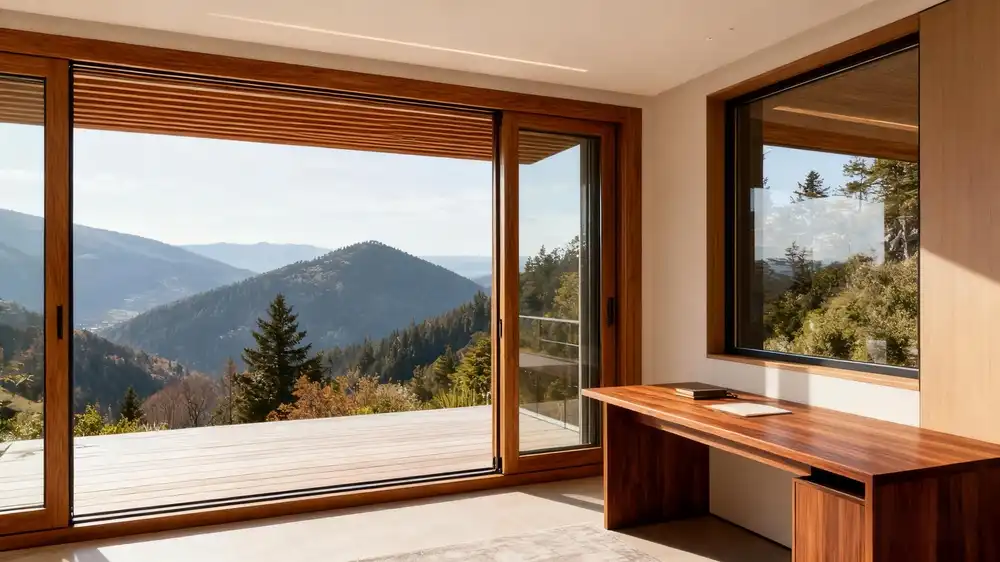
Seamless Indoor-Outdoor Living with Large-Span Aluminium Sliding Doors
Creating Uninterrupted Visual Flow
Large-span aluminium sliding external doors make living inside and outside seamless. Large-span slide systems change the way space is used in high-end houses. When projects need large glass walls—often more than three meters tall with panel lengths of up to two meters—architects define these layouts. Manufacturers can make profiles out of aluminium that have great strength-to-weight ratios. These profiles can hold large dimensions without having obvious structural reinforcements that would block sightlines.
Technical Foundations for Expansive Glazing
Wide-span setups depend on strengthened aluminium profiles with walls that are usually between 1.8mm and 2.5mm thick to keep their structure strong. High-quality systems have thermal barriers built into the frame. These are made up of nylon strips that are placed between the inside and outside aluminium cylinders and block the flow of heat. This design solves the problem of heat transfer that comes with metal fenestration.
Energy efficiency is very important, so double or triple glass units in 8–28mm layouts are a must. Low-E covered double glass is best for projects in mild climates, while triple-pane systems with argon or krypton gas fills are often required for projects in harsh climates. These requirements have a direct effect on how much HVAC load is calculated and how much it costs to run apartment towers or estate developments over time.
Performance Validation Through Project Experience
Modern house projects show how choosing the right method can affect how a project turns out. Multi-track slide designs that can hold two to three movable panels offer both freedom and good heat performance. The track systems use precision-engineered stainless steel rollers that can hold more than 200 kg per panel. This makes sure that the systems work smoothly for tens of thousands of rounds.
When EPDM seals and brush pile plugs are used together in weather-resistant sealing systems, air leakage rates are kept below 0.2 cfm/ft² at 25 mph wind pressure, which meets strict building code standards. Water resistance in tested systems usually exceeds 300 Pa, which is very important for sites near the coast where wind-driven rain is a constant problem.
Ultra-Secure Aluminium Sliding Doors for High-End Residential Projects
Security Integration for Premium Developments
For high-end home projects, security requirements for aluminium sliding external doors must cover both forced entry and long-term reliability in harsh environments. Multi-point locking systems have contact points spread out along the vertical frame, and locking bolts fit into stronger strike plates. Quality systems have anti-lift devices that stop panels from being taken off from the outside. This fixes a problem that is common with sliding door designs.
Using laminated glass adds another level of defense. These systems use polyvinyl butyral (PVB) interlayers to connect two glass panes and keep the barrier strong even if it breaks. For home use, specifications usually range from layered units that are 6.38 mm thick to ones that are 10.76 mm thick or more for high-security setups.
Hardware Specifications That Matter
Both security and working life are based on the hardware environment. Premium systems require multi-point locks made in Europe with finishes that don't rust and have been tried to work more than 50,000 times. Hardened stainless steel parts with precise specs below 0.5 mm are used in track systems to keep them from sticking or misaligning when they are under load.
Bottom-rolling designs spread the weight of the panels across heavy-duty tracks, which makes the closing hardware less stressed. Some standards list top-hung options for situations that need smooth floor changes, but these need stronger header support and usually make projects cost 15 to 25 percent more.
Installation Standards for Performance Assurance
Following the right startup steps has a direct effect on how well protection works. Frame fixing standards usually say that structural fasteners must be placed 300 mm apart into strengthened holes and shimming must be kept to ±1 mm in all directions. Poor fitting can make weather sealing less effective and cause stress spots that speed up the wear and tear on hardware.
Professional installation teams use laser alignment tools and vertical measurements to make sure that big parts are straight within a 2mm error. Follow the manufacturer's instructions for preparing the joints, applying the primer, and setting the drying conditions. These are the things that decide how well the sealant will hold up against weather over time.
Sustainable Luxury — Eco-Friendly Aluminium Sliding Doors in Smart Homes
Material Lifecycle Advantages
Because aluminium can be recycled, aluminium sliding external doors are a good material for lifetime studies of building items. The material keeps all of its building features even after being recycled many times. Making secondary aluminium only takes about 5% of the energy that is needed to make primary aluminium. This cycle economy possibility is appealing to builders who want to get LEED or BREEAM ratings, where the source of materials affects the total number of points earned.
Durability is a part of environmental traits. When properly finished, aluminium systems don't rust or break down in the sun's UV rays, so they keep working well for decades. Powder-coated finishes get rid of the volatile organic compound fumes that come from wet paint systems. Anodized processes, on the other hand, make oxide layers that protect the base metal even when no coats are applied.
Energy Performance Through Design
With thermal break technology, aluminium goes from being a thermal risk to a performance-competitive outer component. When paired with the right windows, modern systems can get U-factors between 0.3 and 0.45 BTU/hr·ft²·°F, which is close to the performance levels of advanced uPVC or fiberglass systems. Because these numbers have a direct effect on heating and cooling loads, they also have an effect on running costs and the size of green energy systems.
Better heat performance is achieved with triple glass, low-E finishes, and gas fills. Solar heat gain optimization is helpful for projects in climates that are dominated by heating, while low solar heat gain factors are needed in climates that are dominated by cooling to keep air conditioning loads as low as possible. Adding smart glass gives you more control because it can change the way light passes through based on the amount of sunlight hitting it or your own tastes.
Certification Alignment for Green Projects
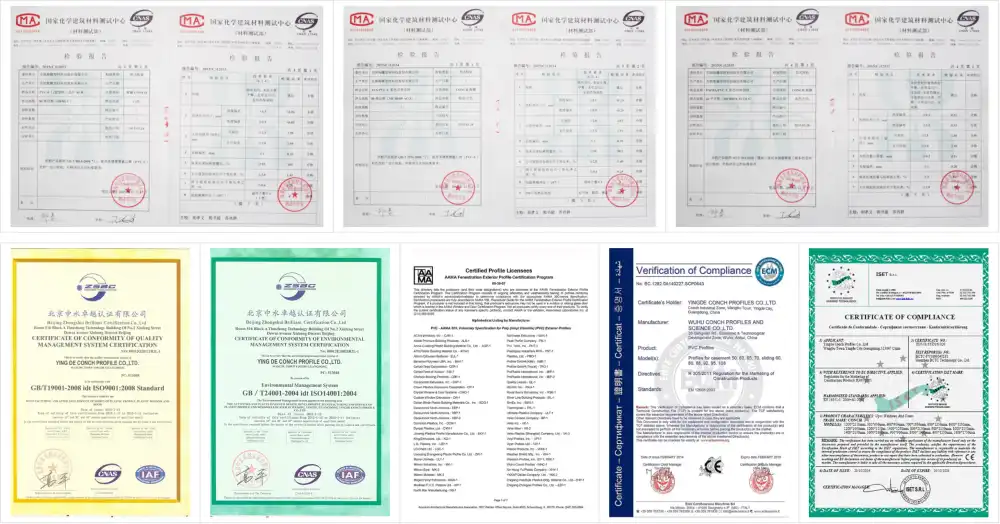
Performance claims are backed up by following building codes and getting third-party certifications. CE labels show that a product meets European standards, and NFRC labels show that the product's temperature and optical qualities have been checked by a third party for the U.S. market. The AAMA certification covers performance marks for air leakage, water entry, and structural loads, which are important requirements for envelope experts who are reviewing submittals.
When energy planning, projects that want to reach net-zero energy goals need to use verified performance data. Passive heating and cooling methods can meet design goals without using too many mechanical systems if accurate window-to-wall ratio calculations and leakage assumptions are used.
Customized Design Solutions Tailored for Luxury Home Architecture
Dimensional Flexibility for Unique Applications
When building a luxury home, the opening sizes are often not standard, which makes it hard to meet the requirements of catalog products for aluminium sliding external doors. Custom shapes can be made with aluminium extrusion methods as long as they don't go too far outside of what's practical for manufacturing. This means that panels over four meters tall can be made, as well as systems over ten meters long with multiple moving panels.
Customizing the frame depth takes into account the different wall widths that are common in high-performance wall systems. The overall depth of standard systems is usually between 120 mm and 140 mm, but custom extrusions can fit thicker insulated wall constructions or allow for hidden installations that keep the internal expansion to a minimum.
Finish Options and Architectural Integration
The choice of surface finish affects both how it looks and how long it lasts. Powder painting comes in the widest range of colors, and special RAL matches make it possible to perfectly fit building requirements. Film thicknesses usually run from 60 to 80 microns for everyday use to 100 microns or more for seaside areas that need better rust protection.
Anodized finishes make things look like metal while also adding safe oxide layers through electrolytic processing. Anodized finishes in bronze, champagne, and black are popular in modern architecture. However, to make sure that colors are consistent across big orders, strict quality control must be used during production runs.
Dual-color setups help with coordinating the design of the inside and outside of a building by matching the finishes inside to the colors used inside and the finishes outside to the materials used on the outside. This customization makes production more difficult, but it gives the final product a look that single-finish methods can't match.
Technology Integration for Smart Homes
Automated operation systems turn aluminium sliding external doors into parts of the building surface that can be managed. Motorized systems with built-in control links can be controlled from afar, set to run at certain times, and work with building management systems. Obstacle recognition sensors keep people from getting hurt or damaging things during automatic closing cycles. This reduces liability worries for homes with a lot of foot traffic.
Integrated blind systems inside sealed glass spaces get rid of the need for external shading devices while keeping the lines of the windows looking clean. To keep the inside of these parts from condensing and to allow for mechanical function inside the protected glass unit frame, they need to be made with very precise tolerances.
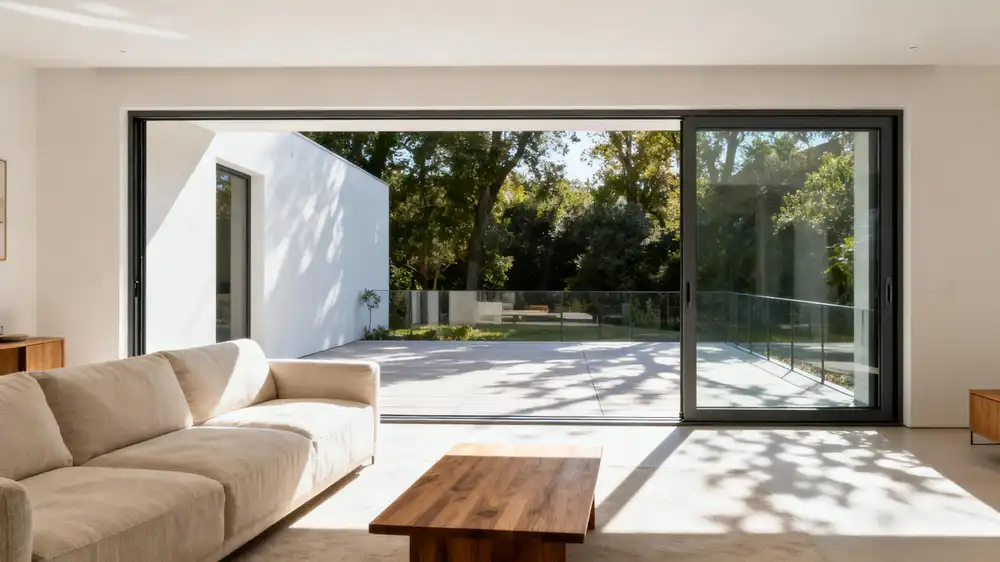
Low-Maintenance Aluminium Sliding Doors That Preserve Luxury Appeal
Material Advantages for Reduced Upkeep
Compared to organic materials, aluminium sliding external doors don't need as much upkeep because of natural qualities. The substance doesn't absorb water, break down biologically, or change shape when exposed to different temperatures. This means it doesn't grow, bend, or rot like wood systems do. UV stability keeps treated surfaces from losing their color, so they look good without having to be refinished as often as painted wood does.
Corrosion protection relies on the type of finish and the climate it is in. Marine-grade specs, such as stronger powder coat films, stainless steel gear, and better drainage systems that keep track sections from standing water, are good for installs near the coast.
Routine Maintenance Protocols
Key system components need to be checked on a regular basis to keep the system running at its best. Cleaning the tracks gets rid of the buildup of dirt that can get in the way of the rollers' movement. Cleaning the tracks every three months is enough for most household situations, but cleaning them once a month may be needed in dusty or high-traffic areas. Using a vacuum to remove the dirt and then wiping it down with a wet cloth stops the buildup of rough particles.
Lubricating hardware makes it last longer and keeps it running smoothly. Silicone-based lubricants should be used once a year on the bearing surfaces of roller systems, while light machine oil should be used on the contact points of multi-point lock mechanisms. Too much oil makes dust build up, so using as little as possible is best.
Weather seal inspection finds damage before it affects efficiency. When placed correctly, EPDM gaskets keep their flexibility for decades. However, in harsh conditions, UV radiation on seals that face the outside can cause them to harden. By visually inspecting during regular cleaning, replacement can be done before air or water gets in.
Long-Term Performance Expectations
When properly designed and fitted, high-quality aluminium sliding external door systems provide reliable service for long periods of time. Weather-resistant parts keep working well even after years of changing seasons, but how long they last depends on how they are used and how often they are maintained.
The salty air and wind-blown sand that come with coastal areas make things more difficult. Marine-grade specs include drainage holes that keep water from building up, bolts that don't rust, and a thicker finish, all of which have a big effect on how long something will last in harsh settings.
Performance standards should be checked against specific product testing results and paperwork from the maker to get accurate estimates of how long a product will last under certain situations.
Conclusion
These five high-end examples show how designed performance and design freedom in aluminium sliding external doors can meet a wide range of project needs. These systems have measured benefits for home projects, from large glass walls that connect indoors and outdoors to designs that improve security and protect valuable properties. Green building efforts are in line with sustainability credentials, and the ability to customize goods lets architects realize their ideas that standard products can't. Lowering the amount of upkeep needed keeps the service looking good and working well for longer. When project teams compare these systems to certain performance standards, they can be sure that the solutions they choose meet the needs of the project in terms of energy efficiency, structure integrity, weather resistance, and long-term dependability.
FAQ
What makes aluminium sliding doors suitable for exterior luxury home applications?
While aluminium sliding external doors are strong, they are also resistant to the weather, which is important for outdoor uses. Problems with heat transfer can be fixed with reinforced profiles that use thermal break technology. For air and watertightness that meets building codes, EPDM and brush sealing systems are used. Security is provided by multi-point locking systems, and finishes that don't rust keep their look for decades of use.
How do thermal break profiles improve energy efficiency in aluminium sliding doors?
Thermal breaks put polyamide walls between the inside and outside aluminium cells, which stops heat from moving through the frame in a direct way. When paired with the right glass, this design lowers U-factors from metal values above 1.0 to 0.30-0.45 BTU/hr·ft²·°F. The change directly lowers the loads for heating and cooling, which lowers costs and helps green building standards that need outer performance proof.
What maintenance do aluminium sliding external doors require to maintain performance?
As part of routine maintenance, the tracks are cleaned every three months to get rid of dirt that could affect the rollers' operation. Hardware parts are oiled once a year with the right silicone or machine oil products, and the weather seals are checked for wear and tear on a regular basis. These steps don't take long, but they greatly increase the service life of a machine by stopping wear and finding problems before they cause performance to drop.
Partner with Haolv Building Materials for Premium Aluminium Sliding Door Systems
With eighteen years of experience making things, Haolv Building Materials makes aluminium sliding external doors for developers, builders, and wholesalers all over North America. Our precision extrusion and automatic CNC manufacturing systems ensure consistent quality in both standard setups and custom specs made to fit the needs of each project.
Working directly with a skilled aluminium sliding external door maker lowers the risk of buying something because their production capacity is checked and their quality management is ISO-certified. We keep enough goods on hand so that deliveries can happen 25 to 30 days after an order is confirmed. This lets us keep projects on track without having to wait for longer lead times. Technical consulting services help design teams choose systems by making sure that the setups they choose meet performance standards for things like weather protection, heating efficiency, and structure loading.
Our Series 120 and 140 high-end slide systems have thermal break profiles, multi-point locking mechanisms, and track setups that can be changed to handle single, double, or triple panel layouts. You can choose from toughened, laminated, double, and triple glazing in sizes ranging from 8mm to 28mm. These types of glass can reduce noise by up to 35–45 dB. Independent testing methods used by CE, ISO, and AAMA standards back up claims of performance.
Contact kristin@haolvwindows.com for technical details, project advice, or to have a sample evaluated. Visit haolvbuilding.com to explore our complete product range and review case studies demonstrating successful project execution across residential and commercial applications.
References
1. Anderson, J. M. (2021). High-Performance Building Envelopes: Design Strategies for Thermal and Moisture Control. Construction Industry Press.
2. British Standards Institution. (2019). Windows and Doors: Performance Requirements and Classification Schemes for Thermal, Acoustic, and Weather Properties. BSI Standards Publication.
3. Chen, L. & Roberts, P. (2020). "Lifecycle Assessment of Aluminum Building Products: Environmental Impact Analysis." Journal of Sustainable Architecture, 15(3), 234-251.
4. National Fenestration Rating Council. (2022). NFRC Certified Products Directory: Performance Ratings for Residential Fenestration. NFRC Technical Publication.
5. Thompson, R. D. (2020). Architectural Aluminum Systems: Engineering and Installation Practices for Commercial and Residential Applications. Building Science Publishers.
6. Wilson, A. & Heritage, K. (2021). "Security Performance of Contemporary Sliding Door Systems: Comparative Analysis of Locking Mechanisms." Building Security Review, 28(4), 112-129.
Fast simple channel to send demands lock favorable price for building window door bulk purchases.