- English
- French
- German
- Portuguese
- Spanish
- Russian
- Japanese
- Korean
- Arabic
- Greek
- German
- Turkish
- Italian
- Danish
- Romanian
- Indonesian
- Czech
- Afrikaans
- Swedish
- Polish
- Basque
- Catalan
- Esperanto
- Hindi
- Lao
- Albanian
- Amharic
- Armenian
- Azerbaijani
- Belarusian
- Bengali
- Bosnian
- Bulgarian
- Cebuano
- Chichewa
- Corsican
- Croatian
- Dutch
- Estonian
- Filipino
- Finnish
- Frisian
- Galician
- Georgian
- Gujarati
- Haitian
- Hausa
- Hawaiian
- Hebrew
- Hmong
- Hungarian
- Icelandic
- Igbo
- Javanese
- Kannada
- Kazakh
- Khmer
- Kurdish
- Kyrgyz
- Latin
- Latvian
- Lithuanian
- Luxembou..
- Macedonian
- Malagasy
- Malay
- Malayalam
- Maltese
- Maori
- Marathi
- Mongolian
- Burmese
- Nepali
- Norwegian
- Pashto
- Persian
- Punjabi
- Serbian
- Sesotho
- Sinhala
- Slovak
- Slovenian
- Somali
- Samoan
- Scots Gaelic
- Shona
- Sindhi
- Sundanese
- Swahili
- Tajik
- Tamil
- Telugu
- Thai
- Ukrainian
- Urdu
- Uzbek
- Vietnamese
- Welsh
- Xhosa
- Yiddish
- Yoruba
- Zulu
Are Aluminum French Casement Door Systems Weather Resistant?
When evaluating door systems for commercial projects or OEM branding, weather resistance ranks among the most critical performance factors. Aluminum French Casement Door systems deliver exceptional weather resilience through engineered design features that address moisture infiltration, thermal efficiency, and structural integrity. Built with 6063-T5 thermal break aluminum profiles, multi-point locking systems, and advanced EPDM sealing technology, these double-swing door systems maintain performance across diverse climates—from coastal humidity to temperature extremes.
The combination of corrosion-resistant aluminum frames, precision-engineered compression seals, and optional Low-E glazing creates a weather barrier that protects building interiors while reducing long-term maintenance costs. Understanding how these technical elements work together helps procurement professionals make informed decisions that align with project specifications and regional climate demands.
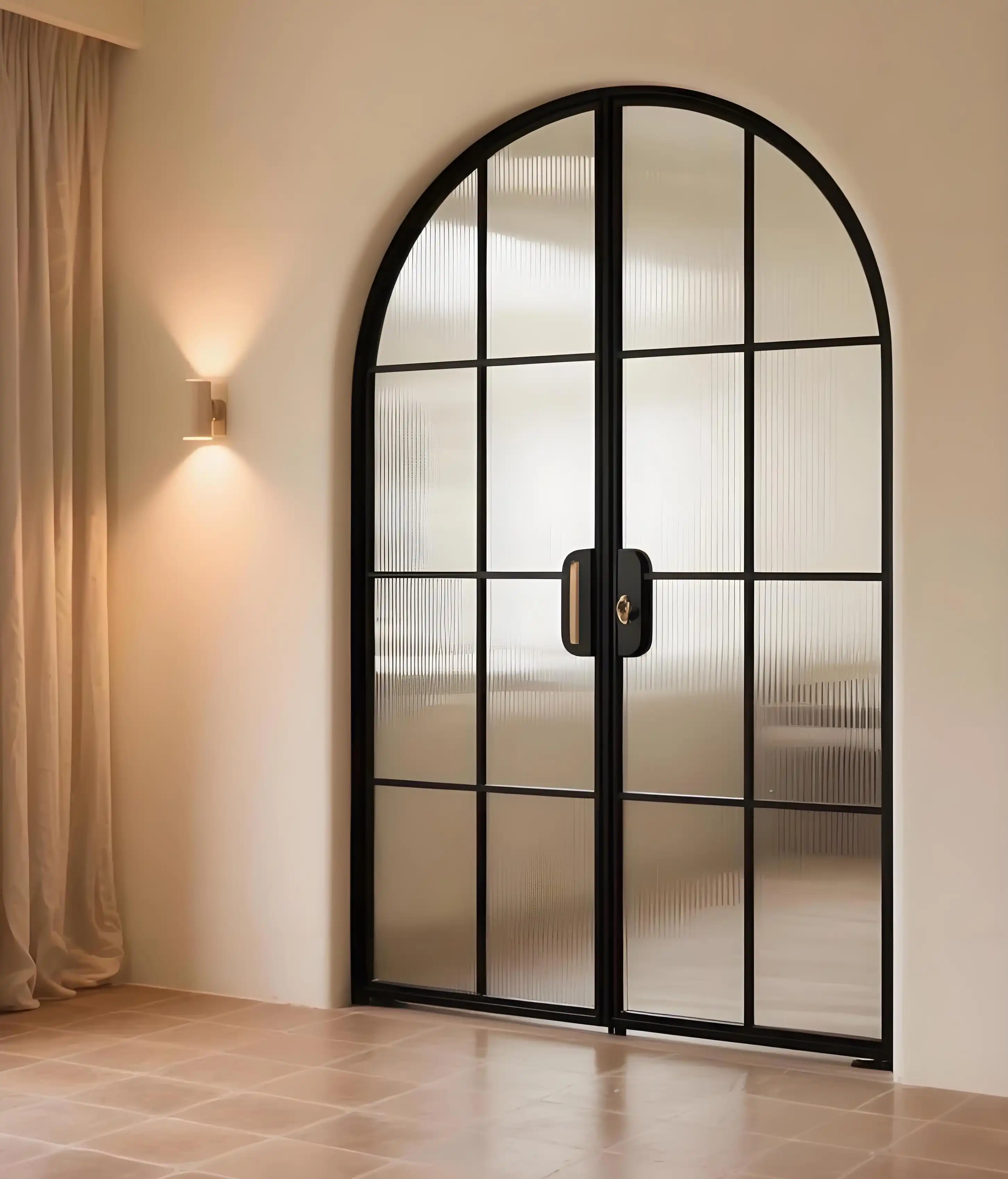
Understanding Weather Resistance in Aluminum French Casement Doors
Defining Weather Resistance in Door Systems
Weather resistance describes a door's ability to withstand environmental stressors without compromising structural integrity, thermal performance, or aesthetic quality. These stressors include water penetration during heavy rainfall, air leakage from wind pressure, condensation from temperature differentials, and material degradation from UV exposure.
The measure of weather resistance extends beyond immediate waterproofing to encompass long-term durability under cyclical stress—freeze-thaw cycles, humidity fluctuations, and seasonal temperature variations. Testing standards such as AAMA 101 and WDMA I.S.2A provide quantifiable benchmarks for water penetration resistance, air infiltration rates, and structural wind load capacity that procurement teams reference during supplier evaluation.
Core Design Elements Contributing to Weather Protection
Weatherproofing starts with powder-coated aluminium frames. Using electrostatic powder coating, a consistent 60–120 micron protective layer resists corrosion, UV fading, and surface deterioration. Unlike painted coatings that chip or peel, powder coating chemically adheres to the aluminium base, protecting it against coastal salt spray and urban industrial pollution.
Another important factor is thermal break technology. PA66 nylon strips from 14.8mm to 34mm wide obstruct heat conductivity channels between aluminium chambers. This built thermal barrier lowers heat transmission by up to 40% compared to non-thermal break systems, reducing condensation on interior surfaces during cold weather, a typical failure point that causes mould development and seal damage.
French casement systems' double-swing design makes sealing the central meeting stile where two door panels converge difficult. Innovative compression seal systems employing EPDM rubber, which remains elastic from -40°C to 120°C, generate overlapping weatherstripping that resists water penetration even in wind-driven rain. Multi-point locking systems with up to five engagement points effectively distribute closing pressure throughout the door perimeter, eliminating gaps.
Impact on Operational Efficiency and Lifecycle Costs
Insufficient weather resistance raises operating costs. Poorly sealed doors cause HVAC systems to work harder, increasing climate-controlled building energy consumption by 15–25%. Water intrusion degrades interior surfaces, increases slip risks, and promotes wall assembly structural degradation. Weather-damaged doors need material costs, labour interruption, temporary closure consequences, and warranty disputes with end customers, which is especially difficult for OEM brand partners whose image relies on product dependability.
Technical Breakdown: How Aluminum French Casement Doors Perform Against Weather Elements
Water Infiltration Prevention Through Engineering Precision
Water resistance starts with door geometry. Inward-opening casements enable wind pressure to tighten door panels against weatherstripping rather than push them outward, providing a storm-reinforcing seal. Drainage channels in the frame's bottom rail direct water that breaches the first level of defence via weep holes before entering the building envelope.
AAMA 520 testing simulates coastal hurricanes by spraying doors with 5 pounds per square foot water and applying structural stresses. Doors achieving these criteria have no water penetration via main seals and negligible drainage channel weepage. The 70/80/110 series profiles' multi-chambered frame architecture generates numerous water-resistance layers.
Double-swing center seals demand engineering care. Interlocking astragal seals squeeze a projection seal in one active panel against a channel in the passive panel at the meeting stile. When correctly built with tolerances within 0.5mm, this interlocking mechanism generates a weathertight junction like perimeter seals.
Thermal Performance and Energy Efficiency Metrics
Thermal break aluminum profiles fundamentally alter heat transfer dynamics. The PA66 nylon barrier's low thermal conductivity (0.25 W/mK compared to aluminum's 237 W/mK) forces heat to travel a circuitous path through the frame, significantly reducing energy loss. Doors equipped with 34mm thermal breaks can achieve U-values as low as 1.8 W/m²K when paired with double glazing configurations like 5+15A+5mm Low-E glass.
The glazing unit contributes substantially to overall thermal performance. The argon gas fill in the insulated glass unit's air space reduces convective heat transfer, while Low-E coatings reflect infrared radiation back into interior spaces during winter and reject solar heat gain during summer. The 12mm or 15mm air space represents an optimized width—narrower gaps limit convective loops, while wider spaces introduce additional convection currents that reduce insulation value. Aluminum French Casement Door designs must account for these glazing dynamics, as the frame material and operating style directly influence edge-seal integrity and overall system efficiency.
Solar heat gain coefficient (SHGC) ratings between 0.25 and 0.35 characterize high-performance glazing assemblies suitable for commercial applications in warm climates. This selectivity allows visible light transmission while blocking infrared heat, reducing cooling loads by up to 30% compared to standard clear glass installations. Building managers in Middle Eastern markets particularly value this performance attribute where summer temperatures regularly exceed 40°C.
Corrosion Resistance and Material Longevity
Surface treatments prolong aluminum's service life beyond its natural oxide layer's corrosion protection. Industrial areas with high sulphur dioxide levels or coastal areas with salty air need powder coating to block moisture, oxygen, and corrosive chemicals. Accelerated weathering studies employing UV exposure chambers and salt spray cabinets show that excellent powder-coated aluminium lasts 20+ years without damage.
The 6063-T5 alloy combines strength and corrosion resistance. T5 tempering artificially ages aluminium, precipitating hardening particles that boost tensile strength to 190 MPa while retaining precise extrusion workability. This alloy has regulated magnesium and silicon levels that improve corrosion resistance compared to structural aluminium alloys developed for strength.
Hardware corrosion prevention is equally important. Even when exposed to dampness or cleaning chemicals, stainless steel hinges, zinc-plated multi-point locks, and anodised aluminium handles resist oxidation. Pitting corrosion may damage hinge operation and door alignment over time, thus coastal installations use marine-grade stainless steel (316 series).
Comparison: Aluminum French Casement Doors vs Other Door Types
Performance Against Traditional Wood French Doors
Wood French doors are cosy but need extensive weatherproofing. Protective coatings must be repainted or re-stained annually, especially on sun-exposed surfaces where UV degradation accelerates finish disintegration. Wood's dimensional instability during humidity fluctuations induces swelling that binds doors in frames during rainy seasons and creates gaps during dry seasons, compromising sealing.
French Casement Doors made of aluminium avoid these maintenance cycles. Powder-coating preserves colour and durability for decades. Seal compression is continuous year-round due to dimensional stability throughout humidity variations. Aluminium systems cost 40–60% less than wood over 20 years, including maintenance labour, refinishing materials, and moisture damage-related premature replacement.
Advantages Over uPVC Casement Door Systems
uPVC doors provide strong thermal insulation at low cost, however material limits restrict performance in certain applications. In big door openings, uPVC's lesser structural strength needs larger frame profiles to provide similar stiffness, reducing visible glass area. The material's thermal expansion coefficient (about 5 times more than aluminium) causes seasonal dimensional fluctuations that impact hardware alignment and seal compression, especially in locations with temperature swings above 30°C.
French door designs that emphasise transparency and light transmission need aluminum's strength-to-weight ratio to accommodate bigger glass panels and thinner sightlines. Regardless of season, the material's dimensional consistency throughout temperature extremes ensures hardware accuracy and seal efficacy. Powder-coated aluminium preserves finish integrity during accelerated weathering equal to decades of sun exposure, but uPVC may discolour from UV exposure.
Structural Advantages Over Sliding Door Configurations
Sliding door systems offer space efficiency but introduce inherent weather resistance compromises. The track-based operation requires threshold clearances that create potential water intrusion paths, and the overlapping panel configuration relies on brush seals rather than compression weatherstripping—a less effective barrier against wind-driven rain. Air infiltration rates for sliding systems typically measure 50–100% higher than casement designs due to these sealing limitations.
Aluminum French Casement Doors' compression seal design creates a tighter weather barrier. The mechanical advantage of multi-point locking systems generates substantial closing force that compresses EPDM weatherstripping uniformly around the entire perimeter, achieving air infiltration rates below 0.1 cfm per square foot of door area under ASTM E283 testing at 75 Pascal pressure differential. This sealing effectiveness translates to measurable energy savings and improved occupant comfort in climate-controlled buildings.
Maintenance and Best Practices to Maximize Weather Resistance
Recommended Inspection and Cleaning Protocols
Commercial door systems benefit from quarterly inspections since they spot weathering issues early. Weatherstripping should be visually inspected for compression set, cracking, or frame channel separation. Running a hand over the seal perimeters during door closing might reveal gaps or uneven compression that need hinge modifications or structural settling.
Cleaning with pH-neutral solutions preserves powder coating and seal materials. Acidic treatments attack aluminium oxide layers, whereas alkaline cleaners accelerate finish degradation. Surface contaminants may be removed without damaging protective coatings using soft microfibre towels and mild dish soap. Frame drainage channels carefully since material accumulation obstructs water evacuation paths, causing overflow into interior regions. Weep hole obstructions in dusty or high-pollen circumstances are cleaned by compressed air or small brushes.
Lubricating hardware extends component life and smooths operation. Silicone-based lubricants reduce friction in multi-point lock roller cams and hinge pivot points without attracting dust from petroleum-based products. Lock mechanisms should be dismantled and cleaned annually to eliminate grit that might prematurely wear engagement hooks and striking plates.
Common Weathering Issues and Repair Solutions
The most common weather resistance failure is sealant deterioration around glazing beads. Glass units are bonded to frames by silicone or polysulphide sealants, which undergo UV deterioration and temperature cycling stress, resulting in holes that allow moisture to seep in. To achieve full void filling and adhesion, re-glazing entails removing degraded sealant, washing bonding surfaces with isopropyl alcohol, and applying new sealant using the appropriate tools.
Despite protective coatings, corrosion spots may sometimes develop; they are usually seen around fastener penetrations or cut edges where base metal exposure takes place. By removing loose corrosion products with wire brushing and applying phosphate conversion coating, which passivates aluminium and improves adherence for touch-up paint, it is possible to stop these spots from spreading. Protective covering is restored by applying color-matched powder coat touch-up powder and heat-curing it using portable induction equipment.
Inconsistent seal compression and challenging operation are signs of frame warping caused by structural movement or incorrect installation. Assessing whether thermal expansion or building settlement produced the distortion is necessary for correction. Shim adjustment at anchor locations re-establishes correct frame geometry and redistributes loads. The need of an initial expert installation that takes building movement allowances into consideration is highlighted by the possibility that severe situations may require frame replacement.
Professional Installation Impact on Performance
Long-term weather resistance is greatly influenced by expert installation. When doors shut, even seal compression is ensured by proper shimming, which creates plumb and level frame alignment. Frame deflection under wind loads that might distort weatherseal geometry is prevented by anchor spacing according to manufacturer standards, which are usually 12-inch intervals on vertical jambs and 16-inch spacing across head and sill.
The secondary weather barrier is created by perimeter sealing between door frames and uneven apertures. Joint movement is possible without adhesion failure when low-modulus polyurethane sealant is applied after closed-cell backer rod installation. At the crucial frame-to-wall interface, the sealant joint design that adheres to the 2:1 width-to-depth ratio principles allows for thermal expansion while preserving elastomeric qualities that stop water penetration.
Disclaimer: Depending on certain product combinations, installation quality, and ambient factors, weather resistance effectiveness varies. For project-specific applications, always refer to certified test results and technical parameter documentation.
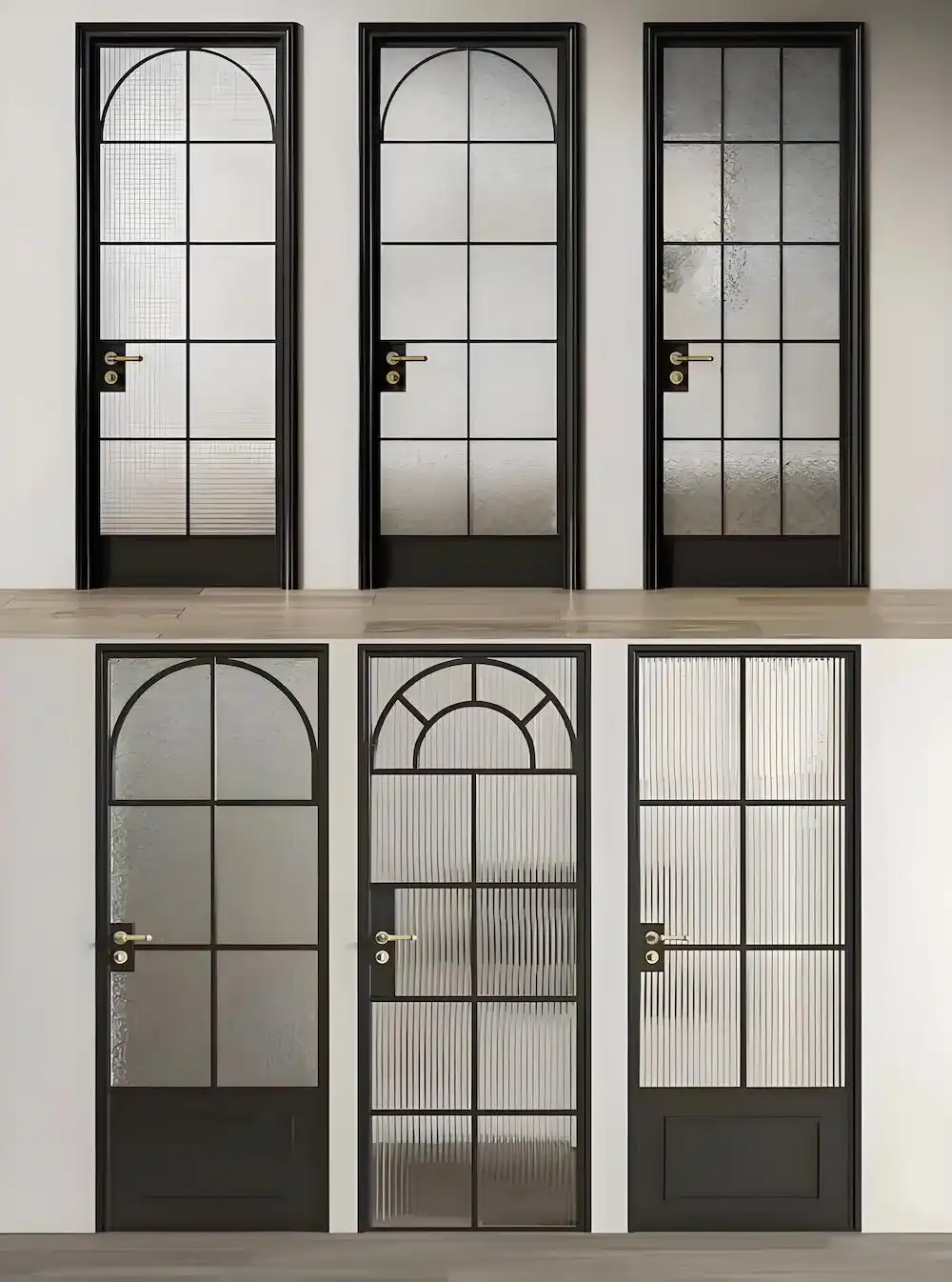
Procurement Insights: Selecting Weather-Resistant Aluminum French Casement Doors
Critical Performance Criteria and Documentation
Specification sheets should detail tested performance ratings rather than marketing claims. Water penetration resistance ratings expressed as Pascal pressure values indicate the wind-driven rain pressure the system withstands without leakage—ratings above 300 Pa suit most commercial applications, while coastal high-rise installations may require 600+ Pa ratings. Air infiltration performance below 0.2 cfm/ft² at 75 Pa pressure differential meets stringent energy code requirements in most jurisdictions.
Structural test data documenting deflection limits under design wind loads prevents field performance failures. Door panels should demonstrate deflection less than L/175 (door height divided by 175) under maximum design wind pressure to maintain seal contact and prevent permanent deformation. Aluminum French Casement Door configurations, with their large operable panels and multi-point locking systems, require particular attention to these deflection criteria, as the hinged sash geometry amplifies load transfer to the frame corners. Test reports from AAMA-certified laboratories provide third-party verification that products meet claimed performance levels—essential documentation for specification compliance on public projects.
Thermal performance documentation should include both frame U-values and complete assembly values incorporating glazing effects. Marketing materials sometimes cite glass-only U-values that misrepresent total door thermal performance. Complete assembly values accounting for frame area, edge-of-glass effects, and thermal bridging through hardware provide accurate energy modeling inputs.
Evaluating Manufacturing Quality and Consistency
Production capability directly affects OEM partnership success. Manufacturing facilities equipped with automated corner welding stations maintain the ±0.3mm corner precision necessary for proper seal alignment—manual welding operations rarely achieve this consistency across production runs. CNC machining centers for hardware preparation ensure hole placement accuracy that prevents installation delays from misaligned components.
Quality management certifications (ISO 9001, ISO 14001) demonstrate process discipline that maintains batch-to-batch consistency—critical for OEM partners requiring color matching across multiple shipments. AAMA certification specifically validates that production samples underwent rigorous testing and that factory quality control systems prevent specification drift. CE marking remains mandatory for European market entry, requiring comprehensive technical file documentation.
Surface treatment capabilities warrant scrutiny. In-house powder coating lines with consistent cure temperature control produce more uniform finishes than outsourced coating services where process variables change between batches. Color consistency measurement using spectrophotometry ensures Delta E values below 1.0—the threshold where human eyes detect color variation between samples from different production lots.
Customization Capabilities and Lead Time Management
Non-standard dimensions or combinations are often needed for building projects, which stock goods are unable to meet. Custom profile designs for certain architectural needs, such as radius curves, asymmetric panel arrangements, or specific thermal break widths, may be produced by manufacturers with flexible extrusion capabilities. This flexibility is useful for historic projects when expenditures in specialised tools are justified by the unique design.
Project scheduling confidence is impacted by lead time dependability. Suppliers may guarantee 25–30 day production cycles from order confirmation to container loading if they keep sufficient inventories of raw materials and component stock. Frame manufacturing, surface treatment, hardware installation, glazing, quality inspection, and packing are all included in this timetable. Shortened schedules that forgo quality control procedures run the risk of field installation issues and warranty claims.
We provide extensive technical support documents, such as thorough assembly manuals, installation video tutorials, and full parameter specification sheets. By maximising container space utilisation, our scatter-pack shipping option drastically lowers logistics costs. Doors ship as pre-cut components with comprehensive assembly instructions, enabling effective on-site assembly that upholds quality standards while cutting freight costs by roughly 30%. Project contractors that manage strict installation timelines across many construction sites would especially benefit from this strategy.
Conclusion
Weather-resistant Aluminum French Casement Door systems combine engineered design precision with material science to deliver long-term performance across challenging environmental conditions. The integration of thermal break technology, multi-point locking compression, and corrosion-resistant finishes creates door assemblies that maintain energy efficiency, structural integrity, and aesthetic quality throughout extended service lives.
Procurement decisions grounded in verified performance data, manufacturing quality assessment, and supplier capability evaluation position building material professionals and OEM partners to specify systems that meet both immediate project requirements and long-term durability expectations while minimizing lifecycle costs and warranty exposure.
FAQ
What weather performance ratings should commercial projects require?
Commercial installations typically specify water penetration resistance above 300 Pa, air infiltration below 0.2 cfm/ft² at 75 Pa, and structural deflection limits under L/175 at design wind loads. Coastal or high-exposure projects may require enhanced ratings—600+ Pa water resistance and structural performance validated through dynamic wind load cycling tests. Always request AAMA-certified test reports documenting these performance levels rather than relying on manufacturer claims.
How does thermal break width affect energy performance?
Thermal break width directly influences U-value performance. A 14.8mm PA66 nylon barrier typically achieves frame U-values around 2.4 W/m²K, while 34mm barriers reduce this to approximately 1.8 W/m²K—a 25% improvement. The enhanced insulation prevents interior surface condensation during cold weather, which protects interior finishes and maintains seal integrity. Projects in extreme climates benefit from wider thermal breaks despite modest cost premiums.
Can aluminum French doors accommodate hurricane-rated glazing?
Quality Aluminum French Casement Door systems accept laminated glass configurations up to 28mm total thickness, including hurricane-impact rated assemblies meeting ASTM E1996 and Miami-Dade certification requirements. The robust 6063-T5 frame construction and structural glazing channels provide adequate edge support for heavy laminated units. Specifying impact-rated doors requires coordinating frame reinforcement, enhanced anchoring schedules, and tested hardware that maintains functionality after simulated debris impact.
Partner with Haolv Building Materials for Reliable Weather-Resistant Aluminum French Casement Door Solutions
Selecting a dependable aluminum French casement door manufacturer influences project success across quality, delivery reliability, and technical support dimensions. Haolv Building Materials brings 19 years of specialized manufacturing experience to OEM partnerships and project supply relationships. Our ISO, CE, and AAMA-certified production facility maintains strict quality controls across 6063-T5 thermal break aluminum extrusion, powder coating application, and precision assembly processes that ensure dimensional consistency and weather performance.
We understand procurement challenges facing building material distributors and project contractors. Our multi-point locking systems with five engagement points, PA66 thermal breaks ranging from 14.8mm to 34mm widths, and customizable glass configurations from 5mm to 28mm thickness address diverse project specifications. Adequate inventory depth supports the 25–30 day delivery commitments that keep construction schedules on track, while our technical team provides specification assistance, installation guidance, and responsive after-sales support.
Contact our team at kristin@haolvwindows.com to discuss your specific requirements. We provide sample evaluation programs, technical parameter documentation, and custom quotations that address your OEM branding needs or project-specific configurations. Our commitment extends beyond product supply to partnership support that protects your brand reputation and project outcomes.
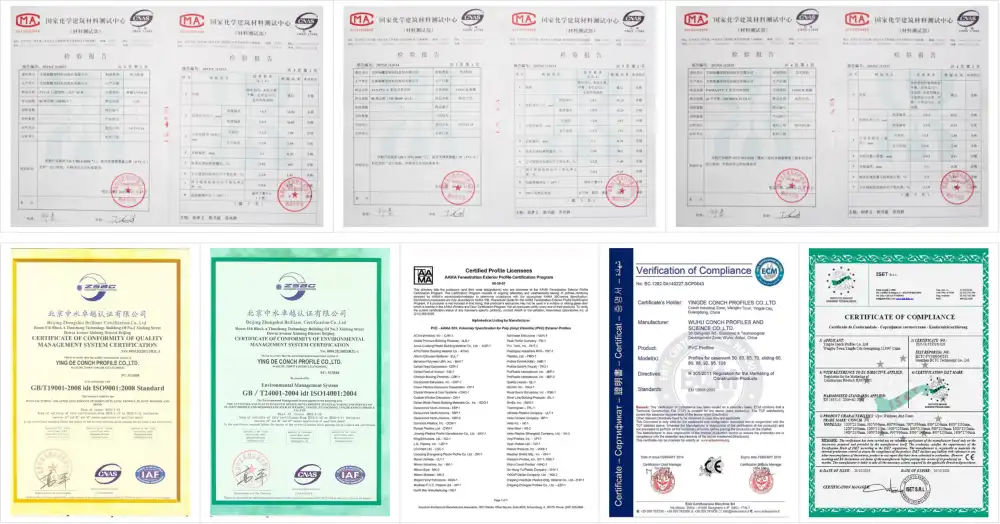
References
1. American Architectural Manufacturers Association. (2019). AAMA 101: Voluntary Standard for Aluminum Prime Windows and Sliding Glass Doors. Schaumburg: AAMA Publications.
2. Straube, J., & Burnett, E. (2005). Building Science for Building Enclosures. Westford: Building Science Press.
3. Window and Door Manufacturers Association. (2020). WDMA I.S.2A: Industry Standard for Water Resistance of Windows, Doors, and Unit Skylights. Chicago: WDMA Technical Publications.
4. Carmody, J., Selkowitz, S., Lee, E., Arasteh, D., & Willmert, T. (2004). Window Systems for High-Performance Buildings. New York: W.W. Norton & Company.
5. Lstiburek, J. (2006). Builder's Guide to Cold Climates: Details for Design and Construction. Westford: Building Science Press.
6. National Fenestration Rating Council. (2021). Technical Document 100: Procedure for Determining Fenestration Product U-factors. Greenbelt: NFRC Publications.
Fast simple channel to send demands lock favorable price for building window door bulk purchases.