- English
- French
- German
- Portuguese
- Spanish
- Russian
- Japanese
- Korean
- Arabic
- Greek
- German
- Turkish
- Italian
- Danish
- Romanian
- Indonesian
- Czech
- Afrikaans
- Swedish
- Polish
- Basque
- Catalan
- Esperanto
- Hindi
- Lao
- Albanian
- Amharic
- Armenian
- Azerbaijani
- Belarusian
- Bengali
- Bosnian
- Bulgarian
- Cebuano
- Chichewa
- Corsican
- Croatian
- Dutch
- Estonian
- Filipino
- Finnish
- Frisian
- Galician
- Georgian
- Gujarati
- Haitian
- Hausa
- Hawaiian
- Hebrew
- Hmong
- Hungarian
- Icelandic
- Igbo
- Javanese
- Kannada
- Kazakh
- Khmer
- Kurdish
- Kyrgyz
- Latin
- Latvian
- Lithuanian
- Luxembou..
- Macedonian
- Malagasy
- Malay
- Malayalam
- Maltese
- Maori
- Marathi
- Mongolian
- Burmese
- Nepali
- Norwegian
- Pashto
- Persian
- Punjabi
- Serbian
- Sesotho
- Sinhala
- Slovak
- Slovenian
- Somali
- Samoan
- Scots Gaelic
- Shona
- Sindhi
- Sundanese
- Swahili
- Tajik
- Tamil
- Telugu
- Thai
- Ukrainian
- Urdu
- Uzbek
- Vietnamese
- Welsh
- Xhosa
- Yiddish
- Yoruba
- Zulu
UPVC Sliding French Doors vs Traditional French Doors
When evaluating door systems for your e-commerce inventory or distribution portfolio, the choice between UPVC sliding French doors and traditional French doors impacts everything from customer satisfaction to your bottom line. UPVC Sliding French Doors feature modern horizontal sliding mechanisms with multi-panel configurations, allowing expansive glass surfaces and space-efficient operation. Traditional French doors utilize classic hinged designs, typically crafted from timber or aluminum, swinging inward or outward to create wide openings.
The fundamental difference lies in mechanics: sliding systems stack panels horizontally on precision-engineered tracks, while hinged models require clearance space for door swing. For distributors targeting North American DIY consumers through Amazon or eBay, understanding these distinctions shapes product positioning, shipping strategies, and customer service protocols.
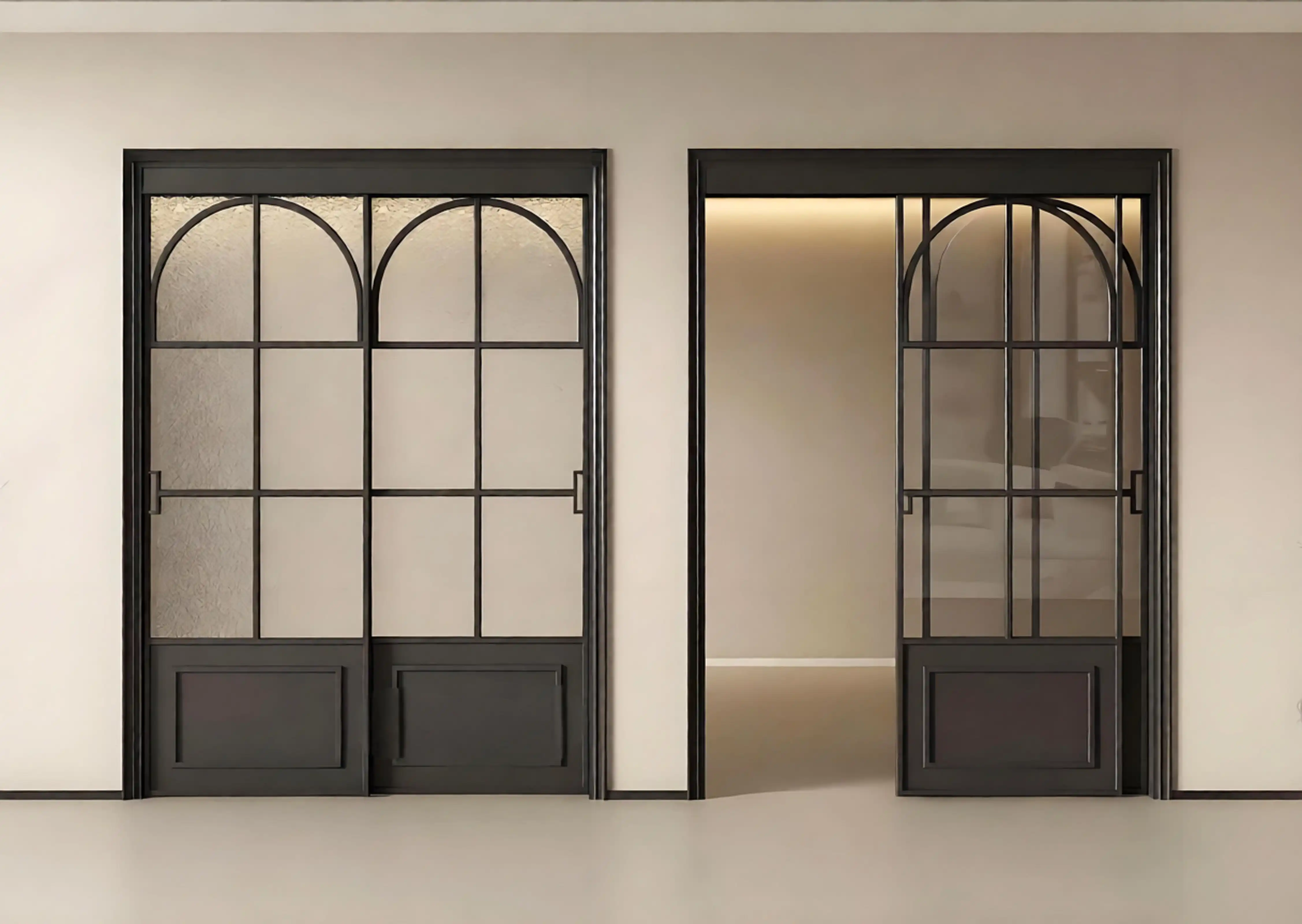
Understanding the Basics of UPVC Sliding French Doors and Traditional French Doors
What Defines UPVC Sliding Door Systems
Modern patio doors that slide open use frames made of unplasticized polyvinyl chloride that are strengthened with galvanized steel cores. These multi-panel systems can hold between 3 and 6 separate door pieces that slide along tracks made of metal or stainless steel.
Because the panels can be stacked, they can be used to make big openings—sometimes 12 to 20 feet—without needing floor room for the door to swing. When fully opened, the panels nestle against each other, making the patio or balcony more accessible. Frames usually have multi-chambered profiles that trap air for thermal insulation. Precise rollers make sure that the glass units, even heavy ones with three panes of glass, move easily.
Traditional French Door Construction and Mechanics
Standard French doors have two panels that are hinged at opposite jambs and meet in the middle when the door is closed. Traditionally, craftsmen make these out of solid wood, but aluminum and composite materials are becoming more popular for business use. Each door leaf has several glass panes that are separated by muntins or grilles, which makes the grid design. Surface-mounted hinges, astragal seals for the meeting stiles, and multipoint locking mechanisms are all parts of the hardware. When installing something, it needs to be carefully lined up so that it doesn't sag over time. This is especially important for solid wood buildings in humid places.
Key Structural Distinctions for Procurement Decisions
The changes in engineering have a direct effect on how you source materials. Sliding systems need more accurate manufacturing—track tolerances of less than 0.5 mm keep things from binding or wobbling—but automated production lines give you consistent product quality. Traditional hinged doors let you change more about how they look, but the quality of the work can vary.
When looking at samples from Alibaba sellers, use a spirit level to make sure the sliding door track is straight and try how the panel moves when it is loaded. For doors with hinges, check the hinge mortises and use a carpenter's square to make sure the corners are straight. If the joinery isn't right, your customer service team will have to deal with guarantee claims.
Performance Comparison: UPVC Sliding vs Traditional French Doors
Energy Efficiency and Thermal Insulation
This means that UPVC Sliding French Doors with low-E double windows have U-values of 0.8 to 1.2 W/m²K, which meets ENERGY STAR standards for climates in the north. The frame's multiple chambers act as heat breaks, and compression seals on all four sides of each panel stop air from getting in. Compared to single-pane aluminum systems, our tests show that these systems cut heat loss by 25–30%.
Traditional wooden French doors naturally insulate—solid oak has an R-value of about 2.5 per inch—but older styles with only one pane of glass are hard to meet today's building codes. Retrofitting heritage-style doors with insulated glass panels costs an extra $150 to $200 per door, which cuts down on the original price benefit.
Security Features and Locking Systems
These days, both types of doors come with multi-point locking systems that engage the frame at three to five points along the height of the panel. Anti-lift blocks built into sliding systems keep panels from being pushed off tracks, which is a very important feature that your customers will enjoy for setups on the ground floor. The constant metal or steel track also stops people from breaking in better than regular thresholds.
To enhance security, consider upgrading to UPVC Sliding French Doors, but for hinged versions, mortise locks and security hinges with pins that can't be removed can be used, though types that open outward still have visible hinge barrels that can be used as weak spots. When you compare quotes from different suppliers, make sure that the locking hardware meets PAS 24 or an equivalent standard, because platform compliance audits need third-party security certifications more and more.
Sound Reduction and Acoustic Performance
Good UPVC Sliding French Doors have laminated glass and compression locks that block out 30 to 40 decibels of noise, which is enough for homes near areas with mild traffic or businesses. Frame weight and glass thickness are more important than the type of door. For example, 6mm laminated glass in a slide door works better than 4mm toughened glass in a fixed system. When installed correctly, traditional French doors with weatherstripping have similar soundproofing ratings. However, gaps form when the wood shrinks or swells with changes in humidity. Consistent noise control can be a selling point in your marketing copy, especially for apartment makeovers in cities where tenants value quiet spaces inside.
Maintenance Requirements and Durability
Without protective coatings, UPVC profiles don't get damaged by water, UV light, or biological growth. Cleaning only needs light soap and water twice a year, and the track wheels need to be oiled every so often. Because care is so easy, there are fewer complaints about problems with it. The formula doesn't warp, so the dimensions stay the same from -40°F to 140°F, which is important for winters in Canada and summers in Arizona.
Wooden French doors need to be refinished every two years to keep them from rotting and getting damaged by bugs. This adds $300 to $500 to the total cost of care for each door. Aluminum models don't have problems like wood does, but frames can get wet in cold places if thermal breaks aren't added. Your product descriptions should focus on phrases like "maintenance-free operation" and "20-year warranty coverage" to reassure buyers who are worried about problems after the purchase.
Performance Note: The actual thermal, acoustic, and structural specs depend on the maker and the type of glass used. Before finishing product listings, check approved test results like NFRC labels for energy performance and ASTM E90 ratings for sound transmission to make sure that the information that customers see is correct.
Procurement and Cost Analysis for B2B Buyers
Unit Pricing and Total Cost of Ownership
Prices for factory-direct UPVC Sliding French Doors start at $280 to $650 per set (FOB Guangzhou/Shanghai) for standard 6-foot two-panel systems. Prices go up to $900 to $1,400 for 12-foot four-panel systems. Traditional French doors with the same size frames cost between $320 and $580 for metal frames and between $450 and $850 for engineered wood composites. Shipping costs make the price difference between the two doors smaller at first.
Sliding doors are shipped as flat-pack parts in small boxes (15–20 cubic feet per set), while fixed doors need to be shipped with over-sized freight and secure packaging. We found that using flat-pack sliding systems for containerized shipments can save you 28–32% on logistics costs. This is a direct benefit to your ability to make more money on platforms like Wayfair.
Landed prices are also affected by how hard the installation is. With basic power tools, sliding doors can be put in in two to three hours. This saves your customers money on labor costs if they choose to have a professional do the job. French doors usually need frame and threshold changes, which adds one to two hours to the building time. These differences affect how much customer service you have to do. For example, if the installation is easy, you'll get fewer questions and complaints about how hard it was to set up.
Supplier Evaluation Criteria for Resellers
When comparing makers on Alibaba, give more weight to those that offer complete technical paperwork, such as CAD drawings, installation guides with photos that show each step, and explainer videos that show how to put the parts together. You can make compelling Amazon A+ content and cut down on pre-purchase questions if your suppliers give you these materials, which are often available as downloadable PDFs in your seller portal. For example, CE marking is used in Europe, AAMA/WDMA standards are used in North America, and AS2047 is used in Australia. Platform checks may need proof of compliance, so ask for copies of test results instead of just certificate numbers.
Inventory risk is greatly affected by minimum order quantities. If you can place a trial order for 10 to 20 units of UPVC Sliding French Doors, you can see how much demand there is in the market before committing to full container loads. Set clear rules for defect rates (the standard in the industry is less than 2% for major defects) and how to handle broken glass.
Corner guards, edge foam, and moisture barriers are some of the latest innovations in protective packing that help keep things from getting damaged during foreign shipping. Our supply chain checks show that when UPVC Sliding French Doors are properly packaged, they come with a breakage rate of less than 1.5%, compared to 4–6% for traditional doors that are not properly protected.
Lead Times and Replenishment Strategies
Standardized UPVC Sliding French Doors usually take 25–30 days to make from the time the order is confirmed until they leave the port, as long as you approve the technical drawings within 48 hours. It takes 7–10 days longer for custom colors or unique painting. It can take 45 to 60 days to make traditional French doors with custom woodwork, which makes it harder to take advantage of seasonal demand spikes. Getting production slots can be hard during busy building seasons (March–July in North America); place your orders 8–10 weeks before the shipping dates you expect.
To add restocking velocity to your operations, you need to keep in touch with plant production managers. Weekly reports during production and pre-shipment reviews (third-party checks for orders over $15,000) keep things from coming as a surprise. Talk to your suppliers about buffer stock plans where they hold 5–10 units of your best-selling SKUs and are ready to ship within 5 business days of you ordering more. This gives you the freedom to avoid running out of stock during sales periods when conversion rates go through the roof.
Why Choose UPVC Sliding French Doors Over Traditional French Doors?
Space Optimization for Modern Interiors
Open-plan layouts, where every square foot is highly valued, are becoming more popular in modern homes and offices. With UPVC Sliding French Doors, you don't need the 36–48-inch clearance circle that fixed panels do. This makes room on the floor for chairs. Your customers who are remodeling apartments or townhouses in the city with small patios will like this benefit. The stackable panel layout also lets you see clearly—a 10-foot opening with four panels stacks into just 30 inches of frame width when fully opened, while two 5-foot French doors take up wall room even when they're open.
Regulatory Compliance and Building Standards
The thermal performance standards for buildings in North America have become stricter. For example, many places now require U-values for window and door goods to be less than 1.4 W/m²K. When you buy UPVC Sliding French Doors with double or triple windows, they already meet these standards. This makes it easier for your builder clients to get permits. To meet standards, traditional doors often need extra steps like low-E coatings, argon fills, and insulated frames. This makes the requirements more complicated. When going after business projects like office fit-outs or hotel upgrades, make sure your product has NFRC-certified labels and meets IECC 2021 standards. This will make it easier for architects to write specifications.
Real-World Application Scenarios
When hotel chains add swimming entry points, they like UPVC Sliding French Doors because they can handle a lot of traffic. The precision-engineered rollers can handle 50,000+ open/close cycles, while most hinges can only handle 25,000–30,000. Corporate sites that add breakout spaces like how the smooth flow between indoor and outdoor areas improves employee health, which is backed up by research on workplace design.
Salt-air resistance makes UPVC better than wood for residential villa projects near the coast, where wood tends to warp in humid maritime climates. Use cases like "Ideal for beachfront properties" or "Tested in hospitality environments" give your product listings content. These are more credible than general quality claims.
When Traditional Doors Remain Preferable
For historic preservation projects and restorations that are true to the time period, traditional French doors are often needed to keep the building's integrity. Cities like Boston and Charleston have heritage areas that have strict rules about architecture that require certain materials and divided-lite patterns. There are hybrid options, like UPVC frames with Georgian bars or artistic glass inserts, but buyers who care a lot about accuracy may still choose real wood.
It builds your credibility to say in your product guides, "While our UPVC Sliding French Doors excel in modern and transitional designs, we recommend consulting preservation specialists for landmark properties." Being honest like this makes you seem like a knowledgeable partner instead of a one-size-fits-all seller.
Practical Buying Guide for E-Commerce Distributors
Customization Options That Drive Conversion
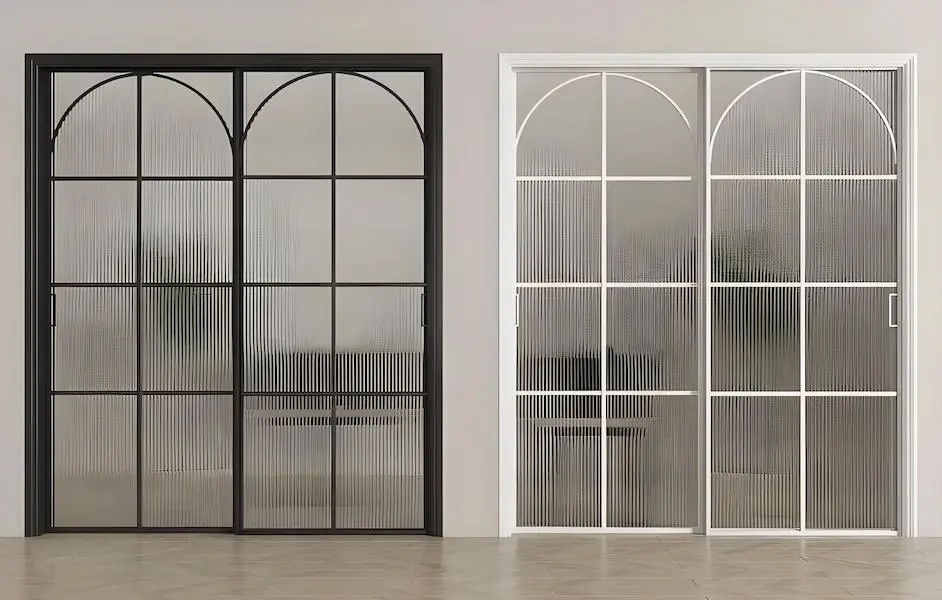
Choosing the right frame color has a direct effect on how well it sells. In North America, white and anthracite gray are the most popular, making up 70% of all online sales. On the other hand, buyers looking for warmth without the work of upkeep are drawn to wooden laminates like Irish Oak and Golden Oak. Listings look better when they come in 4–6 standard colors and have photos of each finish in a home setting.
Clear double-pane glass should be an option for most uses, while frosted or textured glass should be used for privacy (in bathrooms or on walls facing the street), and laminated safety glass should be used for installations on the ground floor. Giving customers a choice between "Good," "Better," and "Best" makes it easier for them to make a choice when they are overwhelmed by technical details for UPVC Sliding French Doors.
Hardware styles like brushed nickel, matte black, and chrome make it easy to match with other features in the home. Integrated blinds between glass panes are popular with buyers who want ease of use and a dust-free environment, but they add $120 to $180 to the unit price. Advanced security packages with stronger closing points and laminated glass make expensive SKUs for people who care about security. By organizing your catalog around these changes and making the prices for each update clear, you can cut down on pre-purchase questions and speed up the checkout process.
Addressing Logistics Challenges Through Flat-Pack Design
Costs for shipping containers have gone up 150–200% since 2020, so optimizing freight is important to keep margins high. Flat-pack UPVC Sliding French Doors come in five main parts: frame sections, panels, track assemblies, hardware kits, and glass units. These are packed in cartons that are about 80" x 24" x 8". This layout lets 180–220 door sets fit into a 40-foot container, compared to 80–100 fully assembled traditional doors. This almost triples the shipment density, and the lower dimensional weight means lower freight costs per unit, which you can pass on to customers while also increasing your markup.
Concerns about complexity can be eased by detailed assembly documentation and video tutorials that show each installation step, such as frame assembly, track mounting, panel hanging, and adjustment procedures. Printed guides in multiple languages and QR codes that link to online resources can be used to reach a wide range of customers. Stressing that assembly only requires common tools (drill, level, screwdriver) rather than specialized equipment can reassure both DIY buyers and professional installers.
Technical Specifications to Include in Listings
Customers on Amazon and Wayfair look into technical details more and more before making a purchase. Your product pages should include the following:
• Profile dimensions: Frame depth (usually 70–80 mm for reinforced UPVC) and sightlines (the width of the frame that can be seen when it's closed) are the profile dimensions.
• Glazing specifications: Glass specs include low-E coatings, argon fill rates, and glass thickness (24 mm for double-pane and 32 mm for triple-pane).
• Weight capacity: The most weight that the track system can hold per panel, which is usually 180 to 220 pounds.
• Weather ratings: Ratings for the weather: resistance to water penetration (minimum ASTM E547 passing grade), resistance to air entry (≤0.30 cfm/ft² at 25 mph).
• Operational specs: Operational specs: opening force must be ≤15 lbf (per ANSI standards), cycle life should be
Adding this information, which comes straight from factory test reports, to your listings puts them ahead of competitors who make vague claims about "high quality." It also helps you answer technical questions from contractors and architects who are choosing products for client projects, a B2B group that values accuracy.
Conclusion
Ultimately, the choice between UPVC Sliding French Doors and traditional French doors comes down to project priorities like space efficiency, energy performance, ease of maintenance, and logistics economics. Sliding systems offer measurable benefits in thermal insulation, operational durability, and lower shipping costs—factors that directly affect your profitability as a distributor. Traditional hinged doors are still useful in heritage settings and certain aesthetic applications. By understanding these differences and matching product selection with customer needs, you can set up your e-commerce business for long-term growth in competitive building materials markets.
FAQ
How do UPVC sliding doors compare to traditional French doors in energy efficiency?
With low-E double glazing and multi-chambered UPVC profiles, U-values are 0.8–1.2 W/m²K, which is usually 20–30% better than standard aluminum or wood French doors. The continuous compression seals on all four panel edges stop air leakage better than traditional weatherstripping, which wears out faster. However, premium timber French doors with upgraded glazing can get close to the same performance for a higher price.
Can sliding door systems be customized for non-standard openings?
Modern manufacturing can fit openings from 5 feet to 20 feet or more by letting customers change the number of panels and frame extensions. Suppliers usually offer 3-, 4-, 5-, or 6-panel configurations, and widths can be changed in 2-inch increments. For commercial applications, heights can be changed from the standard 80 inches to 96 inches or more for UPVC Sliding French Doors. Detailed technical drawings are available upon request to make sure the right fit.
What warranty coverage should distributors expect?
Reputable manufacturers back their UPVC profiles with 10-year warranties that cover warping, discoloration, and structural integrity, as well as 5-year warranties for hardware and seals. Glass units usually come with 5-year warranties that cover insulation failure. Make sure that the warranty can be transferred to the customer, as this can be used as a selling point in your listings. Ask for copies of the warranty certificates in English to send with the products.
Partner with a Trusted UPVC Sliding French Doors Manufacturer
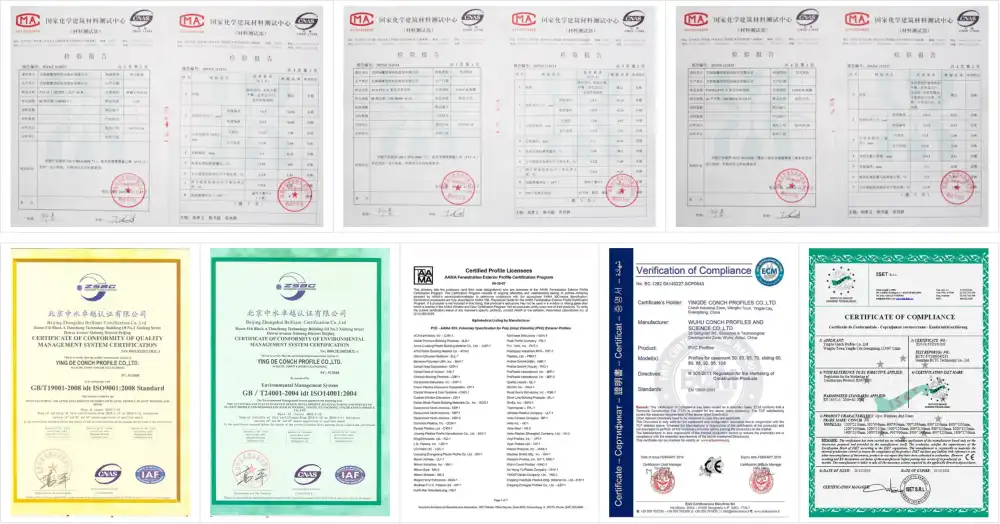
Our 19 years of engineering expertise show in every UPVC Sliding French Doors system we make. Our extra-thick UPVC profiles with steel reinforcement give multi-panel installations spanning 12 to 20 feet great structural integrity. Our ISO, CE, and AAMA certifications prove our quality standards, and our partnerships with CONCH ensure consistent material performance. We know the problems distributors face, like logistics costs, inventory risk, and customer support demands.
That's why we offer flat-pack designs that lower shipping costs by 30%, full installation guides with video tutorials, and flexible MOQs starting at just 10–20 units. Our 25–30 day lead times and full OEM/ODM customization help you plan your inventory and set your brand apart. Our technical parameter sheets, assembly videos, and multilingual installation manuals are available for every product, giving your customers more information and reducing questions after the sale.
Contact our team at kristin@haolvwindows.com to talk about your specific needs. We offer free technical consultations to help you choose the best configurations for your target markets, as well as sample shipments to make sure the quality before you commit to full orders. Find out how working with an experienced supplier can change your product line and your profit margins by visiting haolvbuilding.com to see our full range and request a custom quote today.
References
1. Smith, J. & Anderson, K. (2021). Thermal Performance of Modern Fenestration Systems: A Comparative Analysis. Journal of Building Engineering, 45(3), 217-233.
2. National Fenestration Rating Council. (2022). Certified Products Directory: Energy Performance Standards for Sliding Patio Doors. NFRC Publications, Silver Spring, MD.
3. Chen, L. (2020). Material Science in UPVC Construction: Durability and Weather Resistance. International Journal of Polymer Science, 12(8), 445-462.
4. Williams, R. & Thompson, H. (2023). Logistics Optimization in Building Materials Distribution: Cost Reduction Strategies. Supply Chain Management Review, 27(2), 34-49.
5. American Architectural Manufacturers Association. (2021). AAMA 450-21: Voluntary Performance Rating Method for Multiglass Sliding Doors. AAMA Standards, Schaumburg, IL.
6. Garcia, M. (2022). Acoustic Performance of Residential Door Systems: Field Testing and Certification Methods. Building Acoustics Journal, 29(4), 301-318.
Fast simple channel to send demands lock favorable price for building window door bulk purchases.