- English
- French
- German
- Portuguese
- Spanish
- Russian
- Japanese
- Korean
- Arabic
- Greek
- German
- Turkish
- Italian
- Danish
- Romanian
- Indonesian
- Czech
- Afrikaans
- Swedish
- Polish
- Basque
- Catalan
- Esperanto
- Hindi
- Lao
- Albanian
- Amharic
- Armenian
- Azerbaijani
- Belarusian
- Bengali
- Bosnian
- Bulgarian
- Cebuano
- Chichewa
- Corsican
- Croatian
- Dutch
- Estonian
- Filipino
- Finnish
- Frisian
- Galician
- Georgian
- Gujarati
- Haitian
- Hausa
- Hawaiian
- Hebrew
- Hmong
- Hungarian
- Icelandic
- Igbo
- Javanese
- Kannada
- Kazakh
- Khmer
- Kurdish
- Kyrgyz
- Latin
- Latvian
- Lithuanian
- Luxembou..
- Macedonian
- Malagasy
- Malay
- Malayalam
- Maltese
- Maori
- Marathi
- Mongolian
- Burmese
- Nepali
- Norwegian
- Pashto
- Persian
- Punjabi
- Serbian
- Sesotho
- Sinhala
- Slovak
- Slovenian
- Somali
- Samoan
- Scots Gaelic
- Shona
- Sindhi
- Sundanese
- Swahili
- Tajik
- Tamil
- Telugu
- Thai
- Ukrainian
- Urdu
- Uzbek
- Vietnamese
- Welsh
- Xhosa
- Yiddish
- Yoruba
- Zulu
Are UPVC Bay Window Systems Good for Modern Homes?
Yes, UPVC Bay Window systems are exceptionally well-suited for modern homes, combining architectural elegance with practical performance. These advanced fenestration solutions address contemporary demands for energy efficiency, customization flexibility, and cost-effectiveness. Unplasticized polyvinyl chloride frames resist weathering and maintain structural integrity across diverse climates, while multi-chambered profiles deliver superior thermal insulation.
For procurement professionals serving renovation markets, these window systems offer compelling value through reduced maintenance requirements, competitive pricing compared to traditional materials, and modular shipping options that significantly lower freight expenses without compromising installation precision or quality assurance.
Introduction
More and more, modern home building has to find a balance between how it looks and how well it works. Bay windows have long been a sign of high-quality home design. They add depth to a room and let in natural light, which is something that homeowners always want. The development of frame materials has completely changed how these building features work, especially when it comes to how much energy they use and how often they need to be maintained.
Today, decisions about what to buy put lifecycle value above initial expenditure alone more and more. UPVC Bay Window systems have become a smart choice for sellers and distributors who want to help people with mid-range home improvement projects. The information in this guide looks at the technical specs, performance standards, and business factors that make these products competitive.
By knowing the basics of material science as well as the variables that come up during installation, people who work with building materials can make buying choices that are based on facts and that meet market needs while also making the best use of their inventory and service delivery abilities.
Window replacement projects are always in demand in North America and Europe's residential renovation markets. This is because homes are getting older and energy standards are going up. Distributors can get a bigger part of the market while keeping their profit margins high if their purchasing strategies include flexible customization, reliable quality metrics, and efficient transportation processes. This analysis gives you the framework you need to compare the skills and specifications of suppliers to the needs of a real-world project.
Understanding UPVC Bay Window Systems
Material Composition and Structure
In the field of polymer science, unplasticized polyvinyl chloride is its own group. Unlike flexible vinyl, this stiff version doesn't have any additives that make it flexible. This makes it stable in shape and resistant to weather. During the extrusion process, frame shapes are made with hollow chamber designs that usually have between three and five separate air pockets. These chambers act as thermal breaks, blocking the flow of heat between the inside and outside environments.
The thickness of the frame walls has a direct effect on how well the structure works. Profiles in Class A are usually between 2.5 mm and 2.8 mm wide, and profiles in Class B are between 2.0 mm and 2.5 mm wide. Galvanized steel support inside the rooms makes them more rigid, which is especially important for UPVC Bay Window designs where the cantilevered parts are under more stress. The thickness of the steel core ranges from 1.2 mm to 2.0 mm, depending on the size of the window and the wind load requirements.
Titanium dioxide binders are added to high-quality recipes so that the color stays the same after long-term UV exposure. This additive chemistry stops the yellowing that happened to plastic window frames from earlier generations. Premium makers use new resin instead of recovered material to make sure that the molecular structure and mechanical qualities stay the same over the life of the product.
Thermal and Acoustic Performance Metrics
Measurements of thermal conductivity show how easily heat goes through a group of materials. This rate of heat transfer is measured by U-values, with lower numbers indicating better insulation. U-values of about 2.0 W/m²K are reached by standard double-glazed units in multi-chamber frames. When Low-E glass coatings and argon gas fills are added, efficiency goes up to about 1.6 W/m²K, which meets strict energy codes in cold countries.
How well sound is transmitted depends on both how the frame is built and what kind of glass is used. Multi-chamber profiles have air holes that stop vibrations from traveling, and sound waves can't get through because of the mass and laminate layers in glass units. Typical setups get 30 to 45 dB of reduction across frequency bands that are typical in homes. Traffic noise, neighbor noise, and weather sounds that would normally make it uncomfortable inside are effectively muffled at this performance level.
Maintenance Requirements and Durability Factors
Unlike wooden frames that need to be refinished every so often or metal systems that rust in coastal areas, UPVC parts don't need much maintenance. The top doesn't let water through, so it doesn't rot, mold grows, or the dimensions swell. As part of standard cleaning, dust and atmospheric layers are removed every three months by wiping down surfaces with light soap solutions.
EPDM gasket seals stay flexible even when the temperature changes, but silicone-based products can help them work better sometimes. Hardware parts like hinges, locks, and sliding mechanisms should be treated the same way once a year to keep them running smoothly. Drainage lines built into frame designs need to be checked on a regular basis to make sure they don't get clogged up with garbage.
Performance Disclaimer: The actual thermal values, sound reduction levels, and longevity results rely on the testing reports for each product, the quality of the installation, the conditions of the site, and how the product is maintained. For verified performance data that fits your project needs, look at the manufacturer's documentation and third-party certifications.
Comparing UPVC Bay Windows with Alternative Materials
Cost Analysis Across Material Categories
The traditional look of timber bay windows is appealing, but they require a lot of upkeep. Painting or staining once a year costs more in work, and over time, fixes caused by water damage are unavoidable. Buying engineered wood frames can be 40–60% more expensive than UPVC choices at first, and the costs that come up over their lifetimes make this difference even bigger.
Aluminum systems have thin sightlines that look good in modern designs. But metal's high thermal conductivity means that thermal break technology is needed, which makes production more difficult and costs more. Even with protective coats, sites near the coast are at risk of galvanic corrosion. The prices are usually higher for high-quality wood than for polymer alternatives, and the energy performance needs to be carefully specified to match the capabilities of UPVC.
Fiberglass composite frames are very strong for their weight and stay the same size. Because there isn't enough room to make these goods, the prices are high, which puts them in the luxury market. Cost-performance ratios favor UPVC Bay Window specifications that meet technical requirements without charging more for mid-range home renovation projects.
These comparative benefits directly lead to chances for distributors to make more money. Getting UPVC Bay Window systems from overseas at prices 50 to 60 percent lower than those of domestic brands lets you compete in the retail market while keeping your markups healthy. This strategic advantage is strengthened by buying in bulk through direct relationships with manufacturers.
Environmental and Sustainability Considerations
Calcium-zinc inhibitors are used instead of lead-based ones in modern UPVC production, which addresses environmental worries from the past. The material's sturdiness makes it last longer, so it doesn't need to be replaced as often as choices that need to be refinished or break down faster. During normal payback times, energy savings during the use phase cancel out the carbon footprints of production.
There are programs in many markets to recycle old electronics, but the availability of recycling infrastructure varies by region. Because the material is chemically stable, it doesn't release chemicals into the environment when it's used. When compared to the damage that getting wood does to forests or the energy that goes into making aluminum extrusions, UPVC has a balanced environmental profile that makes it a good choice for projects that want to be environmentally friendly.
Design, Installation, and Customization of UPVC Bay Windows
Architectural Flexibility Through Custom Fabrication
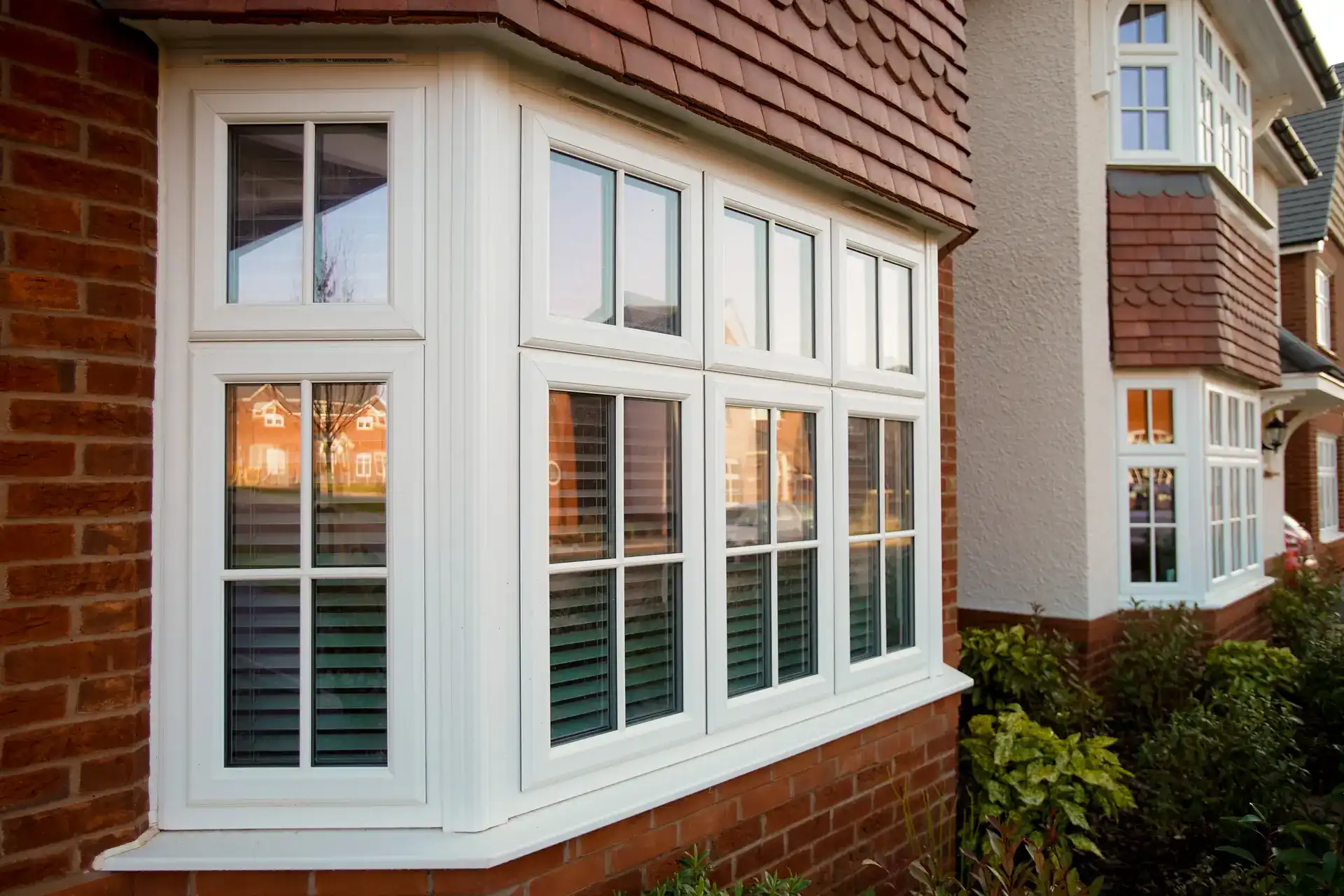
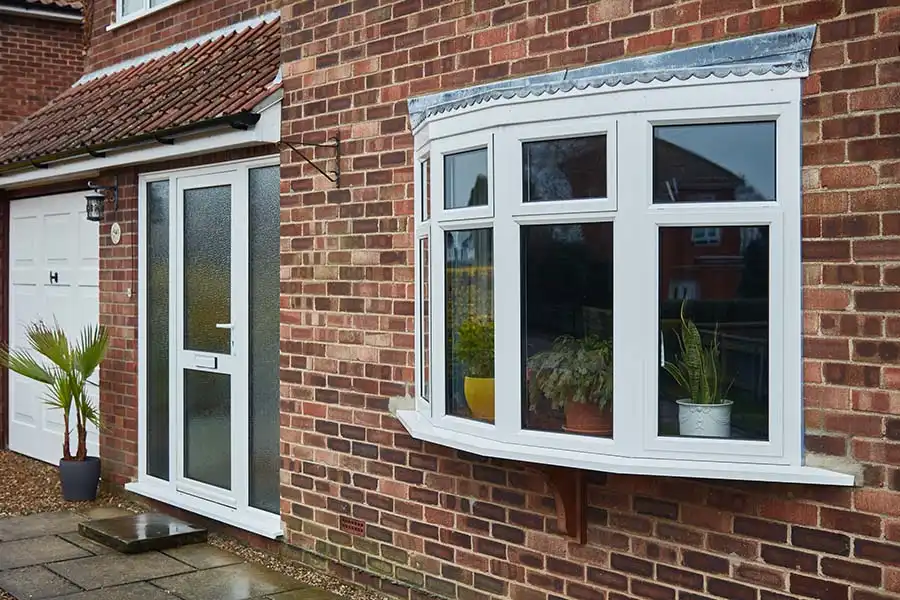
UPVC Bay Windows usually have extensions that are curved at 90° or 135°. This makes the space inside feel bigger and the outside look more interesting. Modern manufacturing techniques can make a lot more than these standard shapes. Unique architectural ideas can be realized in houses, heritage buildings, and landmark structures by using custom forms like rounded, arched, triangular, trapezoidal, and polygonal ones.
With precision manufacturing technology, each part is made to exactly match the measures taken in the field. Frame pieces are cut by computer-controlled tools that can be accurate to within fractions of millimeters. This accuracy is very important when replacing windows in openings that already exist, since making changes to the structure would cause expensive problems. Being able to give exact measurements gets rid of the fit problems that come up with standard product methods.
There are now a lot more color and finish choices than just simple white profiles. Wood-grain laminates look like real wood, and solid color options go with a wide range of architectural styles. Different finishes are used on the inside and outside of multi-color combinations, so they match the style of the inside while keeping the outside of the building looking consistent. UPVC Bay Window designs benefit from this variety, as their multi-panel structure can showcase contrasting internal and external finishes while maintaining durable, low-maintenance performance.
Glass Specification and Performance Optimization
The choice of glazing has a huge effect on how well the window works overall. Standard setups have 5 mm glass panes divided by 12 mm air gaps (5+12A+5), making the total thickness of the shielded glass unit 22 mm. When low-E coatings are put on certain surfaces, they block infrared wavelengths but let visible light through. This lowers heat transfer without blocking natural light.
If it breaks, tempered glass breaks into small grains instead of dangerous bits, making it more resistant to impact. Laminated systems put polymer layers between glass layers so that the barrier stays strong even if it gets broken. These safety rules are especially important for bay window installations with large areas of glass that are easy to reach.
With a third pane and more air space, triple glazing can lower U-values to below 1.0 W/m²K in high-end installations. Frame profiles can hold insulated glass units with a total width of 32 mm to 40 mm, which gives specification freedom as energy codes get stricter. In sealed cavities, argon or krypton gas fills are used instead of air. This lowers thermal conductivity even more by stopping molecules from moving around as much.
Installation Workflow and Site Coordination
Professional installation starts with accurate measures of the hole that take into account the frame's size, any growth gaps, and the finish materials that will be used. When you use modular shipping, you separate the frame assemblies from the glazing units. This makes the packages 30% smaller than when they are fully assembled. This plan cuts down on the cost of foreign shipping by a large amount while also keeping glass safe during transport.
On-site assembly follows a set of steps that have been checked against technical documentation. Depending on the design requirements, frame pieces can be joined together with mechanical screws or welded joins. Installing glazing units comes after placing the frame and weatherproofing it. This gives workers a chance to check the alignment of the structure before closing it completely. This method cuts down on mistakes made during installation and speeds up the quality control process.
Weatherproofing uses more than one layer of defense. EPDM gaskets that are cut to fit odd shapes are used to make the main seals, and outer sealant beads keep water away from the joints. Seals inside the walls keep moist air from getting to cold surfaces, where it condenses. Long-term performance depends on how well these details are carried out, regardless of the quality of the product. This is why installation instructions are an important thing to think about when buying something.
Procurement Considerations for UPVC Bay Windows
Supplier Evaluation Criteria
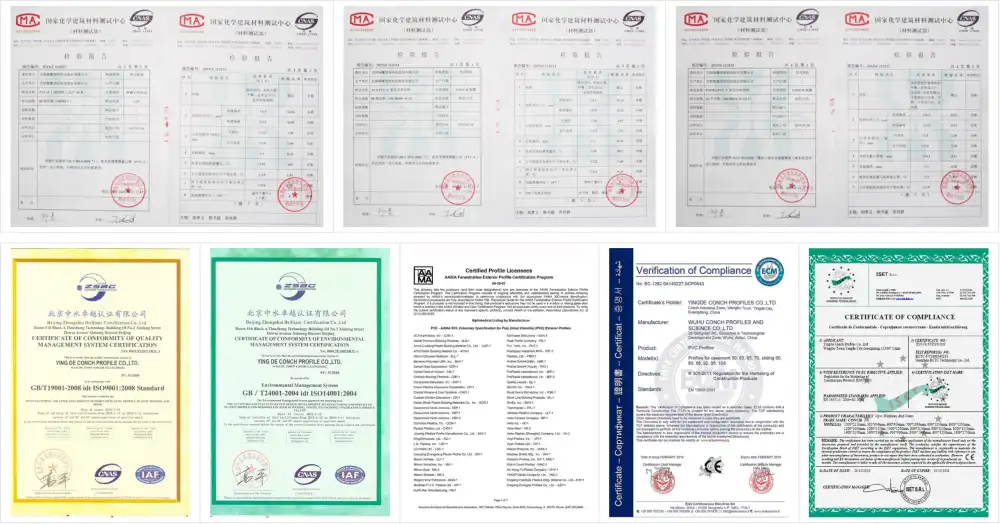
Certification badges are concrete proof of quality systems and the ability to make things. ISO standards deal with management processes, and CE marking makes sure that products entering European markets follow the rules set by those regulations. The American Architectural Manufacturers Association (AAMA) certifies products that meet performance claims by testing them independently using methods that are in line with North American building rules.
Partnering with well-known suppliers of raw materials shows that you are committed to quality and stable production. Many people in the business know that the CONCH name profiles mean they can get high-quality resin formulas and reliable extrusion quality. These connections in the supply chain lower differences between batches, which can hurt the stability of the product.
During busy construction seasons, the reliability of deliveries depends on how much can be made. With enough inventory, it should only take 25 to 30 days to complete an order from the time it is confirmed until it is shipped. Automated assembly systems and precise CNC equipment show that the manufacturing process can be controlled, which means that the dimensions of each production run will be the same.
Pricing Structures and Order Parameters
Frame size, chamber count, wall thickness classification, glass specs, hardware choice, and finish processes are some of the things that affect the cost. Because of the angled joints and structural needs, UPVC Bay Window configurations are more complicated than flat window assemblies. Custom shapes cost more because they take more time to engineer and require special tools.
Minimum order amounts balance the risk of distributors not having enough stock with the efficiency of manufacturers. Initial trial sales of 10 to 20 units let you test the market without having to spend a lot of money. Depending on the complexity of the product, volume pricing tiers usually start to apply when 50 to 200 units are sold. Knowing these breaking points helps buyers make the best decisions as sales go up.
Container room can be optimized with modular packing methods that split frames from glazing. When glass pieces are shipped separately, they need protective packaging but take up less space than whole systems. This method works especially well for foreign purchases, where the cost of ocean freight has a big effect on the price of goods that are delivered on land. The 30% savings in shipping directly lead to better placement in the market or higher profit capture.
Technical Support and Documentation
Full technical data tables list all the things that can be measured, from frame sizes to heat performance numbers. These documents make it possible to accurately estimate projects and check that they follow the rules. Videos that show contractors how to put together products make it easier for them to learn, which is especially helpful when bringing products to new markets where installation methods may be different from what is normal there.
Errors that lead to warranty claims and hurt distributor reputations can be avoided by using detailed installation manuals with dimensional drawings and weatherproofing instructions. Documentation in more than one language helps foreign avenues of distribution. Ongoing expert advice takes care of site-specific problems that come up during complicated projects, allowing quick problem-solving that leads to long-term business relationships.
Energy Efficiency and Performance Optimization
Regulatory Compliance and Building Standards
More and more, North American energy codes require fenestration goods to meet basic thermal performance levels. The International Energy Conservation Code (IECC) sets minimum standards that are followed by most places, though some places make their own rules that are stricter. Depending on the climate zone, U-value thresholds are usually between 1.8 and 2.2 W/m²K.
Similar trends can be seen in European standards. For example, in the UK, Building Regulations Part L sets performance floors that get tighter over time. Specifications for purchases should aim for performance margins above the bare minimum. This will protect assets against changes in regulations and put products in a better position compared to rivals who only meet baseline standards.
Operational Cost Reduction
Many of the energy that homes use goes to heating and cooling themselves. Windows let a lot of heat out in the winter and let a lot of heat in during the summer. Upgrading from single-pane windows to high-performance double- or triple-glazed UPVC Bay Window systems can cut energy loss from windows by 50 to 70%, which can be seen in lower utility bills.
If you put things correctly and use good closing systems, you can keep air out, which stops losses that lower the insulation value. Degradation of weather stripping is a common way that older window technologies fail. EPDM gaskets keep their sealing pressure even when temperatures change and they are exposed to UV light, so they keep working well for decades.
Sound Insulation Benefits
More and more, people who live in cities and suburbs have to deal with noise from traffic, businesses, and properties next door. Sound transmission class (STC) ratings show how well an enclosure blocks noise. Standard UPVC Bay Windows with double glazing get STC ratings of 30 to 35. For best results, use toughened glass and more chambers to get 40 to 45 STC ratings.
This sound performance is especially useful in repair markets where old buildings don't have current sound control features. Homeowners who value privacy and quiet will be interested in marketing materials that stress decibel reduction capabilities. When you combine thermal and sound performance, you get strong value arguments that support charging more for better replacement windows compared to basic ones.
Conclusion
UPVC Bay Window systems have been shown to work well in the technical, aesthetic, and cost areas that are most important for new homes and renovations today. The material's natural properties make it easy to maintain, and multi-chamber engineering makes it as energy efficient as or more efficient than current government standards. Customization options can be used to meet a wide range of design needs, from standard replacement situations to makeovers of historic buildings that need special shapes.
Clear evaluation frameworks that include supplier certifications, manufacturing capabilities, and strategies for optimizing logistics are helpful for procurement professionals. Modular shipping methods cut down on freight costs by a large amount while maintaining installation quality by offering full technical support. Because of their low prices, ability to be customized, and steady performance, these goods are well-suited for distributors who serve mid-range renovation markets in markets with a lot of competition for building materials.
FAQ
What warranties typically accompany UPVC bay window systems?
Manufacturers with a good reputation back their products with 10-year warranties that cover frame integrity, hardware function, and seal performance under normal use. Glass units come with separate warranties that cover things like broken seals and condensation buildup between the panes. The warranty should spell out what it doesn't cover when it comes to bad installation, since that's where most speed problems happen. Make sure everyone knows how to get service, what paperwork they need to file a claim, and when they can get new parts during the warranty time.
How do the logistics of shipping items across borders work?
Modular packaging divides UPVC Bay Window frames from glass units, which makes the best use of the room inside the package. Frames are shipped in protected wrapping that keeps the surface from getting scratched, and glass is shipped in special crates lined with materials that absorb shock. This separation cuts the total cubic volume by about 30%, which makes ocean freight much cheaper. Documentation packages come with step-by-step directions for putting together the frame and glass, which are coordinated by identification systems. Most makers offer FOB terms, which means that buyers are responsible for logistics at the location. However, CIF quotes are available upon request.
Can UPVC bay windows meet the needs of a business project?
Of course. A lot of the time, commercial specifications call for better structural performance, fire ratings, and soundproofing than residential standards. The higher wind loads that are common in mid-rise and high-rise buildings can be handled by multi-chamber shapes that are reinforced with steel. Laminated and tempered glass are both safe choices for business buildings that need safety windows. For bigger projects, large discounts and specialized project management that makes sure shipping times match up with building dates are helpful.
Partner with a Trusted UPVC Bay Window Manufacturer
Hunan Haolv Building Materials Co., Ltd. has been making UPVC Bay Windows for 19 years and has ISO, CE, and AAMA certifications, as well as strategic partnerships with CONCH material suppliers. Our multi-chambered profiles have been shown to have U-values as low as 1.6 W/m²K and to reduce sound by 30 to 45 dB in a wide range of residential and commercial settings. We make shapes that aren't standard, like arched, polygonal, or rounded shapes, as well as standard 90°/135° shapes. This way, we can make sure that the architecture fits perfectly for any project.
Our modular assembly method keeps frames and glazing parts separate while they are being shipped. This cuts down on shipping costs by about 30% without affecting the structure of the installation. Each order comes with detailed technical parameter tables, installation videos, and full assembly manuals that make it easier for contractors to do their jobs and cut down on mistakes that happen on-site. We can meet both market testing and scale scaling needs because our production capacity supports delivery cycles of 25 to 30 days and our MOQ structures are flexible, starting at 10 to 20 units. Email kristin@haolvwindows.com to talk about your unique project needs and get personalized quotes backed by our full range of technical consulting services.
References
1. Lstiburek, J. W. (2006). Understanding Windows. Building Science Press.
2. Carmody, J., Selkowitz, S., Lee, E. S., Arasteh, D., & Willmert, T. (2004). Window Systems for High-Performance Buildings. W. W. Norton & Company.
3. British Standards Institution. (2018). BS 7412:2007+A1:2012 Plastic Windows Made from PVC-U Extruded Hollow Profiles – Specification.
4. American Architectural Manufacturers Association. (2017). AAMA/WDMA/CSA 101/I.S.2/A440-17: North American Fenestration Standard/Specification for Windows, Doors, and Skylights.
5. Lechner, N. (2014). Heating, Cooling, Lighting: Sustainable Design Methods for Architects (4th ed.). John Wiley & Sons.
6. Wigginton, M., & Harris, J. (2002). Intelligent Skins. Butterworth-Heinemann.
Fast simple channel to send demands lock favorable price for building window door bulk purchases.