- English
- French
- German
- Portuguese
- Spanish
- Russian
- Japanese
- Korean
- Arabic
- Greek
- German
- Turkish
- Italian
- Danish
- Romanian
- Indonesian
- Czech
- Afrikaans
- Swedish
- Polish
- Basque
- Catalan
- Esperanto
- Hindi
- Lao
- Albanian
- Amharic
- Armenian
- Azerbaijani
- Belarusian
- Bengali
- Bosnian
- Bulgarian
- Cebuano
- Chichewa
- Corsican
- Croatian
- Dutch
- Estonian
- Filipino
- Finnish
- Frisian
- Galician
- Georgian
- Gujarati
- Haitian
- Hausa
- Hawaiian
- Hebrew
- Hmong
- Hungarian
- Icelandic
- Igbo
- Javanese
- Kannada
- Kazakh
- Khmer
- Kurdish
- Kyrgyz
- Latin
- Latvian
- Lithuanian
- Luxembou..
- Macedonian
- Malagasy
- Malay
- Malayalam
- Maltese
- Maori
- Marathi
- Mongolian
- Burmese
- Nepali
- Norwegian
- Pashto
- Persian
- Punjabi
- Serbian
- Sesotho
- Sinhala
- Slovak
- Slovenian
- Somali
- Samoan
- Scots Gaelic
- Shona
- Sindhi
- Sundanese
- Swahili
- Tajik
- Tamil
- Telugu
- Thai
- Ukrainian
- Urdu
- Uzbek
- Vietnamese
- Welsh
- Xhosa
- Yiddish
- Yoruba
- Zulu
Best thermal break casement windows for soundproofing
Choosing the right fenestration system is very important when noise pollution affects people's happiness or the productivity of businesses. I've looked at hundreds of projects in urban areas and commercial areas with a lot of foot traffic, and Thermal Break Casement Window systems provide the best combination of soundproofing and energy efficiency. These high-performance aluminum window systems have a strengthened nylon barrier between the inside and outside profiles.
This makes a structural break that stops sound from getting through and keeps heat from escaping. When purchasing windows for apartment buildings with multiple units, mixed-use developments or hotel renovations near airports and highways, procurement managers need to know how thermal break technology affects soundproofing results. This has a direct effect on both the satisfaction of occupants and the long-term value of the business.

Understanding Thermal Break Casement Windows
The engineering behind Thermal Break Casement Windows combines two needs that have been in conflict for a long time: the need for strong structure and the need for poor insulation. Traditional aluminum frames act as constant heat carriers, bringing noise, vibrations, and changes in temperature from the outside into the inside. During the extrusion assembly process, the thermal break solution puts a low-conductivity polyamide strip between the inner and outer aluminum profiles. This strip is usually PA66GF25, which is polyamide reinforced with 25% glass fiber.
How Thermal Breaks Reduce Sound Transmission
Vibrations carry sound through solid objects. When noise from outside hits a window frame, the vibrations move through the material structure. Using a polyamide barrier to break up the continuous aluminum shape, thermal break devices separate the two parts mechanically. This break makes sound waves go through many different material surfaces that have different densities and acoustic impedances, which greatly reduces the amount of energy that gets to inside areas. According to tests done in a lab, good Thermal Break Casement Windows get Sound Transmission Class (STC) ratings of 35 to 45, depending on the type of glass used and the depth of the frame.
Core Construction Elements That Enhance Acoustic Performance
For thermal break systems to effectively block out noise, a number of built-in parts must work together. The 6063-T5 aluminum metal makes the structure solid so it doesn't bend when the wind blows, which stops the resonance that makes sound travel farther. There are no air gaps where sound can get through because multi-layer EPDM sealing strips make constant compression seals at all opening points. Profile depths between 70mm and 120mm can accommodate thicker insulated glass units. Triple glazing configurations offer big improvements in both sound and heat insulation. The polyamide strip itself, which is usually 24 to 34 mm wide, needs to have enough tensile strength to keep the structure strong while letting the most heat and sound escape.
Knowing these building principles helps procurement teams figure out what suppliers can do. Checking that the polyamide strip meets the minimum tensile strength standards (usually 80–100 MPa) when looking at the technical specs makes sure that the thermal break won't fail under mechanical stress. Also, making sure that corner joints use two-part structural glue instead of simple mechanical bolts stops sound from leaking at frame connections.
Comparing Thermal Break Casement Windows with Alternative Window Types
To choose the best window system, you need to know how the performance of different technologies compares. Different types of fenestration have different benefits that rely on the project's needs, funds, and environment.
Performance Analysis Across Window Systems
Non-Thermal Break Aluminum Windows are stronger and have thinner frames, and they cost less at first. But frames made of continuous aluminum create direct thermal bridges and vibration paths that make the insulation less effective and make noise more noticeable. These systems might be good enough for projects where sound quality isn't very important, like warehouse offices or back-of-house commercial spaces. But in residential or hospitality settings, complaints from residents about noise from outside and condensation problems usually lead to long-term costs that are higher than the initial savings.
uPVC Window Systems are good at keeping heat in because they have a multi-chamber profile shape and are naturally low in conduction. uPVC frames do a good job of blocking out noise, but they can't be used for long spans or in windy conditions. Large window openings need steel reinforcement, which makes thermal bridges that lower performance overall. Because the material has a lower modulus of elasticity, frames bend more when there is wind pressure, which could weaken the seal over time. For seaside or high-rise projects, thermal break aluminum systems offer better structure performance with the same or better soundproofing results.
Sliding Window Configurations would get in the way of balconies or other structures nearby in small spaces, but they can work. Unfortunately, sliding mechanisms always make sound quality worse. Because the sashes overlap, there have to be operational clearances that stop casement systems from doing continuous compression sealing. Even high-end sliding windows with multiple layers of weatherstripping don't usually perform as well as casement windows by 3 to 5 STC points. Teams in charge of buying things should only specify sliding systems when architectural limitations make casement operation impossible.
Cost-Benefit Considerations for Large-Scale Procurement
When figuring out how much a system costs, the real economic picture can be seen by going beyond the original buy price. Thermal Break Casement Windows usually cost more—often 20–40% more than options that don't have thermal breaks. But this investment pays off in a measurable way: lower HVAC loads, less maintenance for condensation, and longer operational lifespans. In climates that need a lot of heating or cooling, projects often pay for themselves in less than seven years just by saving energy.
The benefits of better sound quality add value that is harder to measure but very important. Better soundproofing directly affects how many people want to live in a residential development and how much it costs to sell. Hotels near airports or nightlife areas can charge more for rooms that promise a peaceful environment. Commercial office spaces that effectively control noise show measurable increases in productivity and lower employee turnover. Setting up supplier relationships with makers that offer full product lines adds value for sourcing teams that are working on multiple projects at once. Using the same thermal break casement systems for all of your projects makes it easier to specify, train installers, and do long-term maintenance. It also saves you money by buying in bulk.
Buying Guide: How to Choose the Best Thermal Break Casement Window for Soundproofing
To choose the right Thermal Break Casement Windows, you have to match the technical specs to the acoustic needs of the project. The following factors give you an organized way to evaluate and compare suppliers.
Acoustic Rating Requirements and Testing Standards
The main ways to compare acoustic performance are the Sound Transmission Class (STC) and the Weighted Sound Reduction Index (Rw). In North American standards, STC ratings are used to measure how much sound is attenuated across frequency bands that are usual for human speech and city noise. With an STC 35 grade, the perceived sound level drops by about 35 decibels, which means that loud talks outside are almost impossible to hear inside. For projects near roads, airports, or entertainment places, requiring at least STC 38–40 performance is the best way to make sure noise is kept down.
Check the supplier's paperwork to make sure that the acoustic testing follows standard procedures like ASTM E90 or ISO 10140. The lab test results should list the exact window setup that was tried, along with the frame sizes, glass requirements, and hardware systems. General claims without full test results might show that tested samples and production units work differently.
Glass Configuration Impact on Soundproofing
While thermal break frames are the basis for soundproofing, the specifics of the glazing have a big impact on the end result. Asymmetric double glazing, like 6mm external and 4mm internal panes, works better than symmetrical designs because it breaks up resonant frequencies. The space between the panes of glass should be at least 12 mm, and 16 mm will make things even better.
Triple glazing systems work better when projects need to cut down on noise as much as possible. The extra layer of glass and the second air gap make more material interfaces that reduce sound. Choosing argon or krypton gas to fill the space between the panes improves both thermal insulation and sound dampening. This is because these denser gases are better at stopping sound from travelling than air. Some types of laminated glass have polyvinyl butyral (PVB) interlayers that soak up wave energy and make the soundproofing even better. If you put laminated exterior panes with triple glazing next to noise sources that are really annoying, you can get soundproofing that is better than STC 45.
Supplier Evaluation and Quality Assurance
To build trust in a supplier, you need to check more than just their marketing materials and price quotes. By asking for factory inspections, buying teams can check out the factory's production skills, quality control systems, and manufacturing scale. Watching the thermal break insertion, corner binding, and surface finishing lines can help you understand how consistent the production is and how well it can handle big orders.
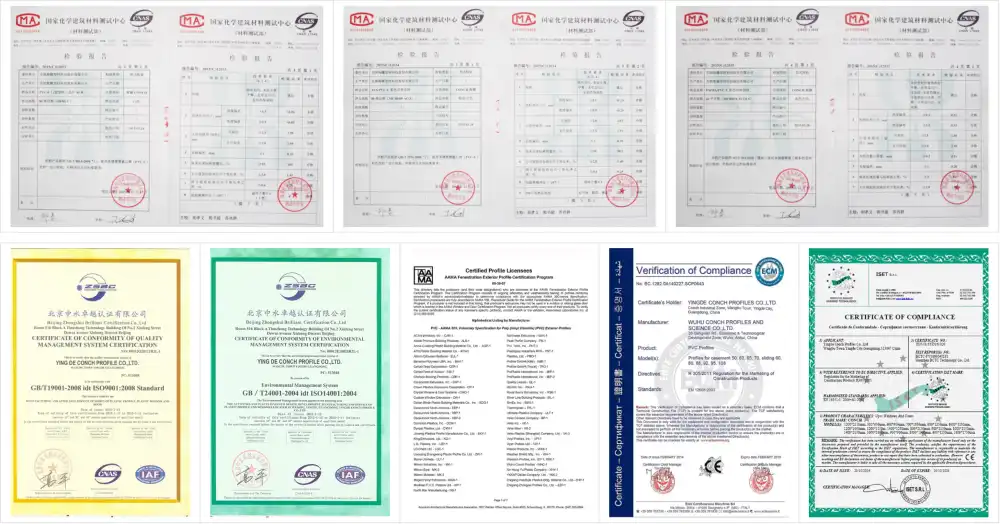
Documentation that certifies a supplier's claims can be checked objectively. Product-specific certificates, like CE marking (for European markets) or NFRC ratings (for North American projects), show that the company meets regional performance standards. ISO 9001 certification shows that the company uses structured quality management practices. For projects that need to follow certain building codes, making sure that the goods from suppliers have the right certifications can help keep the costs of changing specifications during the approval process to a minimum.
Predictability of lead times often determines the success of a project schedule. When evaluating a seller, talking about how they plan output, where they get their raw materials, and their logistics skills can help you find possible delivery risks. Suppliers who have long-term partnerships with trustworthy aluminum extruders and hardware makers usually have more reliable delivery performance than those who rely on spot-market sourcing.
Disclaimer: Actual acoustic and thermal performance should be verified through product-specific testing reports and certifications. Performance values may vary based on installation quality, project-specific conditions, and product configuration.

Installation and Maintenance Tips for Optimal Soundproof Performance
When installation quality is poor, even high-end Thermal Break Casement Windows don't work as well as they're supposed to as far as soundproofing goes. The most important part of soundproofing is the continuous compression seal between the frame and the wall opening.
Critical Installation Practices for Acoustic Integrity
Preparing the rough hole correctly is the first step in installing a window correctly. The size of the opening should leave a uniform amount of space around the edges—usually 10 to 15 mm—so that adjustments can be made and sealants can be applied without having to force the frames into awkward positions. To get a frame that is straight, level, and square, rough holes with differences in size of more than 3 mm need to be shimming.
Pay close attention to the seal around the edge of the window frame where it meets the rough opening. Low-expansion polyurethane foam by itself is not good enough for soundproofing because it can leave tiny air holes. Professional installations use acoustic-grade sealant and continuous backer rod at both the inside and outside edges, making extra barriers against sound getting in. For long-lasting flexibility, the outer sealant joint should stay at a steady 6–8 mm depth and have the right width-to-depth ratios.
Mechanical fastening schedules need to find a balance between attaching structures and preventing thermal bridges. Fasteners make localized conduction paths through the thermal break, so the distance between them should be set by the manufacturer instead of being too close together. These thermal and acoustic bridges can be cut down by using thermally isolating mounting brackets or clips when they are available.
Ongoing Maintenance for Sustained Performance
Regular care keeps the window's thermal and sound performance high for as long as it lasts. UV light and temperature changes cause the EPDM sealing gaskets that make compression seals at movable sash joints to lose their flexibility over time. The condition of the seal should be checked once a year, and it should be replaced if visible hardening, cracking, or compression set is seen.
Hardware parts need to be oiled on a regular basis using products suggested by the maker. Casement hinges and multi-point locking mechanisms that get stuck or don't work right often mean that they need to be adjusted or that parts are worn out. Fixing these problems right away stops the seal from wearing down over time due to misplaced sash action.
Maintenance on the drainage system keeps water from building up and damaging the materials used for soundproofing. Weep holes and draining pathways need to be cleared out every so often to make sure they work right. In coastal or industrial areas, cleaning more often keeps salt deposits or airborne contaminants from building up and breaking down sealants and gaskets. When inspecting a glass unit, look for internal condensation or fogging. This is a sign that the seal in the insulated glass unit has failed. Finding a broken seal early on lets you replace it before water builds up and permanently stains the glass.
Leading Thermal Break Casement Window Manufacturers and Suppliers
To find Thermal Break Casement Windows, you need to find makers who have a track record of both product research and project execution. There are many suppliers in the global fenestration industry, but their performance and service reliability vary a lot.
Key Manufacturer Qualifications
Several things that all reputable Thermal Break Casement Window makers have in common show that they can handle large-scale purchasing needs. Automated assembly lines in factories make sure that the sizes of big orders are always the same, which reduces the problems that come up with field adjustments for projects that come from human production. CNC machining centers for precise cutting and corner joining tools that can maintain steady hydraulic crimping pressures have a direct effect on the quality of the product and how well it sounds.
Certification and Compliance Verification
International and regional certifications give you a standard way to compare the skills of different manufacturers. Getting ISO 9001 quality management certification shows that you can control production in a structured way and make improvements all the time. Environmental management standards like ISO 14001 show that green building projects are putting more value on responsible manufacturing practices.
Product-specific certifications change depending on the market. AAMA approval shows that a product meets the standards for architectural aluminum in North America, while CE marking shows that a product meets the standards for building products in the European Union. For projects that need to be sure of a certain level of energy efficiency, manufacturers should make sure that their NFRC-rated products have documented U-factors and Solar Heat Gain Coefficients.
Logistics and Order Flexibility
For global procurement to work, producers need to have a track record of exporting and a variety of fulfillment choices. Logistics costs are cut by a lot when suppliers offer knock-down shipping configurations. This could lead to the 30% savings that procurement optimization strategies talk about. Shipping pre-assembled frames as parts and installing glass and hardware on-site cuts down on the number of containers needed while keeping quality control over important frame assembly.
Transport damage that causes project delays and repair costs can be avoided by being good at loading containers. When manufacturers send goods, they make sure to use the right protective packing, load arrangement, and securing methods to keep frames and finishes from warping or getting damaged during shipping.
Conclusion
Choosing Thermal Break Casement Windows for soundproofing purposes is an investment in the comfort of building occupants, energy efficiency, and the building's long-term performance. When these systems are put together, the polyamide thermal barrier does two things: it stops heat from transferring and separates vibration paths that carry outside noise.
When combined with the right glazing specifications, the right installation methods, and regular maintenance, these window systems achieve acoustic performance that makes places with a lot of noise much better places to live. If procurement experts know about the technical factors that affect soundproofing results, such as STC ratings, glass configurations, installation details, and provider skills, they can set up their projects so that they go smoothly and the end users are happy.
FAQ
How effective are thermal break casement windows for industrial noise reduction?
Depending on how they are set up, Thermal Break Casement Windows get STC ratings between 35 and 45, which means they effectively block out noise from highways, airports, and factories. The polyamide shield stops vibrations from travelling through the frame, and the multi-layer EPDM seals stop sound from leaking at the joints that open. Triple windows with reinforced glass can make projects quieter than STC 45, so even loud places outside can be comfortable inside.
Do thermal breaks provide benefits beyond soundproofing?
In addition to improving sound quality, the polyamide strip also lowers thermal conductivity, giving U-values of 1.0 to 1.8 W/m²K. This improves heat efficiency, which lowers HVAC costs and stops condensation inside, which harms finishes and helps mold grow. Because they can do two things, thermal break systems are useful for jobs where insulation isn't the main requirement.
Can acoustic performance be customized for specific project requirements?
Manufacturers give customers a lot of ways to customize their products, such as choosing the profile depth (from 70 mm to 120 mm series), the asymmetrical glass configurations, the laminated pane options, and the gas-filled cavity specifications. This gives you the freedom to change the sound performance to fit the noise problems at your place while staying within your budget. Technical advice during the creation of the design guarantees the best choice of setup.
Partner with Haolv Building Materials for Your Thermal Break Casement Window Requirements
When purchasing Thermal Break Casement Window systems for soundproofing purposes, teams will be able to find complete solutions from well-known companies that have a history of getting projects done. The people at Haolv Building Materials have been making specialized window frames for 18 years. They run high-tech factories that combine aluminum extrusion, precise CNC machining, automatic assembly, and finishing the surfaces in-house. Our quality control systems are ISO-certified, so they always do a good job on both standard and special orders.
With 6063-T5 aluminum and PA66GF25 thermal barriers, we make full Thermal Break Casement Window lines for 70, 80, 100, and 120 series shapes. High-end European hardware choices, multi-layer EPDM sealing systems, and flexible glazing designs (such as double, triple, and laminated glass specs) make it possible to precisely match the sound needs of a project. Powder coating, anodizing, and PVDF finishes in custom colors are all surface treatment options.
We offer knock-down component shipping because we know that logistics costs have a big effect on the economics of a project. This cuts down on the number of containers needed and the cost of freight. Our technical team provides detailed assembly instructions, installation videos, and parameter lists to help with quick and easy installation in the field. From the initial consultation on specifications to production and delivery, dedicated project coordinators make sure that the schedule is followed and that the quality is always the same.
Email our team at kristin@haolvwindows.com to talk about your particular needs. Thermal Break Casement Window suppliers in North American markets can get sample shipments to check performance, detailed technical specifications, and project-specific quotes from us. We help with commercial, residential, and mixed-use developments.
References
1. American Architectural Manufacturers Association (AAMA). Thermal Performance of Fenestration Systems: Testing and Rating Standards. AAMA Technical Publications, 2021.
2. Qualicoat. Quality Standards for Coating of Aluminum: Acoustic and Thermal Performance Considerations. Qualicoat International Specification, 2020.
3. National Fenestration Rating Council (NFRC). Sound Transmission Class Ratings and Window Performance Metrics. NFRC Technical Document Series, 2022.
4. International Organization for Standardization. ISO 10140: Acoustics – Laboratory Measurement of Sound Insulation of Building Elements. ISO Standards Catalogue, 2021.
5. Building Science Corporation. Thermal Bridging in Fenestration Systems: Impact on Energy Performance and Condensation Control. Building Science Press, 2020.
6. ASTM International. ASTM E90: Standard Test Method for Laboratory Measurement of Airborne Sound Transmission Loss of Building Partitions and Elements. ASTM Standards Publication, 2022.
Fast simple channel to send demands lock favorable price for building window door bulk purchases.