- English
- French
- German
- Portuguese
- Spanish
- Russian
- Japanese
- Korean
- Arabic
- Greek
- German
- Turkish
- Italian
- Danish
- Romanian
- Indonesian
- Czech
- Afrikaans
- Swedish
- Polish
- Basque
- Catalan
- Esperanto
- Hindi
- Lao
- Albanian
- Amharic
- Armenian
- Azerbaijani
- Belarusian
- Bengali
- Bosnian
- Bulgarian
- Cebuano
- Chichewa
- Corsican
- Croatian
- Dutch
- Estonian
- Filipino
- Finnish
- Frisian
- Galician
- Georgian
- Gujarati
- Haitian
- Hausa
- Hawaiian
- Hebrew
- Hmong
- Hungarian
- Icelandic
- Igbo
- Javanese
- Kannada
- Kazakh
- Khmer
- Kurdish
- Kyrgyz
- Latin
- Latvian
- Lithuanian
- Luxembou..
- Macedonian
- Malagasy
- Malay
- Malayalam
- Maltese
- Maori
- Marathi
- Mongolian
- Burmese
- Nepali
- Norwegian
- Pashto
- Persian
- Punjabi
- Serbian
- Sesotho
- Sinhala
- Slovak
- Slovenian
- Somali
- Samoan
- Scots Gaelic
- Shona
- Sindhi
- Sundanese
- Swahili
- Tajik
- Tamil
- Telugu
- Thai
- Ukrainian
- Urdu
- Uzbek
- Vietnamese
- Welsh
- Xhosa
- Yiddish
- Yoruba
- Zulu
How Long Can Aluminium Lean to Glass Roof Systems Last?
When specifying lean-to conservatory roof systems for residential garden projects or commercial terrace installations, one question dominates procurement discussions: how long will these structures realistically perform? Based on industry data and field observations across temperate climate zones, an aluminium lean to glass roof system built with quality materials and proper installation typically delivers 25 to 40 years of functional service life.
This lifespan depends on three critical variables: the grade of aluminium alloy and protective finishes used in the frame construction, the type and quality of glazing specified, and the rigor of the sealing and drainage engineering. Understanding these factors allows installation contractors and landscape design firms to confidently present long-term value propositions to homeowners while managing lifecycle costs effectively.
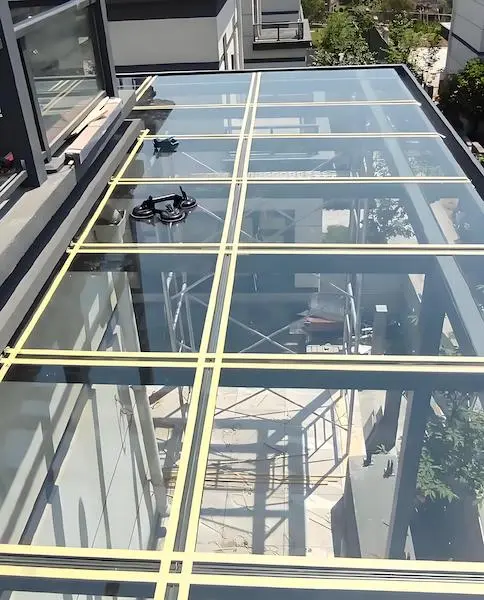
Understanding the Lifespan of Aluminium Lean to Glass Roof Systems
Material Quality as the Foundation
Any Aluminium lean to glass roof starts with the aluminum frame, which gives it its strength. High-strength aluminum alloys, like 6063-T5 or 6061-T6 grades, have tensile strengths of more than 150 N/mm². This means they can hold enough weight for self-weight, snow buildup, and wind lifting forces. When thermal break technology is built into profiles that are 2.0 mm to 3.5 mm thick, it creates separate thermal zones that stop condensation and improve energy performance. This directly affects the material's durability by lowering the damage caused by moisture.
Surface treatments make things last a lot longer. Anodized layers naturally protect against rust in seaside or industrial settings, and powder-coated finishes that meet AAMA 2605 standards don't fade or chalk over time. PVDF coatings are very durable in places where consistency in appearance is important. These layers protect the base metal from rust and keep it structurally sound for a lot longer than metals that haven't been treated.
Glazing Configuration and Its Durability Impact
The glass specification is just as important. For overhead uses, tempered safety glass meets building codes. Laminated versions add an important safety layer; if the glass breaks, the interlayer holds the pieces together. For installations that need to be as thermally efficient as possible, double or triple glazing with low-emissivity coatings cuts down on heat transfer and thermal stress cycles that can weaken sealant bonds over time.
Choosing a glass thickness between 6mm and 32mm depends on the length of the span and the wind loads in the area. Naturally, thicker configurations can handle more stress, but they need framing that is just as strong. Whether a system stays weathertight for decades or seals fail early depends on how the weight of the glass, the strength of the frame, and the way it is fastened all work together.
Environmental Factors and Regional Considerations
The weather has a direct effect on how long people think they will live. When systems are put in place in moderate marine climates with constant humidity, they face different problems than when they are put in place in continental climates with harsh freeze-thaw cycles. UV exposure levels, the ranges of annual temperature changes, and the patterns of rainfall can all speed up or slow down the aging process of materials.
Marine-grade aluminum treatments and stainless steel grade 316 screws help keep coastal systems safe from galvanic corrosion. Heavy snowfall areas need stronger structures and higher pitch angles to make dumping easier and reduce long-term load stress. When procurement managers understand these environmental interactions, they can specify correctly engineered systems instead of over-specifying or accepting designs that aren't good enough.
Key Components Influencing Durability and Maintenance
Frame Engineering and Protective Coatings
Real-world performance is determined by more than just the choice of base material. It is also affected by the building of joint connections and growth accommodations. Because aluminum has specific thermal expansion coefficients, it needs union joints and fixing points with slots that allow controlled movement without compromising weathertightness. Within 10 to 15 years, systems that don't have these traits will develop stress cracks or sealant fails.
Multi-layer EPDM sealing systems make weatherproofing that is twice as good. Under normal circumstances, primary seals stop water from getting in, and secondary drainage pathways catch and get rid of any water that gets through the upper defense. Aluminium lean to glass roof integrates seamlessly into this layered strategy, as its sloped frame and glass panels work with the drainage paths to shed runoff efficiently. Designing for graceful degradation instead of single-point failure is an engineering philosophy that greatly increases the useful life of something.
Glazing Technology and Insulation Performance
Double-glazed units with argon gas fills and warm-edge filler bars provide good thermal insulation, which lowers the chance of condensation forming on inside surfaces. This moisture control keeps the glass edge seals and the frame around them from breaking down too quickly. Low-E coatings reflect infrared radiation, which lowers the greenhouse effect in the summer and keeps the inside warm in the winter.
The sealed unit's ability to absorb moisture and the strength of its edge seal determine whether misting happens between the panes. This is a common type of failure that lowers both thermal performance and visual clarity. Quality glass units from well-known brands come with 10–20-year guarantees against seal failure, which gives buying teams a way to measure risk.
Maintenance Protocols That Extend Service Life
Even high-end systems need to be checked every so often. Inspections once a year should confirm:
- Sealant condition – Looking for cracks or loss of stickiness in silicone or polyurethane joints, especially where the frame meets the wall and stress is concentrated from different movement.
- Drainage channel patency – Making sure that the hidden drainage paths are always free of garbage that could block water flow and lead to frame rust.
- Hardware operation – Putting grease on the hinges, rollers, and locking systems of sliding doors or tilt-turn windows that are built in to keep them from sticking, which puts stress on the frame connections.
- Surface contamination – Getting rid of organic growth, industrial waste, or salt deposits that make coatings break down faster.
Powder-coated finishes can be kept in good shape without chemical damage by using pH-neutral cleaning products on a regular basis. Re-sealing exterior joints on a regular basis, before they completely fail, every 8 to 12 years is much cheaper than fixing leaks and cleaning up the water damage that comes with them.
Comparing Aluminium Lean to Glass Roofs with Alternative Solutions
Aluminium Versus Timber Construction
Traditional wooden greenhouse roofs need to be painted or stained every two years to keep them from rotting and getting bugs. Even if you take good care of structural wood, it will break down in 15 to 20 years, especially if it is outside. Aluminium lean to glass roof completely gets rid of these biological breakdown processes and has better spread capabilities with thinner profile dimensions that make the most of glazing area.
When adding on to existing structures, the difference in weight is very important. Aluminum systems have about half the dead load of similar wood framing. This lowers the stress on the base and makes it easier to follow building regulations for additions.
Aluminium Versus uPVC Systems
uPVC profiles are good at keeping heat in and cost less at first, but they lose their shape when exposed to UV light and changes in temperature. After 10 to 15 years, white uPVC turns a noticeable yellow color. Darker colors absorb sun energy, which causes warping that makes the material less weatherproof. Anywhere from -40°C to +80°C, aluminum doesn't change shape, so its dimensions stay the same.
Another difference is load-bearing capacity. For lengths bigger than small, uPVC needs steel support cores, which takes away from its thermal break benefits. Aluminum has the same strength as steel just by using alloy metallurgy, and it still has all of its thermal break properties.
Long-Term Cost-Benefit Analysis
When comparing upfront costs to long-term costs during the procurement process, aluminum's financial benefits become clear. A wood system that needs to be replaced every 18 years and has to be maintained very carefully every year will cost a lot more over 30 years than an aluminum system that doesn't need much care other than minor resealing. When the disruption costs of early replacement are taken into account, such as customer complaints, problems with site access, and the cost of getting rid of waste, the calculation becomes even more favorable.
Polycarbonate covering is cheap and light, but it lets a lot of solar heat through and cracks on the surface after 8 to 12 years of UV exposure. For installation companies that want to build a reputation on long-term customer satisfaction, suggesting systems that will work reliably for 30 years or more cuts down on warranty calls and brings in new customers through word of mouth.
Installation's Role in Ensuring Longevity
Critical Installation Standards and Best Practices
When installation quality isn't good enough, even high-end parts break early. To keep binding pressures from putting too much stress on corner joints, frame alignment errors must stay within 2 mm across diagonal measurements. To stand up to wind uplift forces that can reach 2.5 kN/m² in open areas, wall fixing points need to be anchored into masonry or timber studs instead of just cavity insulation or cladding.
How the sealant is applied determines how well it waterproofs. Joints need to be properly prepared, which includes being cleaned with a solvent, having a primer applied as needed, and having the right tools to make the right curved shapes that help water run off. Installers who don't use the right bead sizes or prepare the surface properly create leak paths that show up in months instead of decades.
The Value of Experienced Installation Partners
Choosing installation professionals with proven experience installing greenhouse roofs protects the project's results. Teams with a lot of experience know how to accommodate thermal movement, spot problems with the substrate before they become failures, and keep their tools calibrated so that they can cut and drill accurately.
How warranties are set up is very important. Installation guarantees that cover both materials and labor for 10 years transfer a lot of risk, while limited warranties that don't cover "misuse" or "inadequate maintenance" don't really protect you. When comparing various bids, purchasing managers should look at both the guarantee terms and the price differences.
Delivery and Project Coordination Efficiency
Supply chain optimization is a big part of modern procurement models. Systems that come as pre-fabricated parts with full installation instructions, such as dimensional assembly plans, bill of materials lists, and fastener specs, cut down on the time needed on-site and the chance of mistakes. Aluminium lean to glass roof fits directly into this optimized supply chain, as its prefabricated framing and glazing panels arrive ready for rapid assembly with minimal on-site cutting. Video installation guides and technical call support are very helpful when problems arise in the field that were not expected.
Normal production and logistics cycles last 25 to 30 days, from when an order is confirmed to when it is delivered on site. This makes project scheduling more realistic. This time frame allows for custom color requirements, fabrication in non-standard sizes, and coordinated delivery with other trades, which cuts down on the expensive delays that eat away at project margins.
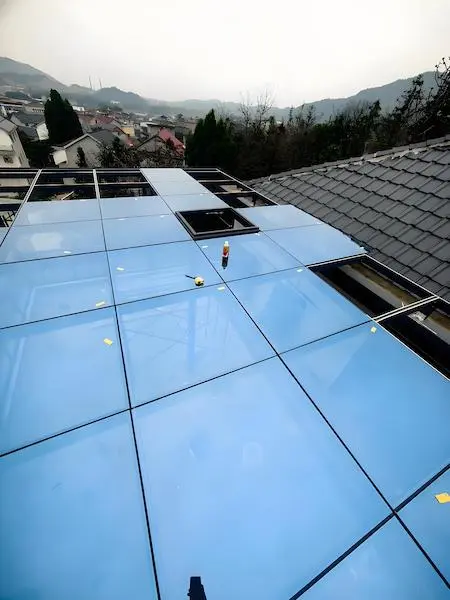
Sustainability and Energy Efficiency Impacts on Lifespan
Eco-Friendly Materials and Manufacturing Processes
The circular economy is based on the idea that aluminum can be recycled over and over again without losing any of its quality. Choosing systems from manufacturers that use recycled aluminum lowers the amount of carbon that is built into them while keeping the same performance levels. Powder painting methods don't give off nearly as many volatile organic compounds (VOCs) as solvent-based paint systems, so they can meet stricter environmental rules.
The advantage of durability is itself an advantage of sustainability. A 35-year working life uses one-third as much material and creates one-third as much waste as installing three 12-year units one after the other. This view of the lifecycle is in line with the standards for green building approval and with companies' promises to be more environmentally friendly.
Thermal Performance and Operational Efficiency
When you mix advanced thermal break engineering with high-performance glazing, you get U-values below 1.5 W/m²K. This means that places that might be uncomfortable in the winter can be used all year. Because it uses less energy, the building will have lower heating and cooling costs and a smaller impact on the environment over its lifetime.
Low-E glass coatings let visible light through but reflect infrared radiation. This reduces the greenhouse effect without blocking natural light. This balance between the benefits of daylighting and controlling temperature keeps buildings from getting too hot, which would require extra shade or automatic cooling systems otherwise.
Innovation Trends Extending Performance Horizons
New technologies are always making systems last longer. Electrochromic glass lets you change the tint on the fly, which lowers thermal stress cycles by limiting solar heat gain. Integrated solar glazing makes energy and protects against the weather at the same time, which is a useful feature that explains the extra cost. Self-cleaning glass coatings that use photocatalytic reactions cut down on upkeep times, which lowers the total cost of service over the life of the product.
Installation companies that are on the cutting edge can set their services apart and attract high-end customers by staying up to date on these new technologies. Client investments are protected against becoming obsolete by choosing systems that can be upgraded in the future.
Performance Disclaimer: The actual system performance and service life will rely on the conditions of the site, the specs of the materials used, the quality of the installation, and how well the system is maintained. The information given is based on general findings about the industry. For performance validation specific to a project, look at certified testing reports and engineering calculations.
Conclusion
Lean-to glass roof systems have a service life expectancy that is based on the quality of the materials, the planning that went into them, how well they were installed, and how often they are maintained. With the right thermal breaks, protective surface treatments, and quality glazing configurations, aluminum frames will consistently protect against the weather and look good for decades. Installation contractors and landscape design firms that work with both home and business customers should choose well-engineered systems from well-known manufacturers to lower risk and make appealing value propositions.
Aluminium lean to glass roof exemplifies this principle, offering the same durable performance and long-term reliability when specified from reputable suppliers. When looking at realistic ownership times, especially when upkeep costs and replacement frequency are taken into account, the original investment difference compared to cheaper options fades quickly. When service providers and their clients make strategic purchasing decisions based on lifecycle analysis instead of simple price comparison, the results are always better for both parties.
FAQ
How often should aluminium lean to glass roofs undergo professional inspection?
Most systems in mild areas only need to be inspected once a year. Assessments should be done every two years in coastal or industrial areas where corrosion can happen quickly. Inspections check the integrity of the sealant, the way the drainage works, and how the hardware works. This way, small problems are found before they get worse and need expensive repairs.
Can these systems withstand harsh winters and heavy snow loads?
Systems that are properly designed can handle heavy snow loads by using the right frame size, steeper pitch angles, and stronger corner joints. Loads that are unique to a certain area can be accommodated by optional structural improvements. For example, installations in mountain zones need different specs than those in moderate coastal areas. Load capacity for a certain spot is proven by certified engineering estimates.
What warranty terms do reputable manufacturers typically offer?
Leading manufacturers offer 10 to 20-year warranties that cover flaws in the material and the finish's integrity. Some even offer longer warranties for powder-coated surfaces that meet AAMA 2605 standards. When certified professionals do the installation, warranties for the work they do usually last for 10 years. Warranty terms depend on the manufacturer and the grade of the system. During specification, procurement teams should make sure they know exactly what is covered.
Partner with Haolv Building Materials for Your Aluminium Lean to Glass Roof Supplier Needs
Haolv Building Materials has been making specialized building materials for 19 years and can help you with your greenhouse projects. Our commercial-grade Aluminium lean to glass roof systems come with heavy-duty thermal break aluminum profiles ranging in thickness from 2 mm to 3 mm, as well as tempered, laminated, and triple-glazed glazing options ranging in thickness from 6 mm to 32 mm. Each system has been approved by CE, ISO, and AAMA, and it uses multi-layer EPDM seals and hidden integrated draining engineering.
We solve common problems by giving full technical help, including thorough assembly drawings, complete bill of materials (BOM) lists, and installation video tutorials that give your teams the tools they need to do a great job. Our knock-down component packaging cuts shipping volumes by up to 30%, which saves money on logistics costs and speeds up the customs clearance process. Installation companies and landscape design firms have changing needs, and we can meet those needs with 25 to 30 day production processes, flexible MOQs that support project amounts of 1 to 3 units, and custom RAL color matching. Email us at kristin@haolvwindows.com to talk about the details of your project and get custom technology solutions.
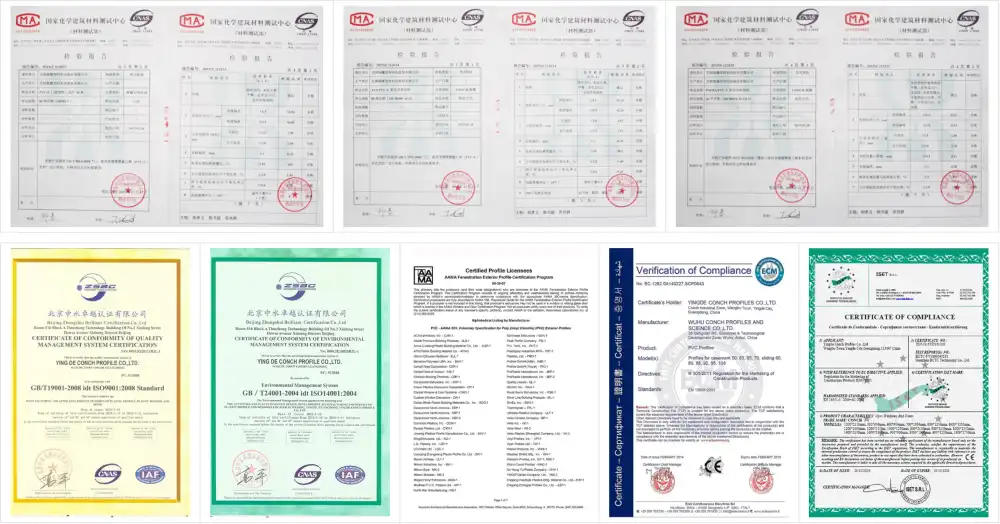
References
1. Anderson, M. & Roberts, P. (2021). Aluminum Building Systems: Performance and Durability in Modern Construction. Architectural Press.
2. Building Research Establishment. (2020). Conservatory and Extension Design Guide: Thermal Performance and Structural Standards. BRE Publications.
3. Chen, L. (2022). "Long-term Performance Assessment of Thermally Broken Aluminum Glazing Systems." Journal of Building Engineering, 48, 112-129.
4. European Aluminium Association. (2019). Aluminum in Building: Sustainability and Lifecycle Analysis. EAA Technical Report Series.
5. Mitchell, K. & Thompson, R. (2023). Glazing Technology for Residential and Commercial Applications: Materials, Performance, and Installation. Construction Industry Publications.
6. National Fenestration Rating Council. (2022). Certification Program Procedures for Thermal Performance of Fenestration Products. NFRC Technical Document 100-2022.
Fast simple channel to send demands lock favorable price for building window door bulk purchases.