- English
- French
- German
- Portuguese
- Spanish
- Russian
- Japanese
- Korean
- Arabic
- Greek
- German
- Turkish
- Italian
- Danish
- Romanian
- Indonesian
- Czech
- Afrikaans
- Swedish
- Polish
- Basque
- Catalan
- Esperanto
- Hindi
- Lao
- Albanian
- Amharic
- Armenian
- Azerbaijani
- Belarusian
- Bengali
- Bosnian
- Bulgarian
- Cebuano
- Chichewa
- Corsican
- Croatian
- Dutch
- Estonian
- Filipino
- Finnish
- Frisian
- Galician
- Georgian
- Gujarati
- Haitian
- Hausa
- Hawaiian
- Hebrew
- Hmong
- Hungarian
- Icelandic
- Igbo
- Javanese
- Kannada
- Kazakh
- Khmer
- Kurdish
- Kyrgyz
- Latin
- Latvian
- Lithuanian
- Luxembou..
- Macedonian
- Malagasy
- Malay
- Malayalam
- Maltese
- Maori
- Marathi
- Mongolian
- Burmese
- Nepali
- Norwegian
- Pashto
- Persian
- Punjabi
- Serbian
- Sesotho
- Sinhala
- Slovak
- Slovenian
- Somali
- Samoan
- Scots Gaelic
- Shona
- Sindhi
- Sundanese
- Swahili
- Tajik
- Tamil
- Telugu
- Thai
- Ukrainian
- Urdu
- Uzbek
- Vietnamese
- Welsh
- Xhosa
- Yiddish
- Yoruba
- Zulu
How to Import Arch Top UPVC Windows From China Suppliers?
Importing Arch Top UPVC Windows from China requires a structured approach that balances design precision, cost efficiency, and quality assurance. For custom home designers and historic restoration specialists working on villa projects or landmark buildings, sourcing curved-profile UPVC windows involves verifying manufacturing capabilities for arch fabrication accuracy within ±2mm tolerances, confirming compatibility between curved glass and frames, and ensuring suppliers accommodate small-batch orders of 5-15 units per project.
Successful procurement hinges on selecting manufacturers with proven expertise in bespoke radius bending, multi-radius arch fabrication, and knock-down assembly options that significantly reduce shipping expenses while maintaining structural integrity.
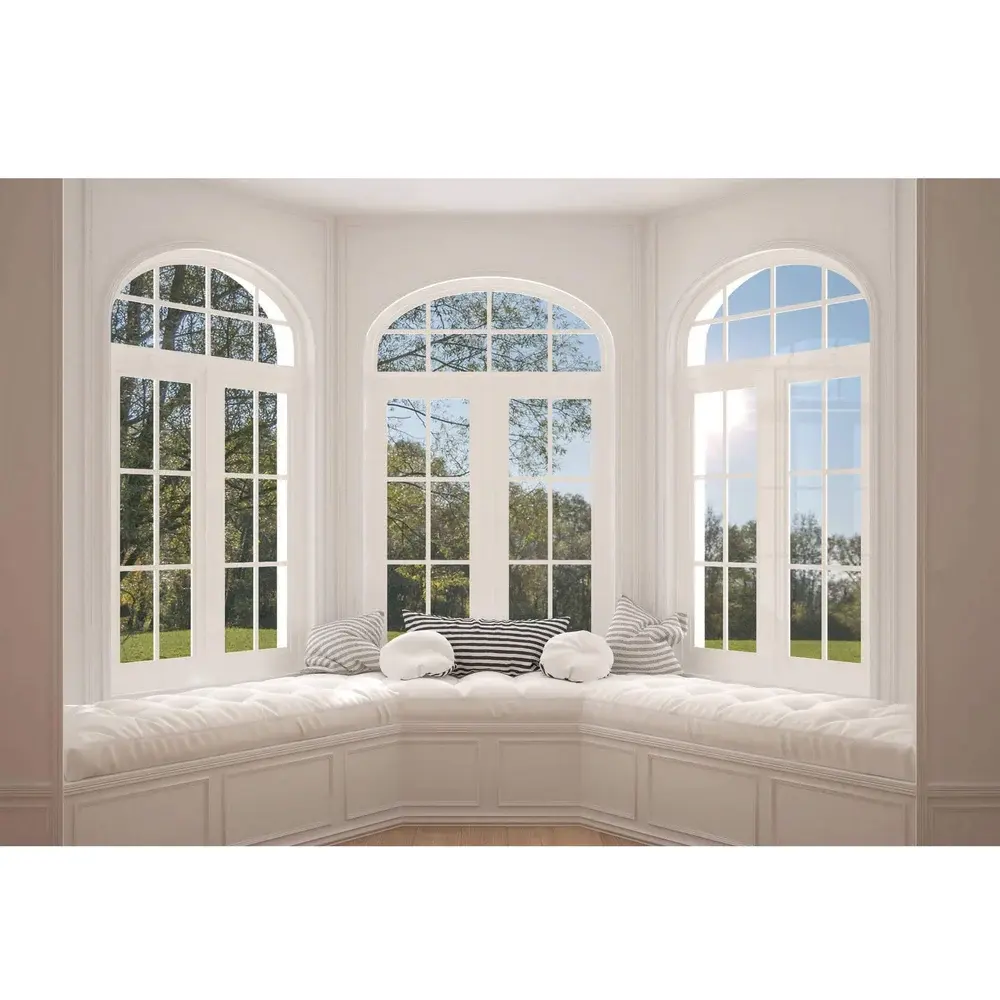
Understanding Arch Top UPVC Windows and Their Market Demand
What Makes Arch Top UPVC Windows Unique
In architectural projects, Arch Top UPVC Windows are both useful and nice to look at. The unplasticized polyvinyl chloride material doesn't warp, rot, or corrode even after decades of use. This makes it perfect for structures that need to be stable in terms of size. The material stays strong when it is made into Arch Top UPVC Windows, like semicircular, elliptical, or segmental shapes. This is possible with strengthened steel cores inside multi-chamber profiles. With this engineering method, Arch Top UPVC Windows can be made, from tight cathedral circles to gentle arcs that span several meters.
These Arch Top UPVC Windows are often used in heritage building restorations where it's important to match the original arch proportions, modern houses that want to stand out visually, and religious buildings that need big Arch Top UPVC Windows. The material is thermally efficient because it is naturally insulating and comes with sealed glazing units. It can also reduce noise by 30 to 45 decibels, depending on the type of glass used and the design of the frame.
Current Market Trends Driving B2B Demand
It seems that buyers are becoming more and more interested in sellers who offer full technical teamwork instead of just delivering products. Design companies are now looking for makers who can read building plans, come up with structural solutions for odd Arch Top UPVC Windows, and give them shop drawings to approve before they start making the product. This consultative approach addresses common worries about frame and glass curvature not matching, the risk of shipping damage for odd shapes, and installation problems that arise when pre-fabricated Arch Top UPVC Windows can't be adjusted in the field.
European and North American markets value providers who can handle small orders and acceptable custom premiums, which usually means taking 30–50% price rises over standard rectangular units instead of multiplications that are too high to consider. Suppliers are chosen based on their ability to deliver solid color finishes that match current building palettes or wood-grain transfer printing. They are also chosen based on their desire to work with production plans that fit within the 8–12 week decision cycles that are usual for custom architectural projects.
Preparing for Import: Key Considerations Before Sourcing from China
Defining Technical Specifications for Custom Arch Windows
For procurement to go well, you must first clearly write down what you need. Arch radius, chord width, rise height, and frame depth should all be shown on architectural plans. When working with complex or irregular curves, giving CAD files in DXF or DWG format stops mistakes in interpretation during fabrication. When writing glass specs, you need to say whether you want heat-bent curved glass for a smooth look or divided panes with muntin bars to save money.
The material specifications should make it clear which profile series is preferred (usually 60mm, 70mm, or 80mm for residential applications), what kind of steel reinforcement is needed for load-bearing arch sections, and what kind of hardware is expected, such as the hinge type for operable sashes versus fixed lites. When matching colors, real samples are often needed instead of digital ones. This is especially true when matching to current building parts or getting certain wood-grain effects through foil lamination methods.
Supplier Verification and Quality Assurance
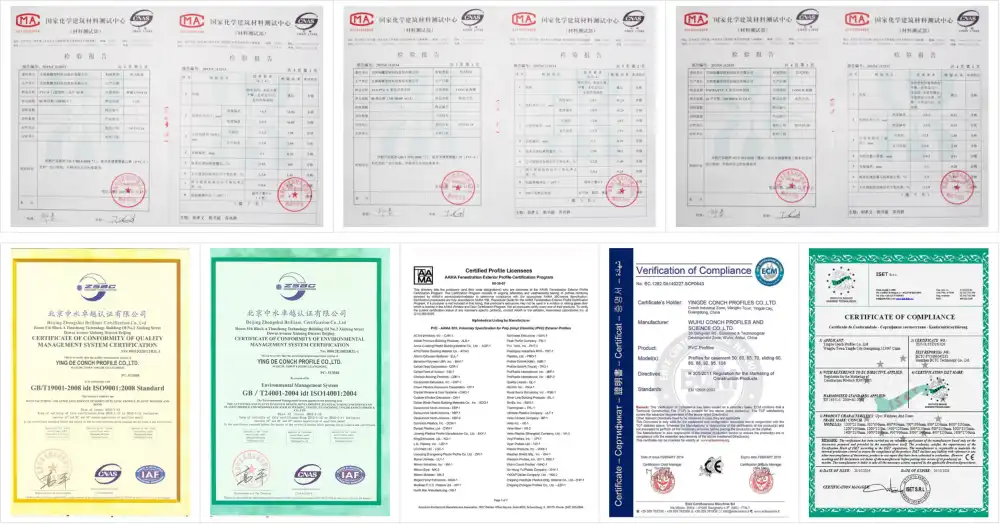
When judging potential manufacturers, you need to look at more than just their business licenses to see how trustworthy they are. The ISO 9001 approval shows that the quality management is organized, and the CE marking shows that the product meets European safety and performance standards. If someone is certified by the American Architectural Manufacturers Association (AAMA), it means they know how to test for air infiltration, water penetration, and structural performance in North America.
Factory audits show things about production that can't be said in marketing materials. Check to see if the building has CNC machines that are specifically designed to bend Arch Top UPVC Windows, temperature-controlled welding stations that make sure the corners are welded consistently, and quality control stations that check the accuracy of the dimensions of all finished units. Long-term ties with material suppliers, like those with well-known profile extruders like CONCH, suggest a stable supply chain and consistent raw material quality, which can affect how well the window works in the long run.
Ask for references from projects that were similar to yours in size and scope, preferably ones that involved small-batch custom orders. By talking to past customers directly, you can learn useful things about how quickly technical support responds, how flexible they are when design changes need to be made, and how to solve problems when changes to the specifications need to be made in the middle of a project.
Comprehensive Cost Analysis Beyond Unit Pricing
When figuring out the total landing cost, things other than the given window price must be taken into account. Shipping costs may be higher for Arch Top UPVC Windows that are too big, as they may need custom crating and special handling for freight, especially for protected packing that keeps the arch from deforming during transport. Ocean freight is usually more cost-effective for full container loads, while air freight is only useful for urgent small shipments, even though the costs per unit are much higher.
Import taxes depend on the country of location and the type of product. To get a good idea of customs fees, check the Harmonized System codes that apply to Arch Top UPVC Windows in your market. Some areas base duties on the value of the raw materials, while others use the price of the finished product. Hiring a customs broker who knows about building supplies can help you avoid surprises like extra fees and delays in clearance.
The estimated cost of installation should take into account the fact that Arch Top UPVC Windows need more skilled work than regular rectangular units. Plan your budget to include the cost of possibly making a template, buying special lifting equipment for large radius windows, and buying more sealing materials that can fit curved openings. When comparing Arch Top UPVC Windows to wood or metal options, you should take into account that it requires less care over its lifetime because it doesn't need to be painted, refinished, or treated for corrosion.
Disclaimer: You should check the performance details and price comparisons against real product test reports and the current market conditions that apply to your project's area and requirements.
Step-by-Step Process for Importing Arch Top UPVC Windows from China Suppliers
Conducting Thorough Supplier Research
To find qualified makers, start by doing focused searches on well-known B2B platforms. These platforms let you sort suppliers by their ability to customize, their production capacity, and their experience exporting. Instead of just looking at generic window manufacturers, find ones that have portfolios of Arch Top UPVC Windows, radius, or other specialty shapes. Building materials trade shows give people the chance to look at real samples, talk about technical capabilities in person, and see how well they can communicate before committing to doing business with someone.
Most of the time, the most reliable supplier leads come from architects, contractors, or other designers who have worked on similar import projects. Along with these suggestions, there are useful tips on how to communicate, follow instructions, and solve problems during the expected problems that come up during production.
Evaluating Samples and Technical Capabilities
To check if performance claims are true, sample review goes beyond just looking at the samples. Instead of taking general display units, ask for models that match the profile series, color finish, glazing setup, and hardware that you want. You can check the quality of the welds at the corner joints, the smoothness of the operation of moving sashes, the compression of the seal around the glass, and the consistency of the color across different parts by using physical samples.
Technical talks during sampling should include the manufacturer's method for placing steel reinforcement in curved sections, ways to make sure the curvature is exactly as needed, and quality control steps that keep the dimensions from changing from one production batch to the next. Ask if they have experience with different arch shapes. Suppliers who are good at simple semicircular arches might have trouble with elliptical, Gothic, or eyebrow shapes that need more complicated bending math.
Negotiating Terms and Finalizing Agreements
During price talks, it's important to be clear about custom fabrication fees, minimum order quantities, and payment schedules that are linked to production milestones. Usually, a 30–40% deposit is required to secure an order, and the rest of the payment is due before shipping or against a bill of lading for long-term customers. Warranty coverage usually lasts between 2 and 5 years and covers material defects and mistakes in manufacturing, but the exact terms depend on the supplier. Make sure that agreements cover custom-made parts.
Arch Top UPVC Windows are usually delivered 25 to 30 days after the final shop plans are approved and the fee is paid. Add extra time to project schedules to account for possible rounds of changes during technical review and shipping transit times that can be anywhere from 3 to 6 weeks, depending on the destination and freight method. Most of the time, rush production costs 10–20% more than regular pricing.
Managing Logistics and Customs Clearance
When shipping Arch Top UPVC Windows, they need special packaging that keeps them from deforming during transit. Check that the sellers use reinforced crates with interior bracing to hold the arch pieces and protective materials to keep the surface from getting scratched. For bigger projects, look into knock-down assembly options, in which frame parts are shipped separately so they can be put together on-site. This can cut shipping volumes by about 30% compared to fully assembled units, which directly lowers freight costs.
Customs paperwork must correctly describe goods using the right classification codes, list correct values that include all fees related to the transaction, and include any certificates or testing reports that are needed. Before building materials can go through customs in some markets, they need to have proof of their energy efficiency, structural engineering stamps, or fire safety certifications. Working with skilled freight forwarders who specialize in moving building goods makes this process go a lot more quickly.
Establishing After-Sales Support Systems
Support after delivery is very important when installation teams run into problems or need expert explanation. Set up ways for people to talk to each other so that you can reach expert staff who can help with the process. Ask for detailed installation manuals with pictures showing how to set up Arch Top UPVC Windows, technical parameter sheets with performance specs, and assembly videos showing how to handle curved parts correctly. These will help you avoid mistakes during installation and lower the risk of having to call back for repairs.
Procedures for filing a warranty claim should be clearly written down, including what needs to be done to document defects, how long it takes for the manufacturer to respond, and how to fix the problem. Find out if the guarantee service includes shipping a new part, allowing a fix to be done on-site, or splitting the costs based on how bad the defect is and how long it's been since installation.
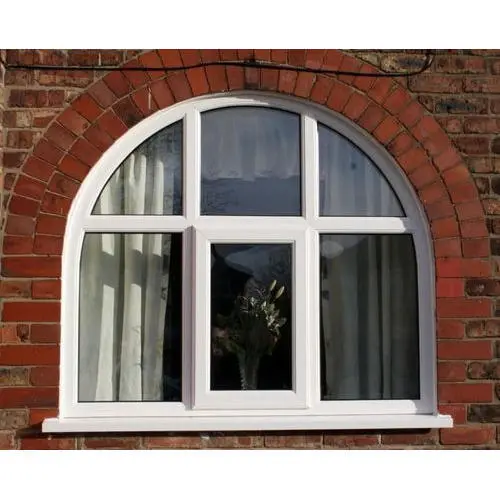
Design, Customization, and Installation Insights for B2B Clients
Exploring Customization Options for Architectural Integration
Advanced customization goes beyond simple arch curves to fit a wide range of architectural ideas. When you work with manufacturers who offer precision CNC fabrication, you can make Arch Top UPVC Windows with round corners, peaks with triangles, shapes like trapezoids and complex polygons. Color choices go beyond basic white and tan. They include custom color matching through RAL or similar systems, true wood-grain finishes that look like oak, walnut, or mahogany, and even two-color combinations with different finishes on the outside and inside.
The type of glazing you choose has a big effect on both how well it works and how it looks. For low-height installs, tempered glass is safer, laminated glass improves security and lowers noise, and triple glazing is the most energy-efficient way to keep heat in during harsh climates. Decorative glass options like frosted, textured, or leaded designs built into sealed units can help some projects. All glass parts can be cut to fit Arch Top UPVC Windows, but complicated curves might need segmented approaches with artistic grilles that hide the joints.
The choice of hardware affects both how well it works and how well it looks. For period repair projects, traditional hardware types like crescent locks, lift handles, and decorative hinges that match historical examples are often asked for. Multi-point locking systems, reinforced strike plates, and tamper-resistant fasteners are all used in applications that care about security. Finishes in brass, bronze, nickel, and powder-coated colors make it possible to match with other building parts.
Installation Best Practices for Custom Arch Windows
Whether perfectly manufactured Arch Top UPVC Windows work as well as they were meant to depends on how well they are installed. Curved openings need to be carefully checked against made units before they can be installed. Making a template during the rough opening frame stage helps avoid expensive fit problems that are only found when the product is delivered. For structural reasons, you need to make sure that the header supports span the arch openings, that the flashing is properly installed so that water stays away from weak joints, and that the thermal breaks are installed so that condensation doesn't form where the frame meets the wall.
Arch Top UPVC Window sealing systems use EPDM gaskets that are specially made to fit curved profiles and keep their compression even around edges that aren't straight. Installation teams need to be careful not to over-compress, which can damage the gasket, or under-compress, which can leave holes that let water or air in. It is very important for big arch spans that go through a lot of temperature changes to have expansion joints that can accommodate thermal movement.
Working with installation professionals who know how to install Arch Top UPVC Windows greatly lowers the risk. Give installers technical information from the manufacturer, assembly videos that show how to handle things correctly, and direct contact information for technical support during the installation. For big or complicated jobs, it's possible to arrange for maker representatives to visit the site and give hands-on advice to make sure the quality of the work.
Maintenance Protocols Extending Service Life
When the right care instructions are followed, Arch Top UPVC Windows will last for decades without needing much upkeep. Cleaning tracks and drainage lines on a regular basis with light soap solutions and soft cloths keeps dirt from building up. Cleaners and chemicals that are too rough can damage surface finishes and weatherseals. Using the right products to lubricate hardware keeps moving parts running smoothly and stops them from wearing out too quickly.
Inspections should be done on a regular basis to check the weatherseal around the glass units and frame edges, the hardware's tightness and functionality, the drainage holes' ability to let water out, and the integrity of the frame-to-wall seal. Finding small problems during regular checks keeps them from getting worse and needing major fixes. Most makers give you maintenance schedules that tell you how to service and inspect their goods at the right times.
Evaluating Arch Top UPVC Windows in Comparison to Other Materials
Performance Advantages Over Traditional Materials
Material choice has a big effect on how long Arch Top UPVC Windows last, how much maintenance they need, and how much they cost over their whole life. Arch Top UPVC Windows don't break down when they come in contact with moisture like wood windows do. This means you don't have to worry about rot, swelling, and paint failure that can happen in damp or weather-exposed places. In contrast to metal frames, Arch Top UPVC Windows have a natural thermal resistance that makes it harder for heat and cold to move through them. This, along with high-performance glass systems, makes Arch Top UPVC Windows more energy efficient overall.
Dimensional stability at high and low temperatures is especially useful for Arch Top UPVC Windows, where even small warping can make them look bad or make them not work right. Arch Top UPVC Windows stay in the shape they were made in during all four seasons, while wood can move around and affect curved parts unevenly, and aluminum's temperature expansion needs careful engineering to account for. The UV resistance of the material stops color fading and surface chalking that make things look bad over time. This way, the material will look good for a long time, often longer than 30 years.
Thermal and Acoustic Performance Metrics
When you put together multi-chamber frame shapes, insulated glass units, and good weathersealing systems, you get energy economy. Multi-chamber extrusions make thermal breaks in the frame cross-section, which slows the flow of heat through the material. When double or triple glazing with low-emissivity coatings and inert gas fills are added, the heat transfer values reach levels that meet passive house standards and strict energy codes.
These Arch Top UPVC Windows have an acoustic performance of 30 to 45 dB, which means they can block out noise in places that need it. This includes residential properties near transportation corridors, business buildings that need to protect speech privacy, and school buildings that need quiet settings inside. Laminated glass configurations improve acoustic properties beyond standard sealed units. Correct installation methods that ensure complete perimeter sealing stop acoustic flanking paths that would lower theoretical performance.
Security Features and Structural Robustness
Physical protection is made up of many different design aspects that work together. Multi-point locking mechanisms engage the frame in several places around the perimeter. This spreads the forced-entry resistance across the whole sash instead of putting all the stress on one lock point. The reinforced steel cores inside Arch Top UPVC Windows give the structure strength and keep the frame from deforming when it's attacked. Glazing retention systems that use internal beading stop glass from being taken off from the outside. Keyed locks, child safety restrictors, and different types of laminated security glazing are all hardware choices.
Testing the structure makes sure it works as planned under design loads like wind pressure, impact resistance, and operational cycling. Manufacturers of good products give test results that show they meet recognized standards. Make sure that the tests were done on setups that are similar to your requirements instead of depending on general certificates that might not show how well the custom arch geometry works.
Conclusion
When you buy Arch Top UPVC Windows from specialized manufacturers, you need to pay close attention to the technical specs, the supplier's abilities, and the logistics planning. It's not enough to just compare prices; you also need to look at how precise the fabrication is, how flexible the customization options are, and how well the collaborative design support works. From the first proposal to the final installation, the buying process usually takes 8 to 12 weeks. However, this time frame can be shortened with good planning and clear communication.
The benefits of UPVC as a material, such as its longevity, thermal efficiency, and low upkeep needs, make it a better choice than other options when looking at the whole lifecycle. Building partnerships with makers who offer consistent quality, quick technical support, and dependable delivery lays the groundwork for finishing projects successfully and making clients happy.
FAQ
What Certifications Should I Verify When Importing from China?
Make sure that your providers have the ISO 9001 quality management certification, which shows that they have systematic rules in place for production. If something has a CE mark, it means it meets European safety and performance standards. If it has an AAMA mark, it means it knows how to test things in North America. Request copies of the real certificates instead of taking promises without proof, and if you can, check the validity of the certificates on the websites of the organizations that issued them. For extra peace of mind, testing results that are special to a product and include information on its thermal performance, structural grades, and weatherability are available.
How Long Does Shipping and Customs Clearance Typically Take?
Freight traveling by ocean from big Chinese ports to North American areas usually takes three to four weeks. Depending on the port, routes in Europe take an average of six to eight weeks. When paperwork is full and correct, customs clearance takes an extra three to seven working days. Air freight cuts travel time to 5–10 days, but it costs a lot more. Adding 8–10 weeks to project plans from the time an order is placed until it is delivered allows for time for production, shipping, and customs clearance, as well as a backup in case of delays.
Can I Order Climate-Specific or Fully Customized Arch Window Designs?
Reputable makers allow for a lot of customizing, such as Arch Top UPVC Windows that aren't typical, specific thermal performance goals, hurricane-rated structural strengthening, and personal tastes in how things look. When you make your first inquiry, be sure to include specifics like the climate, any building codes that apply, and any architectural needs.
You can expect longer lead times and higher prices for highly customized configurations compared to standard arch profiles. However, experienced suppliers can often suggest other ways to get the job done more quickly. Working together with other engineers during the design process helps make the best specifications that balance performance needs with the ability to make the product and the cost.
Partner with Haolv Building Materials for Your Custom Arch Top UPVC Window Supplier Needs
Hunan Haolv Building Materials Co., Ltd. has been making windows for 19 years and specializes in Arch Top UPVC Windows fabrication for architectural projects around the world. Our ISO, CE, and AAMA-certified factory specializes in precise bending for Arch Top UPVC Windows including semicircular, elliptical, Gothic, and fully custom forms with radius ranges from tight curves to wide spans.
Our strategic partnership with CONCH guarantees high-quality UPVC profiles that will keep their shape over many years of use. We also offer full system integration, which includes tempered or laminated glazing options, EPDM sealing technology that can be used on irregular shapes, and corrosion-resistant hardware. This means that we can give you turnkey solutions that exactly meet your needs.
We can handle small-batch orders (5–15 units per order), which are common for custom home projects, without having to meet unreasonable minimum numbers. This means that our custom prices stay within the normal ranges for the industry. Our technical team works directly with design professionals to look over building drawings, suggest structural solutions, and give approval shop drawings before the manufacturing process starts. Knock-down assembly choices cut shipping amounts by about 30%, which directly lowers your logistics costs. Our 25–30 day production timeline also helps you plan your projects efficiently.
Email our team at kristin@haolvwindows.com to talk about the specifics of your project. We offer detailed technical parameter sheets, installation videos, and illustrated assembly manuals to make sure that the installation goes smoothly. You can learn more about how we can offer architectural-grade Arch Top UPVC Windows that meet the strict requirements of historical restoration, high-end residential, and landmark business projects all over the world by visiting haolvbuilding.com.
References
1. Anderson, J.M. (2021). Custom Window Fabrication for Historic Preservation: Materials, Methods, and Best Practices. Architectural Heritage Press.
2. Chen, L. & Thompson, R. (2020). Global Supply Chain Management in Building Materials Procurement. International Construction Publishing.
3. European Committee for Standardization. (2019). Performance Standards for UPVC Window Systems in Custom Applications. Technical Report EN 14351-1.
4. Martinez, S. (2022). Thermal and Acoustic Performance of Modern Window Systems: Comparative Analysis. Building Science Journal, 45(3), 178-195.
5. National Fenestration Rating Council. (2023). Energy Performance Certification Procedures for Custom Window Configurations. NFRC Technical Document 100-2023.
6. Williams, D.K. (2020). Import Logistics and Customs Compliance for Construction Materials: A Practical Guide for Procurement Professionals. Trade Publishing International.
Fast simple channel to send demands lock favorable price for building window door bulk purchases.