- English
- French
- German
- Portuguese
- Spanish
- Russian
- Japanese
- Korean
- Arabic
- Greek
- German
- Turkish
- Italian
- Danish
- Romanian
- Indonesian
- Czech
- Afrikaans
- Swedish
- Polish
- Basque
- Catalan
- Esperanto
- Hindi
- Lao
- Albanian
- Amharic
- Armenian
- Azerbaijani
- Belarusian
- Bengali
- Bosnian
- Bulgarian
- Cebuano
- Chichewa
- Corsican
- Croatian
- Dutch
- Estonian
- Filipino
- Finnish
- Frisian
- Galician
- Georgian
- Gujarati
- Haitian
- Hausa
- Hawaiian
- Hebrew
- Hmong
- Hungarian
- Icelandic
- Igbo
- Javanese
- Kannada
- Kazakh
- Khmer
- Kurdish
- Kyrgyz
- Latin
- Latvian
- Lithuanian
- Luxembou..
- Macedonian
- Malagasy
- Malay
- Malayalam
- Maltese
- Maori
- Marathi
- Mongolian
- Burmese
- Nepali
- Norwegian
- Pashto
- Persian
- Punjabi
- Serbian
- Sesotho
- Sinhala
- Slovak
- Slovenian
- Somali
- Samoan
- Scots Gaelic
- Shona
- Sindhi
- Sundanese
- Swahili
- Tajik
- Tamil
- Telugu
- Thai
- Ukrainian
- Urdu
- Uzbek
- Vietnamese
- Welsh
- Xhosa
- Yiddish
- Yoruba
- Zulu
How to Specify Thermal Break Aluminum Sliding Windows for Coastal Residential Projects
Choosing the right Thermal Break Aluminum Sliding Window comes down to how the frame blocks heat, how the panels travel, and how the opening drains under driven rain. A sliding unit trades the outward swing of a casement for a horizontal journey inside its own frame, which is why it never fights a curtain, a blind or a neighbouring panel. Four variables decide whether an order performs as specified: the thermal break material and the profile wall thickness, the track and roller system, the glazing specification, and the brush and EPDM sealing arrangement. For trade buyers and procurement teams supplying coastal residential, hospitality and light commercial projects, those four are also what decide whether the first container arrives without a claim against it.
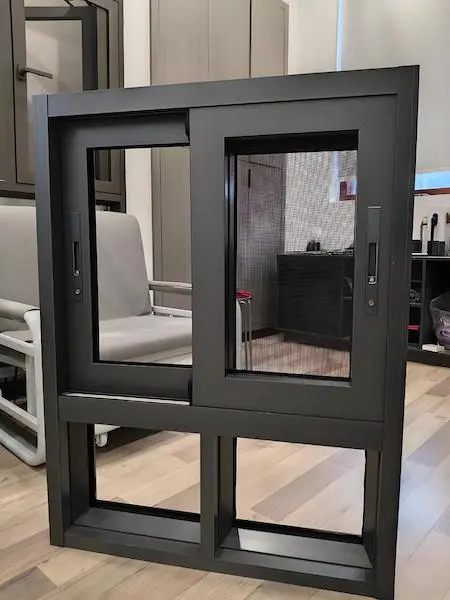
Understanding Thermal Break Aluminum Sliding Windows: Key Features and Benefits
What Makes A Thermal Break Sliding Window Different From A Standard Aluminum Window?
A standard aluminium frame uses one continuous metal path from the outside face to the inside face. Aluminium conducts heat at roughly 160 to 200 W/(m·K), so that path behaves as a thermal bridge, and the visible result is condensation running down the frame in winter and unwanted heat moving inward in summer.
A thermal break interrupts that path with an insulating polyamide strip set between the inner and outer profiles. Polyamide conducts in the region of 0.3 W/(m·K), so the strip is the component that actually separates the two sides. The product page for these windows states a 6063-T5 alloy frame with a profile thickness of 1.4 to 2.0 mm, an insulating polyamide strip, a brush seal combined with EPDM rubber, and single or double track options. Wall thickness and track count are the two figures that limit panel size and the wind pressure a unit can be rated for, so they belong in the enquiry rather than in the small print.
Why Choose A Sliding Opening Instead Of A Hinged Window?
A sliding window travels horizontally inside its own frame. It needs no clearance inside the room and none outside, so on balconies, in corridors and along kitchen counters it is the difference between furniture fitting and furniture being moved. The product page describes a space-saving horizontal sliding design with high-quality rollers for quiet and effortless movement, which is the detail that matters once panels get large, because a poor roller set is the first thing a customer notices.
The trade off sits in the sealing. A sliding unit seals along the overlap between panels and along the brush line rather than on a single compression gasket, which is why the brush and EPDM combination and the track drainage decide water performance. Single track suits smaller openings and lighter ventilation needs; double track allows two sashes and an independent screen, which is normally what buyers in insect-heavy markets ask for.
Bulk Procurement Considerations for Trade Buyers
When a sliding line is bought in volume, the unit that ships has to match the sample that was approved. Confirm the alloy and temper, the 1.4 to 2.0 mm wall thickness range, the polyamide strip, the roller grade, and the brush and EPDM sealing arrangement in writing before the order is released, because these are the items that quietly change when a specification is left verbal.
Mixed loads are how most distributors start. The supplier accepts initial orders of 10 to 20 units with neutral packaging or OEM branding, and sample support is available to verify quality before a full order commitment. A first container that mixes track configurations and finishes gives a market test without the risk of committing a whole load to one size that does not sell.
Climate Considerations: How Weather Conditions Affect Thermal Break Aluminum Sliding Window Performance
Cold Climate Requirements and Thermal Engineering
In a cold climate the thermal break is the component doing the heavy work. A thermally broken frame keeps the inside face of the profile closer to room temperature, which is what stops the heavy condensation that forms on a plain aluminium frame when warm indoor air meets a cold metal surface. The difference is felt on the frame itself, not only on the glass.
Published whole window figures for thermally broken aluminium with double glazing commonly land in the region of 2.0 to 2.7 W/m²K, and a triple glazed unit moves the number lower again. The realised value also depends on the installation, because the junction between frame and wall carries as much heat as the frame when the gap is not sealed properly, and that junction is inside the installer scope rather than the factory scope.
Hot and Humid Climate Adaptations
In hot and humid markets the priorities reverse. The frame has to shed water and resist corrosion rather than hold heat, and aluminium does not absorb moisture at all, so the profile itself is not the weak point. What matters is that the track drains and that the surface finish survives ultraviolet exposure, which is where powder coating or anodizing earns its place over a bare mill finish.
Solar control then matters more than insulation. A low emissive coating on the glass reduces the solar gain that drives air conditioning load, and standing water in the track is the detail that grows mould and stains the sill, so the drainage slots are checked on every service visit in a humid climate.
Coastal and High Wind Zone Specifications
Coastal sites load the window in two ways at once. Wind pressure rises with height and with exposure, so the frame, the reinforcement and the fixings are sized against a calculated pressure for the project rather than against a standard product list. The engineering team produces drawings and project based technical support for exactly this reason, and the fixing schedule should follow it.
Salt attacks the hardware long before it attacks the frame. Stainless steel components, the brush seals and the rollers are what decide whether a unit still slides smoothly after several years of salt laden air, and a neutral cure silicone in the glazing pocket avoids the acid cure products that can stain a coated finish.
Comparing Thermal Break Aluminum Sliding Windows to Other Frame Options
Performance Analysis Against Non Thermal Break Aluminum and Timber
At procurement level the useful comparison is between thermally broken aluminium, plain aluminium and timber. Plain aluminium is the cheapest frame and the most conductive, so it condenses in cold weather and leaks heat all year. Timber insulates reasonably well but it moves with moisture and needs a coating cycle to stay sound, which is a recurring cost the buyer pays for the life of the window.
Thermally broken aluminium costs more than a plain frame because of the polyamide strip and the two part extrusion, and less than timber over a full service life because there is no repainting cycle and no rot. For a coastal project the finish also matters, and a powder coated or anodized aluminium frame holds its appearance without the annual attention that timber demands.
Glazing Options and Energy Performance
The product page lists tempered, double glazed and laminated glass. Tempered glass is impact resistant and suits ground level and safety critical locations; laminated glass adds security and ultraviolet protection; a double glazed sealed unit raises thermal and acoustic performance. Choosing between them is a project decision, and the unit is configured around the choice.
On the frame side the gain comes from the whole assembly rather than from the glass alone. A sealed unit with a low emissive coating, a warm edge spacer and an inert gas fill performs noticeably better than the same thickness of plain glass, and it does so without changing the frame geometry, which keeps the order simple.
Procurement Factors: Making Informed Purchase Decisions
Technical Verification and Compliance Standards
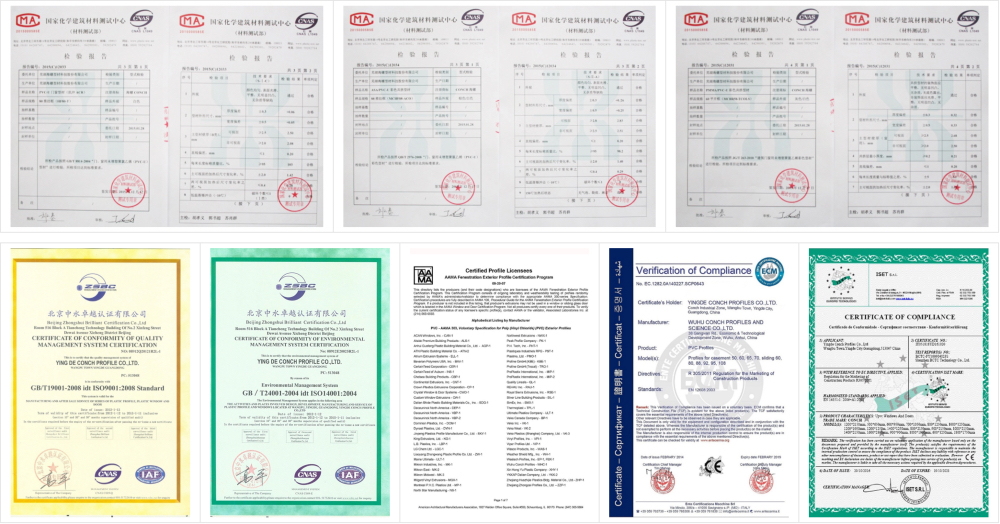
Windows that cross a border are checked against published standards. EN 14351-1 is the European product standard for windows and doors, EN 12207 classifies air permeability, EN 12208 watertightness and EN 12210 resistance to wind load, AAMA 101 covers vinyl and aluminium windows for North American projects, and ISO 9001 covers the manufacturing quality system. The product page states that these doors and windows ship with ISO, CE and AAMA certification documentation, which simplifies the customs conversation. Ask for that documentation with the quotation rather than after production starts.
Customization Capabilities and Order Flexibility
The page lists customisation across size, colour, hardware, finishes, track configurations, glass types and integrated screen systems, supported by OEM and ODM capability and colour matching. For a distributor the practical limit is the frame geometry itself, because panel width and panel weight are fixed by the section and the rollers. Anything outside the standard range needs a drawing check before the order is confirmed, and that check is cheaper than a remake.
Logistics and Installation Support
Sliding windows pack well because the frame and the sashes travel as one assembly. In practice the shipping unit is crated so that panels cannot move against each other, the hardware travels separately, and the load is braced so the frame cannot twist in transit. Hardware that arrives loose and rollers that arrive full of grit are the two most common reasons a perfect unit performs badly on day one.
On site the opening must be square, the sill level and the drainage path clear, and the frame packed so that it stays true while the fixings are tightened. The supplier provides application guidance and installation support with the order, which keeps the installer from solving a specification problem with sealant.
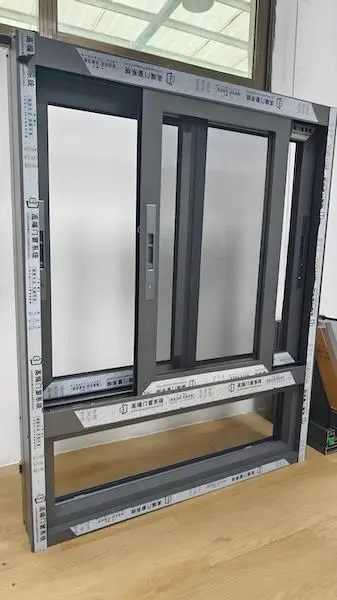
Maintenance and Longevity: Protecting Your Investment Value
Climate-Specific Maintenance Protocols
Maintenance is limited to cleaning and inspecting, because there is no coating to renew. A mild pH neutral detergent is all the profile needs, and abrasive cleaners and solvents are avoided because they attack the surface and the brush seals. In coastal or dusty environments the seals and the drainage slots are checked more often, since salt and grit are what let water past a seal that is otherwise sound.
Early Warning Signs and Component Replacement
The first signs appear at the seals and the track. A draught along the overlap between panels, water staining on the sill after rain, or a roller that no longer runs smoothly all point to components that can be replaced without changing the frame, which is a low cost repair rather than a replacement.
Fogging inside a sealed unit means the edge seal has failed and moisture has entered the cavity, and at that point the unit is replaced rather than repaired. Stiff movement usually traces to a worn roller or grit in the track, and a new roller set restores operation for a fraction of the cost of a new window.
Performance Enhancement Options
Because the frame, the seals and the glass set the ceiling, the upgrades worth offering restore or raise those three. Replacing compressed seals and clearing the drainage brings back the original weather performance at almost no cost, and reglazing with a low emissive or laminated unit raises thermal or acoustic performance without touching the frame.
Disclaimer: Actual performance depends on the test reports for each specific product and on the quality of installation. Results in different climates depend on correct specification and on following the manufacturer instructions.
Conclusion
Specifying a thermal break aluminum sliding window for a coastal project comes down to four decisions: confirming that the frame is genuinely broken with a polyamide strip, matching the 1.4 to 2.0 mm wall section and the track configuration to the panel size, choosing glazing that meets the thermal and acoustic target, and specifying hardware and finishes that survive salt and wind. A frame built on 6063-T5 alloy with a polyamide strip, EPDM and brush sealing and single or double track options covers the majority of residential and light commercial openings, and the difference between a dependable supplier and a commodity vendor is verifiable certification, real customisation capability and logistics support.
FAQ
Q1: How do I check whether a sliding window is genuinely thermally broken?
A: Look for the polyamide strip between the inner and outer profiles. A thermally broken frame is extruded in two parts and joined by that strip, while a plain aluminium frame is a single extrusion with one continuous metal path. Ask for the frame section drawing and for the alloy and wall thickness in writing, since 6063-T5 with a 1.4 to 2.0 mm wall is the base specification these units are built to.
Q2: What thermal performance can a thermally broken aluminium sliding window reach?
A: Published whole window figures for thermally broken aluminium with double glazing commonly sit in the region of 2.0 to 2.7 W/m²K, and a triple glazed unit moves the value lower again. The realised figure also depends on how the frame is sealed into the wall, so the installation detail is part of the specification rather than something added on site.
Q3: Single track or double track, and how does that affect the order?
A: Single track suits smaller openings and straightforward ventilation, while double track allows two sashes and an independent screen, which is the usual choice where insects make a screen essential. If a market needs both, order them as separate line items so the packing list and the accessory list stay clear and the installer is not left guessing.
Q4: What are typical lead times and minimum order quantities?
A: With component stock on hand and integrated supply chain management, standard delivery is usually 25 to 30 days from order confirmation. Initial orders of 10 to 20 units are accepted with neutral packaging or OEM branding, so a new market can be tested without committing to a full container.
Partner with Haolv Building Materials for Thermal Break Aluminum Sliding Windows
Haolv Building Materials Co., Ltd. has been manufacturing windows and doors for 19 years, and supplies procurement teams who need a dependable thermal break aluminum sliding window supplier. Our ISO, CE and AAMA certified factory in Hunan Province works with CONCH to keep raw material quality consistent, and our 25 to 30 day delivery schedule is supported by integrated supply chain management.
We accept initial orders of 10 to 20 units with neutral packaging or OEM branding, which makes it practical for building material sellers in Africa, South Asia and Eastern Europe to enter the market without committing to a full container. Our engineering team works from your drawings and specifications to configure the alloy, the wall thickness, the track arrangement, the glazing and the finish, and provides application guidance and project based technical support. Email us at kristin@haolvwindows.com to discuss your market requirements and request quotes matched to your container plan.
References
1. European Committee for Standardization. (2016). EN 14351-1: Windows and doors — Product standard, performance characteristics.
2. European Committee for Standardization. (2000). EN 12207: Windows and doors — Air permeability — Classification.
3. European Committee for Standardization. (2003). EN 12208: Windows and doors — Watertightness — Classification.
4. European Committee for Standardization. (2003). EN 12210: Windows and doors — Resistance to wind load — Classification.
5. American Architectural Manufacturers Association. (2022). AAMA 101: Voluntary Standard for Aluminum, Vinyl (PVC) and Wood Windows and Glass Doors.
6. International Organization for Standardization. (2015). ISO 9001: Quality management systems — Requirements.
Fast simple channel to send demands lock favorable price for building window door bulk purchases.