- English
- French
- German
- Portuguese
- Spanish
- Russian
- Japanese
- Korean
- Arabic
- Greek
- German
- Turkish
- Italian
- Danish
- Romanian
- Indonesian
- Czech
- Afrikaans
- Swedish
- Polish
- Basque
- Catalan
- Esperanto
- Hindi
- Lao
- Albanian
- Amharic
- Armenian
- Azerbaijani
- Belarusian
- Bengali
- Bosnian
- Bulgarian
- Cebuano
- Chichewa
- Corsican
- Croatian
- Dutch
- Estonian
- Filipino
- Finnish
- Frisian
- Galician
- Georgian
- Gujarati
- Haitian
- Hausa
- Hawaiian
- Hebrew
- Hmong
- Hungarian
- Icelandic
- Igbo
- Javanese
- Kannada
- Kazakh
- Khmer
- Kurdish
- Kyrgyz
- Latin
- Latvian
- Lithuanian
- Luxembou..
- Macedonian
- Malagasy
- Malay
- Malayalam
- Maltese
- Maori
- Marathi
- Mongolian
- Burmese
- Nepali
- Norwegian
- Pashto
- Persian
- Punjabi
- Serbian
- Sesotho
- Sinhala
- Slovak
- Slovenian
- Somali
- Samoan
- Scots Gaelic
- Shona
- Sindhi
- Sundanese
- Swahili
- Tajik
- Tamil
- Telugu
- Thai
- Ukrainian
- Urdu
- Uzbek
- Vietnamese
- Welsh
- Xhosa
- Yiddish
- Yoruba
- Zulu
How Top Hung Aluminum Windows Enhance Safety and Comfort
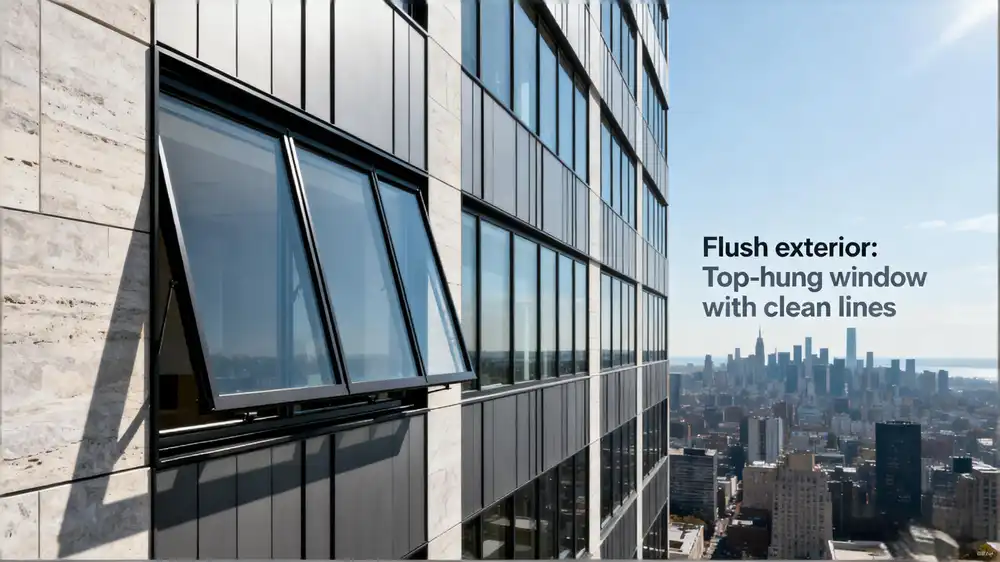
Aluminum Top Hung Windows solve a common problem when specifying fenestration systems for mid-rise commercial projects or multi-unit residential developments: they let fresh air flow continuously without sacrificing weather protection or occupant safety. The top of these outward-opening systems hinges, making a natural awning that protects interiors from rain while keeping air flow.
This is an important feature for healthcare facilities, educational campuses, and mixed-use buildings where the quality of the air inside affects productivity and health. The strong 6063-T5 aluminum construction and multiple locking points address security concerns that procurement managers have when they have to balance ease of access with reducing risk across large installations.
Understanding Top Hung Window Operation and Core Advantages
How the Opening Mechanism Works
The unique thing about this kind of window is that it has a spring on top, which lets the bottom edge swing outward at controlled angles. Grade 304 stainless steel friction stay hinges keep the sash in place even when wind speeds reach over 100 mph, meeting ASTM E330 structural performance standards. This design gets rid of the blind spot problems that come with regular casement windows that stick out into walkways or the edges of buildings. The outward swing makes positive pressure differences that naturally push out old air while letting in fresh air through opening angles that can be changed from 15 to 35 degrees.
Ventilation Efficiency in Adverse Weather
Project managers say that these systems keep air flow going even when it rains lightly to moderately, which is when sliding or casement windows have to stay closed. The 1.8 mm thick aluminum extrusions have recessed drainage channels that collect water and send it away from the sill through weep holes spaced 300 mm apart. According to AAMA 501.1 testing, there is no water entry at difference pressures of up to 700 Pa. This means that the water resistance is Category 4, which is good for high-rise buildings near the coast.
Space Optimization for Compact Installations
The small swing radius of Aluminum Top Hung Window configurations is very helpful for bathroom and galley kitchen designs. When fully opened, these units only need 200 to 250 mm of exterior projection, while standard casements need 600 mm of space beyond the frame. This efficient use of space lets architects make the most of usable floor space in hospitality projects where room sizes are limited. The thin frame depth of 60mm to 80mm lets in even more light and keeps the structure strong with corner pinching methods that make joint strengths over 1500N.
Material Science: Why 6063-T5 Aluminum Outperforms Alternatives
Corrosion Resistance and Longevity
The oxide layer that forms naturally on aluminum protects against rust and grows back when scratched, unlike zinc coats on steel frames that break down when they get damaged. Accelerated salt spray testing (ASTM B117) shows that powder-coated 6063-T5 profiles keep their structural integrity for more than 5,000 hours without any obvious pitting. This is the same as decades of service in coastal settings up to 500 meters from land. This long-lasting quality gets rid of the need to paint wood frames on a regular basis or deal with the UV damage that turns uPVC white and chalky in warm climates.
Thermal Break Integration for Energy Compliance
Modern extruded profiles can hold polyamide PA66GF25 thermal break strips with widths between 14mm and 34mm. Aluminum Top Hung Window systems using these profiles, when paired with low-emissivity double glazing, lower frame U-factors to 0.35 to 0.45 W/m²K. This performance lets buildings in all temperature zones in the U.S. meet the standards of IECC 2021 without having to use triple glazing, which is heavier and costs more. When thermally broken frames are combined with argon-filled insulated glass units, Solar Heat Gain Coefficients drop below 0.30. This lowers HVAC loads by 18–22% compared to systems that aren't thermally broken in places like the Southwest and Gulf Coast that need a lot of cooling.
Strength-to-Weight Ratio Benefits
T5-tempered aluminum has a tensile strength of at least 190 MPa, which means that frame members can span 2400 mm vertically and still not bend more than L/175 when wind loads of 2400 Pa are applied. This structural strength allows floor-to-ceiling glass panels without horizontal mullions in the middle, which is a popular design choice in corporate office halls and school atriums. The material's density of 2.7 g/cm³, which is one-third that of steel, makes it easier to install by hand and cuts labor hours by about 30% compared to steel-framed systems of the same type.
Performance Comparison: Evaluating Material and Operational Characteristics
Aluminum vs. uPVC in High-Use Environments
uPVC systems have lower starting material costs, but aluminum frames have better cycle life performance, which is important for business uses. Through hardware fatigue testing, it was found that uPVC sash corners start to bend after 8,000 to 12,000 opening cycles, while welded aluminum corners stay the same size after 50,000 cycles. This difference is important from a financial point of view in places like schools and hospitals where windows are used for many things every day. Because aluminum has a higher melting point than uPVC (660°C vs. 160°C), it has better fire safety ratings and can keep its egress functionality longer during heat events.
Top Hung vs. Casement Security Profiles
Casement windows that open inward create weak spots that people who aren't supposed to can use to their advantage with easy tools for spying. On the other hand, outward-opening Aluminum Top Hung Window configurations put the locking points on the inside of the frame, so attackers have to get past the full shear strength of the stainless steel shoot bolts that engage into the frame pocket. Three to five places along the sash perimeter are locked by multi-point locking systems. These systems achieve forced-entry resistance scores of Grade 30 according to EN 1627 standards, which is often a requirement for installations on the ground floor of business buildings in cities.
Operational Safety Advantages
The Aluminum Top Hung Window opening limits the largest opening size, which keeps people from falling from high places, which is very important in places like hospitals, dorms, and senior living communities. In places like New York City and San Francisco, fall-prevention devices must be installed on operable windows above the first floor. Aluminum Top Hung Window designs naturally meet these standards without the need for extra gear. The outward swing also gets rid of the dangers of interior collisions that come up when casements open inward in busy hallways.
Strategic Procurement Guidelines for Commercial Projects
Certification Verification and Compliance Documentation
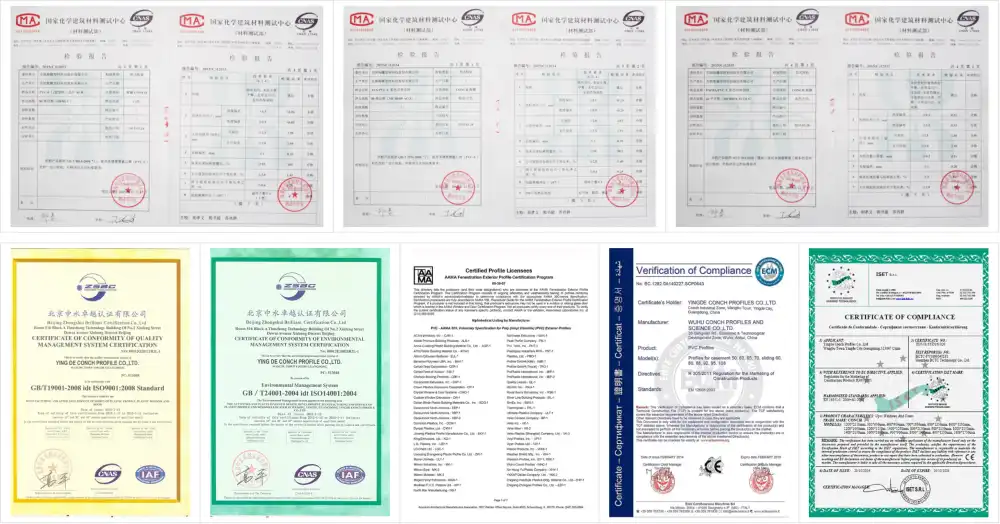
To be competitive for institutional projects, you need to submit windows that have been certified to more than one standard. Look for NFRC stickers that prove thermal performance, AAMA Gold certifications that prove resistance to air and water entry, and Miami-Dade NOA approvals for projects in storm zones. The GB/T 8478-2020 standard used in quality systems makes sure that the manufacturing process is consistent. However, U.S. projects also need proof of IRC and IBC compliance, and Aluminum Top Hung Window models must meet these same rigorous requirements to be accepted. By getting these certifications up front, you can avoid costly delays in resubmission that can add 6 to 8 weeks to the project timeline.
Customization Parameters Affecting Lead Times
Standard production runs based on 60, 70, and 80 series shapes can meet most design needs, and orders are delivered 25 to 30 days after they are confirmed. For batch processing and curing, it takes an extra 10 to 14 days for powder coat colors other than white, black, and bronze. Using sublimation transfer to apply wood grain finishes requires special tools that add to the wait time of 35 to 40 days. However, the results are beautiful and can't be told apart from natural wood, and they require half as much upkeep. If you choose toughened or tempered glass, it takes an extra 5 to 7 days to make and check for quality.
Evaluating Supplier Manufacturing Capabilities
Factory inspections should make sure that there is CNC precise cutting equipment that can keep limits of ±0.3mm across 6-meter extrusions. This is necessary for multi-point locking alignment. Automated corner crimping tools that use 15 to 20 tonnes of pressure make sure that all production runs have the same level of joint strength. Surface treatment lines with seven-stage pretreatment processes and electrostatic powder application systems make sure that coating thicknesses of 60 to 80 microns meet the requirements of AAMA 2604. These skills set producers who can work on multi-building projects apart from smaller companies that can only work on domestic projects.
Total Cost of Ownership Analysis
While aluminum systems are 15–25% more expensive to buy than their uPVC counterparts, lifecycle analysis shows that they will cross over within 8–12 years because they need different amounts of maintenance. Aluminum frames only need to be cleaned and oiled every so often. uPVC systems, on the other hand, need new gaskets every 7–10 years and may need frame tweaks because heat cycling changes the sizes of the parts. When aluminum is no longer useful, it can be recycled, which returns about 8–12% of the initial material costs and completely covers disposal costs. This is becoming more and more important for LEED-certified projects that want to earn Materials & Resources points.
Design Innovations Elevating Safety Standards and Occupant Comfort
Advanced Locking Mechanisms and Security Integration
Modern multi-point locking systems use 20 mm deep hardened steel shoot bolts that are inserted into frame slots that are strengthened with aluminum extrusions that are thicker than 3 mm. Mushroom-head cam devices stop lift-out strikes by making a positive mechanical interlock when they are loaded. Electronic devices that work with building management systems allow for centralized locking control over whole floor plates. This is something that healthcare managers need to be able to do in an emergency to lock up patient wings. Keyed cylinder locks that use standard institutional cores make it easier to manage keys for a variety of hardware brands.
Precision Ventilation Control
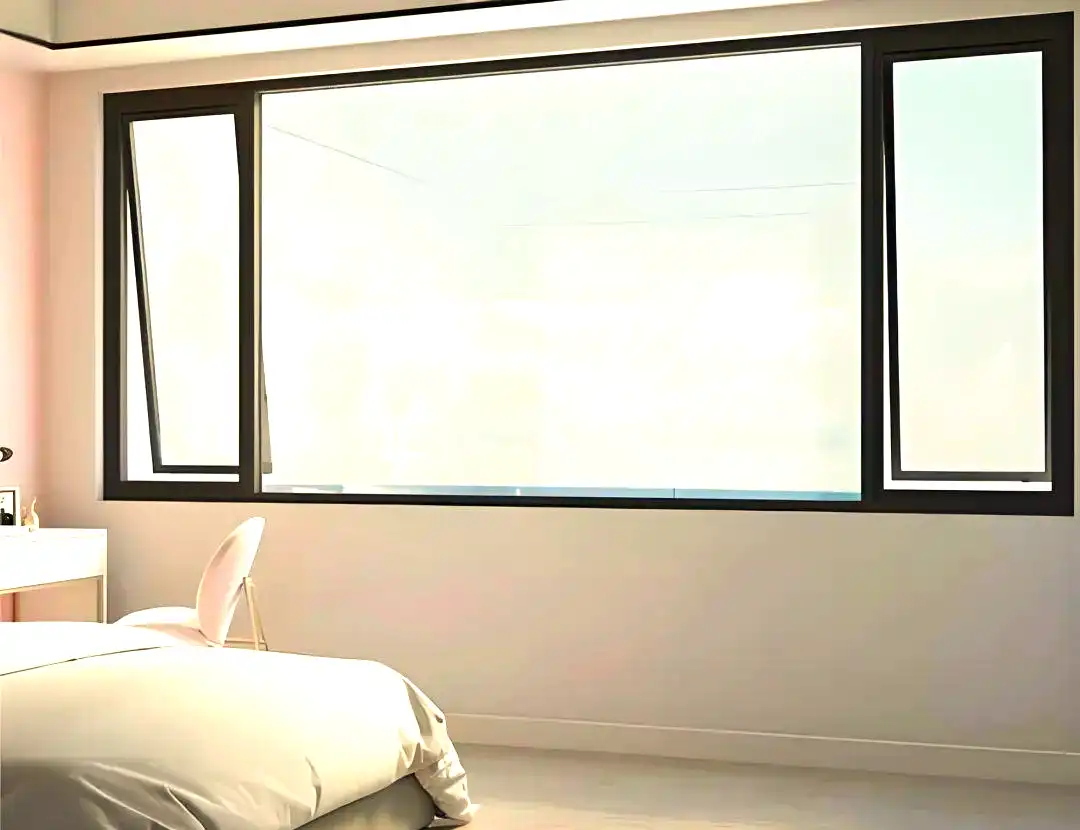
Friction stay hinges on Aluminum Top Hung Window units have tension screws that can be adjusted. This lets facility managers set the opening resistance, which stops rapid moves when the wind is blowing and keeps things easy for people who aren't very strong. Graduated locking settings every 10 degrees let users fine-tune airflow rates to meet their current comfort needs without making drafts that hurt the usability of the desk. This fine-grained control makes it so that motorized HVAC systems aren't needed as much during shoulder seasons. In temperate areas where natural air works for 4 to 6 months a year, this cuts energy use by 12 to 18%.
Acoustic Performance in Urban Settings
If you use EPDM perimeter gaskets and brush seals at the sash-to-frame interfaces, you can get Sound Transmission Class (STC) values of 32 to 36 with laminated glass panels. This performance lowers street-level traffic noise by 30 to 35 decibels, lowering sound levels from 70 to 75 decibels outside (similar to busy urban streets) to 35 to 40 decibels inside, where people can focus on their work. Studies in the Journal of the Acoustical Society of America have found that patient healing rates are higher when noise levels are below 40 dB. This is especially true for healthcare settings.
Practical Implementation: Installation Best Practices and Post-Delivery Support
Modern sellers know that delivering the goods is only the middle step in the buying process. Parametric CAD files that work with both Revit and AutoCAD are now included in technical documents packages. This makes it easy to integrate them into Building Information Modeling processes that find clashes before they are built. Installation guide videos show the right way to shimming, apply sealant, and adjust hardware, so subcontractors who aren't familiar with certain product lines don't have to go through as much training on-site.
Because Aluminum Top Hung Window extrusions are modular, manufacturers can ship parts in "knocked-down" configurations, which takes up 35–40% less space in containers than fully assembled units. This method greatly lowers the cost of international freight while allowing assembly at regional staging facilities that are closer to project sites. This shortens the time it takes from arrival to installation. Customization options go beyond just choosing a finish that looks good. They also include non-standard sizes that can work for historic renovation projects where the rough openings are different from what is normal today.
Disclaimer: The actual performance characteristics depend on how the product is configured, how well it is installed, and the conditions of the environment. For uses that are very important to the project, look at certified test results and engineering standards.
Conclusion
When procurement professionals in charge of large commercial projects specify Aluminum Top Hung Window systems, they get measured benefits in safety, working efficiency, and lifetime economics. Because these products have weatherproof ventilation, better security profiles, and temperature performance that meets strict energy codes, they are seen as value-engineered solutions rather than high-end options.
Basic ideas in material science, like corrosion resistance, strength-to-weight ratios, and thermal break integration, directly lead to less maintenance and longer service lives, which improve calculations of return on investment. When looking at different providers, it's important to focus on their production skills, certification portfolios, and post-delivery support systems that make large-scale deployments less risky.
FAQ
How do thermal breaks improve energy efficiency in aluminum top hung windows?
By physically separating the inside and outside of an aluminum surface with polyamide thermal break strips, effective heat transfer paths are blocked. This lowers the frame's overall U-factor by 40–50% compared to profiles that aren't thermally broken. This makes it possible for all climate zones in the U.S. to meet IECC energy codes. Because of this, heating and cooling loads are usually cut by $0.80 to $1.20 per square foot of glazed area per year in climates with a mix of seasons.
What factors influence bulk pricing for commercial orders?
The main factors that affect prices are the minimum order quantity, the level of customization needed, and the delivery time frame. When you order more than 500 units, you can often get 12–18% off the stated prices. Custom powder coat colors cost an extra $4 to $7 per unit, and wood grain finishes cost an extra $12 to $16 per unit. Standard 30-day lead times can be cut down to 18–20 days with expedited production, which usually costs an extra 15–20%.
Are these systems suitable for coastal installations?
Because 6063-T5 aluminum doesn't rust and marine-grade powder coating or anodized finishes are thicker than 25 microns, these goods work well in saltwater settings. Hardware parts made of stainless steel (at least grade 304) stop galvanic corrosion at metal junctions that are not the same. If the installation is within 300 meters of the water, you must use AAMA 2605 fluoropolymer treatments to get a guarantee that lasts longer than 20 years.
Partner with Haolv Building Materials for Engineered Fenestration Solutions
Haolv Building Materials has 18 years of experience extruding aluminum and uses cutting edge CNC technology to make Aluminum Top Hung Window systems that are exactly what your project needs. Our ISO-certified production processes make sure that every unit meets the performance standards set by AAMA and CE. During the specification phase, our in-house engineering teams offer free technical advice.
As a well-known company that makes Aluminum Top Hung Windows, we keep 60, 70, and 80 series profiles in stock, so even for special orders, the wait time is only 25 to 30 days. Knock-down shipping options can cut your shipping costs by up to 30%, and our documentation packages for assembly come with video guides to make sure the right way to install it. For your future business or educational building, email our project experts at kristin@haolvwindows.com to get technical data sheets, sample units and rough prices.
References
1. American Architectural Manufacturers Association. (2021). AAMA 101/I.S.2: Voluntary Specification for Aluminum, Vinyl (PVC) and Wood Windows and Glass Doors. Schaumburg: AAMA Publications.
2. Carmody, J., Selkowitz, S., Lee, E.S., Arasteh, D., & Willmert, T. (2004). Window Systems for High-Performance Buildings. New York: W.W. Norton & Company.
3. National Fenestration Rating Council. (2020). NFRC 100-2020: Procedure for Determining Fenestration Product U-factors. Greenbelt: NFRC Technical Publications.
4. Straube, J., & Burnett, E. (2005). Building Science for Building Enclosures. Westford: Building Science Press.
5. Ulrich, R.S., Zimring, C., Zhu, X., DuBose, J., Seo, H.B., Choi, Y.S., Quan, X., & Joseph, A. (2008). A Review of the Research Literature on Evidence-Based Healthcare Design. HERD: Health Environments Research & Design Journal, 1(3), 61-125.
6. Yeang, K. (2006). Ecodesign: A Manual for Ecological Design. London: Wiley-Academy Press.
Fast simple channel to send demands lock favorable price for building window door bulk purchases.