- English
- French
- German
- Portuguese
- Spanish
- Russian
- Japanese
- Korean
- Arabic
- Greek
- German
- Turkish
- Italian
- Danish
- Romanian
- Indonesian
- Czech
- Afrikaans
- Swedish
- Polish
- Basque
- Catalan
- Esperanto
- Hindi
- Lao
- Albanian
- Amharic
- Armenian
- Azerbaijani
- Belarusian
- Bengali
- Bosnian
- Bulgarian
- Cebuano
- Chichewa
- Corsican
- Croatian
- Dutch
- Estonian
- Filipino
- Finnish
- Frisian
- Galician
- Georgian
- Gujarati
- Haitian
- Hausa
- Hawaiian
- Hebrew
- Hmong
- Hungarian
- Icelandic
- Igbo
- Javanese
- Kannada
- Kazakh
- Khmer
- Kurdish
- Kyrgyz
- Latin
- Latvian
- Lithuanian
- Luxembou..
- Macedonian
- Malagasy
- Malay
- Malayalam
- Maltese
- Maori
- Marathi
- Mongolian
- Burmese
- Nepali
- Norwegian
- Pashto
- Persian
- Punjabi
- Serbian
- Sesotho
- Sinhala
- Slovak
- Slovenian
- Somali
- Samoan
- Scots Gaelic
- Shona
- Sindhi
- Sundanese
- Swahili
- Tajik
- Tamil
- Telugu
- Thai
- Ukrainian
- Urdu
- Uzbek
- Vietnamese
- Welsh
- Xhosa
- Yiddish
- Yoruba
- Zulu
Is side casement or top hung window better?
Choosing between side casement and top hung windows for business buildings, housing developments, or repair projects can affect how well they ventilate, protect against the weather, and how much they cost to maintain over time. Due to its ability to provide continuous airflow even during rain, as well as its better structural stability and wind resistance, the aluminum top hung window has become the preferred option in many business settings. Knowing how the two types of windows work differently, how they measure up in terms of performance, and what they are used for helps engineering teams and buying managers make choices that are in line with project needs and budget goals.
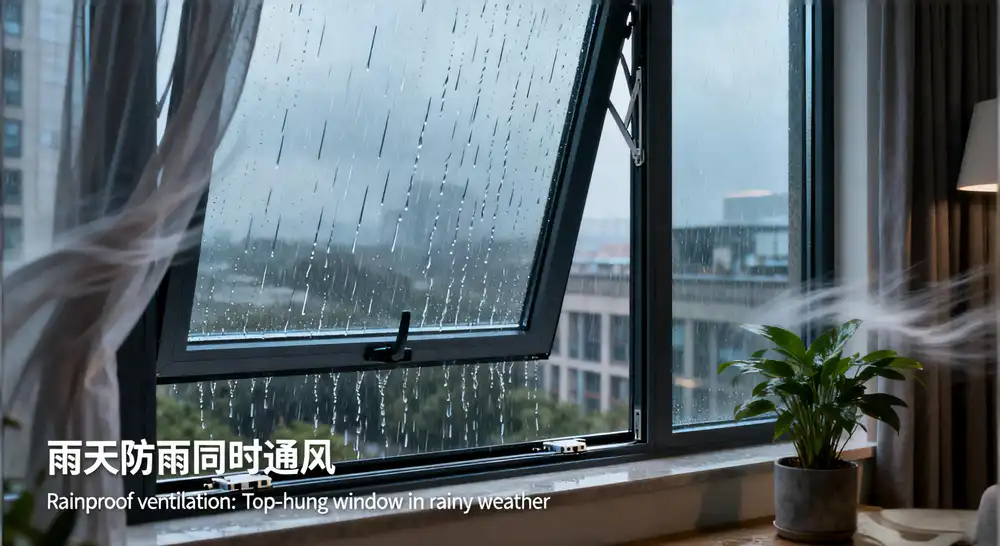
Understanding Side Casement and Aluminum Top Hung Windows
Before comparing performance, it's important to know how each type of window works and what makes them different in real-life situations.
How Side Casement Windows Function
Side casement windows open all the way by hinged on either the left or right side of the frame. They can swing outward or inward to open fully. This design lets the most air flow through when the sash is turned 90 degrees, making a large hole that makes cleaning the outside of the building easier from inside. Casement windows are often chosen by contractors for industrial settings that need to move air quickly or for domestic projects that want to have views that aren't blocked. In ground-level sites, the full hole also lets people get out in case of an emergency, which is sometimes required by law.
Defining the Aluminum Top Hung Window Configuration
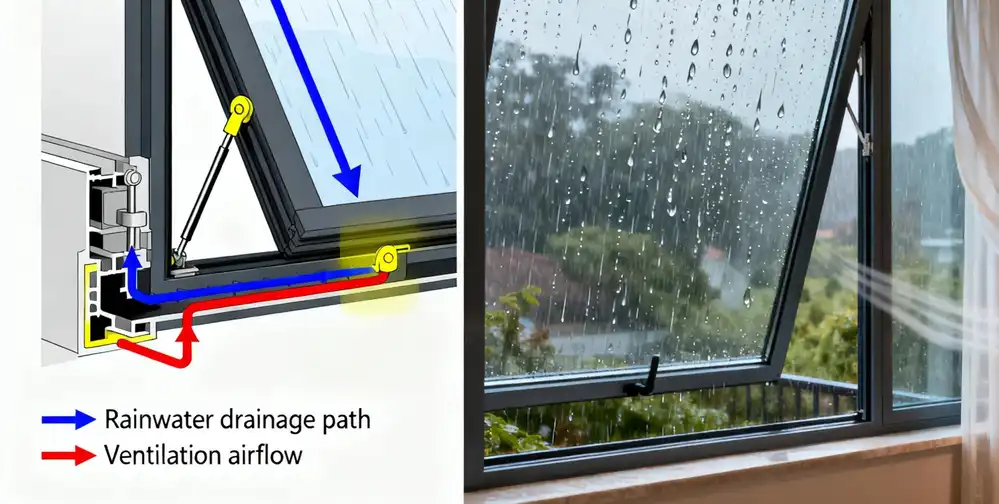
An aluminum top hung window has a spring at the top of the frame and opens outward from the bottom. This makes an umbrella that keeps the opening dry in the rain while still allowing air to flow through. These windows are made from 6063-T5 aluminum metal and have profile widths that range from 1.4mm to 2.0mm. They are very strong for their weight and don't rust.
The angle of the opening to the outside is usually between 15 and 30 degrees. This allows controlled airflow without letting in unwanted guests or weather. This layout works especially well in bathrooms, kitchens, and hallways where side-opening designs aren't possible because of limited space.
Material Advantages of Aluminum Construction
In tough business settings, aluminum frames are clearly better than frames made of other materials. The natural oxide layer of the metal protects it from corrosion in coastal and wet areas, so it lasts longer without needing to be maintained as often. Surface treatments like anodizing, powder coating, or PVDF finishes make things even more durable. Coatings that are 60µm thick or more are very resistant to UV light and salt spray.
Built-in polyamide thermal break strips can lessen aluminum's ability to carry heat, which lowers heat movement and raises energy efficiency. Because of these qualities, aluminum is a great material for projects that need to last for a long time and need little maintenance.
Key Comparison Dimensions Between Side Casement and Aluminum Top Hung Windows
To choose the right window type, you need to look at a number of performance factors that have a direct effect on the building's running costs, user comfort, and structural integrity. The next section uses industry standards and field performance data to look at important factors that affect B2B procurement decisions.
Durability and Weather Resistance
The two configurations have very different wind pressure resistance. Aluminum top hung windows, especially those made with 6063-T5 aluminum alloy and multi-point locking systems, can withstand wind loads of up to 3000Pa, which is the same as a Category 4 hurricane. The outward opening system makes the hinges less stressed when there is wind because the wind presses the sash against the frame instead of pushing it open. Even though side casement windows are strong, they need stronger hardware to keep the sash from moving in high winds, which can raise the cost of materials and the number of times they need to be fixed.
Another area where top hung designs do well is stopping water from getting in. Rainwater is pushed away from the opening by the umbrella effect. This lets air flow even when it's raining lightly, without damaging the inside with water. Air tightness values of Class 4 (≤0.5 m³/h·m²) and water tightness up to 700Pa are met by EPDM and brush sealing systems built into the frame exterior. This meets AAMA 101 and AS2047 standards. Most of the time, side casement windows need extra weatherstripping and careful construction to work as well as other windows, especially when it's raining hard.
Energy Efficiency and Thermal Performance
How well thermal insulation works depends on how the frame is made, what kind of glass is used, and how well the seals are sealed. Windows made of aluminum that have thermal break technology can get U-values as low as 1.6 W/m²K when double or triple glazing is added. When compared to fully opened casement windows, the small opening angle keeps the temperature inside stable while ventilation happens. This trait leads to measured energy savings in places that need a lot of air conditioning, like hotels and office buildings, where controlled ventilation should be available all the time.
How well noise reduction works depends on how strong the frame is and how well the seals are made. When combined with laminated or double-glazed units, aluminum profiles with wall thicknesses of 1.8mm to 2.0mm are better at blocking noise than thinner extrusions. They can reach sound transmission class (STC) ratings of 35–38 dB. Side casement windows lose their soundproofing when the sash is opened, so they aren't as good for places that need to block out noise. Top hung windows, on the other hand, keep the seal compression along the perimeter even when they are only partially open.
Security and Safety Considerations
The two types of windows have very different security features. Top hung windows are naturally hard for thieves to break into because they open outward and have a small opening angle. This makes it hard for thieves to get leverage or get in from the outside. Multi-point locking systems with stainless steel friction stay hinges make protection even better by spreading the locking force over many places on the frame. Because of these factors, top hung configurations are better for installations that are low to the ground or in places where security is important.
Side casement windows are better for emergency exits because they open all the way, letting people leave quickly if they need to. In the US, building rules often say that bedrooms and basements must have exit windows with a minimum net clear opening size of 5.7 square feet and a minimum height of 24 inches. These requirements are easily met by casement windows, but top hung windows usually don't meet these standards because they can't open all the way.
Maintenance Requirements and Service Life
Long-term upkeep costs are a big part of figuring out the total cost of ownership. Casement windows have more moving parts and more complicated mechanical systems than top hung windows. This makes it less likely that the hardware will break. Stainless steel friction stay hinges don't rust and keep working smoothly for 20,000 to 50,000 opening cycles without showing any major signs of wear. Hidden drainage systems built into the frame move water away from the sills, keeping them dry and reducing the number of times they need to be cleaned.
Casement windows need to have their hinges and locking systems adjusted every so often to keep them in the right place, especially in areas that get a lot of use. When casement sashes are opened, they subject parts to more external stress, which could speed up wear. Casement windows are easier to clean the outside glass of because the sash can be fully opened and sometimes turned around for access from the inside. Top hung windows, on the other hand, need to be cleaned from the outside or with special tools.
Installation, Customization, and Sizing Considerations
Practical implementation factors like how hard it is to install, how flexible the customization options are, and how well the dimensions work with each other directly affect project timelines, labor costs, and the integration of the architecture. Knowing about these things helps buying teams plan for problems and come up with good answers.
Installation Complexity and Labor Requirements
Installing a top hung window is easier when the mounting steps are standard and the flashing details are known ahead of time. Because it opens outward, there is no need to worry about inner room, so it can be installed in small areas like above countertops or plumbing. Standard installation steps include using adjustment clamps to secure the frame to rough holes, checking that the frame is straight and level, adding continuous sealant beads, and trying the operation before the final trim. Skilled workers can usually put in a normal top hung window in 1.5 to 2 hours, but this depends on the type of wall and the finish that is needed.
When installing side casement windows, you need to pay more attention to the swing space and how they might affect nearby chairs, fixtures, or other windows. Casements that open inward must be coordinated with the layouts inside, while units that open outward must take into account things like walkways, landscaping, or screening that might get in the way from the outside.
Aluminum top hung windows share similar clearance concerns, especially when they project outward or inward, so their operation should also be checked against overhead obstructions and adjacent openings. Because of these things, installation can take longer and changes may need to be made on-site, especially in upgrade situations where the old windows may not fit the new ones.
Customization Options for Project-Specific Needs
These days, aluminum window systems can be changed in a lot of ways to fit different architectural and performance needs. Here are the main customization options that experienced makers offer:
• Frame Series and Profile Depth: Series numbers like 60, 70, or 80 show the frame depth in millimeters. Deeper profiles can hold bigger glass units and better thermal breaks. Choosing the right series makes sure that it works with the glass configurations and energy performance goals that you want.
• Surface Treatment and Color: Finishes like powder coating, anodizing, PVDF, and wood grain offer a range of looks and protect the environment. In addition to white, black, and grey, you can choose from unique RAL or architectural colors that match your brand or style goals. Cross-hatch and impact tests should be used to check the thickness and bonding quality of the coating to make sure it will last in tough environments.
• Glazing Specifications: Tempered, laminated, and insulated glass panels provide different levels of safety, protection, and thermal efficiency. Adding low-E coatings and argon gas to double and triple windows makes U-values much better and lowers solar heat gain, which is very important for energy-efficient building designs.
• Hardware and Accessories: The type of friction stay hinge you choose affects the opening angles and the amount of weight it can hold. The protection and ease of use are also affected by the manual locking handles or integrated locking systems. For specific uses, optional mosquito screens, child safety restrictors, and automatic triggers make the product more useful.
Because window systems can be changed in these ways, they can be made to fit the needs of any project, from low-cost residential developments to high-performance commercial installations. Specification and procurement processes are sped up when you work closely with suppliers who offer technical advice and drawing coordination services.
Standard Sizing and Dimensional Compatibility
Standard window sizes make it easier to keep track of inventory, cut down on lead times, and lower costs by taking advantage of economies of scale. The normal aluminum top hung window size is between 600 mm x 600 mm and 1500 mm x 1200 mm, which is sufficient for most home and light business uses. For openings that aren't standard, custom sizes are easy to get. Manufacturers can make units up to 2000 mm in width or height, as long as they pass structural engineering tests and hardware capacity limits.
Tolerances in dimensions are very important for making sure that things fit and work right. As required by industry standards, diagonal alignment must be within ±1.5 mm to ensure even compression of the seal and smooth multi-point closing contact. To avoid problems and extra work in the field, procurement specifications should make it clear what sizes are needed, how accurate they need to be, and how they will be checked.
Cost Analysis and Procurement Guidance
When you know the total cost of ownership instead of just the original purchase price, you can make better choices about what to buy. This part talks about what causes costs to go up or down, how to choose the best supplier, and the best ways to buy things for large-scale window acquisitions.
Initial Purchase Price vs. Total Cost of Ownership
Because they have different gear and better closing systems, aluminum top hung windows usually cost 10–20% more per unit than similar side casement windows. At wholesale prices, a 1000mm x 1000mm top hung window with double glazing and a powder-coated finish might cost $150 to $250 per unit. The exact price will depend on the series depth and level of customization. This original cost is often more than made up for by lower installation costs, lower upkeep costs, and longer service life.
The total cost of ownership should take into account how much time it will save to install, how often it will need to be maintained, how much energy it will save, and how long it is expected to last. With proper fitting and high-quality parts, top hung windows can last more than 30 years with little upkeep. On the other hand, casement windows may need hardware repair or adjustment every 15 to 20 years in harsh environments. Long-term worth is increased even more by the energy savings that come from better air tightness and thermal performance. This is especially true in climate-controlled business areas where HVAC costs are a big part of the operating costs.
Supplier Selection and Quality Assurance
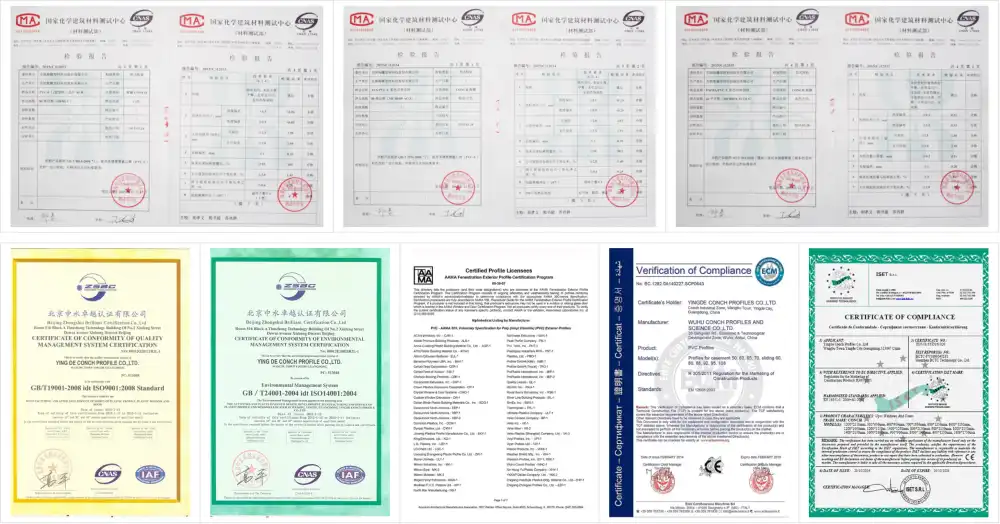
When looking for a reputable provider, you should look at their manufacturing skills, quality control systems, ability to meet certification requirements, and help after the sale. Reputable makers keep production sites that are ISO 9001 certified and have combined processes for cutting, welding, assembling, and extruding aluminum. Large production runs are always accurate in terms of size and finish thanks to automated assembly systems and precise CNC cutting equipment.
As part of quality control, corners should be tested for strength, water leakage should be tested according to ASTM E331, hardware should be tested over 20,000 processes to make sure it works, coating should be checked for adhesion, and dimensions should be checked. In order to get into a market, you need to get certified. For European markets, you need CE marking, for North American markets, you should get AAMA certification, and for Asian markets, you should use GB/T 8478-2020. Suppliers who give test results, technical data sheets, and performance paperwork make it easier to check specifications and get regulatory permission.
Bulk Ordering and Logistics Considerations
Volume price, consolidated shipping, and streamlined project completion are all good things about buying things in large quantities. When you order windows that are disassembled or knocked down, the shipping volume is cut by 40–50%. This makes international shipping much cheaper. This method needs to be coordinated with installation teams that can put things together on the spot, but the savings in shipping costs often make up for the extra work, especially in places where container shipping costs are high.
Standard aluminum windows usually have lead times of 25 to 30 days from the time the order is confirmed until they are shipped, with extra time needed for shipping depending on where the windows are going and how they are being shipped. Lead times may be longer by 10 to 15 days for custom orders with non-standard sizes or finishes. Keeping enough inventory on hand and timing orders to fit with building plans helps keep project delays and storage costs to a minimum.
Disclaimer: You should check the real performance specs, load limits, and energy efficiency levels by looking at test records and technical reviews that are relevant to the product. The values given in published specifications are averages and may be different depending on the configuration, the quality of the installation, and the environment.
Conclusion
If you need to balance ventilation needs, weather protection needs, security goals, and installation limitations for your project, you can choose between side casement and aluminum top hung windows. Weather-resistant ventilation, small size, and long-term durability are just a few of the great things about these window designs that make them perfect for a wide range of commercial and residential uses.
Side casement windows let in the most air and meet exit requirements, making them perfect for places where these qualities are very important. When you look at the total cost of ownership, the capabilities of the supplier, and the performance requirements specific to the application, you can be sure that the procurement decisions you make will give you the best value and operational reliability throughout the lifecycle of the product.
FAQ
Which window type provides better ventilation efficiency?
When fully opened, side casement windows let in the most air because they don't block movement. Top hung windows let in controlled airflow all the time, even when it's raining, which makes them better for use in all kinds of weather. The best choice relies on whether you want maximum airflow or ventilation that is safe from the weather.
Can aluminum top hung windows be customized for high-security facilities?
Modern aluminum top hung windows can be customized in many ways, such as by adding strengthened locking systems, laminated security glass, and limiting the opening angle. Intruders can't easily get in through multi-point locks with stainless steel hardware, and the outward opening design makes it harder for people from outside to get in.
What are the comparative maintenance demands of each window type?
Top hung windows usually need less maintenance because their mechanical systems are simpler and their hardware isn't exposed to as much environmental stress. Casement windows may need to have their hinges and closing mechanisms serviced every so often, especially in tough or busy places. Regular cleaning and greasing is good for both types to keep them working at their best.
Partner with a Trusted Aluminum Top Hung Window Manufacturer
Haolv Building Materials has more than 18 years of experience designing and manufacturing aluminum and UPVC window systems that meet the needs of business builders, developers, and building material distributors. Every aluminum top hung window we make meets AAMA, CE, and ISO standards thanks to our cutting-edge production facility's automatic assembly lines, high-precision CNC equipment, and stringent quality control procedures. To make the process of completing your project easier, we offer expert advice, thorough parameter sheets, installation videos, and full assembly directions.
You can change the size, color, glass, and hardware, and knock-down versions can cut shipping costs by up to 30%, bringing delivery times down to 25 to 30 days from the time you place your order to the time it ships. Contact our engineering team at kristin@haolvwindows.com or visit haolvbuilding.com to get technical information, examples, and quotes for your particular project from a dependable aluminum top hung window provider that wants you to succeed.
References
1. American Architectural Manufacturers Association. (2017). AAMA 101: Standard Test Method for Water Penetration of Windows, Curtain Walls and Doors Using Dynamic Pressure. AAMA Publication.
2. Australian Standards. (2014). AS 2047: Windows and External Glazed Doors in Buildings. Standards Australia International.
3. U.S. Department of Energy. (2019). Energy-Efficient Windows and Doors: Reducing Heating and Cooling Costs in Commercial Buildings. Office of Energy Efficiency & Renewable Energy.
4. European Committee for Standardization. (2016). EN 14351-1: Windows and Doors – Product Standard, Performance Characteristics. CEN Publication.
5. International Organization for Standardization. (2020). ISO 9001:2015 Quality Management Systems – Requirements. ISO Standards Catalogue.
6. National Fenestration Rating Council. (2021). NFRC 100: Procedure for Determining Fenestration Product U-factors. NFRC Technical Document.
Fast simple channel to send demands lock favorable price for building window door bulk purchases.