- English
- French
- German
- Portuguese
- Spanish
- Russian
- Japanese
- Korean
- Arabic
- Greek
- German
- Turkish
- Italian
- Danish
- Romanian
- Indonesian
- Czech
- Afrikaans
- Swedish
- Polish
- Basque
- Catalan
- Esperanto
- Hindi
- Lao
- Albanian
- Amharic
- Armenian
- Azerbaijani
- Belarusian
- Bengali
- Bosnian
- Bulgarian
- Cebuano
- Chichewa
- Corsican
- Croatian
- Dutch
- Estonian
- Filipino
- Finnish
- Frisian
- Galician
- Georgian
- Gujarati
- Haitian
- Hausa
- Hawaiian
- Hebrew
- Hmong
- Hungarian
- Icelandic
- Igbo
- Javanese
- Kannada
- Kazakh
- Khmer
- Kurdish
- Kyrgyz
- Latin
- Latvian
- Lithuanian
- Luxembou..
- Macedonian
- Malagasy
- Malay
- Malayalam
- Maltese
- Maori
- Marathi
- Mongolian
- Burmese
- Nepali
- Norwegian
- Pashto
- Persian
- Punjabi
- Serbian
- Sesotho
- Sinhala
- Slovak
- Slovenian
- Somali
- Samoan
- Scots Gaelic
- Shona
- Sindhi
- Sundanese
- Swahili
- Tajik
- Tamil
- Telugu
- Thai
- Ukrainian
- Urdu
- Uzbek
- Vietnamese
- Welsh
- Xhosa
- Yiddish
- Yoruba
- Zulu
Sash, Casement & Tilt-Turn Windows Explained
Picking the right window system has a direct effect on how well the project works, how much energy it uses, and how much it costs to maintain over time. Tilt and turn casement windows feature European technical precision and dual-action functionality, with the ability to tilt inward from the top for safe ventilation or swing fully open for easy maintenance access. This design solves important problems in high-rise buildings, business spaces, and high-end domestic projects that must have safety, thermal insulation, and operating freedom. Knowing the differences between sash, casement, and tilt-turn mechanisms helps buying teams come up with solutions that meet building rules, climate conditions, and the needs of the people who will be living in the building.

Understanding Window Types: Sash, Casement, and Tilt-Turn Windows
Sash Windows: Traditional Vertical Operation
Sash windows have panels that slide vertically inside the frame, usually with the help of a spring or balance. They are often used in traditional architectural plans and projects that restore historic buildings. Sash windows look good on older buildings, but they can't be opened all the way and need regular upkeep for the moving parts. Compared to current compression-seal systems, they let more air in, which makes them less suitable for projects that want to save energy or block out noise.
Casement Windows: Outward-Swinging Functionality
Casement windows open outward and have a hinge on one side. They can be opened with a crank or a push bar. This arrangement lets in the most air flow and lets you clean the outside glass from inside a single-story building. But outward-opening sashes are hard to put in high-rise buildings because gusts of wind can damage the hinges and upkeep is dangerous when you can't get to the outside. The single-point locking system isn't very secure, but it's better than most systems because it has multiple points of contact.
Tilt and Turn Mechanism: Dual-Action Innovation
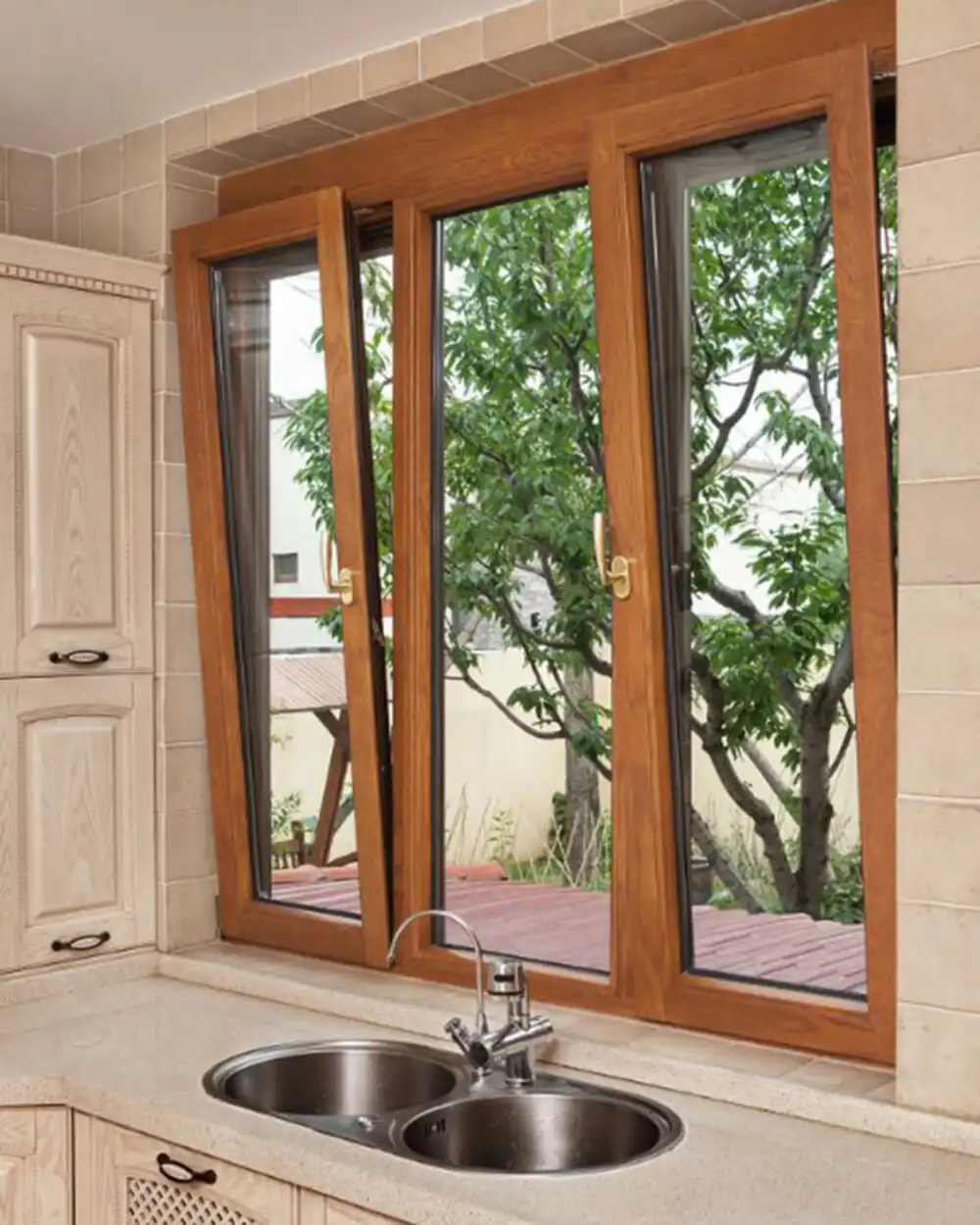
To use the tilt and turn casement windows method, you only need to move one handle to one of two places. When the handle is turned 90 degrees, the sash tilts inward from the top, making a 10-15 cm gap for draft-free air flow while keeping the door secure against rain and thieves. By turning the sash 180 degrees, the side springs are engaged, which lets the sash swing all the way in like a door. This two-in-one feature improves ventilation safety at high elevations, gets rid of upkeep concerns on the outside, and adds multi-point locking hardware that engages the frame border. The inward action keeps wind damage from happening and makes room for bigger glass areas—some heavy-duty designs can hold sashes that weigh more than 130 kg.
Tilt and turn casement windows are different from regular casements because they use compression closing technology. When the window is closed, the sash pushes against continuous EPDM seals that go around the outside of the frame. This keeps air infiltration rates as low as 0.1 cfm/ft² (ASTM E283) and water infiltration rates higher than 15 psf (ASTM E331). This level of performance meets strict building envelope standards in storm zones and cold areas where controlling condensation and thermal bridges is very important.
Benefits and Features of Tilt and Turn Casement Windows
Enhanced Ventilation Control
The tilt position lets fresh air flow continuously without making direct drafts or putting safety at risk. This is very important in places like healthcare facilities that need to constantly replace the air, schools that put child safety first, and apartment buildings where full window opening could be dangerous. Changing the tilt angle gives you exact control over the air flow, unlike set louvers or partially open sliding windows that don't give you as much freedom.
Superior Energy Performance
With thermal break technology and multi-chamber metal shapes, heat transfer coefficients are cut down by a large amount. Tilt and turn casement windows can get U-values between 0.22-0.35 Btu/hr·ft²·°F when they are paired with low-E double or triple glazing. This is higher than what ENERGY STAR requires for northern temperature zones. The compression seal gets rid of the usual ways that air leaks out of moving tracks. This lowers the load on the HVAC system and helps the building earn LEED points in the Energy & Atmosphere area.
Advanced Security Features
Depending on the size of the window, multi-point locking methods use between 4 and 12 locking points spread out around the sash's edge. Each point has mushroom cams made of hardened steel that hook into strike plates. This makes it very hard to get in without permission. RC2-rated setups keep out efforts at attack for a few minutes. They meet European burglar resistance standards and can be used for business installations on the ground floor and high-end home projects in rural areas.
Material and Glazing Options
- Aluminum Profiles: The only high-strength aluminum material we work with is 6063-T5, and the profile widths we offer are between 1.4 and 2 mm. With the optional thermal break technology, polyamide strips are put between the inside and outside metal chambers. This keeps the inside surfaces from condensing in cold regions. As you go up from Series 70 to Series 100, the shapes can handle bigger glass units and more weight.
- Glass Configurations: Double glazing with argon fill gives good thermal efficiency for mild areas. When you use triple glass with krypton fill, you get the best insulation for arctic weather or passive house standards. There are types of laminated glass that meet the safety glazing needs for overhead placements, storm zones, and stopping people from breaking in.
- Hardware Systems: Multi-point locks and friction hinges made in Europe make sure that the door opens and closes smoothly more than 20,000 times. The single-handle control makes it easier for the user to use while still engaging all closing points precisely. As an option, you can get versions with built-in mosquito nets and child safety latches that limit the tilt opening to 10 cm.
- These features directly address the goals of business-to-business buyers: lowering building operating costs by using less energy, lowering risk by making safety systems better, and increasing service life by specifying durable materials. With the ability to customize, profile sizes, powder-coated finishes, and gear specs can be made to match building plans and performance goals.
Performance claims made here are normal for the business. Actual thermal, acoustic, and structural performance should be checked by looking at the testing results and approval paperwork that the maker gives you.
Comparative Analysis: Tilt and Turn vs Other Window Types
Operational Practicality
For traditional casement windows to open outward, they need a clear room on the outside. This makes installation more difficult near walks, buildings next to them, or landscaping. Sliding windows don't need any swing clearance, but they give up half of the opening area at all times and need to have their tracks cleaned regularly to keep them working. Tilt and turn casement windows open inward, needing only internal clearance, which is usually easy to handle in most room plans, and offer a full opening area when fully turned. The ability to be used in two positions gives it freedom that single-action designs don't have.
Energy Efficiency Comparison
Sliding windows use brush seals or fin gaskets that don't compress very much, so air can get in three to five times faster than with compression-seal systems. Under ASTM E283 testing conditions, even good slide units only get 0.3 to 0.5 cfm/ft³ leakage rates. Tilt and turn casement windows compression seals, on the other hand, get 0.1 cfm/ft³ or better. There are measurable changes in the heating and cooling loads. For example, in mixed climates, replacing sliding windows with tilt and turn casement windows in a 10,000-square-foot business building can cut its annual HVAC energy use by 15-20%. Traditional open casements with single-point locks let more air in than multi-point systems because the edge of the sash isn't compressed evenly. The single handle and cam system can't apply even pressure in several places, which leaves gaps that get worse over time as the seals wear down. Multi-point methods keep the tension constant, which increases the life of the gasket and keeps the heat performance.
Security and Durability
Standard window locks with a single point of failure make them easy to break into. Spread entry resistance around the whole edge with tilt and turn casement windows multi-point systems. According to European EN 1627 standards, independent testing shows that RC2-rated tilt and turn casement windows can withstand attack tools like screwdrivers, pliers, and wedges for a minimum amount of time, which is a lot longer than single-point systems. The benefits of durability come from less stress on metal parts. When the casement opens inward, it doesn't have to deal with the wind loads that wear out outer casement springs. The multi-point connection spreads the weight of the sash over many contact points instead of putting all the stress on two or three hinge points. If you keep up with hardware, it will keep working smoothly for more than 20,000 turns, which is many years of normal home use or years of heavy business use.
Installation and Maintenance Considerations
Window types don't vary much in how hard they are to install; all of them need to be properly squared, sealed against the weather, and anchored to the structure. When installing tilt and turn casement windows, the hardware needs to be carefully adjusted to make sure that all of the closing points are compressed the same amount. In contrast to easier sliding or single-point casement installs, this needs trained workers who know how to make adjustments at more than one place.
Tilt and turn casement windows are better for maintenance reasons. With the inward operation, all of the outer glass can be cleaned from inside the building, without the need for swing stages, platforms, or dangerous access to the outside. Hardware hinge points need to be oiled and EPDM gaskets need to be checked for flexibility as part of yearly maintenance. These tasks can be done in minutes per window. Sliding windows need to have their tracks cleaned after every storm to keep dirt from building up, and outdoor casements need to have their hinges oiled on a regular basis, which means getting in from the outside.
The difference in efficiency is reflected in the cost. Because they require more complex gear and more precise production, tilt and turn casement windows usually have higher starting costs than sliding windows of the same size. A lifecycle cost study should look at things like how much energy is saved, how much upkeep costs, and how long the product lasts. Tilt and turn casement windows often give better return on investment, even though they cost more up front, for projects that care about 30-year building shell performance.
Procurement Guide: How to Choose and Source Tilt and Turn Casement Windows?
Aligning Specifications with Project Requirements
To start making specifications, set success goals in six different areas:
- Thermal Performance: Match the U-value standards to the temperature zone and the building energy rules for thermal performance. In cold countries, thermal break profiles and triple glazing are required. In mild climates, double glass is enough to meet code requirements.
- Structural Requirements: As per ASCE 7 standards, figure out the design wind loads for the building based on its height, location, and exposure group. Choose a profile series (70/80/100) with enough moment of inertia to keep the profile from deflecting under heavy loads.
- Acoustic Insulation: Use the amount of noise in the area to figure out the Sound Transmission Class (STC) needs. To get STC 38–42 ratings, buildings next to highways may need uneven window designs or laminated glass.
- Security Standards: RC2 or better burglar resistance grades are best for business and private installations on the ground floor. Choose from different types of multi-point locks and, if you want, hardened security glass.
- Operational Constraints: Safety limits and easy-to-clean entry are given top priority in high-rise setups. Places where kids can play need safety locks that stop the doors from opening all the way when they're not being watched.
- Aesthetic Integration: Match feature sizes, sightlines, and finish choices with building plans. Powder-coating metal lets you match colors exactly according to RAL standards.
Supplier Evaluation Criteria
Suppliers you can trust show that they have the output capacity, certification compliance, and expert assistance skills to:
- Manufacturing Infrastructure: CNC precise cutting, automated extrusion lines, and integrated assembly systems make sure that all big orders are the same size. Ask the facility for proof that they can meet the project deadlines. Lead times are usually between 25 and 30 days for basic setups and 35 to 45 days for complex custom orders.
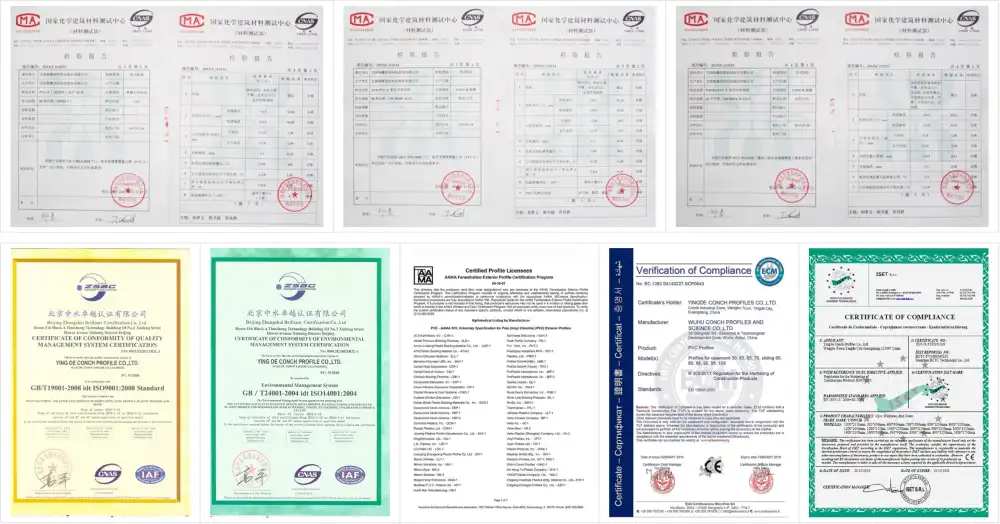
- Certification Portfolio: To be compliant with U.S. market rules, products must have NFRC labels for energy efficiency, AAMA certifications for structure and water penetration tests, and the right building code approvals. For international projects, CE marking or licenses from each country may be needed.
- Testing Documentation: Suppliers should give third-party test results that back up their performance claims. These reports should include measures of air entry (ASTM E283), water penetration (ASTM E331), structural load resistance (ASTM E330), and working force. Instead of using general system scores, testing should be based on how the tilt and turn casement windows are actually set up.
- Technical Support: Check to see if the seller can look over building plans, suggest the right profile series and glazing configurations, and give shop drawings so the contractor can coordinate. Technical teams that are responsive can speed up project timelines by answering questions about specifications during the planning phase.
Order Processing and Delivery Expectations
Usually, this is how procurement processes go: review of specifications, acceptance of shop drawings, payment of deposit, planning of production, quality inspection, and coordination of shipping. Shipping in containers allows for protective packaging that keeps finished metal surfaces and glazed units from getting damaged during travel. Export logistics experts help with paperwork like business bills, packing lists, and certificates of origin, which speeds up the customs clearance process.
After-sales help includes managing warranties, making sure new parts are available, and fixing technical problems. Standard warranties cover problems with how the hardware works and wear and tear on the finish. Hardware warranties usually last for five years and metal finish warranties last for ten years. Make sure you understand the guarantee terms for installation flaws versus manufacturing defects, and make sure that replacement parts are available to protect against obsolescence across multiple phases of a project.
Case Studies and Industry Insights
High-Rise Residential Implementation
A 32-story apartment building in Seattle with 280 units chose tilt and turn casement windows because they were better for upkeep safety and soundproofing near an international airport. The project used Series 80 thermal break profiles and triple glass to get STC 39 and U-0.27 ratings. After the building was finished, monitoring showed that it used 18% less heating energy than the developer's previous project, which had normal sliding windows. This helped the building get LEED Gold approval. During the mild seasons in the Pacific Northwest, residents were very happy with the sound comfort and air options.
Educational Facility Renovation
In order to meet current energy codes, a university in Boston replaced metal sliding windows from the 1960s in four apartment buildings with tilt and turn casement windows. The makeover cut the building's heating loads by 22% and improved the quality of the air inside by controlling natural airflow. Concerns about university responsibility in student housing were handled by safety barriers that stopped the doors from opening all the way. Rebates from the state for energy saving covered 15% of the cost of the windows for the job.
Commercial Office Energy Upgrade
In Chicago, a Class A office building changed its single-glazed outward casements with thermally broken tilt and turn casement windows that have low-E triple glass. Energy models suggested that the facade would lose 28% less heat, and a study of utility data showed that natural gas use dropped by 24% during the first heating season. Better thermal comfort led to fewer complaints from people working in outer offices, and better building shell performance raised the property's value.
Industry Innovation Trends
New technologies combine automated controls with hardware, which allows the Building Management System (BMS) to be integrated for planned night purge air and automatic closing based on the weather. Low-carbon aluminum profiles made from green energy sources meet the goals for reducing embodied carbon set by LEED v4.1 and BREEAM. Adding electrochromic glass lets you control the amount of heat that comes in from the sun in a dynamic way, without affecting the security or cooling benefits that come with tilt and turn operation. These implementations show measurable performance benefits that help people make business choices. Projects that care about occupant comfort, business efficiency, and long-term value choose tilt and turn casement windows more and more, even though they cost more at first, because they have better lifetime returns.
Conclusion
To choose the right window systems, you have to weigh the prices over their entire life, as well as their thermal performance and operating safety. Tilt and turn casement windows meet these needs with their ability to do more than one thing, better closing technology, and strong metal systems. The two-action system gives you ventilation options that standard designs don't offer, while still keeping you safe and protecting you from the weather. Specifications for materials like thermal break metal profiles and advanced glazing setups save energy in a way that can be measured.
These savings more than cover the initial costs of the building over its lifetime. A successful procurement relies on detailed blueprint development, seller evaluation that focuses on licenses and production capacity, and teamwork between the building and design teams. Tilt and turn technology is a good choice for projects that need high-quality building envelope performance, as shown by the performance benefits seen in both business and home settings.
FAQ
Q1: How do tilt-turn windows improve energy efficiency compared to sliding windows?
A: When the door is locked, the compression seal system makes sure that the sash and frame are in constant touch with each other around the whole perimeter. This gets rid of the ways that air can leak out of moving window tracks, where the seals on the brushes don't squeeze very much. Test results show that tilt and turn casement windows let less air in (less than 0.1 cfm/ft²) than good moving windows (0.3 to 0.5 cfm/ft²), which directly lowers the amount of energy needed for heating and cooling.
Q2: What are typical lead times for custom tilt-turn window orders?
A: Standard setups with stock profile colors and common glass specs usually need 25 to 30 days from the time the order is confirmed until it is shipped. Custom powder-coated finishes, units that are too big, or unique glass arrangements may make the lead time 35 to 45 days. These dates should be added to the building plans of projects, along with extra time for shipping based on where the goods are going.
Q3: Can tilt-turn windows be specified for both new construction and retrofit applications?
A: Both situations are handled well by the programs. When building something new, the frame can be put in while the rough hole is being prepared, and the weatherproofing can be done perfectly. For retrofit uses, exact measurements of the existing openings are needed, and adaptor frames may be needed based on the type of window that was there before. The inward process makes retrofitting buildings that are already occupied easier because it doesn't require any work to be done on the outside.
Partner with a Trusted Tilt and Turn Casement Windows Manufacturer
Haolv Building Materials has been making specialized windows and doors for 18 years and is working on tough projects all over North America. Our factory is fully automatic and uses ISO-certified quality control systems for metal extrusion, thermal break insertion, precision CNC cutting, and multi-point hardware installation. We have long-term agreements with top component providers that give us steady access to 6063-T5 aluminum alloy, European locking hardware, and approved insulated glass units.
Our engineering team offers full technical support, from looking over building standards and suggesting the best profile series to making shop drawings that make it easier for contractors to work together. We offer full customization options for sizes, thermal performance levels, hardware setups, and finish choices. Our products are backed by strict testing methods that prove their structural strength, weather resistance, and operational durability. Standard shipping times of 25 to 30 days and good inventory placement allow for tight project plans without lowering quality standards. Email our team at kristin@haolvwindows.com to talk about the details of your project and get thorough technical information. We offer full specification help to make sure that your tilt and turn casement windows provide measurable efficiency benefits throughout the span of the building.
References
1. Window and Door Manufacturers Association Technical Manual: Performance Standards for Architectural Fenestration Systems, 2022 Edition.
2. Smith, J. R., "Comparative Energy Performance of Window Operating Types in Commercial Buildings," Journal of Building Envelope Design, Vol. 18, No. 3, 2021.
3. European Standard EN 12608: Windows and Doors - Burglar Resistance Requirements and Classification, Brussels: European Committee for Standardization, 2020.
4. Thompson, A. and Williams, K., "Lifecycle Cost Analysis of High-Performance Window Systems," Building Science Review, Spring 2023.
5. ASTM E2112-19: Standard Practice for Installation of Exterior Windows, Doors and Skylights, West Conshohocken: American Society for Testing and Materials, 2019.
6. Martinez, C., "Evolution of Multi-Point Locking Technology in Residential Fenestration," Construction Specifier Magazine, December 2022.
Fast simple channel to send demands lock favorable price for building window door bulk purchases.