- English
- French
- German
- Portuguese
- Spanish
- Russian
- Japanese
- Korean
- Arabic
- Greek
- German
- Turkish
- Italian
- Danish
- Romanian
- Indonesian
- Czech
- Afrikaans
- Swedish
- Polish
- Basque
- Catalan
- Esperanto
- Hindi
- Lao
- Albanian
- Amharic
- Armenian
- Azerbaijani
- Belarusian
- Bengali
- Bosnian
- Bulgarian
- Cebuano
- Chichewa
- Corsican
- Croatian
- Dutch
- Estonian
- Filipino
- Finnish
- Frisian
- Galician
- Georgian
- Gujarati
- Haitian
- Hausa
- Hawaiian
- Hebrew
- Hmong
- Hungarian
- Icelandic
- Igbo
- Javanese
- Kannada
- Kazakh
- Khmer
- Kurdish
- Kyrgyz
- Latin
- Latvian
- Lithuanian
- Luxembou..
- Macedonian
- Malagasy
- Malay
- Malayalam
- Maltese
- Maori
- Marathi
- Mongolian
- Burmese
- Nepali
- Norwegian
- Pashto
- Persian
- Punjabi
- Serbian
- Sesotho
- Sinhala
- Slovak
- Slovenian
- Somali
- Samoan
- Scots Gaelic
- Shona
- Sindhi
- Sundanese
- Swahili
- Tajik
- Tamil
- Telugu
- Thai
- Ukrainian
- Urdu
- Uzbek
- Vietnamese
- Welsh
- Xhosa
- Yiddish
- Yoruba
- Zulu
The Complete Buyer’s Guide to Frameless Glass Shower Doors for Developers
When choosing frameless glass shower doors for your building projects, you need to think carefully about how well they work, how well they meet code requirements, and how much they cost. This detailed guide looks at Frameless Swing Glass Shower Door systems, discussing their structural benefits, the best ways to buy them, and the best ways to install them. Whether you're in charge of high-end apartment buildings, small hotels, or business improvements, knowing the technical details and supply chain options will help you get the best return on investment (ROI) for your projects while giving them the smooth, modern look that buyers want today.
Understanding Frameless Swing Glass Shower Doors
What Defines a Frameless Swing Door System
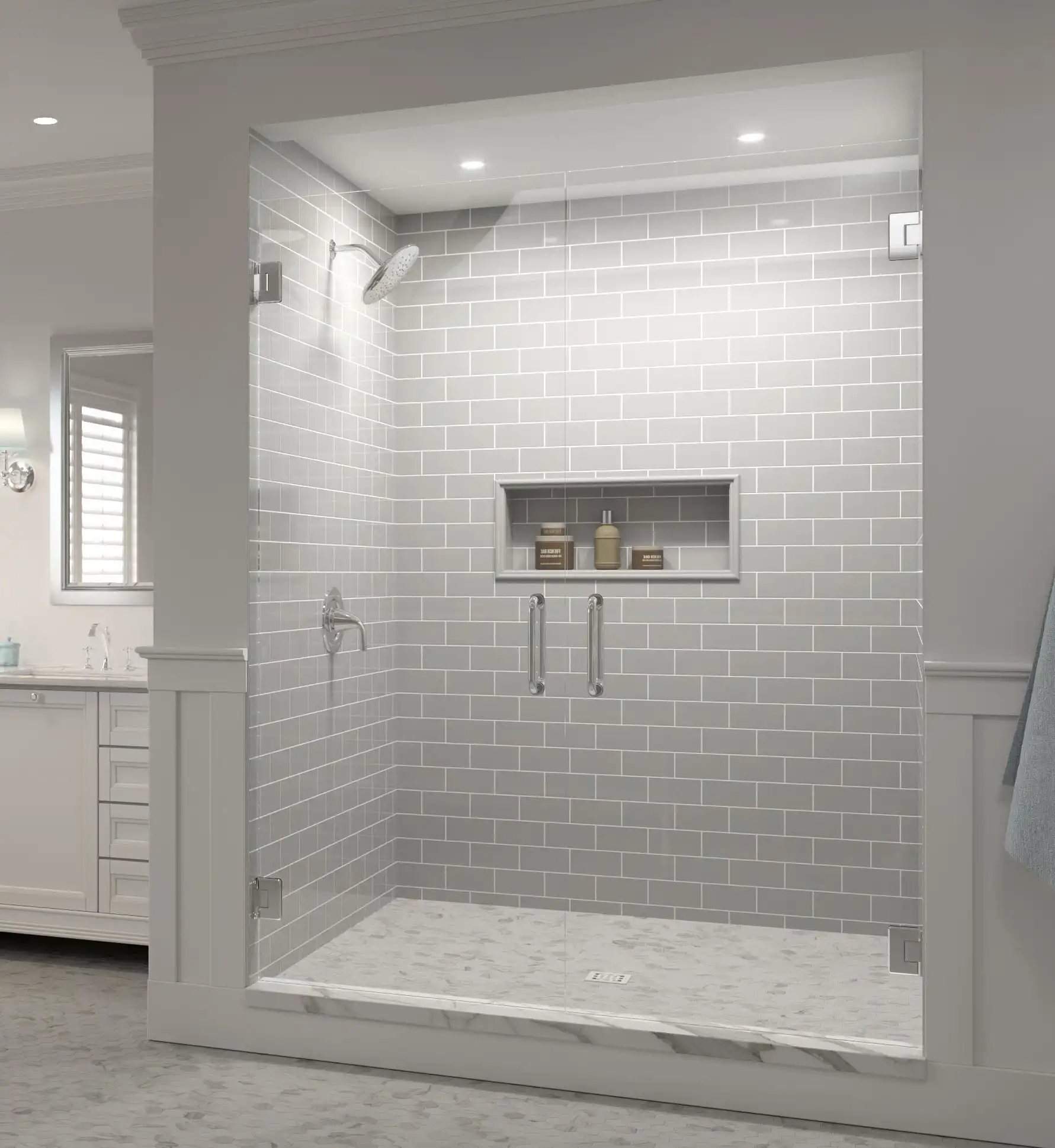
A Frameless Swing Glass Shower Door doesn't have any heavy frames around the edges. Instead, it uses thick tempered safety glass (usually 8mm to 12mm) and hinges that are carefully designed to hold it in place. This architectural window solution solves problems that have been around for a long time, like mould growing in aluminium tracks, too much visual clutter in small bathrooms, and the trouble of maintaining metal frames that have rusted. The lack of vertical framing provides a clear line of sight, highlighting fine tilework and letting in as much natural light as possible, which is a key selling point in high-end homes and hotels.
304-grade stainless steel gear and Xinyi tempered safety glass are used in modern systems that meet strict standards like 3C, CE, ANSI, and ASTM C1048. Full hardening is used on the glass, which makes it four to five times stronger than regular tempered glass. It breaks into small, blunt grains instead of dangerous bits when it hits something, so it meets safety standards in all North American countries.
Core Configuration Options
Frameless Swing Glass Shower Doors can be installed in a variety of ways because they can be mounted in a number of different ways. Wall-to-wall setups work well in hideaway bathrooms, while corner and neo-angle arrangements work best in rooms with odd shapes. Single-panel designs are good for small rooms, while double-swing designs give people in luxury suites a lot of space to move around.
The swing device can be used to move the door inward or outward, but for emergency exits, building rules usually require the door to swing outward. When the door is fully opened, the premium springs allow it to move 180 degrees, making it a smooth extension of the wet room. This flexibility is very helpful when making bathrooms that are accessible and don't have any barriers that meet ADA standards without sacrificing style.
Glass can be customised in more ways than just thickness. Developers can choose clear glass for an open look, frosted or patterned glass for protection, or coloured glass to match certain design styles. Chrome, brushed nickel, matte black and gold hardware styles go with a wider range of fixtures, making sure that bathroom design stays consistent across all project files.
Performance Advantages for Development Projects
Frameless Swing Glass Shower Doors have benefits that can be measured and directly affect the worth of a project. The simple design gives the impression of more space, which makes smaller baths feel bigger, which is a big plus in urban housing projects where every square foot is worth a lot of money. The openness makes it easier for natural light to spread, which cuts down on the need for artificial lighting and helps reach sustainability goals.
From a practical point of view, the simpler geometry cuts down on the amount of work needed to clean. In traditional framed doors, soap residue and mould can grow in the metal ducts. Frameless systems don't have any of these problems. Hotels say that cleaning turnover rates have gone down, which has a direct effect on how efficiently they run their businesses. Durability of tempered glass and corrosion-resistant stainless steel hardware ensures longer service life, lowering replacement cycles and lifetime costs. This is especially important when selecting for rental homes or business buildings that get a lot of use.
Two types of seals are used to keep water out: PVC strips along the vertical sides and magnetic strips at the places where doors close. When fitted correctly with sloped thresholds, these systems achieve high water tightness that is similar to traditional framed options. This puts an end to worries about performance trade-offs.
How to Choose the Right Frameless Swing Glass Shower Door for Your Project
Matching Door Specifications to Project Requirements
For residential developments, looks and space economy are most important, while for business developments, durability and safety are more important. 10mm or 12mm glass thickness is best for high-end private master rooms because it makes the structure more rigid and gives the glass a solid feel. Larger screens with thicker glass don't vibrate or bend as much, which makes the user experience better and supports higher unit prices.
Hotels, exercise centers and apartment buildings are all commercial settings that need 12mm glass as a minimum. The extra thickness makes it stronger so it can handle heavy use and reduces the chance of breaking on its own. By finding and getting rid of glass panels with nickel sulphide inclusions that could cause delayed breakage, specifying Heat Soak Testing (HST) during production lowers this risk even more.
How long hardware lasts and how much it costs to maintain are closely related. Solid brass or 316-grade stainless steel locks should be able to hold at least 50 kilograms each, and the self-closing systems should work easily within a 15- to 25-degree range. Low-quality hinges rust in damp places or need to be adjusted often, which leads to callback costs that cut into project profits.
Comparing Swing Doors to Alternative Configurations
Sliding doors save space in bathrooms that are very small, but they add floor tracks that collect dirt and make cleaning harder. The moving parts need to be serviced on a regular basis and will eventually need to be replaced. Frameless Swing Glass Shower Doors get rid of these problems and make the spaces bigger, which is great for accessible design or when pool equipment needs to fit.
Hinged semi-frameless options are less expensive, but they don't look as clean, which is what buyers want in competitive markets. The metal frame that you can see makes the bathroom look smaller and blocks light. When going after high-end buyers, the extra cost of fully frameless systems always leads to more interested buyers and faster absorption rates, which more than covers the initial investment through faster sales velocity.
When installed in a large bathroom, pivot doors can make a big visual effect, but they need to be carefully designed to drain water and take up more space. They're good for high-end custom homes, but they don't work for normal multi-unit buildings where uniform sizes and easy installation are important.
Balancing Cost and Quality in Procurement Decisions
The procurement approach has a big effect on the overall project costs. Knowing the range of prices for different levels of performance helps door designers match door specs to market placing. Frameless systems with 8 mm glass and simple chrome hardware are good for mid-range flats where value is more important than high-end finishes. Premium systems with 12 mm low-iron glass, slippery nano-coatings, and designer metal finishes cost more, but they set high-end condos apart in competitive markets.
When you buy in bulk, you can sometimes really cut down on costs. Building relationships with capable makers lets you negotiate tiered price structures, which is especially helpful when combining orders from different stages of a project. Standardising door sizes and specifications can help developers who are in charge of groups of units that are similar. It can lower building costs and make handling inventory easier.
Pay attention to the growing trend toward buying things by their parts. Shipping costs change a lot depending on whether you order doors as pre-assembled kits or as loose parts. When parts are taken apart, the volume of the crate is cut by about 30%, which lowers the cost of shipping goods internationally. Manufacturers who provide detailed assembly instructions, installation videos, and technical parameter sheets make it possible for trained workers to put things together on-site, which saves money on shipping and doesn't affect quality or plans. This method works especially well for builders who have to stick to tight schedules because it makes sure that materials get to the job site on time.
Installation and Maintenance Best Practices for Frameless Swing Glass Shower Doors
Critical Installation Steps for Long-Term Performance
Frameless Swing Glass Shower Doors will either work as designed or cause expensive returns if they are not installed correctly. The first step is to check the structure of the wall at the hinge fixing points. To support the weight of heavy tempered glass that is hanging off the sides, standard domestic framing needs extra support, usually in the form of two 2x4 bolts. If you mount it into single bolts or hollow-core walls, the door will eventually fall off because its weight will slowly loosen the fixings.
You can't forget to measure the wall's level and line. If the door height changes by more than 3 mm, it needs to be shimming or adjusted. Good hinge systems have built-in seals and alignment measures to handle this. If you skimp on this part of the verification process, doors will stick, not close properly, or leak water, all of which hurt the developer's image and lead to guarantee claims.
The placement of a sealing system needs the same amount of care. To make uniform closing pressure, PVC sealing strips need to be properly compressed along their vertical sides, leaving no gaps. Magnetic strips, on the other hand, need to be precisely aligned. There shouldn't be any gaps between the bottom sweep seal and the barrier that are bigger than 2 mm. At least a 2% slope should be used to send water back toward the drain. This will stop water from moving under the door while the shower is running.
The most dangerous part of installation is touching the glass. When stretched, tempered plates are strong, but when hit on the edges, they can break. Chips that could lead to catastrophic failure can be stopped by using the right suction cup lifts and padding all contact points. Installers should make sure that the mounting holes were precisely CNC-drilled at the factory. It is not possible to drill holes in toughened glass in the field, and poor quality control during factory drilling can cause stress points.
Maintenance Protocols That Extend Service Life
When properly installed, frameless glass shower doors don't need much care, but following a few simple steps can make them last a lot longer. As part of daily user care, the squeegee should be used after every shower to get rid of water drops before mineral deposits form. This easy habit, which takes less than 30 seconds, stops hard water stains, which are the main reason people worry about their looks.
When you deep clean every three months, you should use pH-neutral cleaners instead of harsh products that damage seals or etch glass. When you check and clean hinge parts, you get rid of soap buildup that can get in the way of their smooth operation. Putting a thin layer of silicone oil on the hinge pins keeps the easy swing action and stops rusting in bathrooms that are damp.
A skilled check once a year gives you peace of mind and finds problems before they get worse. Techs should check the state of the hardware finish, the tightness of the hinges, and the stability of the seals. Over time, repeated compression makes magnetic seals less effective. Replacing them every five to seven years keeps them waterproof. Taking this proactive step costs a lot less than fixing water damage caused by broken seals.
When problems happen, quick analysis keeps small issues from turning into big fails. Hinges that don't close on their own often just need to be adjusted or oiled. Most of the time, persistent leaks are caused by a failing seal or an incorrect threshold slope, not by basic design flaws. Taking care of these problems right away saves the bathroom finishes around the door and keeps its structural integrity.
Disclaimer: The exact performance features rely on the testing report for each product and the fitting conditions. To make sure you're following local building codes, look at the manufacturer's technical specs and hire trained workers.
Troubleshooting Common Installation Challenges
The most common issue after installation is water leaks. Most of the time, the problem starts with a barrier slope that is too low, seals that are too tight or missing, or doors that aren't lined up right and can't close properly. Systematic evaluation starts with the threshold: water that doesn't move means there isn't enough pitch. The next step is to check the seal. Look for cracks, tears, or hardened material that can't make a good touch anymore. Adjusting the hinges fixes doors that hang open a little because of settling or changes in temperature.
Even though glass spotting and stains aren't building problems, they make owners very unhappy. Most problems can be avoided by asking for factory-applied hydrophobic coatings. These coatings stop water from spreading across the glass surface and make it bead and roll off. These nano-coatings lower the surface energy, which makes it easier to clean and increases the time between deep maintenance sessions.
When low-quality materials are put in places with a lot of humidity, hardware starts to rust. This type of failure shows how important it is to choose 304 or 316 stainless steel from the start. According to ASTM B117 guidelines, salt spray tests should show that hardware can withstand 48 to 96 hours of rapid corrosion, which is the same amount of time that a bathroom is used every day for decades. By choosing gear that has been shown to be resistant to corrosion, you can avoid having to replace it too soon and keep the bathroom's look for as long as the building is in use.
Market Overview and Procurement Guide for Frameless Swing Glass Shower Doors
Current Pricing Landscape and Cost Drivers
Frameless Swing Glass Shower Door prices vary a lot depending on the type of glass, the quality of the hardware, and the style you choose. Entry-level systems with 8 mm clear glass and simple metal hardware usually cost between $400 and $700 each. Options in the middle range cost $700 to $1,200 and have 10 mm glass, better closing systems, and artist finishes. High-end systems with 12 mm low-iron glass, hydrophobic coatings, and high-end gear cost more than $1,200, and big custom setups with speciality glass can get close to $2,000.
The cost of installation labour is usually between $300 and $600 per door, but this depends on the difficulty of the site and the rate of labour in the area. Labour costs are higher for projects that are hard to get to, have unusual wall conditions, or have to be finished quickly. Developers in charge of multi-unit projects should try to get package prices that include both the supply of materials and installation services. This way, they can save time and money by not having to do the same work over and over again.
One of the main things that affects costs is the quality of the glass. Low-iron glass gets rid of the greenish tint that you can see on the edges of regular toughened glass. It costs 20% to 30% more, but in high-end uses, it looks much better. Hydrophobic coatings cost an extra 10 to 15 percent, but they make cleaning a lot easier, making them a good investment for rental homes or places that serve food and drink because care costs add up over time.
Strategic Supplier Selection for B2B Buyers
A careful review of the supplier is the first step to successful procurement. It's important to know if the maker can handle the amount of your project and still meet the deadlines. Smaller operations that rely on human processes don't be able to keep up with schedule pressure as well as factories that have automatic assembly systems, precision CNC equipment, and integrated extrusion capabilities.
Quality management systems give you information about the field of industry. ISO approval is a starting point, but more can be learned by digging deeper. You should ask for proof of tests for glass fracturing, hinge cycle-life (20,000 to 50,000 open-close cycles), and hardware salt-spray. Suppliers who are sure of their quality will be happy to answer these questions. Those who avoid them or give unclear answers are probably cutting corners.
How well providers can meet the needs of different projects depends on how well they can customise their products. Flexible partners are different from rigid catalogue sellers because they can make doors from shop drawings, work with non-standard sizes, and offer a range of glass and hardware choices. Manufacturers who offer engineering support to solve technical problems before they affect building plans are especially helpful for projects with special design needs.
Support and guarantee terms after the sale show that the seller wants to build long-term relationships. Full guarantees that cover glass, hardware, and production flaws for five to ten years show that the company is sure the product will last. Just as important is quick expert help for when questions come up during installation or when problems happen in the field and need to be fixed. Risk is created by suppliers who don't follow through on their promises after being paid. Suppliers who stand behind their goods become valuable long-term partners.
Logistics Optimization and Component-Based Procurement
Transportation costs have a big effect on the overall economy of a project, especially when buying things from other countries. Traditional fully-assembled door packages take up a lot of space in containers, which makes freight costs go up. Modern makers now offer component-based shipping, which means that doors come in carefully packed kits with all the hardware and directions you need to put them together.
This method usually cuts the number of containers needed by 30%, which saves money on freight. A 40-foot container that holds 80 assembled doors can handle approximately 110 to 120 component sets, greatly improving cost efficiency on big projects. The plan needs trained installation teams that are used to putting things together on-site, but makers that offer detailed technical videos, step-by-step manuals, and installation parameter sheets make it easier for people to learn.
When working with building plans, managing lead time becomes very important. If the requirements are normal, well-known manufacturers usually need 25 to 30 days from the time they confirm the order until they ship it. This could take up to 35 to 45 days longer if you need custom setups or speciality glass. Adding enough "buffer time" to project plans keeps doors from becoming "critical path items" that slow down the whole process.
When companies are in charge of ongoing building vs. one-time projects, their inventory strategies are different. Builders who are always busy should set up standing orders and keep a small amount of inventory on-site. This way, they can get big savings and make sure they always have materials on hand. Just-in-time delivery timed to installation windows is helpful for single-project makers because it cuts down on storing needs and the risk of theft or damage.
Case Studies and Developer Insights
Residential Tower Project: Balancing Cost and Market Positioning
In the southeast of the United States, a mid-rise apartment block with 180 units chose Frameless Swing Glass Shower Doors for all of the master bedrooms. The units were positioned in the top market segment by using 10mm clear glass and brushed nickel hardware. The developer made sure that all units had the same measurements. This made it possible to buy in bulk, which cut the cost of each unit by 18% compared to the first individual bids.
The project team and their seller worked together to come up with shipping rules based on components. The doors came in well-organised kits with pre-cut glass, matched hardware sets, seals, and screws. They also came with installation videos that were made just for that product. This method cut the number of containers needed from seven to five, which saved $4,800 in freight costs. After a short training session, installation teams quickly put everything together on-site, keeping up with the tight building timeline.
The purchase was justified by the market's reaction. During pre-sales focus groups, the frameless shower doors were cited as a key differentiator. Prospective buyers repeatedly noted that the bathrooms felt more "spa-like" than bathrooms in rival buildings. The units sold 22% faster than expected, and the project was fully occupied by 94% within eight months, which is a lot better than the market average.
Boutique Hotel Renovation: Durability and Maintenance Efficiency
For all of its guest bathrooms, a 45-room boutique hotel that is getting a complete makeover chose frameless swing doors with 12mm glass and high-quality stainless steel hardware. The hotel client cared more about long-term operating efficiency than original cost. They knew that lower upkeep costs and longer replacement cycles would lead to a better total cost of ownership.
The job called for 316-grade stainless steel gear and hydrophobic-coated glass that had been tested with salt spray for a longer period of time. During installation, waterproofing stability was emphasised, with a focus on threshold design and seal tension. The money spent on quality parts and proper fitting paid off right away.
Housekeeping staff said that cleaning bathrooms took 30% to 35% less time than when the property had framed sliding doors, which needed to have their tracks cleaned and metal frames descaling on a regular basis. In surveys done after the makeover, guest happiness scores with the quality of the bathrooms went up significantly, and many of the online reviews specifically mentioned the modern shower design. During the two years after the makeover, the hotel had no major maintenance problems or broken bathroom doors, which proved that the method to specification that focused on durability was the right one.
Developer Decision-Making Checklist
Based on these case studies and the business as a whole, builders who are looking at Frameless Swing Glass Shower Doors should always think about these important points:
- Project Positioning: Does the people in your market care enough about modern looks and how room is perceived to support the higher cost compared to normal options? Most of the time, premium and luxury projects gain, but mid-market projects need a careful cost-benefit study.
- Technical Specifications: Have you matched the width of the glass, the grade of the metal, and the coating choices to the amount of use that you expect? For residential uses, lighter standards are fine, but for business and hospitality uses, strong designs are needed.
- Supplier Capabilities: Can the possible seller show that they have the production capacity, quality systems, customisation options, and quick response times that match the needs of your project and your level of comfort with risk?
- Procurement Strategy: Have you optimised the material-labor relationship by negotiating quantities, shipping by component, and standardising specs across multiple units when it's possible to do so?
- Installation Planning: Do you have trained installation teams with the right training, tools, and supervision to make sure the job is done right and saves your investment and reputation?
Addressing these questions methodically leads to procurement decisions that balance initial investment with long-term project value, market positioning, and operational performance.
Conclusion
Frameless Swing Glass Shower Doors add a lot of value to both home and business building projects because they look modern, make the best use of space, and last a long time. To apply something successfully, you need to know the technical details, how to buy things strategically, and the right way to put things. The component-based shipping method saves a lot of money on transportation costs while keeping quality standards high.
When developers carefully consider things like hardware quality, glass thickness, source abilities, and installation needs, their projects have a better chance of doing well in the market and having lower lifetime costs. The money spent on accurate planning and performance always pays off through higher sales rates, better positioning, and fewer operating problems.
FAQ
How effective are frameless swing doors at preventing water leakage?
Frameless swing doors can keep water out just as well as regular framed doors if they are put correctly and have good sealing systems. Three things are very important: thresholds that are properly sloped to send water back to the drain, PVC closing strips that are properly squeezed along the vertical edges, and magnetic closure strips that keep the pressure steady at the door-to-wall interface. Quality of installation is more important than design—even high-end doors leak if they are not installed properly. Most sealing problems can be avoided by choosing doors with proven seal designs and making sure they are installed by a trained professional.
What glass thickness should commercial projects specify?
For business use, 12 mm toughened glass is the norm that should be used. The extra width makes the structure stronger under heavy use, lowers the risk of vibration and bending in bigger panels, and lowers the chance that it will break on its own. Hotels, exercise centers, apartment buildings, and other places with a lot of foot traffic can benefit from the longer durability that makes up for the higher cost of the materials. 10 mm glass can often work well for residential projects, but more and more high-end homes are choosing 12 mm glass for its better feel and longer life.
Can frameless shower doors accommodate non-standard bathroom dimensions?
One big benefit of good frameless door systems is that they can be fully customised. Door manufacturers who use CNC to cut and drill make doors to exact specs based on measurements taken in the field or architectural plans. Different bathroom plans can be accommodated by wall-to-wall, corner, nook and neo-angle designs. Customisation usually adds one to two weeks to the lead time compared to normal sizes, but it makes it possible to find solutions for unusual building situations. Giving exact measurements and clear instructions for fitting makes sure that the finished product fits well without needing to be changed in the field.
Partner with Haolv Building Materials for Your Frameless Shower Door Needs
Frameless Swing Glass Shower Door suppliers who understand both product quality and project planning are needed by developers working on residential towers, business renovations, or hospitality projects. Haolv Building Materials has been making building glazing systems for 18 years and has both advanced production capabilities and open customisation services that can be tailored to your needs.
Our frameless swing door systems come with 8mm, 10mm, or 12mm Xinyi tempered safety glass that meets 3C, CE, ANSI, and ASTM standards. They also come with 304 stainless steel hardware that is resistant to rust and comes in chrome, brushed nickel, matte black, and gold styles. We provide full technical paperwork, such as installation parameter sheets, assembly videos, and thorough manuals, to help your teams install the products efficiently on-site. Our 25- to 30-day production cycles keep projects on track, and our component-based shipping methods cut your freight costs by about 30%.
Our ISO-certified quality systems make sure that big orders always get the same level of service, and our engineering team can help with difficult fitting situations. No matter if you need 50 units for a small project or 500 doors for a multi-phase development, our production capacity and relationships in the supply chain make sure that you get what you need on time. Send an email to kristin@haolvwindows.com right away to get project-specific technical specs, volume prices, and help with purchasing that fits your budget and schedule. You can look at our full line of products at haolvbuilding.com and learn how smart relationships can help your project succeed.
References
1. National Glass Association. (2021). Glazing Manual: Tempered Glass Standards for Architectural Applications. National Glass Association Technical Publications.
2. American National Standards Institute. (2020). ANSI Z97.1: Safety Glazing Materials Used in Buildings - Safety Performance Specifications and Methods of Test. American National Standards Institute.
3. ASTM International. (2019). ASTM C1048: Standard Specification for Heat-Strengthened and Fully Tempered Flat Glass. ASTM International Standards Worldwide.
4. Building Owners and Managers Association. (2022). Lifecycle Cost Analysis for Commercial Building Materials: A Decision Framework for Developers. BOMA International Research Foundation.
5. National Kitchen and Bath Association. (2023). Bathroom Design Guidelines: Space Planning and Product Specification Standards. National Kitchen and Bath Association Industry Publications.
6. International Code Council. (2021). International Building Code: Chapter 24 - Glass and Glazing Requirements for Safety and Performance. International Code Council Publishing.
Fast simple channel to send demands lock favorable price for building window door bulk purchases.