- English
- French
- German
- Portuguese
- Spanish
- Russian
- Japanese
- Korean
- Arabic
- Greek
- German
- Turkish
- Italian
- Danish
- Romanian
- Indonesian
- Czech
- Afrikaans
- Swedish
- Polish
- Basque
- Catalan
- Esperanto
- Hindi
- Lao
- Albanian
- Amharic
- Armenian
- Azerbaijani
- Belarusian
- Bengali
- Bosnian
- Bulgarian
- Cebuano
- Chichewa
- Corsican
- Croatian
- Dutch
- Estonian
- Filipino
- Finnish
- Frisian
- Galician
- Georgian
- Gujarati
- Haitian
- Hausa
- Hawaiian
- Hebrew
- Hmong
- Hungarian
- Icelandic
- Igbo
- Javanese
- Kannada
- Kazakh
- Khmer
- Kurdish
- Kyrgyz
- Latin
- Latvian
- Lithuanian
- Luxembou..
- Macedonian
- Malagasy
- Malay
- Malayalam
- Maltese
- Maori
- Marathi
- Mongolian
- Burmese
- Nepali
- Norwegian
- Pashto
- Persian
- Punjabi
- Serbian
- Sesotho
- Sinhala
- Slovak
- Slovenian
- Somali
- Samoan
- Scots Gaelic
- Shona
- Sindhi
- Sundanese
- Swahili
- Tajik
- Tamil
- Telugu
- Thai
- Ukrainian
- Urdu
- Uzbek
- Vietnamese
- Welsh
- Xhosa
- Yiddish
- Yoruba
- Zulu
Three Track UPVC Sliding Window Supplier Guide for Large Balcony Openings
Choosing the right Three Track UPVC Sliding Window comes down to how many panels the opening needs, how those panels stack when the window is open, and how far the frame can span before it bows and the sashes start to drag. A third track buys one more travelling panel, which on a wide balcony changes the clear opening from a fixed centre light to a full stack at one end. Four variables decide whether the order performs: the profile series and its steel reinforcement, the sealing system, the glazing build, and the roller and locking hardware. For trade buyers and procurement teams supplying distributors, villa builders and commercial projects, those four are also what decide whether the sashes still glide in year five.
Understanding Three Track UPVC Sliding Windows: Key Features and Benefits
How Does A Third Track Change What The Window Can Do?
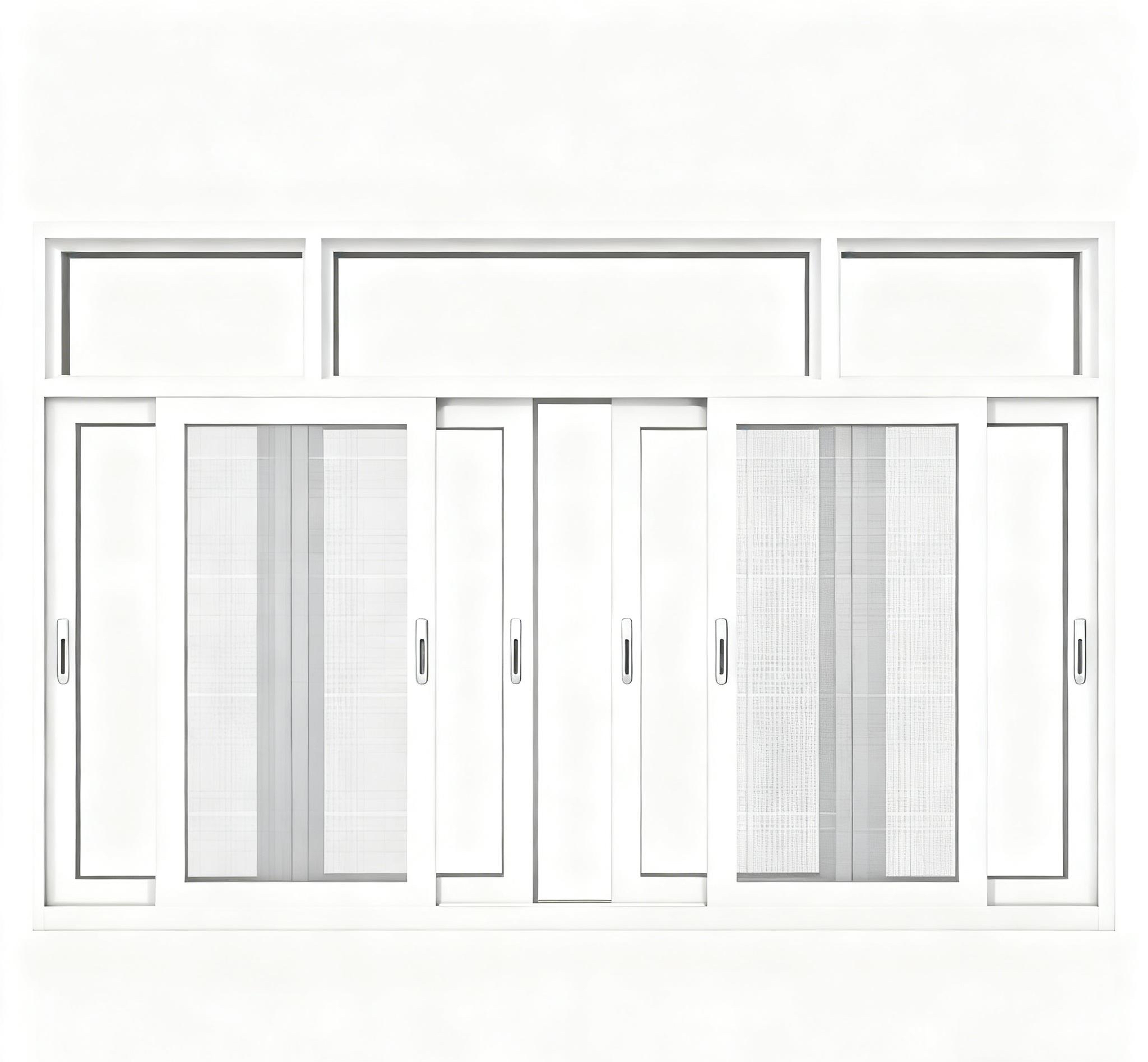
A two track window carries its sashes on two rails, so one panel can pass the other but no further. A third rail lets a third panel travel past both, which means a wide opening can be cleared in one movement without turning any panel into a fixed light. On a balcony of three metres or more, that is the difference between a window that ventilates half the opening and one that opens it completely.
The product page describes 80, 88 and 100 three track systems in a multi chamber UPVC profile with steel reinforcement, three or more sliding panels, a brush and rubber combined sealing system, 30 to 40 dB of sound reduction, concealed drainage and multi point locking on heavy duty rollers. A fly screen can run on its own track, which is worth confirming at quotation stage because the screen track takes depth out of the frame.
Which Panel Configuration Suits A Wide Balcony Opening?
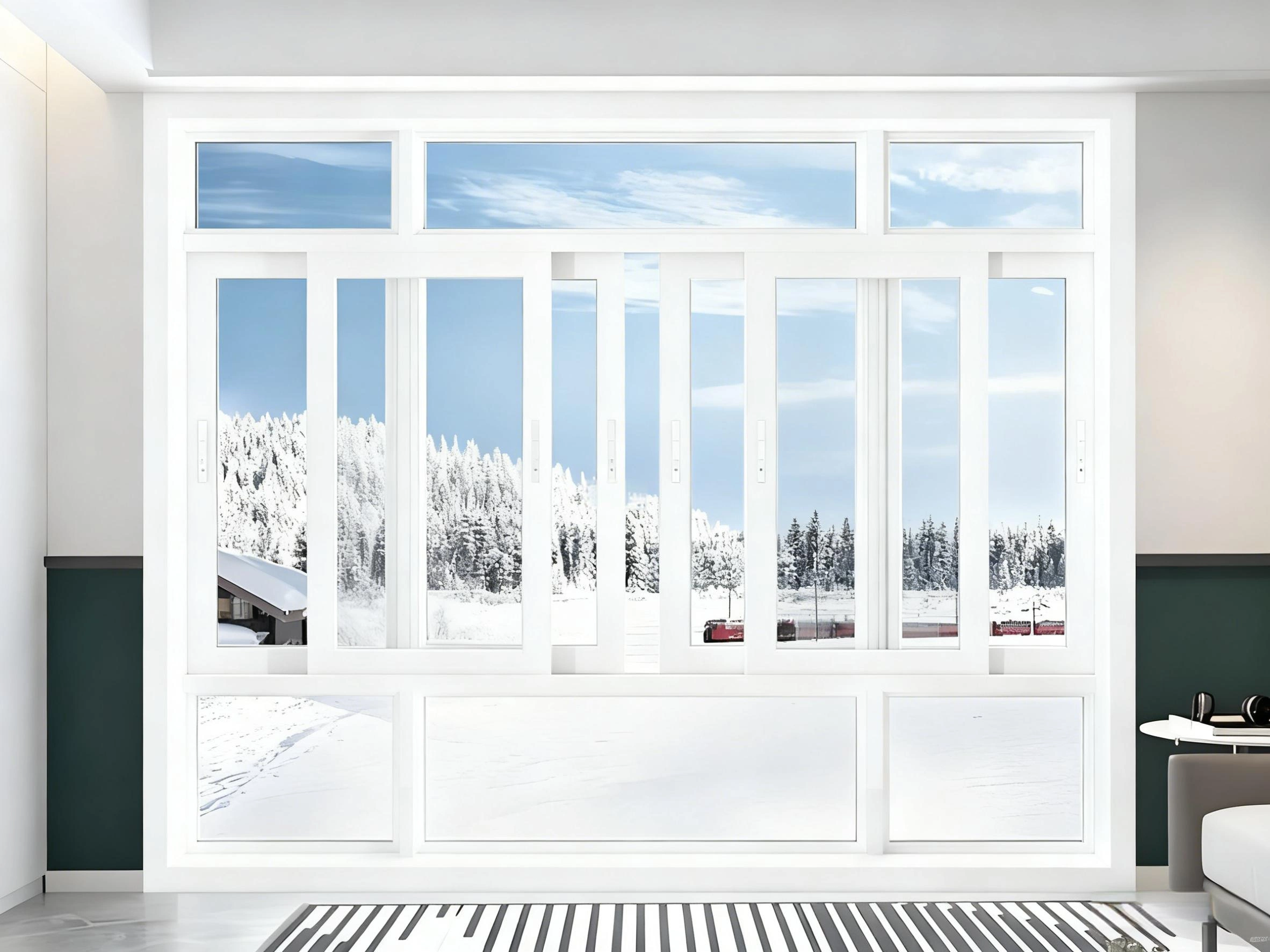
Three panels on three tracks can be arranged as two travelling to one side and one to the other, or as all three stacking at one end. The first arrangement gives a controlled clear opening in the middle, which suits a balcony used as a passage; the second gives the largest single clear opening, which suits a view. The choice changes the number of sashes, the interlock positions and the hardware count, so it belongs in the purchase order rather than in a site instruction.
The load on the rollers grows with panel width, glass weight and the number of panels sharing a track. A 100 series frame carries the widest span of the three, and the deeper section is what keeps a three panel set from twisting when one end is pushed. Ask for the maximum panel width the supplier will warrant in writing, then design the opening to that figure rather than to what fits on the drawing.
Bulk Procurement Considerations for Trade Buyers
UPVC is colour through in white, but woodgrain is a laminated foil, so a repeat order can arrive a shade off if the foil batch changes. Fix the profile series, the panel count, the reinforcement specification, the hardware brand and whether the screen is included, and put all five on the order. White profiles are also easier to match than a dark foil, which matters when an elevation is delivered in two shipments.
Initial orders of 10 to 20 units are accepted with neutral packaging or OEM branding, and sample support lets a distributor test the roller feel and the seal before committing to a container. Mixed containers work here because the same profile serves a balcony window, a terrace door height and a smaller bedroom opening, with only the panel count changing.
Climate Considerations: How Weather Conditions Affect Three Track Window Performance
Cold Climate Requirements and Thermal Engineering
UPVC insulates far better than aluminum per millimetre because the material itself conducts little heat, and the multi chamber section traps still air in the cells. A PVC-U window with a double glazed unit generally lands between 1.2 and 1.6 W/m2K for the whole assembly, which is why this product is often chosen for cold markets where a thermal broken aluminum section would need a wider frame to match.
The steel reinforcement inside the chambers exists for stiffness, not for insulation, and it is a path for heat if it runs continuously from the warm face to the cold one. Specify galvanized reinforcement, and check that the reinforcement stops short of the outer face, because a section that is stiff but cold will condense on the inner frame in a hard winter.
Hot and Humid Climate Adaptations
In a hot humid market the priorities are drainage, ultraviolet stability and dimensional movement. PVC-U does not corrode, so the frame is not the weak point, but the track is: water that sits in a rail will carry grit into the rollers and stain the sill. The concealed drainage described on the product page only works if the outlet slots are kept clear and the sill is set with a fall.
PVC-U expands roughly two to three times as much as aluminum over the same temperature change, which matters on a three metre run. Panels need clearance at the jambs and the frame needs fixing points that allow movement; over packing a long frame is how a sliding window ends up with a bowed track after one hot season. Pigment also matters: a dark foil absorbs more heat than white and moves further.
Coastal and High-Wind Zone Specifications
Salt does not attack the PVC-U profile, but it attacks everything the profile holds: rollers, locking gear, screws and the screen mesh. On a coastal site specify stainless rollers and stainless fixings, and confirm the mesh material, because a cheap steel mesh will fail long before the window does.
Wind pressure on a wide three panel window is carried by the reinforcement and by the interlocks, not by the glass alone. The product page states these systems are built for high rise and large openings; a buyer should still ask for the design wind pressure the section is rated to, and for the fixing schedule that goes with it.
Comparing Three Track UPVC Sliding Windows to Other Systems
Performance Analysis Against Aluminum Sliding Systems
Aluminum wins on sightline and on span. A slim aluminum section carries a taller panel with a narrower face, which is why high end residential work still specifies it for full height sliding walls. PVC-U wins on thermal performance per unit of cost, because it reaches a low U value without a thermal break, and on price for the same opening.
The trade off is bulk and weight. A reinforced PVC-U sash is heavier than an aluminum sash of the same size, and that weight goes straight onto the rollers. On a three panel set the practical consequence is that PVC-U suits openings up to a certain panel width, beyond which the hardware cost and the wear rate climb faster than the frame cost falls.
Glazing Options and Energy Performance
The product page lists double, triple and laminated units, with 30 to 40 dB of sound reduction quoted for the assembly. Double glazing is the standard for residential work, triple is specified where an external noise source or a cold climate justifies the extra weight, and laminated glass is the choice where security or traffic noise governs.
Every step up in glass adds weight to a sliding sash that already carries its own frame. A triple unit can add half again to the glass weight of a double unit, which is why the roller specification has to be decided with the glazing and not after it. Ask for the roller rating against the finished sash weight, not against the panel size.
Procurement Factors: Making Informed Purchase Decisions
Technical Verification and Compliance Standards
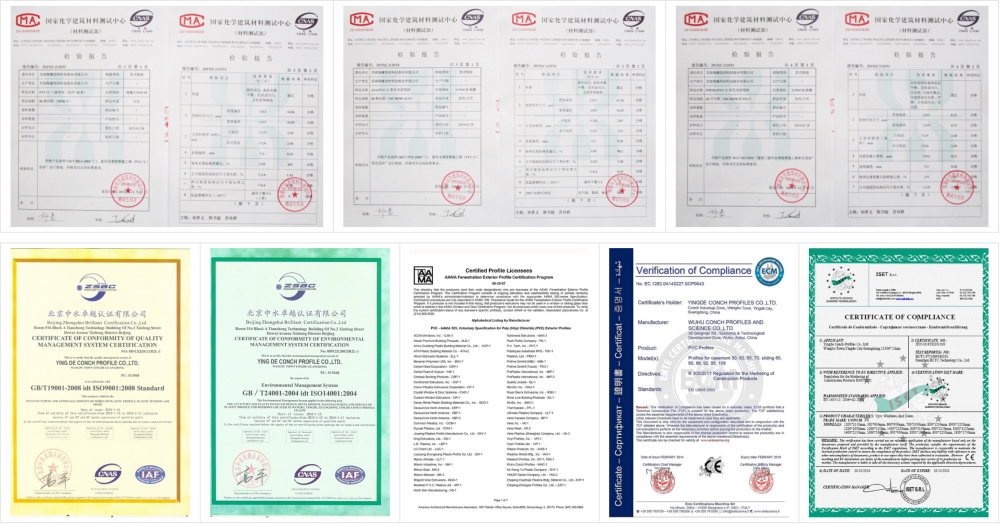
Ask for the certification documentation that covers the product family, for air, water and wind test reports to EN 12207, EN 12208 and EN 12210, and for the profile datasheet giving chamber count, wall thickness and reinforcement. Ask as well which stabilizer system the profile uses, because calcium zinc is the current export standard while lead based systems still appear in cheap profiles.
Customization Capabilities and Order Flexibility
Customization covers frame dimensions, panel count and arrangement, the 80, 88 or 100 series, colour and finish, and the screen. The constraint is the roller and the section: a very wide panel needs the 100 series and heavier hardware, and a non standard colour in a woodgrain foil carries a minimum run. Separate those two items in the quotation so the buyer sees what the opening is costing.
Logistics and Installation Support
Wide sliding units are bulky rather than heavy per cubic metre, so the packing decision is whether the sashes travel hung in the frame or boxed separately. Hung units arrive ready to set but need more protection at the interlocks; separated sashes pack tighter but shift the hanging work to site. Confirm which option the factory quotes before the container is booked.
On site the frame has to be set level and square, because a track that is out of level by a few millimetres will make a heavy sash run to one side for the life of the window. Standard delivery is 25 to 30 days from order confirmation, which leaves room for a site measure and a panel layout drawing before production starts.
Maintenance and Longevity: Protecting Your Investment Value
Climate-Specific Maintenance Protocols
The track is the whole maintenance programme. Vacuum the rail before the wet season, wipe it dry rather than flooding it, and lubricate the rollers with a silicone product rather than grease, which collects grit. On a coastal site, rinse the hardware twice a year; in a dusty market, clean the rail monthly. Solvents should stay away from PVC-U, which can craze.
Early Warning Signs and Component Replacement
A sash that starts to drag is telling you about the roller or the track, not about the frame. Grit in the rail, a flat spot on a roller and a track that has settled out of level produce the same symptom, so check the cheap causes first. Rollers and brush seals are replaceable consumables and should be ordered with the window.
Water standing in the rail after rain means the drainage outlet is blocked or the sill has no fall. Draught along the interlock usually means the brush seal has worn flat, which happens faster in a sandy environment. Fogging between the panes is a failed sealed unit and cannot be repaired.
Performance Enhancement Options
An existing window can be improved without replacement: new brush seals restore the interlock, stainless rollers remove a recurring wear problem on a coastal site, a fly screen on its own track solves an insect problem without touching the sashes, and a solar film helps where the original glass had no coating. None of these substitute for the right series at the start.
Disclaimer: Actual performance depends on the test reports for each specific product and on the quality of installation. Results in different climates depend on correct specification and on following the manufacturer instructions.
Conclusion
A three track window is bought for the clear opening, and it is judged on whether the sashes still run after a few seasons. The series fixes the span, the reinforcement fixes the stiffness, the drainage and the brush seal fix the water and draught performance, and the roller rating fixes the feel. A buyer who specifies those four against the finished sash weight, rather than against the panel size on a drawing, gets a window that opens as easily in year five as it did on the day it was hung.
FAQ
Q1: When is a three track window better than a two track window?
A: When the opening needs more than two travelling panels, or when the clear opening has to be wide without turning a panel into a fixed light. A two track system handles a standard bedroom or living room opening; a three track system earns its cost on balcony runs and commercial frontages where the whole width has to open.
Q2: Does the steel reinforcement affect thermal performance?
A: It can, if it runs continuously from the warm face to the cold face. The reinforcement is there for stiffness on wide spans, and the specification should call for galvanized steel that stops short of the outer face. In a cold climate the multi chamber profile plus a double glazed unit is what delivers the 1.2 to 1.6 W/m2K range for the assembly.
Q3: How much sound reduction can I expect?
A: The product page quotes 30 to 40 dB for the assembly with the brush and rubber sealing system. The figure depends on the glass build and on how well the frame is sealed into the wall, so a laminated unit and a correctly sealed reveal are what push the result toward the top of that range.
Q4: What are the lead time and the minimum order?
A: Standard delivery is 25 to 30 days from order confirmation, and initial orders of 10 to 20 units are accepted with neutral packaging or OEM branding. Samples are available so a distributor can test the roller action and the seal before committing to a full container.
Partner with Haolv Building Materials for Three Track UPVC Sliding Windows
Haolv Building Materials Co., Ltd. has been manufacturing windows and doors for 19 years, and supplies procurement teams who need a dependable three track UPVC sliding window supplier. Our factory in Hunan Province works from ISO, CE and AAMA certification documentation, works with CONCH to keep raw material quality consistent, and runs a 25 to 30 day delivery schedule supported by integrated supply chain management.
We accept initial orders of 10 to 20 units with neutral packaging or OEM branding, which makes it practical for building material sellers in Africa, South Asia and Eastern Europe to enter the market without committing to a full container. Our engineering team works from your drawings and specifications to configure the series, the panel arrangement, the reinforcement, the glazing and the hardware, and provides application guidance and project based technical support. Email us at kristin@haolvwindows.com to discuss your market requirements and request quotes matched to your container plan.
References
1. European Committee for Standardization. (2016). EN 14351-1: Windows and doors - Product standard, performance characteristics.
2. European Committee for Standardization. (2000). EN 12207: Windows and doors - Air permeability - Classification.
3. European Committee for Standardization. (2003). EN 12208: Windows and doors - Watertightness - Classification.
4. European Committee for Standardization. (2003). EN 12210: Windows and doors - Resistance to wind load - Classification.
5. American Architectural Manufacturers Association. (2022). AAMA 101: Voluntary Standard for Aluminum, Vinyl (PVC) and Wood Windows and Glass Doors.
6. International Organization for Standardization. (2015). ISO 9001: Quality management systems - Requirements.
Fast simple channel to send demands lock favorable price for building window door bulk purchases.