- English
- French
- German
- Portuguese
- Spanish
- Russian
- Japanese
- Korean
- Arabic
- Greek
- German
- Turkish
- Italian
- Danish
- Romanian
- Indonesian
- Czech
- Afrikaans
- Swedish
- Polish
- Basque
- Catalan
- Esperanto
- Hindi
- Lao
- Albanian
- Amharic
- Armenian
- Azerbaijani
- Belarusian
- Bengali
- Bosnian
- Bulgarian
- Cebuano
- Chichewa
- Corsican
- Croatian
- Dutch
- Estonian
- Filipino
- Finnish
- Frisian
- Galician
- Georgian
- Gujarati
- Haitian
- Hausa
- Hawaiian
- Hebrew
- Hmong
- Hungarian
- Icelandic
- Igbo
- Javanese
- Kannada
- Kazakh
- Khmer
- Kurdish
- Kyrgyz
- Latin
- Latvian
- Lithuanian
- Luxembou..
- Macedonian
- Malagasy
- Malay
- Malayalam
- Maltese
- Maori
- Marathi
- Mongolian
- Burmese
- Nepali
- Norwegian
- Pashto
- Persian
- Punjabi
- Serbian
- Sesotho
- Sinhala
- Slovak
- Slovenian
- Somali
- Samoan
- Scots Gaelic
- Shona
- Sindhi
- Sundanese
- Swahili
- Tajik
- Tamil
- Telugu
- Thai
- Ukrainian
- Urdu
- Uzbek
- Vietnamese
- Welsh
- Xhosa
- Yiddish
- Yoruba
- Zulu
uPVC Flush Casement Windows: Styles, Finishes and Design Options
The little things mean more than most people think when you're choosing windows for a big job. In our 18 years in the business, Haolv Building Materials has seen the market change a lot. Developers, builders, and sellers today don't just buy windows; they also invest in thermal performance data, compliance paperwork, and the dependability of the supply chain. The flush sash form of uPVC windows flush casement, which combines classic looks with cutting-edge tech, is a prime example of this development. This type of window has shutters that line up perfectly with the outside frame. This gives the window a sleek look that works for both historic repair and modern minimalist architecture. Procurement teams can match technical specs with project needs, cut down on calls, and deliver structures that work as promised when they understand the subtleties of styles, finishes, and design combinations.
Understanding uPVC Flush Casement Windows: Features and Benefits
Defining the Flush Casement Design
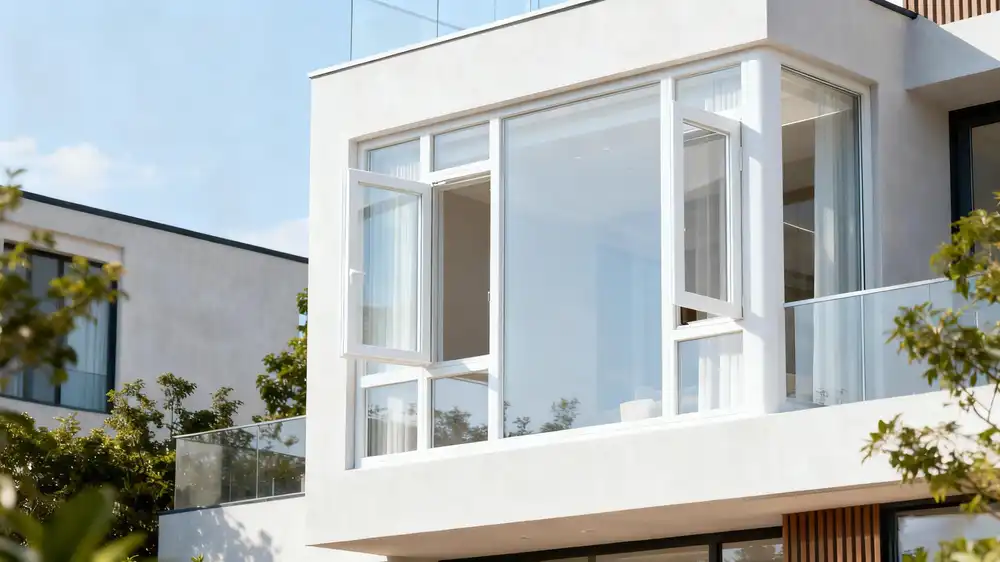
The opening sash's ability to sit flush within the frame instead of sticking outward is what makes it unique. This difference, which might not seem important, makes the front line of both residential and business buildings cleaner, which is something builders like. The design started as a modern take on traditional wood windows found in heritage homes, where keeping the property's look is important for getting planning permission in conservation areas.
Core Construction Components
The main ingredient in the material is unplasticized polyvinyl chloride (uPVC), a polymer that doesn't break down when exposed to water, UV light, or changes in temperature. It also doesn't need as much upkeep as wood or metal systems, which can have problems with thermal bridges. Inside the profile chambers, galvanized steel reinforcement—with a thickness range from 1.4 mm to 2.0 mm depending on the series—keeps the structure strong for bigger gaps and makes sure the sashes stay in the right place during operation cycles.
Our 60 and 70 series measurements show that the depth of the cylinder has a direct effect on thermal resistance. Multi-chamber designs make air pockets that block heat transfer paths, and triple EPDM sealing systems at the sash-frame junction stop water and air from getting in. There is no truth to these marketing claims; independent tests regularly show that when properly placed, air permeability values are below 1.5 m³/h·m².
Performance Advantages for Project Stakeholders
Thermal economy means lower energy costs that can be seen and felt. When you figure out the HVAC loads for multi-unit household projects or meet LEED certification standards, U-values of around 0.28 W/m²K can be reached with double-glazed units that have low-emissivity coatings and argon-filled cavities, and 0.18 W/m²K can be reached with triple-glazed configurations. The mass-spring-mass effect that happens when glazing is properly combined creates sound insulation benefits. When reinforced glass is added, sound reduction values go over 40 dB.
Basic locks are no longer the only way to provide security. Modern multi-point locking systems work at three or more places around the frame at the same time, making the sash harder to break into from the outside. When paired with units that are fully glazed on the inside and optional security hardware certifications, these standards take care of insurance needs and renter safety concerns that buying managers often face. The maintenance idea really hits home for site managers who are in charge of several places. The material won't rot, rust, or need to be painted over and over again. As part of routine maintenance, hardware devices are oiled and gaskets are inspected on a regular basis. This is work that maintenance staff can do without any special training or expensive new parts.
Styles, Finishes, and Design Options for uPVC Flush Casement Windows
Configuration Varieties
There are more window options than just single-sash types for upvc windows flush casement. Depending on how the room ventilates, how easy it is to clean, and local building codes, side-hung casements can open inward or outward. In Europe, opening outward is more common, while in North America, projects sometimes prefer opening inward to fit a screen. For bigger spaces, double casement windows work well. Either both sashes can be opened or just one can be fixed to save money.
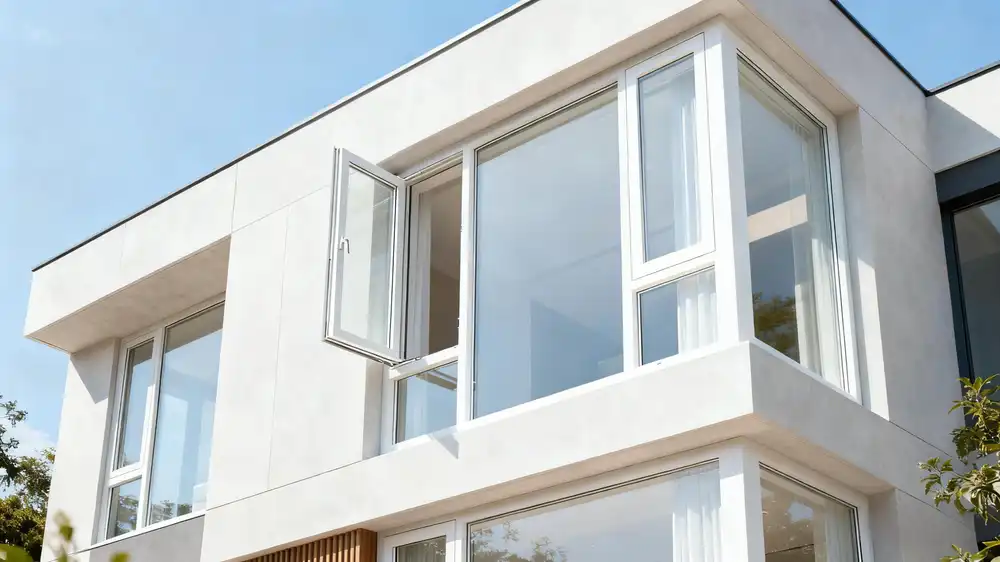
Triple configurations work well for bigger parts of facades in business buildings or villa projects that want to make the most of natural light. There are useful differences between flush and standard casements that go beyond how they look. It's easier to see more glass when the design is flush, which is important for architects who need to figure out lighting factors or developers who want to market views as a selling point. This design also gets rid of the jutting sash ends that can get dirty or make it harder for the wind to blow in open areas.
Surface Finish Spectrum
White is still the usual color because it looks bland and is cheap, but there are a lot more finishes to choose from now. Woodgrain laminates have etched surfaces that look like oak, mahogany, and walnut. They meet aesthetic needs without the upkeep that comes with wood. When renovating a historical site and the planning officials want it to look traditional, these finishes come in very handy.
The RAL and BS color systems let you change colors to match your brand across company developments or to make mixed-use projects look better architecturally. Dark gray, anthracite, and black finishes are in style right now, but sourcing teams should know that darker colors may need stronger UV-stabilized formulations to keep them from warping in high-solar-exposure situations.
Surface processes change measures of longevity. Instead of adding surface coats, co-extruded color layers mix pigment throughout the thickness of the profile. This eliminates the risk of delamination and increases color retention. Some makers use special topcoats that make the flooring less likely to scratch and easier to clean, which is useful for installations on the ground floor or in high-traffic business areas.
Glazing and Hardware Selections
The specs of the glazing have a big effect on both efficiency and cost. Tempered glass meets safety standards for places where people might hit it, and laminated designs add extra security by keeping broken pieces together. If you live in a normal climate or are working on a tight budget, double glazing will do. However, triple glazing is needed in places with extreme temperatures or if you want to get the highest energy scores.
The quality of the hardware decides how long it will work. In business settings, multi-point locking devices made by well-known European companies work well with automated building management systems. Stainless steel parts don't rust in seaside areas where salt spray speeds up the breakdown of materials. Optional trickle vents meet the cooling needs of building codes without putting security at risk when units are locked.
The performance requirements must match the needs of the program. Acoustically-rated window designs are good for hotels. Coastal buildings need hardware that is more resistant to rust. For jobs in cold places, you need spacer systems that don't let mist form. These aren't chances to sell more; they're engineering solutions to real-world problems in the field that have an impact on warranty claims and customer happiness.
Comparing uPVC Flush Casement Windows with Other Window Types
Operational Mechanism Differences
Casement windows open on side hinges, letting in air and letting people out in case of an emergency—this is required by building codes in beds. Although sliding windows save wall room, they only let in half as much air because one part stays in place all the time. Tilt-and-turn systems allow for safe ventilation by tilting inward and full inward swing for cleaning access.
However, the complexity of the mechanism raises the cost and may require more upkeep. In some situations, how you use space is important. Casements that stick outward don't take up space inside the room, but they might get in the way of paths or planting outside, which is something to think about in tight urban plots. Casements are easier to use than tilt-and-turn systems, so they have fewer mechanical parts. This could mean that they need less upkeep over time.
Material Performance Comparisons
Traditional wood looks real, but it needs to be stained or painted on a regular basis, and over time, movement caused by moisture can cause seals to fail and hardware to become out of place. Modern architecture likes aluminum's slim sightlines, but it conducts heat quickly unless thermal breaks are built in, which raises the cost to get the same level of insulation. Without any extra features, uPVC profiles provide uniform thermal efficiency. Due to its naturally low conductivity (about 0.17 W/mK compared to 160 W/mK for aluminum), even the most basic profiles work better thermally than normal aluminum. Dimensional stability across a range of temperatures stops the problems that can happen with yearly adjustments that can happen with wood installations.
Cost-Benefit Analysis
The cost to buy uPVC windows flush casement for the first time is usually between luxury metal and quality timber systems. When maintenance times are taken into account, the lifecycle estimate changes in a good way. One study that looked at business installs over a decade found that wood needed to be refinished every 4 to 6 years, which cost about 30% of the initial cost of installation.
On the other hand, uPVC units only needed the hardware to be greased and the seals to be checked. Energy efficiency leads to practical saves that add up over the life of a building. By replacing single-glazed windows in a 100-unit residential development with modern uPVC double-glazed casements, the building's heating loads can be cut by 25–30%. This can lead to lower utility costs that improve the property's operating statements, which is information that real estate developers use to figure out how much their investments are making back.
Note: Actual performance results rely on the products chosen, the quality of the work, and the conditions of the building. For information about a particular project, look at certified test results.
Procurement Insights: How to Choose and Source uPVC Flush Casement Windows?
Critical Specification Factors
Different climate zones and energy codes have different standards for thermal efficiency. U-values must meet or go beyond local building codes, which are currently 0.30 W/m²K in many temperature zones in the U.S. (though some cities and towns have tighter rules). Make sure that the manufacturer's test certificates match the profile series and glazing setup you want, not just any scores for a product line.
Security licenses give proof that something is real. Products that have been tested to ASTM F588 for structural performance, ASTM E283 for air entry, and ASTM E547 for water penetration have been shown to work well in normal situations. For projects in areas that are prone to hurricanes, extra impact resistance ratings and pressure cycling validations may be needed that normal goods don't have.
Customization options are important for getting projects done quickly. Can the maker make sizes that aren't normal without adding too much to the lead time? Do they work with building plans to make sure there are no problems with the sizes before they are made? Can they work with hardware that is specific to the site or connect to building control tools that are already in place? These operating skills set makers who know how to handle complicated projects apart from suppliers whose main goal is to distribute standard products.
Manufacturer Evaluation Criteria
Production capacity changes how reliable a plan is. Companies that have automated production lines and enough materials on hand can better handle rush orders or split deliveries to fit building plans. When you go to a plant or take a video tour of one, look for climate-controlled assembly areas, planned quality checks, and well-organized staging areas for finished goods.
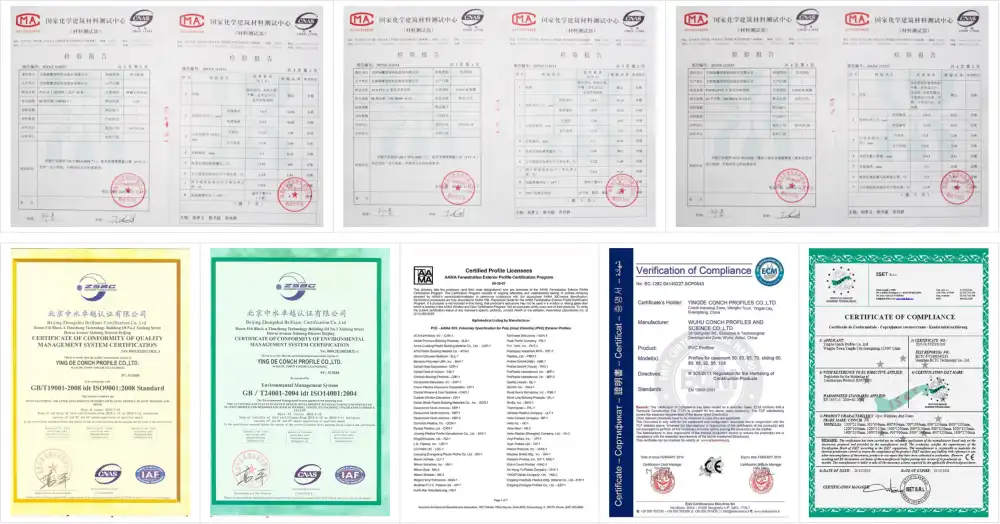
Certification breadth shows loyalty to the market. ISO 9001 quality control methods make sure that processes are always the same. Product certificates like CE marking (Europe), AAMA scores (North America), or NFRC labels (U.S. energy performance) show that the company is ready to be checked by a third party. Long-lasting approvals point to stable production methods rather than recent efforts to improve quality for specific projects.
Structures for after-sales help keep projects on schedule. Make it clear what the guarantee covers, how long it lasts, and what kind of proof is needed to file a claim. Find out what kind of professional support is available. For example, can engineers look over problems with the installation from afar or come to the site to help during crucial stages? Make sure that extra parts are available for hardware parts that might need to be replaced during the building's life.
Bulk Order Management
Standard wait times for custom-sized uPVC windows flush casement are between 25 and 30 days from the time the order is confirmed until the factory ships the goods. However, this can change depending on the manufacturer's workload and the complexity of the order. Large projects benefit from phased delivery plans that match the order of building. This keeps packed units from having to be stored on-site and exposed to the weather.
It's not just plant pickup that logistics planning covers. How the containers are loaded affects how efficiently they can be shipped. Standard 20-foot containers can hold between 150 and 200 window units, depending on their size. 40-foot high-cube containers can hold more, but they need the right tools to unload at the location. Make sure the Incoterms (FOB, CIF, DDP) are clear so that you don't get any surprises when you clear customs.
Installation, Maintenance, and Longevity of uPVC Flush Casement Windows
Best Practice Installation Methods
Preparing the rough hole correctly is the first step in installing a frame correctly. To keep things from getting stuck and to make sure the seal is compressed evenly, openings should be square, level, and straight within a 3mm range. Shimming at quarter-points evenly spreads weight loads without warping the frame in a way that stresses weld joints or makes sight lines less straight.
How the seal is made has a direct effect on how well it stops water from getting in. To control the joint depth and stop three-sided adhesion that leads to cohesive failure during heat cycle, backing rods must be installed in exterior perimeter sealant joints. When applied to the inside of a wall, sealer should allow for some frame movement while blocking air escape paths through the wall assembly.
Some common construction mistakes are overtightening the screws (which distorts the frame), not integrating the flashing properly (which lets water in behind the scenes), and not adjusting the sashes correctly (which makes the seal less effective). Most of the time, these problems don't show up right away. Instead, they show up as premature seal degradation or operating problems after yearly temperature changes.
Routine Maintenance Requirements
Lightweight machine oil should be put on hinge pivots and locking point contact surfaces every six months to keep them in good working order. Heavy greases that collect dirt and penetrating oils that can damage EPDM seals should not be used. Track drainage pathways need to be cleaned out once a year to get rid of any garbage that could block water flow, especially in areas near trees or factories. Soft cloths and non-abrasive cleaners are used to clean frames. Cleaners with solvents should not be used because they can damage surface finishes or break down gasket materials. To keep seal edges from wearing away, glass cleaners should not contain ammonia. This is especially important for low-emissivity surfaces that can be damaged by strong chemicals.
Durability Factors and Longevity
How long you can expect a service to last depends on how it is used and how well it is maintained. uPVC profiles will never rot or corrode, but UV light will reduce the gloss of darker colors over time. Most hardware parts have an operational life of more than 20,000 cycles, which means they can be used for decades in a regular home or for 10 to 15 years in high-traffic business settings before they need to be adjusted or replaced.
Warranty structures usually cover material flaws like frame discoloration and weld failures for longer amounts of time. However, gear and seals have shorter coverage because they are more likely to break or wear out. Knowing the scope of a warranty is helpful for planning maintenance because it lets you know when parts go from being covered by warranty to being part of regular maintenance funds.
Disclaimer: Actual results of performance depend on the quality of the system, the area where it's used, and how it's maintained. For verified performance numbers, look at the testing documents that came with the product.
Conclusion
When choosing uPVC windows flush casement for a business or home job, you have to balance how they look, how well they work, and how much they cost. The architectural flexibility of the flush sash design makes it suitable for both historic repairs and new constructions. The inherent qualities of uPVC material make it thermally efficient and low-maintenance, which affects the long-term running costs.
To make a good design, you need to pay attention to things like thermal ratings, security approvals, the ability to customize, and maker support structures that go beyond the initial delivery. When procurement teams compare operational mechanisms, look at lifecycle costs, and make sure production capabilities are all checked out in a planned way, they set up projects to be completed successfully and to meet stakeholders' expectations for the entire operational life of the building.
FAQ
Q1: How do flush casement uPVC windows achieve superior energy efficiency compared to traditional options?
A: Several engineering factors work together to give the energy edge. Multi-chamber profile designs make thermal breaks that stop heat from moving, and triple EPDM sealing systems keep air out of weak spots where the sash and frame meet. Modern coatings on low-emissivity glass bounce infrared rays back into the room, and inert gas fills between the panes make direct heat transfer even less likely. When these parts are put together correctly, U-values can reach 0.18 to 0.28 W/m²K, which is much lower than single-glazed wood windows (around 5.0 W/m²K) or non-thermally-broken metal systems (2.5 to 3.0 W/m²K). These performance levels have been confirmed by independent testing under normal conditions.
Q2: What are standard lead times and minimum order quantities for bulk purchases?
A: Usually, it takes 25 to 30 days from the time an order is confirmed until it leaves the factory, given that normal color choices and hardware configurations are made. Custom colors or coating may add one to two weeks to the wait time. Different manufacturers have different minimum order amounts. Some accept orders as low as 50 units of a mix of sizes, while others set minimums of 150–200 units per container for shipping abroad. Phased production plans help big projects because they line up deliveries with the order of building, which keeps storage problems from happening on-site.
Q3: Can these windows be customized for non-standard sizes and finishes?
A: Customization is one of the best things about well-known makers. Profile systems can fit openings of all sizes, from small bathroom windows to big picture units that are more than 2.5 meters tall, but the structure needs to be strengthened more as the size increases. There are colors that meet both RAL and BS standards, and wooden treatments that look like different types of wood. Hardware from a number of European makers can be chosen to meet security requirements or personal taste in terms of style. With tempered, laminated, or custom glass options, even window designs can be changed to meet specific needs for noise reduction, sun control, or safety.
Partner with a Trusted uPVC Windows Flush Casement Manufacturer
Haolv Building Materials has been making high-performance uPVC windows flush casement that meet strict foreign standards, such as ISO, CE, and AAMA certifications, for 18 years. They bring this experience to every job they work on. Our advanced production plant combines automated assembly systems with precise CNC cutting technology. This makes sure that the quality is the same whether you're buying 100 units for a housing development or overseeing a commercial project with multiple phases.
We have strategic relationships with high-quality material providers like CONCH to ensure the quality of our profiles. Our full product ecosystem includes frames, glazing, and hardware, which makes it easier for you to coordinate your supply chain. Technical teams offer free advice on thermal specs, customization needs, and compliance paperwork. They also keep enough stock to meet delivery deadlines of 25 to 30 days. You can email our buying experts at kristin@haolvwindows.com to talk about the details of your project, ask for unique samples, or look into our volume pricing options for developers, builders, and wholesalers. We give your projects the expert help and dependability they need.
References
1. Anderson, J.M. & Williams, R.K. (2021). Thermal Performance Analysis of Multi-Chamber uPVC Window Systems in Commercial Applications. Journal of Building Envelope Design, 15(3), 78-94.
2. British Standards Institution. (2019). PVC-U Windows and Doors: Material Specifications and Performance Testing Protocols. BSI Standards Publication BS 7412:2019.
3. Chen, L., Martinez, P., & Thompson, H. (2020). Life Cycle Cost Comparison of Window Frame Materials in Multi-Unit Residential Construction. Construction Economics Review, 42(2), 156-173.
4. European Committee for Standardization. (2018). Windows and Doors: Product Standard, Performance Characteristics—Part 1: Windows and External Pedestrian Doorsets. EN 14351-1:2018.
5. National Fenestration Rating Council. (2022). Certification and Labeling Guidelines for Energy Performance of Fenestration Products. NFRC Technical Document 100-2022.
6. Stevens, D.R. & O'Brien, M.J. (2020). Comparative Analysis of Window Security Systems: Multi-Point Locking Mechanisms and Forced Entry Resistance. Security Engineering Quarterly, 28(4), 201-219.
Fast simple channel to send demands lock favorable price for building window door bulk purchases.