- English
- French
- German
- Portuguese
- Spanish
- Russian
- Japanese
- Korean
- Arabic
- Greek
- German
- Turkish
- Italian
- Danish
- Romanian
- Indonesian
- Czech
- Afrikaans
- Swedish
- Polish
- Basque
- Catalan
- Esperanto
- Hindi
- Lao
- Albanian
- Amharic
- Armenian
- Azerbaijani
- Belarusian
- Bengali
- Bosnian
- Bulgarian
- Cebuano
- Chichewa
- Corsican
- Croatian
- Dutch
- Estonian
- Filipino
- Finnish
- Frisian
- Galician
- Georgian
- Gujarati
- Haitian
- Hausa
- Hawaiian
- Hebrew
- Hmong
- Hungarian
- Icelandic
- Igbo
- Javanese
- Kannada
- Kazakh
- Khmer
- Kurdish
- Kyrgyz
- Latin
- Latvian
- Lithuanian
- Luxembou..
- Macedonian
- Malagasy
- Malay
- Malayalam
- Maltese
- Maori
- Marathi
- Mongolian
- Burmese
- Nepali
- Norwegian
- Pashto
- Persian
- Punjabi
- Serbian
- Sesotho
- Sinhala
- Slovak
- Slovenian
- Somali
- Samoan
- Scots Gaelic
- Shona
- Sindhi
- Sundanese
- Swahili
- Tajik
- Tamil
- Telugu
- Thai
- Ukrainian
- Urdu
- Uzbek
- Vietnamese
- Welsh
- Xhosa
- Yiddish
- Yoruba
- Zulu
UPVC Folding Sliding Door Supplier Selection Tips for Buyers
Selecting a reliable UPVC folding sliding door supplier is about more than just comparing prices. The right partner ensures premium material quality, precision customization, and efficient logistics that directly affect your project timeline and profitability. High-end villa developers and custom home builders increasingly source bifold door systems from overseas manufacturers, leveraging knock-down assembly methods to cut shipping expenses while maintaining aesthetic and performance standards.
Understanding how to evaluate UPVC profile quality, hardware durability, and supplier capabilities empowers procurement managers to secure partnerships that deliver consistent value across multiple projects without compromising on structural integrity or design flexibility.
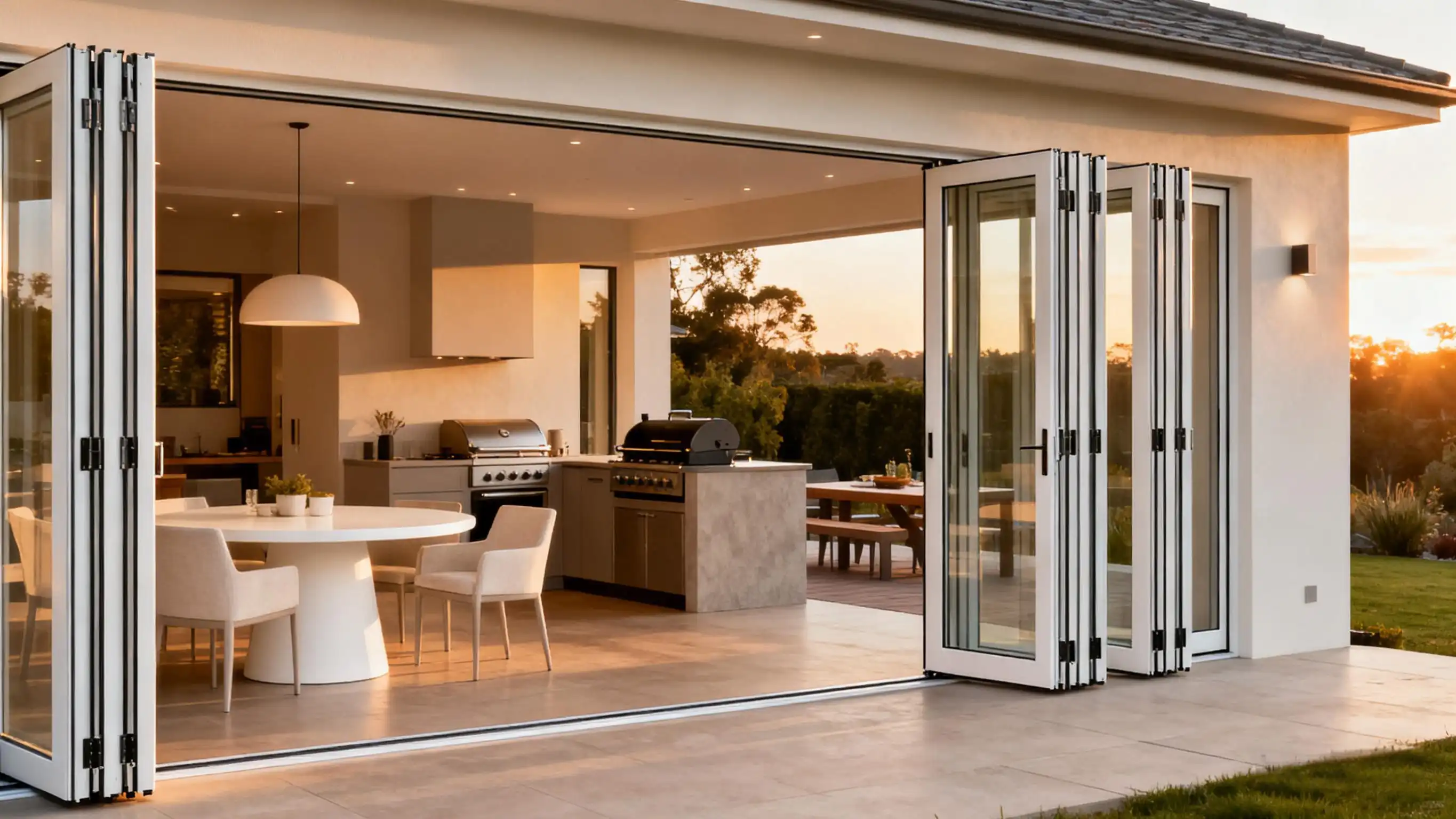
Understanding UPVC Folding Sliding Doors and Their Market Landscape
Bifold doors, which are also known as UPVC Folding Sliding Doors, use a system of multiple panels that slide along a track and fold nicely to one side. This mechanism makes large, clear openings that are great for connecting rooms inside with gardens, patios, or balconies. The multi-chamber profile form of UPVC (unplasticized polyvinyl chloride) material traps air pockets and lowers heat transfer, making it a very thermally efficient material. UPVC doesn't need thermal breaks like aluminum does, and unlike wood, it doesn't warp, rot, or get damaged by termites without regular care.
In North America, Europe, and Australia, the demand for these door systems has gone through the roof. This is because homeowners want to make their homes more energy efficient and architects want to use modern designs. Supply hubs in Asia, especially China, have most of the production capacity because they offer low prices and cutting-edge molding technology.
To fit high-end home projects, the market has moved toward solutions that can be customized, like wood grain finishes, RAL color matching, and panels that are too big for the room. Because there is so much competition, procurement experts can find makers that offer affordable products with certifications like ISO, CE, and AAMA. This makes sure that the products meet local building codes while keeping costs low.
Key Criteria for Selecting a UPVC Folding Sliding Door Supplier
Material Quality and Profile Composition
For a folding door system to last, the UPVC profile is what it's built on. Premium providers use new UPVC resin instead of reclaimed materials. This keeps the color stable and keeps it from turning yellow over time. Look for ways to work together with reliable resin makers like CONCH, whose products meet strict standards for sturdiness and protection of the environment. For large-span installations, steel reinforcement inside the profile chambers is a must. This keeps the structure from sagging and keeps panel loads between 80 and 120 kg. Asking for certifications of materials and records of the extrusion process helps to check what suppliers say.
The insulation in multi-chamber profiles is better, and the designs range from five to seven chambers based on the type. Most of the time, they come in 85mm or 100mm depths. U-values are usually less than 1.2 W/m²K when the right window is used and the room is set up in a certain way. People who want to buy something should ask for thermal performance test results that are in line with local energy rules, like ENERGY STAR standards in the US or Passive House standards in Europe. This information makes sure that the product meets both the needs of the current job and the goals for long-term energy economy.
Hardware Systems and Operational Smoothness
How well a bifold door works depends a lot on the hardware, especially the hinges, rollers, and track systems. High-quality parts made in Germany by companies like HOPO or similar ones ensure smooth folding and long-lasting dependability. Rollers made of stainless steel with protected bearings don't wear out or corrode, which is very important for sites that are near water or the coast. Multi-point locking systems make things safer while still being easy to use, and the designs of handles should take both aesthetic preferences and ergonomic needs into account.
Track systems have to be able to hold the weight of several plates without giving way. Precisely machined aluminum tracks make sure that panels slide along easily and line up correctly when they are closed. Ask suppliers if they test the assembled units for load and ask for video demonstrations of how to fold them. The effectiveness of weather seals—usually EPDM rubber with multiple contact points—in stopping drafts and water from getting in has a direct effect on how comfortable people are inside and how much their energy bills are.
Customization Flexibility and Design Options
Customized solutions that fit architectural ideas are needed for high-end home projects. UPVC Folding Sliding Door systems are a prime example of this versatility, offering seamless transitions between spaces. Suppliers that offer wood grain transfer printing can make UPVC surfaces look like oak, walnut, or mahogany, giving them the warmth of wood without the upkeep. RAL color matching can work with custom palettes, so it can be easily combined with exterior siding or interior decor. Panel configurations range from two to six panels, and they can be folded inward or outward, based on how much room you have and how much air flow you want.
The type of glazing you choose has a big effect on both function and cost. Double glazing with 5+12A+5mm configurations works well in mild climates, while 5+20A+5mm or triple glazing is best for places with very high or low temperatures. Low-E coatings stop UV rays from passing through and make windows more energy efficient. Laminated safety glass options make windows safer and soundproof. Finding suppliers who can find and combine different types of glass makes buying easier, cuts down on coordination problems, and makes sure that frame and glazing specifications are compatible.
Certification Compliance and Quality Assurance
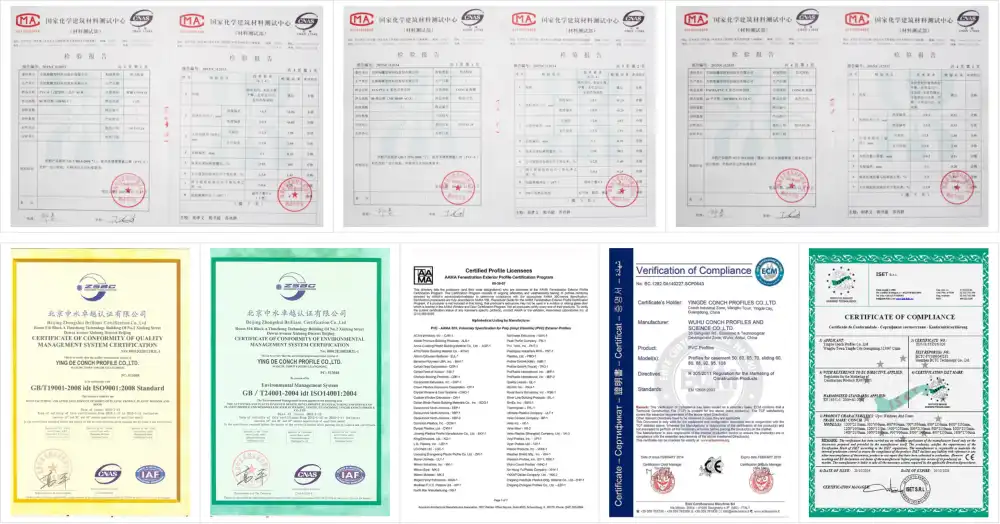
International approvals back up claims about a product's safety and performance. If a product has an ISO 9001 approval, it means that quality management is used throughout the whole production process. If it has a CE marking, it means that it meets European health, safety, and environmental standards. AAMA (American Architectural Manufacturers Association) approval covers structure performance, water penetration resistance, and air infiltration, and is good for projects in North America. To make sure that goods meet GB/T 8478-2020 standards or similar regional benchmarks, ask for copies of test results from accredited labs.
Quality control methods that are easy to understand separate trustworthy providers from dishonest ones. Find out about the checking procedures that are used when raw materials are received, during production, and before the final assembly. Third-party inspections before shipping add another layer of security and find problems with the goods before they get to your warehouse. When suppliers let workplace audits happen, it shows that they trust their processes and want to build trust through openness.
Comparing UPVC Folding Sliding Door Suppliers — What to Look For?
Production Capacity and Scalability
Knowing how big a supplier's factory is can help you figure out how well they can consistently fill orders. Tighter tolerances and faster turn-around times are achieved in factories that have automated extrusion lines, CNC cutting machines, and robotic welding stations. How well a supplier can handle large orders without affecting lead times can be seen by how many units they can make each month. Having partners whose operations can be scaled up or down helps buyers who are working on multiple projects at the same time and avoid delays caused by limited capacity during busy times.
Delivery times are usually between 25 and 30 days from when an order is confirmed to when it is shipped, but this depends on how complicated the customization is and how many orders are placed. Suppliers who keep enough raw materials on hand can cut down on production delays, but those who rely on just-in-time procurement have to deal with more changes. Talking about buffer stock policies and fast production choices during the first talks sets realistic goals and emergency plans for when the project needs to be done quickly.
Communication and Technical Support
Professional sellers can be told apart from transactional vendors by their responsive contact. Technical teams that can read architectural drawings and suggest changes based on the limits of production can save time and avoid mistakes that cost a lot of money. Multilingual support staff who are fluent in English make it easier to communicate clearly, which cuts down on misunderstandings about shipping arrangements or specifications. Suppliers who offer design consultation services add value by suggesting the best panel layouts, hardware choices, and glazing combinations for each project.
Having access to maintenance tools raises the value of a purchase. When suppliers give local workers who aren't familiar with knock-down building methods detailed installation instructions, CAD drawings, and instructional videos, they have more power. Technical parameter sheets that list sizes, weight limits, and gear specs make it easier to fit into larger building plans. Some manufacturers offer remote troubleshooting help or on-site training for complicated installations. This cuts down on problems that can happen after delivery and speeds up the project's completion.
Logistics and Shipping Efficiency
By splitting frames, glass, and hardware into small packages, knock-down building methods cut down on shipping costs by a large amount. Freight companies use volumetric weight estimates that are less accurate with this method. This could cut shipping costs by 30% compared to fully built units. Buyers need to make sure that providers have experience with knock-down packing so that parts arrive safely and with clear labels so they can be put back together quickly.
When more than one door set is stored in the same container, detailed packing plans and color-coded instructions keep things from getting mixed up. UPVC Folding Sliding Door systems, in particular, benefit from this approach because their multi-panel and folding hardware require precise component matching, making proper knock-down packaging even more critical to avoid assembly errors upon delivery.
Damage insurance and shipping insurance protect investments while they're in process. Make it clear who is responsible for damage that happens while the goods are being shipped, and set up a way to file a claim right away. When suppliers work with reputable logistics companies, they can give you clear tracking information and reliable delivery windows, which are very important for keeping up with construction deadlines. When negotiating a price, it's helpful to talk about incoterms like FOB, CIF, or DDP so that there are no mistakes when it comes to customs clearance, duties, and final port charges.
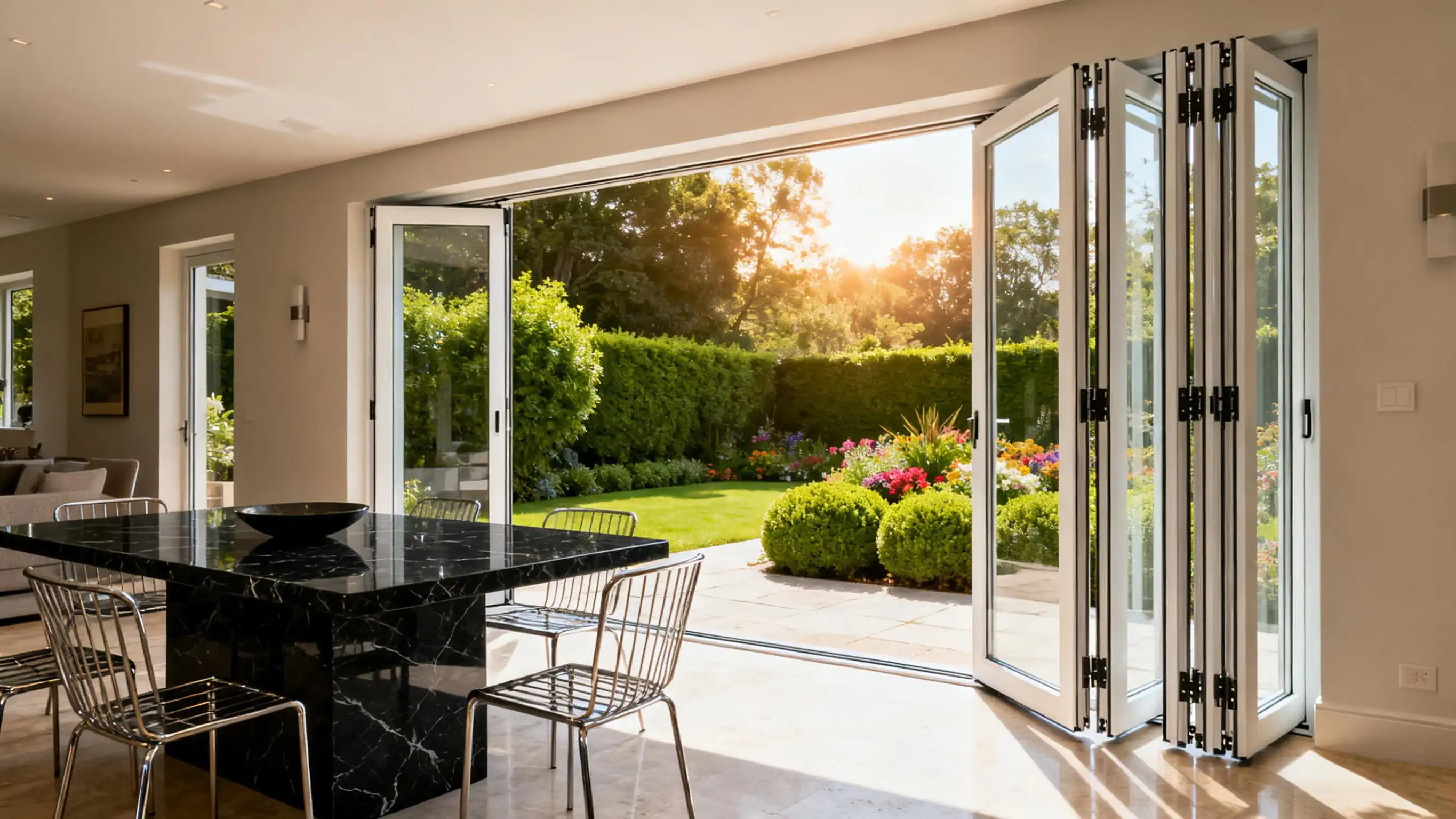
Common Challenges and How to Avoid Procurement Pitfalls with UPVC Folding Sliding Doors
Material Quality Verification
In order to undercut rivals, low-cost providers will sometimes use recycled UPVC instead of new UPVC or cut the thickness of the steel reinforcement. Within months, these flaws show up as coloring or structural weakness when put under load. This risk can be reduced by asking for certificates of material makeup and inspecting samples before placing large orders. Profile stiffness, surface finish quality, and color consistency can all be seen in physical samples. Independent lab testing of sample materials proves that they meet published standards, but this costs more up front.
UPVC surfaces usually turn yellow and chalky because the resin doesn't have enough UV protectors. Premium suppliers use titanium dioxide and organic stabilizers that keep the color true even after decades of being in the sun. Asking for results from rapid weathering tests that simulate years of UV exposure in controlled settings is a good way to get objective proof of long-term durability. This care is especially useful in sunbelt areas where strong sunlight speeds up the breakdown of materials.
Hidden Cost Components
Prices that are given often don't include important things like custom RAL colors, better hardware, or Low-E glass coatings. Cost comparisons can be done accurately with itemized quotes that break down base prices, customization fees, and alternative features. Buyers should think about the total cost of ownership, which includes the work needed for installation, the upkeep that needs to be done, and the guarantee coverage. Even though UPVC costs more up front than wood, it doesn't need as much maintenance, and its better insulation means that it costs less to heat and cool.
Shipping costs change depending on the price of fuel, how busy the port is, and how many containers are available. Asking for landed cost estimates that include freight, insurance, and import duties gives you accurate budget numbers. Minimum order amounts affect unit prices, so combining needs from several projects may allow you to get bulk savings. Terms of payment also affect the total cost. For example, bank fees are added to letters of credit, and currency exchange fees may be added to wire transfers.
After-Sales Support and Warranty Terms
A full warranty guards against problems with the way the product was made and breakdowns that happen before they should. For profiles and hardware, standard warranties last between five and ten years, but the length of time varies by supplier. Carefully read through the warranty's exclusions, as coverage is usually null and void for things like improper installation, unauthorized modifications, or not following maintenance instructions. Longer guarantees from suppliers show that they trust their products to last, and they give peace of mind for long-term projects.
After-sales support includes things like technical help, quick service for broken products, and the ability to get replacement parts. Getting parts from suppliers with warehouses in North America or Europe is faster than getting them straight from Asia. Setting clear escalation procedures and response times during contract negotiations makes sure that people are held responsible if problems arise. Buyers who are in charge of warranty claims for more than one project benefit when suppliers give them specialized account managers who know about their project past and preferences.
Best Practices for Finalizing a UPVC Folding Sliding Door Supplier Contract
Defining Quality Standards and Inspection Protocols
As a minimum, contracts should list specific standards like GB/T 8478-2020, ISO approvals, or AAMA testing procedures. Specifications that are very specific about profile sizes, glass thickness, hardware brands, and finish quality clear up any confusion. Tolerance ranges for important dimensions, like diagonal measurements and panel gaps, give clear reasons for accepting or rejecting the design.
Pre-shipment inspection conditions let buyers or third-party agents check the quality of the goods before they leave the plant. This way, problems can be found early on, while the cost of fixing them is still low. For UPVC Folding Sliding Door systems, these contractual details are especially vital, as their complex folding mechanisms and multi-panel alignment demand stricter tolerances and clearer acceptance criteria to ensure smooth operation and long-term durability.
The factors for accepting a batch strike a balance between accuracy and speed. Random sampling protocols, which check 10% of units in large orders, find problems with the system without checking each piece. Setting acceptable quality standards (AQL) for small, medium, and large flaws sets clear goals for everyone. Photographs of units that have been inspected make proof of responsibility and can be used as evidence in case of a disagreement. Clear rejection and rework procedures set deadlines for corrective action and re-inspection to cut down on delays.
Delivery Schedules and Penalty Clauses
Production wait times, the level of customisation, and shipping times should all be taken into account in timelines. Tracking progress is easier when delivery schedules are broken down into steps, such as order confirmation, production start, quality inspection, and shipment. There are penalty terms that encourage on-time delivery by lowering the final payment if delays happen beyond certain levels. Punishments should be balanced with "force majeure" clauses that recognize uncontrolled events like natural disasters. This keeps things fair and encourages people to be reliable.
Projects with different construction schedules can use phased delivery options. Suppliers who are willing to store finished units and ship them in multiple batches can work with sites that aren't ready at the same time without rushing the installation process. It's easier to avoid mistakes if you talk about inventory holding fees and minimum batch amounts during discussions. When project deadlines get squished out of the blue, expedited production choices, which come at a higher cost, give you options.
Building Strategic Partnerships
Having long-term relationships with dependable suppliers is helpful for more than just one transaction. When you commit to a lot of work on a lot of different projects, you can get better prices and earlier production times during busy times. In competitive markets, collaborative product development sets your products apart. For example, co-designing custom profiles for signature projects is an example of this. Suppliers who are invested in the success of the partnership share information with the market about changes in regulations, trends in material costs, and new design preferences.
Performance reviews done on a regular basis keep everyone on the same page and solve problems before they get worse. Talking about things like on-time service, good products, and clear contact opens up chances to keep getting better. Recognizing great work through testimonials or participation in case studies makes relationships stronger. On the other hand, giving providers positive feedback about problems helps them improve their processes, which is good for future partnerships. When you treat your sellers like partners instead of customers, you build mutual respect and a desire to succeed together.
Conclusion
To find the best UPVC Folding Sliding Door provider, you need to carefully consider the quality of the materials, the hardware systems, the ability to make changes, and how well the seller can handle logistics. Partners who offer new UPVC profiles reinforced with steel, high-quality German-engineered hardware, and a range of design choices such as wood grain finishes and custom glazing are good for high-end house builders. Knock-down assembly methods lower shipping costs by a lot while keeping the quality of the product, which makes buying things from other countries economically viable.
Reliable suppliers can be told apart from shady ones by their certification compliance, open communication, and strong after-sales support. Setting clear contract terms for things like quality standards, delivery dates, and guarantee terms saves investments and makes sure the project succeeds. Strategic relationships based on trust and constant improvement pay off in the long run for many projects.
Disclaimer: Specific product performance characteristics should be verified through official testing reports and certifications. Material specifications, load capacities, and thermal values vary by product series and configuration.
FAQ
What advantages do UPVC bifold doors offer compared to aluminum or wood alternatives?
Thanks to multi-chamber profile designs that catch insulating air pockets, UPVC bifold doors provide better thermal protection without the need for thermal breaks. Unlike wood, UPVC doesn't get damaged by water, termites, or warping, so you don't have to paint or seal it often. UPVC is warmer to the touch than aluminum and less likely to conduct heat, which makes it better for humid areas where condensation is a problem. The material is naturally flexible, so it can take minor hits without denting, and modern wood grain finishes make it look like real wood without the upkeep. While meeting the same performance standards, UPVC systems usually cost 20–30% less than similar aluminum configurations.
How long do commercial-grade UPVC folding doors typically last in residential applications?
If you install and take care of your quality UPVC bifold door systems the right way, they will look great for many years. Profile warranties that last for ten years show that the maker is confident in their products, but with basic care, they will last much longer than the warranty time. UV blockers keep colors from fading and chalking, and steel support keeps the shape even when the temperature changes. Hardware parts like wheels and hinges may need to be adjusted or replaced after a while of use, but the UPVC shapes don't break down. Cleaning and lubricating moving parts on a regular basis will keep the product running smoothly for a long time.
What customization options are available for UPVC folding sliding door systems?
Manufacturers allow for a lot of flexibility to meet both stylistic and useful needs. Standard colors include white, dark brown, and custom RAL matches. Wood grain transfer printing can look like oak, walnut, mahogany, and other types of wood. The number of panels can be anywhere from two to six, and they can fold inward or outward. You can choose from double or triple insulated glass units with thicknesses between 24 and 32 mm. You can also get Low-E coatings, laminated safety glass, or tinted glass. Different types of handles, hinge finishes, and locking systems can be used to suit different design tastes and safety requirements. Based on the size of the opening, the 85mm or 100mm depths of the profile line balance insulation function with good looks.
Partner with Haolv Building Materials for Premium UPVC Folding Door Solutions
Haolv Building Materials offers a wide range of services to help procurement managers and design professionals find a reliable UPVC Folding Sliding Door supplier. With 19 years of experience making products, we can guarantee that every bifold system has ultra-thin frames that make the most of the glass area, multi-chamber profiles that provide excellent thermal performance, and German-engineered hardware that makes sure the system works smoothly. We are experts at knock-down assembly configurations that save money on shipping costs while keeping the structure strong. Every shipment comes with detailed technical parameter sheets, installation videos, and full assembly instructions.
We can match RAL colors, give you wood grain finishes that look like real wood, and give you glass choices with sizes from 24mm to 32mm and Low-E and laminated options. Two to six panels can be arranged in different ways, and each panel can hold between 80 and 120 kg. These panel configurations are good for the entrances of high-end villas and large patio connections. Our commitment to international quality standards is shown by our ISO, CE, and AAMA certifications. Our partnerships with premium material suppliers like CONCH ensure that our profiles will last and keep their color.
Tight project schedules can be met with standard delivery times of 25 to 30 days, and our engineering team is available for technical advice throughout the specification process. Whether you're buying for multiple villa developments or custom residential projects, Haolv Building Materials provides the reliability, customization freedom, and cost efficiency that define successful supplier relationships. Contact us at kristin@haolvwindows.com to discuss your specific requirements, request product samples, or schedule a virtual factory tour. Find out how our UPVC Folding Sliding Door systems can make your next project better while also helping you save money on purchases.
References
1. Smith, J. & Thompson, R. (2022). Performance Analysis of UPVC Window and Door Systems in Commercial Applications. Building Materials Research Journal, 45(3), 112-128.
2. European Committee for Standardization. (2021). Energy Performance of Windows, Doors and Shutters – Calculation of Thermal Transmittance. EN ISO 10077-1:2021 Technical Standard.
3. Martinez, L. (2023). Comparative Lifecycle Assessment of Residential Door Materials: UPVC, Aluminum, and Wood. Journal of Sustainable Construction, 18(2), 67-84.
4. American Architectural Manufacturers Association. (2020). AAMA 101-20: Voluntary Performance Specification for Windows, Doors, and Unit Skylights. AAMA Standards Publication.
5. Chen, W. & Liu, H. (2021). Advances in UPVC Extrusion Technology and Material Formulation for Building Applications. Polymer Engineering and Construction Materials, 33(4), 201-217.
6. Davis, P. (2022). Strategic Procurement in the Global Building Materials Market: Risk Management and Supplier Evaluation. International Journal of Construction Management, 22(8), 1453-1469.
Fast simple channel to send demands lock favorable price for building window door bulk purchases.