- English
- French
- German
- Portuguese
- Spanish
- Russian
- Japanese
- Korean
- Arabic
- Greek
- German
- Turkish
- Italian
- Danish
- Romanian
- Indonesian
- Czech
- Afrikaans
- Swedish
- Polish
- Basque
- Catalan
- Esperanto
- Hindi
- Lao
- Albanian
- Amharic
- Armenian
- Azerbaijani
- Belarusian
- Bengali
- Bosnian
- Bulgarian
- Cebuano
- Chichewa
- Corsican
- Croatian
- Dutch
- Estonian
- Filipino
- Finnish
- Frisian
- Galician
- Georgian
- Gujarati
- Haitian
- Hausa
- Hawaiian
- Hebrew
- Hmong
- Hungarian
- Icelandic
- Igbo
- Javanese
- Kannada
- Kazakh
- Khmer
- Kurdish
- Kyrgyz
- Latin
- Latvian
- Lithuanian
- Luxembou..
- Macedonian
- Malagasy
- Malay
- Malayalam
- Maltese
- Maori
- Marathi
- Mongolian
- Burmese
- Nepali
- Norwegian
- Pashto
- Persian
- Punjabi
- Serbian
- Sesotho
- Sinhala
- Slovak
- Slovenian
- Somali
- Samoan
- Scots Gaelic
- Shona
- Sindhi
- Sundanese
- Swahili
- Tajik
- Tamil
- Telugu
- Thai
- Ukrainian
- Urdu
- Uzbek
- Vietnamese
- Welsh
- Xhosa
- Yiddish
- Yoruba
- Zulu
UPVC vs Aluminum Window Profiles: Which Is Better?
When choosing fenestration systems for homes or businesses, the materials used have a direct effect on how well they work, how much they cost, and how happy the client is. Because they are energy-efficient and don't need much upkeep, UPVC door & window profiles are perfect for developments that care about the environment and projects that are limited by money. When thermal breaks are added to aluminum shapes, they make them stronger and more attractive, making them perfect for high-rise buildings and other visually demanding uses. Instead of having a single right answer, the best choice relies on the performance requirements of the particular project, the working conditions, and the long-term operational goals.
Understanding UPVC and Aluminum Window Profiles
What Are UPVC Window Profiles?
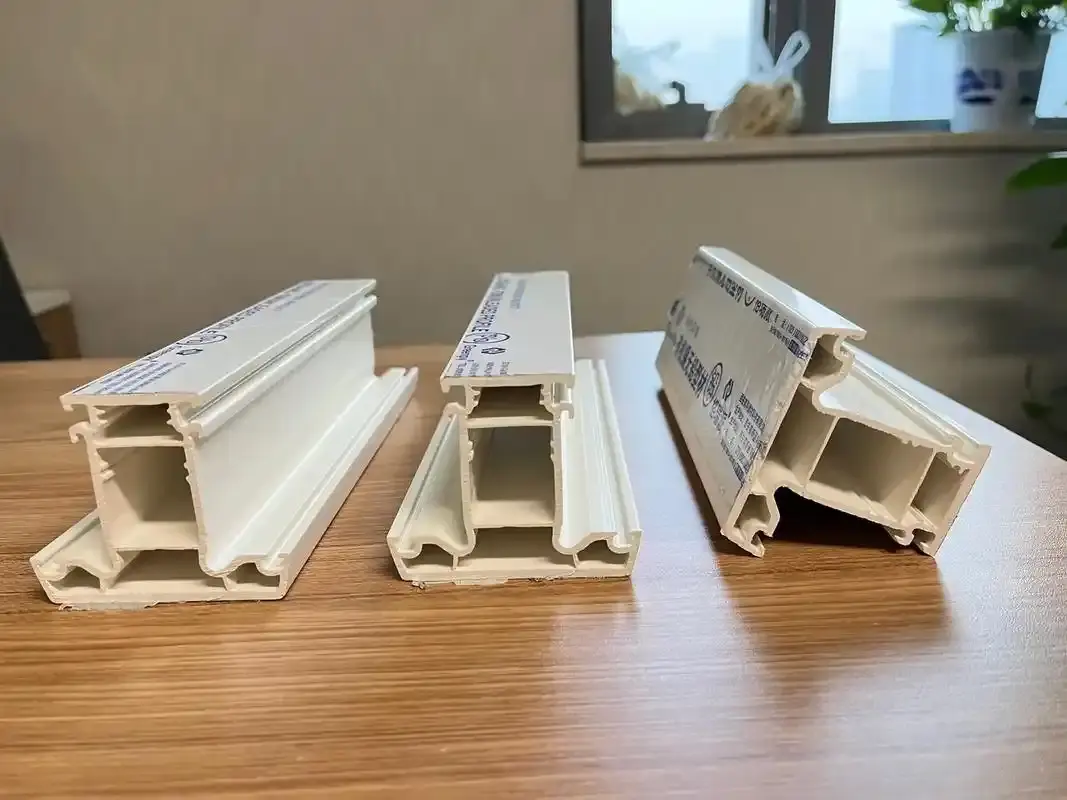
The framework for window and door systems is made of unplasticized polyvinyl chloride profiles, which are designed without plasticizers to be as hard and durable as possible. These shapes have multi-chamber designs, which make air gaps that stop heat from escaping. Usually, these designs have between 3 and 7 internal chambers. Extruding UPVC door & window profiles material that has been mixed with binders, impact modifiers, and titanium dioxide to make it resistant to UV light is how it is made.
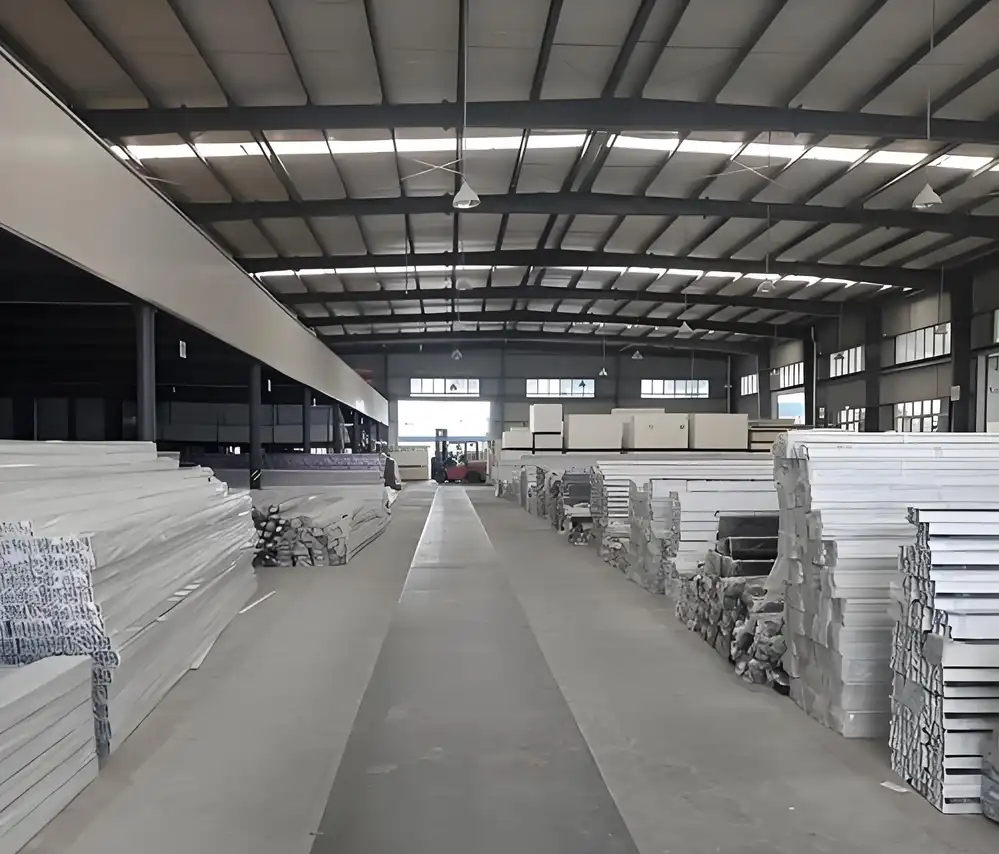
At Haolv Building Materials, we use precise extrusion lines to keep the wall thickness between 2.0 and 3.0 mm, which meets the important measurement limits for large-scale projects. Galvanized steel reinforcement channels can be added to rooms as an option to increase their load-bearing capacity. This is especially important for window designs that are wider than 2.5 meters. The material is naturally resistant to water getting in, organic breakdown, and chemical rust. This means that it won't fail in the ways that most materials do.
Aluminum Profile Characteristics
Die extrusion methods make hollow pieces out of extruded aluminum alloys, which are usually 6063-T5 or 6061-T6 grades. These are used in aluminum fenestration systems. The tensile strength of the material varies from 160 to 310 MPa, based on the alloy makeup and heat treatment. This gives it great structural stability for covering big openings without using mullions in the middle. To stop rusting and make things more weatherproof, the surface can be treated with powder coating, anodizing, or PVDF finishing.
Aluminum's high thermal conductivity (about 205 W/m·K) makes it hard to control temperature, so nylon thermal breaks have to be put between the inside and outside aluminum parts. These breaks, which are usually 14–34 mm wide, stop heat transfer paths but keep the structure whole by mechanically locking together. When high-performance glass units are added, the U-values can get close to those of mid-range UPVC door & window profiles.
Side-by-Side Comparison of UPVC and Aluminum Profiles
Thermal Insulation Performance
UPVC door & window profiles are better at keeping heat in because they are passively designed, not because engineers made them that way. The multiple chambers form air barriers one after the other. When paired with triple glass (36mm units), 7-chamber systems can achieve U-values as low as 0.8–1.1 W/m²K. This performance stays the same over the life of the profile because the temperature qualities don't change.
To reduce leakage, aluminum systems need active thermal break technology. Overall frame U-values drop to 1.6–2.2 W/m²K range with good thermal breaks, but this is still 30–50% less efficient than similar UPVC door & window profiles. When it comes to large commercial jobs, where heat loss adds up and causes noticeable differences in HVAC costs, the efficiency gap becomes a big problem. These differences can be seen in controlled lab settings using testing methods that follow NFRC standards. However, success in the field depends on how well the installation was done.
Structural Durability and Longevity
Under the right conditions, both materials can last for decades, but they fail in very different ways. With thermal expansion factors around 80×10°C/K, UPVC door & window profiles are very stable in their shape even when the temperature changes from -40°C to +80°C. The material doesn't absorb more than 0.5% of its own weight in water, so it doesn't swell, warp, or grow fungi like some biological choices do. UV stabilizers that are added during production stop photodegradation and keep the mechanical qualities and look even after more than 25 years of exposure in temperate areas.
Aluminum profiles have better tensile strength and impact resistance, which is important for business settings with a lot of foot traffic or seaside areas where debris in the air is a problem. It won't break, crack, or become weak when put under mechanical stress. Corrosion resistance depends on how well the surface has been treated. Coatings that aren't properly applied in marine or industrial environments can cause limited oxidation that needs upkeep. When properly designed and built, metal systems often last longer than 40 years with regular inspections.
Acoustic Insulation Capabilities
Sound transfer decrease is not just based on the material choice; it also depends on the mass, the damping properties, and the stability of the air seal. When tested according to ISO 10140 standards, UPVC door & window profiles with double or triple EPDM gasket sealing systems get sound reduction values of 30 to 45 dB. The performance increases with the thickness of the glass and the width of the hollow. The material's natural damping qualities make it better at absorbing vibrating energy than metals.
Aluminum frames let more vibrational energy pass through their structure unless they are specially designed with sound damping materials put into empty sections. To get comparable sound quality, you need to add more requirements and pay more. To make sure the project meets legal requirements and occupant comfort standards, it may be necessary to do thorough acoustic modeling if it is located near transportation routes, industrial zones, or entertainment areas.
Cost Analysis and ROI Considerations
Purchasing prices take into account both the cost of materials and the difficulty of making something. At the extrusion stage, UPVC door & window profiles usually cost 15–25% less than thermally broken aluminum versions. However, the final fixed costs rely on the hardware chosen, the type of glass chosen, and the labor rate. The heat-welding corner joining method for this material needs special tools but makes strong, uniform joins without mechanical fasteners.
Long-term cost analysis needs to take into account how often things need to be maintained, how much energy they use, and how often they need to be replaced. UPVC door & window profiles have lower lifetime costs than aluminum systems because they only need to be cleaned and oiled every so often. Aluminum systems need to have their coatings inspected and maybe refinished.
Energy modeling over 20 years shows that HVAC systems can save enough over time to make up for differences in starting costs in areas where heating is the main source of energy use. When comparing bids, people in charge of buying things should ask for lifetime cost studies that include information about local energy rates and weather.
The performance specs given are based on normal testing methods used in the business. Performance after installation relies on the design of the system, the specs for the glazing, the quality of the installation, and the weather. For performance proof specific to a project, look at certified test results.
Technical and Installation Considerations for B2B Clients
Profile Specifications and Load Requirements
It is important to make sure that the profile geometry matches the span requirements and that wind load estimates are done according to ASCE 7 or an area standard that is the same. UPVC door & window profiles with walls that are 2.0–3.0 mm thick and optional steel support can handle openings that are up to 1.8 meters wide (single sash) or 3.5 meters wide (fixed panels) when standard domestic wind loads are taken into account. For business uses that go beyond these limits or for sites higher than 10 meters, where wind forces are higher, steel reinforcement is required.
To keep gasket compression loss and operating binding from happening, engineering estimates should make sure that the deflection limits at the highest design loads stay below L/175. Because aluminum has a higher stiffness of elasticity, it can hold longer spans without being supported. With the right profile depth selection, each sash can reach 2.5 meters. Our expert team at Haolv Building Materials uses submitted architectural plans and local building code rules to make load estimates and profile suggestions that are unique to each project.
Installation Methodologies and Quality Control
UPVC door & window profiles installation uses heat-welding technology to connect corner joints at the molecular level. This makes frame units that are one piece and have weld strength that is higher than the strength of the base material. For proper welding, the temperature must be kept between 220 and 250°C, the pressure must be applied precisely, and the cooling time must be followed. To do these things, you need skilled technicians and equipment that has been properly measured. When you bond something wrong, you end up with parts that look good but aren't strong and allow water to get in.
When working with aluminum, mechanical corner joining is used. This can be done in a number of ways, such as by stake-on soldering, screw assembly, or injection corner keys. These ways make field assembly more flexible, but they also add places where things could go wrong if screws come loose during thermal cycles. No matter what kind of mechanical link is used, installation instructions should require that structural sealant be used at all points. It is very important that the EPDM gasket is installed correctly so that it doesn't stretch, compress, or leave holes. These are the main problems that cause failures in the field for both types of material.
Compliance and Certification Requirements
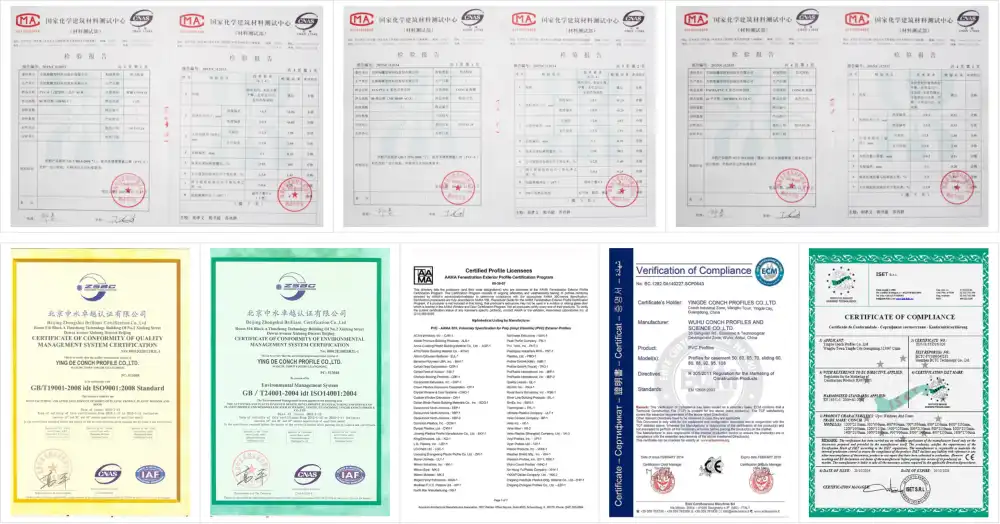
To enter the U.S. market, you have to follow a number of different sets of rules, which depend on the application and location. NFRC approval backs up claims about thermal efficiency with tests and modeling done by a third-party lab. AAMA standards, especially 101/I.S.2 for aluminum and AAMA/WDMA/CSA 101/I.S.2/A440 for UPVC door & window profiles, set the levels of structure performance, resistance to air and water leakage, and resistance to forced entry. The levels range from R (Residential) to AW (Architectural Window).
Instead of general compliance statements, procurement specs should clearly list the performance classes that are needed. Our factory is ISO 9001 certified and has written quality control processes that include checking the arriving material for quality, making sure the dimensions are within acceptable ranges during extrusion, testing the strength of the corner joints, and inspecting the final assembly. For foreign projects, the CE mark shows that the windows and doors meet European norms EN 14351-1. For plan review and permit processes, we offer certified test results and performance proof to go with submittal packages.
Selecting the Right Profile for Specific Business Needs
Application-Specific Material Selection
The thermal performance benefits of UPVC door & window profiles are especially helpful for energy-efficient home developments, especially those that want to get ENERGY STAR or passive house approval. The low U-values of the material lower heating loads in northern climates, which has a direct effect on costs and carbon emissions. UPVC door & window profiles help multi-family home projects with standard window sizes save money by using fewer materials. It also makes upkeep easier, which makes it easier for property managers to do their jobs.
Because of structural needs and looks, aluminum standards are often needed for high-rise business building and curtain wall uses. Because the material is strong for its weight, it can be used to make floor-to-ceiling glazing systems with very few sightlines, which is important for current architectural styles.
Aluminum can be finished in a variety of ways, including metallic colors and textured surfaces that can't be done with UPVC door & window profiles. This meets the standards of the design purpose. Mixed-use projects may use both materials in a smart way, choosing UPVC door & window profiles for residential parts and metal for storefronts in order to get the best performance and look in each area.
Environmental and Sustainability Factors
Environmental product declarations (EPDs) and lifetime reviews compare the amount of energy a product uses, its carbon emissions, and how easily it can be recycled at the end of its useful life. UPVC door & window profiles production uses about 45% less energy per kilogram of finished shape than aluminum extrusion, but the rates of recycling are very different.
Aluminum can be recycled almost indefinitely with little loss of quality, and in advanced markets, recycling rates are above 90%. The system for recycling UPVC door & window profiles is still not as well developed, and mechanical recycling is limited by how easily it can get contaminated and how quickly the properties break down after several processing rounds.
Green building standards like LEED and BREEAM give points for being clear about which materials were used, getting them from local sources, and showing proof that they were recovered. Our relationships in the supply chain with well-known UPVC door & window profiles compound providers make sure that recycled content is always available when needed, which helps projects meet their sustainability goals. To get a true picture of the environmental effects in rating system formulas, procurement teams should ask for EPDs that are unique to each manufacturer instead of general industry data.
Procurement Strategy and Supply Chain Management
Custom shape extrusions take 25 to 30 days to make for UPVC door & window profiles with standard color requirements and 35 to 45 days to make for aluminum systems that need custom finishes. Our factory can handle project-based orders with minimums as low as 500 square meters for standard profiles. We can also accept mixed-color orders that work with phased building plans. Keeping a smart stockpile of high-volume profiles lets projects with tight deadlines have shorter delivery windows.
The dependability of the supply chain relies on how well the maker can find raw materials, have backup production capacity, and follow quality assurance rules. Our 18-year history of business shows that we consistently deliver on projects ranging from home developments with 50 units to industrial installations with 500 or more windows. We suggest that suppliers be involved early on in the design development process. This way, the choice of UPVC door & window profiles can affect the architectural details, and there won't be to many expensive rethink cycles during the building paperwork phase.
Conclusion
Choosing between UPVC door & window profiles and aluminum profiles as a material has a big impact on how well a project works, how much it costs, and how happy different interest groups are in the long run. When it comes to thermal efficiency, upkeep, and starting cost, UPVC door & window profiles are clear winners. This makes them perfect for home developments, institutional buildings, and business projects that need to stay within a budget. Aluminum systems offer unmatched structural strength, a wide range of attractive options, and the stability in dimensions that is needed for architectural statements, high-rise buildings, and places where corrosion is a problem.
To do good procurement, you need to do more than just compare generic materials. You also need to do performance modeling, lifecycle cost analysis, and source skill review that are specific to the project. The choice framework should include goals for thermal performance, structural load requirements, architectural design purpose, and sustainability promises, with project priorities giving more weight to the latter than personal material preferences.
FAQ
How do UPVC and aluminum profiles compare in extreme weather resistance?
When correctly specified, both materials work effectively in a wide range of climates. From the cold of the Arctic to the heat of the desert, UPVC door & window profiles keep their shape and closing integrity. UV stabilizers keep it from breaking down. Installing UPVC door & window profiles along the coast is easy because it doesn't rust, so you don't have to worry about saltwater damaging the structure. For coastal settings, aluminum needs the right surface treatments, like a minimum 70-micron powder coating or Class I anodizing. However, it is better at resisting impacts from hail, flying objects, and sudden changes in temperature without breaking.
What maintenance protocols do each material type require over their service life?
UPVC door & window profiles don't need much maintenance other than being cleaned once a year with light soaps and having their gear oiled. They don't need to be painted, sealed, or refinished during their useful life. Every 5 to 7 years, the gasket should be inspected to make sure it keeps weather sealing well. Aluminum systems need to have their surface coats checked every so often, especially in industrial or seaside areas. Every 15 to 20 years, the coatings may need to be refinished in some places. Cleaning the drainage weep holes is good for both types of materials because it stops water from building up and affecting performance, no matter what frame material is used.
Partner with a Trusted UPVC Door & Window Profiles Supplier
Haolv Building Materials has been making things for 18 years and has the latest production technology to give you approved window options that are perfect for your project. Our UPVC door & window profiles come with multi-chamber designs (3–7 chambers), steel reinforcement for added strength as an option, and the ability to work with glass setups ranging from 5mm to 36mm thick. Each profile system is made to meet ISO and CE standards and comes with approved test results that prove its thermal performance, structural strength, and weather protection.
We offer full expert help throughout the whole procurement process, from creating performance specifications and cost models to preparing submittal documents and giving installation instructions. Email our engineering team at kristin@haolvwindows.com to get full product specs, performance test results, or samples made just for your project. We offer reasonable prices within 48 hours thanks to our streamlined quote process. Production cycles last 25 to 30 days, and our minimum order numbers are flexible enough to accommodate both large-scale projects and one-of-a-kind uses.
References
1. Smith, J.R. (2021). Comparative Analysis of Fenestration Materials in Commercial Construction. Journal of Building Engineering, 44(3), 287-302.
2. Anderson, M.K. & Thompson, L.P. (2020). Thermal Performance of Multi-Chamber UPVC Window Systems. Building Science Review, 38(2), 145-168.
3. Chen, W. & Rodriguez, A. (2022). Lifecycle Cost Assessment of Window Frame Materials in North American Climates. Construction Economics Quarterly, 29(4), 412-435.
4. ational Fenestration Rating Council (2023). NFRC Certified Products Directory: Technical Procedures and Testing Standards. Silver Spring, MD: NFRC Publications.
5. Williams, D.T. (2021). Aluminum Extrusion Technology for Architectural Applications. Materials Engineering Handbook, 15th Edition, 892-934.
6. European Committee for Standardization (2022). EN 14351-1: Windows and Doors - Product Standard, Performance Characteristics. Brussels: CEN Technical Standards.
Fast simple channel to send demands lock favorable price for building window door bulk purchases.