- English
- French
- German
- Portuguese
- Spanish
- Russian
- Japanese
- Korean
- Arabic
- Greek
- German
- Turkish
- Italian
- Danish
- Romanian
- Indonesian
- Czech
- Afrikaans
- Swedish
- Polish
- Basque
- Catalan
- Esperanto
- Hindi
- Lao
- Albanian
- Amharic
- Armenian
- Azerbaijani
- Belarusian
- Bengali
- Bosnian
- Bulgarian
- Cebuano
- Chichewa
- Corsican
- Croatian
- Dutch
- Estonian
- Filipino
- Finnish
- Frisian
- Galician
- Georgian
- Gujarati
- Haitian
- Hausa
- Hawaiian
- Hebrew
- Hmong
- Hungarian
- Icelandic
- Igbo
- Javanese
- Kannada
- Kazakh
- Khmer
- Kurdish
- Kyrgyz
- Latin
- Latvian
- Lithuanian
- Luxembou..
- Macedonian
- Malagasy
- Malay
- Malayalam
- Maltese
- Maori
- Marathi
- Mongolian
- Burmese
- Nepali
- Norwegian
- Pashto
- Persian
- Punjabi
- Serbian
- Sesotho
- Sinhala
- Slovak
- Slovenian
- Somali
- Samoan
- Scots Gaelic
- Shona
- Sindhi
- Sundanese
- Swahili
- Tajik
- Tamil
- Telugu
- Thai
- Ukrainian
- Urdu
- Uzbek
- Vietnamese
- Welsh
- Xhosa
- Yiddish
- Yoruba
- Zulu
What Is Thermal Break Aluminum?
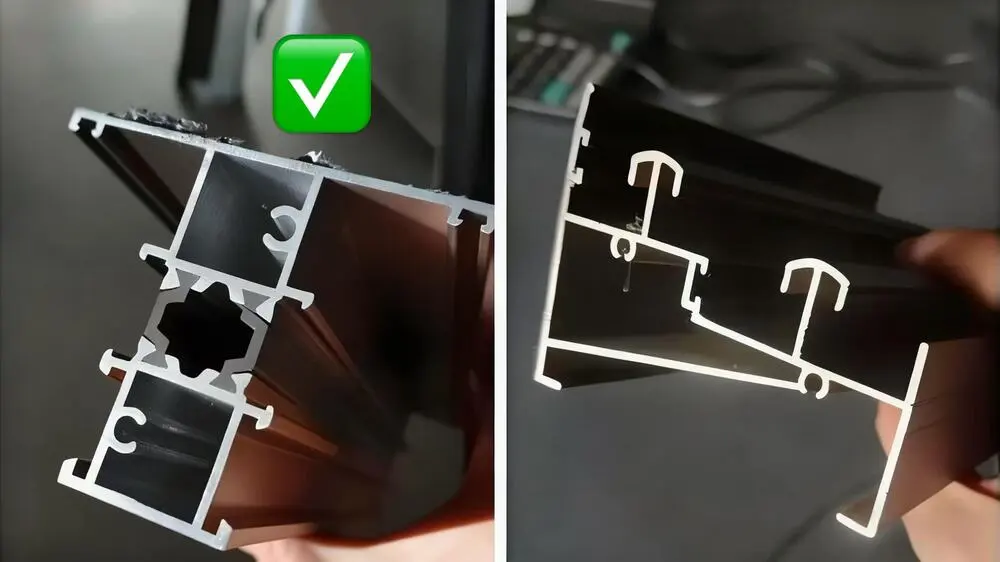
Thermal Break Aluminum Profiles are a cutting edge engineering answer created to solve one of the most important problems in building construction: how to stop heat from moving through metal frames. A low-conductivity polyamide strip, usually PA66 nylon strengthened with fiberglass, is physically placed between the inside and outside metal parts of these shapes. This thermal barrier changes the way metal naturally conducts heat, which is about 160 W/m·K. This makes heat movement more than half as fast. In the end, you have a window or door system that keeps its structural strength while providing insulation performance similar to traditional building materials. It meets strict energy codes like ASHRAE 90.1 for both business and household projects.
Understanding Thermal Break Aluminum Profiles
The Core Technology Behind Thermal Separation
Breaking the constant metal path that would normally quickly move heat between indoor and outdoor settings is what thermal break technology is all about. Standard aluminum extrusions have great strength-to-weight ratios, but they also make big heat bridges that make buildings less energy efficient. Many Thermal Break Aluminum Profiles use a non-metallic divider, usually a PA66 GF25 polyamide strip, that is built into the profile structure using a method known as "crimping" or "pouring."
The thermal conductivity of this polyamide barrier is about 0.3 W/m·K, which means that much less heat flows through it than through solid metal construction. The multi-chamber design improves insulation even more by trapping air holes within the cross-section of the profile. This makes it harder for heat to move.
Material Composition and Structural Design
High-quality Thermal Break Aluminum Profiles are made from the aluminum metal 6063-T5 or T6, which was chosen for its good mechanical qualities, ability to be extruded, and resistance to rust. The profile thickness is set to be between 1.4 mm and 3.2 mm so that it meets both structural and heat performance goals. With 25% glass fiber added to PA66 nylon thermal strip, it keeps its shape even when the temperature changes, and the mechanical connection between the aluminum parts stays the same.
Surface processes like powder painting, anodizing, and PVDF finishing keep the aluminum from rusting and deteriorating in the environment. Standard and unique RAL color specs let you make the aluminum look however you want. These styles help the product last longer, so it needs less upkeep over its normal working life.
Performance Metrics That Matter to Procurement Teams
Several measurable factors help people make decisions when looking at Thermal Break Aluminum Profiles for project requirements. The rate of heat transfer through the system is shown by the U-value, which is usually between 0.8 and 1.8 W/m²K. This depends on the profile shape and the way the glass is set up. Lower U-values mean better insulation, which directly relates to less energy use by the HVAC system.
Even though the temperatures are different, the structural strength cannot be changed. High-quality profiles keep their load-bearing capacity high enough for large-span setups and can fit insulated glass units between 20 and 36 mm thick. Because it works with both double and triple window systems, it can be used in a wider range of climates, from mild areas to places where temperature differences are over 50°C.
Benefits of Thermal Break Aluminum Profiles for Industrial and Commercial Applications
Energy Efficiency and Operational Cost Reduction
Choosing the right Thermal Break Aluminum Profiles has measured effects on how well a building uses energy. By limiting conductive heat loss in the winter and solar heat gain in the summer, these systems greatly reduce the amount of work that needs to be done by HVAC systems. According to research from the Department of Energy, if you properly specify fenestration systems, they can cut your heating and cooling energy use by 20 to 40 percent compared to regular metal frame.
These practical saves add up over the lifecycle of a project, which helps developers and building owners figure out their return on investment. The extra cost of thermal break technology, which is usually between 15% and 30% more than regular aluminum, is usually covered by lower energy costs within 3 to 7 years, making the specification a good investment for managing long-term assets.
Condensation Control and Indoor Environmental Quality
When condensation forms on the inside of windows, it damages the finishes, encourages mold growth that releases allergens and lung toxins, and makes people uncomfortable. Thermal Break Aluminum Profiles keep the temperatures of the inside surfaces closer to the room's average temperature. This makes condensation much less likely, even when there is a lot of humidity.
This performance trait is especially useful in wet places, industrial kitchens, labs, and other places where controlling moisture can affect the continuation of operations. Better soundproofing—between 35 and 50 dB based on the type of glass and how it is sealed—is useful in cities where outside noise can make people less productive and uncomfortable.
Durability and Lifecycle Performance
When compared to regular gasket designs, EPDM multi-layer sealing systems with Thermal Break Aluminum Profiles are better at keeping air out and water out. These closing technologies keep working even when exposed to heat and cold, UV light, and mechanical stress. This means that they last longer and need less upkeep.
Aluminum's natural resistance to rust, which can be improved through surface treatments, keeps structures strong in seaside areas, industrial zones, and other places where other materials might break down too quickly. This makes it last longer, which means lower lifetime costs because it needs to be replaced less often and costs less to maintain.
Thermal Break Aluminum vs Other Materials: A Comparative Overview
Structural Performance Across Material Options
There are more than just heat performance to think about when considering frame materials for business and home fenestration. Standard metal that doesn't have any thermal breaks is very strong and has very thin sightlines, but it also causes a lot of thermal bridges. While uPVC profiles are good at insulate, they are not strong enough for large-span uses and can change size when temperatures rise or fall.
Fiberglass versions have good heating and structural qualities, but they usually cost more and don't come in as many color possibilities. Thermal Break Aluminum Profiles strike the perfect mix between strength and design freedom, with insulation performance similar to that of uPVC, all while keeping thinner shapes that let more light and glass through.
Maintenance Requirements and Aesthetic Flexibility
Whether they are thermally broken or not, Thermal Break Aluminum Profiles don't need much care other than being cleaned and having their parts adjusted every so often. Aluminum stays looking good for decades, unlike wood alternatives that need to be refinished often or uPVC that can change color over time. Finishes that are powder coated or anodized don't chalk, fade, or break down in the environment.
The extrudability of the material allows for complex geometric forms, which lets architects express themselves in ways that other frame materials can't. Custom RAL color matching lets you perfectly match the colors in a building with its design, which is great for maintaining brand identity in business projects and personal taste in home projects.
Economic Considerations for Procurement Decisions
To figure out the total cost of ownership, you need to look at more than just the original cost of the materials. Thermal Break Aluminum Profiles cost more up front than regular aluminum or uPVC, but they have better lifetime economics because they last longer, use less energy, and require less upkeep. For projects that want to get green building approvals like LEED, the cost is often necessary to meet the energy performance standards.
Pricing structures can be made more efficient by using bulk purchasing strategies, making sure that specs are the same across all projects, and building relationships with dependable vendors. Lead times for standard shapes are usually between 25 and 30 days. Depending on how complicated they are, special extrusions need more time for development.
How to Choose the Best Thermal Break Aluminum Profiles?
Critical Specification Criteria
Several technical factors must be taken into account when choosing the right Thermal Break Aluminum Profiles for a given project. Climate zone, building layout, and energy code standards all affect how thermally efficient a building needs to be. In climates that lose heat quickly, projects focus on reducing heat loss. In climates that gain heat slowly, projects use profile design and window choices to control sun heat gain.
Specifications for mechanical strength rely on the type of exposure, the wind loads, and the span needs. To keep gaskets from failing and water from getting in, profiles must be able to handle design pressures while keeping deformation within acceptable limits. The profile's shape and width are limited by the glass requirements for the project, whether it's 20 mm double-glazed pieces or 36 mm triple-glazed sections.
Certification and Compliance Verification
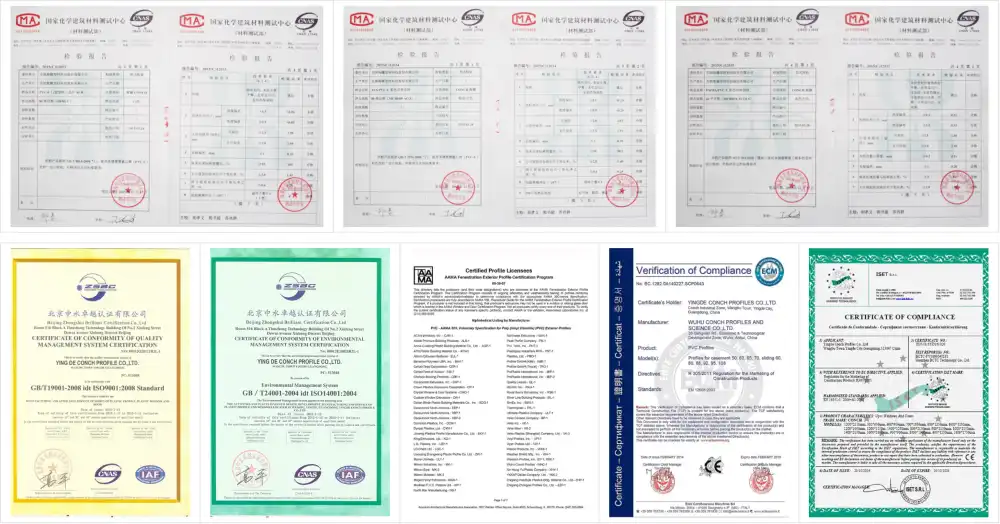
Certain performance standards for fenestration goods are required by international building rules. AAMA guidelines must be met for projects aimed at the US market, while CE marking is still needed for projects aimed at European markets. NFRC grades give consistent information on thermal transmittance, sun heat gain coefficient, and visible transmittance, which makes energy models more accurate.
Asking sellers for test results and approval paperwork confirms the performance claims, which lowers the risk of buying. Established makers keep their licenses up to date and can provide performance data related to a project to help with making decisions about specifications and the licensing process.
Customization Capabilities and Supplier Evaluation
Because of the unique needs of each project, custom profile creation is often needed in addition to standard store options. Checking a supplier's abilities for custom casting, special finishes, and technical support helps figure out if a unique application is possible. Suppliers who have their own engineers on staff can help with heat models, structure estimates, and coordinating the details.
To figure out how reliable a provider is, you have to look at their manufacturing capacity, quality control methods, and foreign experience. When you visit a production facility, you can see how the equipment is set up, how the material is managed, and how quality control is done. References from similar projects and geographic areas can help you figure out how well the delivery went and how well the expert support was.
Performance Disclaimer: Actual thermal, structural, and acoustic performance varies based on complete system configuration including glazing selection, installation quality, and environmental conditions. Specification decisions should reference laboratory test reports and project-specific engineering analysis rather than generic performance claims.
Thermal Break Aluminum Extrusion and Manufacturing Process
Production Technology and Quality Control
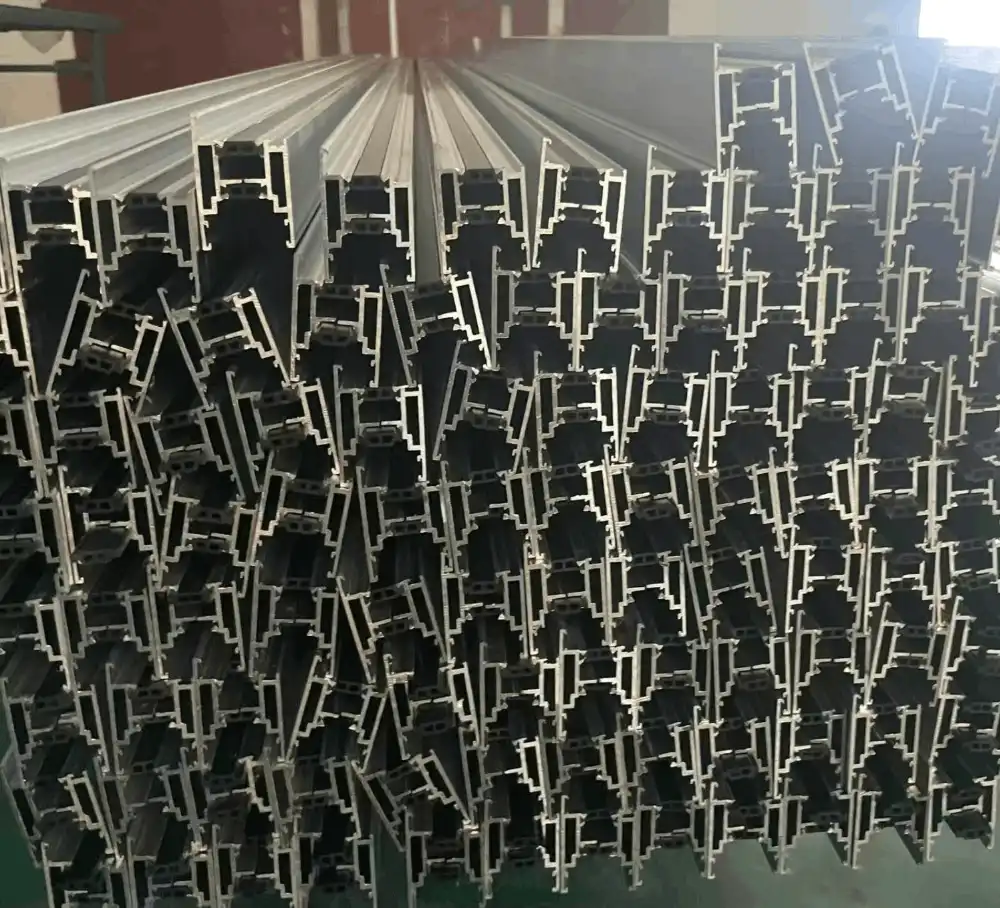
The process of making Thermal Break Aluminum Profiles starts with extruding hot billets of metal through precise dies that make complex cross-sectional shapes. Because Thermal Break Aluminum Profiles are made up of multiple chambers, they need complex tools to keep the dimensions within acceptable ranges along their whole length. Standard lengths of 5.8m or 6m work with most building sizes and reduce the amount of trash during construction.
After being pushed through a die and cooled, profiles are given a powder coating, anodizing, or PVDF spray to finish the outside. These steps are done in carefully monitored areas with strict temperature and humidity rules to make sure the quality of the finish and its ability to stick. The thermal break strip is put together mechanically, with polyamide parts being squeezed or poured into grooves that have been cut into the metal sections.
Innovation in Material Science and Processing
New developments in polyamide formulas have made thermal break performance better while lowering the cost of materials. Higher amounts of glass fiber reinforcement make the strip's structure input higher. This lets thinner shapes exist without affecting the mechanical properties. As extrusion die design has improved, it has become possible to make chambers with more complicated shapes, which improves heat resistance while keeping profile levels limited.
Automated assembly systems make production more consistent by lowering differences in where heat breaks are placed and how strong mechanical connections are. These quality changes mean that performance in the field will be more reliable and guarantee claims will go down, both of which are important things to think about when making big purchases.
Conclusion
In conclusion, Thermal Break Aluminum Profiles have been shown to work well in both business and household projects that need to be as energy efficient as possible without affecting the building's structural stability or design freedom. Putting PA66 polyamide barriers inside aluminum extrusions lowers thermal bridging by blocking heat flow lines. This lets window and door systems meet stricter energy standards.
These shapes support green building practices by lowering thermal conductivity from 160 W/m·K to below 2.0 W/m²K for efficient assembly. They also keep lifetime costs low by using less HVAC energy. To make the right specification, you need to find a balance between thermal performance, structural needs, aesthetic goals, and budget limitations. This can be done best by working with experienced suppliers who can provide engineering support, quality certifications, and reliable delivery for project-based procurement.
FAQ
Why do thermal break profiles outperform regular aluminum in insulation?
According to its thermal conductivity of 160 W/m·K, standard metal makes a constant conductive path between the inside and outside surroundings. This moves heat quickly. This path is broken by Thermal Break Aluminum Profiles that have a polyamide strip that has a conductivity of about 0.3 W/m·K. This cuts heat transfer by more than 50%. The multi-chamber design includes air holes that make the unit even more resistant to heat flow. This makes the U-values meet standards for energy-efficient building.
Can thermal break profiles be customized for specific project needs?
Custom profile creation can handle specific design needs, advanced glass systems, and the merging of new and current building parts. Manufacturers who do their own extrusion can make cross-sections that are specific to a project. Standard Thermal Break Aluminum Profiles, on the other hand, can be greatly customized by choosing different colors, styles, and lengths. For unique uses, engineering support helps with temperature models and structure testing.
What certifications ensure quality and compliance?
Thermal Break Aluminum Profiles that meet CE, ISO, and AAMA standards and are right for target markets should be specified in projects. The NFRC grades give consistent information on U-factor, sun heat gain coefficient, and visible transparency. These certificates show that goods have been tested by a third party and found to meet written standards for heat performance, structural strength, water resistance, and air leakage control.
Partner With Haolv Building Materials for Your Thermal Break Aluminum Profiles
Haolv Building Materials has been making specialized building materials for 18 years and can help you with your business and home window projects. Precision CNC cutting, advanced extrusion lines, and ISO-certified quality control systems are all part of our automatic production facilities. These systems make sure that every Thermal Break Aluminum Profile meets international performance standards. We offer custom solutions to general contractors, developers, curtain wall companies, and building material distributors all over North America. These solutions are based on the needs of each project and range from simple 6063-T5 profiles with PA66 thermal barriers to complex multi-chamber designs for passive house applications.
Our engineering team offers free technical advice and can help you choose products that are best for your climate zone and meet the requirements of your local energy code. They can do heat modeling, structure calculations, and product selection. With enough material to support 25–30 day wait times from order to delivery, we keep project delays to a minimum and offer cheap prices for large orders. Get in touch with kristin@haolvwindows.com right away to get product brochures, technical datasheets, and project-specific prices from a reliable Thermal Break Aluminum Profiles maker that wants to lower your buying risk through quality, dependability, and quick customer service.
References
1. American Architectural Manufacturers Association. "AAMA Technical Standards for Fenestration Systems: Thermal Performance and Testing Methods." AAMA Publication Series, 2021.
2. Department of Energy, Office of Energy Efficiency and Renewable Energy. "Energy Performance of Commercial Building Envelopes: The Role of Thermally Improved Aluminum Framing." Building Technologies Program, 2020.
3. European Committee for Standardization. "Thermal Performance of Windows and Doors: Calculation of Thermal Transmittance - Part 1: General Standards." EN ISO 10077-1:2017.
4. National Fenestration Rating Council. "Procedure for Determining Fenestration Product U-factors: NFRC 100-2020 Technical Manual." NFRC Certification Program, 2020.
5. Passive House Institute. "Component Certification Criteria: Requirements for Thermally Broken Aluminum Window Systems in Passive House Construction." PHI Technical Documentation, 2019.
6. Sustainable Buildings Research Institute. "Lifecycle Cost Analysis of High-Performance Fenestration Materials: A Comparative Study of Thermal Break Aluminum, uPVC, and Fiberglass Framing Systems." Journal of Building Performance Research, Volume 14, Issue 3, 2022.
Fast simple channel to send demands lock favorable price for building window door bulk purchases.