- English
- French
- German
- Portuguese
- Spanish
- Russian
- Japanese
- Korean
- Arabic
- Greek
- German
- Turkish
- Italian
- Danish
- Romanian
- Indonesian
- Czech
- Afrikaans
- Swedish
- Polish
- Basque
- Catalan
- Esperanto
- Hindi
- Lao
- Albanian
- Amharic
- Armenian
- Azerbaijani
- Belarusian
- Bengali
- Bosnian
- Bulgarian
- Cebuano
- Chichewa
- Corsican
- Croatian
- Dutch
- Estonian
- Filipino
- Finnish
- Frisian
- Galician
- Georgian
- Gujarati
- Haitian
- Hausa
- Hawaiian
- Hebrew
- Hmong
- Hungarian
- Icelandic
- Igbo
- Javanese
- Kannada
- Kazakh
- Khmer
- Kurdish
- Kyrgyz
- Latin
- Latvian
- Lithuanian
- Luxembou..
- Macedonian
- Malagasy
- Malay
- Malayalam
- Maltese
- Maori
- Marathi
- Mongolian
- Burmese
- Nepali
- Norwegian
- Pashto
- Persian
- Punjabi
- Serbian
- Sesotho
- Sinhala
- Slovak
- Slovenian
- Somali
- Samoan
- Scots Gaelic
- Shona
- Sindhi
- Sundanese
- Swahili
- Tajik
- Tamil
- Telugu
- Thai
- Ukrainian
- Urdu
- Uzbek
- Vietnamese
- Welsh
- Xhosa
- Yiddish
- Yoruba
- Zulu
Which UPVC Window Profile Is Right for You?
If you don't pick the right window profile system, your project might not meet energy codes, stay strong, or be worth money in the long run for the clients. They are a good choice for home, business, and repair jobs in the US, so UPVC door & window profiles are becoming more common. The unplasticized polyvinyl chloride extrusions have a multi-chamber heating design, steel support as an option, and a weather-resistant construction that makes them work well without the maintenance that comes with standard materials. You can make sure that your decision to buy is in line with project goals and the law by learning about the technical specs, performance standards, and customizable options.
Understanding UPVC Window Profiles: Basics and Benefits
What Are UPVC Window Profiles?
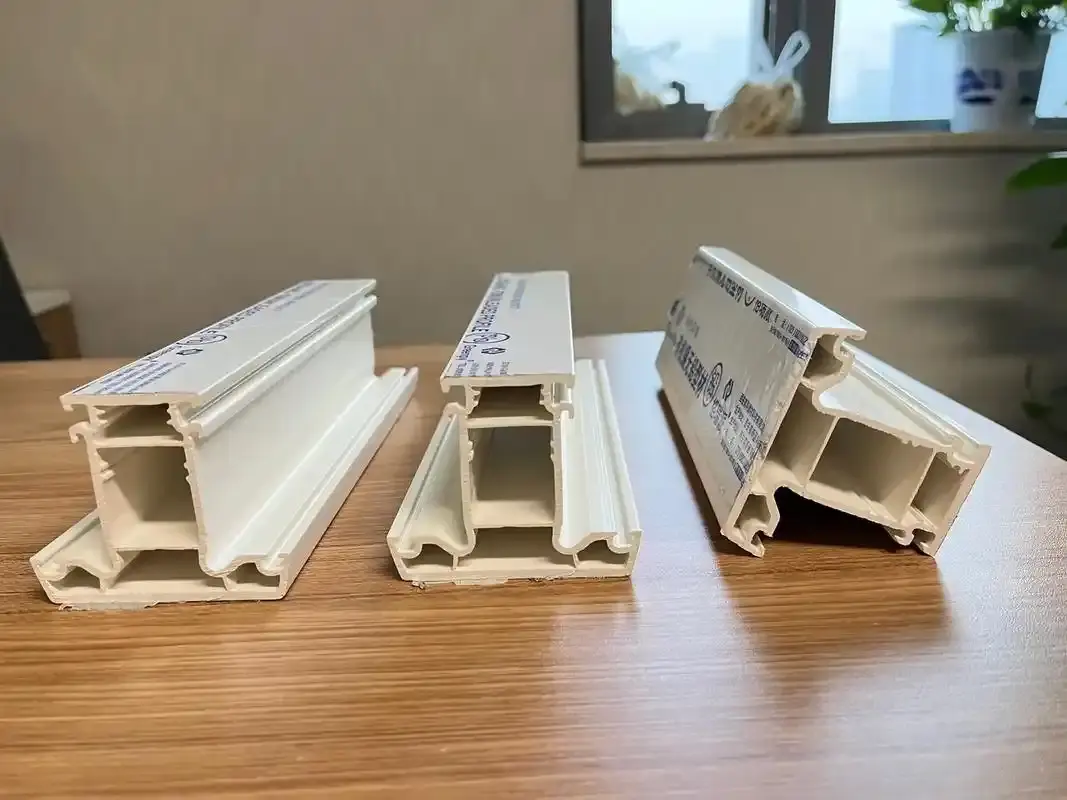
There are no plasticizers added to unplasticized polyvinyl chloride, which makes it hard and able to keep its shape for decades. The frames of UPVC window shapes are made from this material and are cast. This PVC doesn't bend, break down in UV light, or let water in like regular PVC does. It is great for harsh situations because of this. There are open spots inside the body because of the extrusion process. These areas hold air, which slows the movement of heat and makes it easier to block out noise. These forms are the most important part of window systems because they can hold single, double, or triple panes of glass that are 5mm to 36mm thick.
Multi-Chamber Design for Thermal Efficiency
Profile systems today have three to seven places inside that keep the inside and outside from getting too hot or too cold. It has low-emissivity layers and three windows, so the U-value can be as low as 0.8 W/m²K. This means that it loses as little heat as possible through conduction. To meet strict energy efficiency standards, projects that want to be approved by LEED or Passive House often need layouts with more than one chamber. There is a straight link between the amount of chambers and the insulation capacity. Most of the time, 5-chamber systems work well for business, while 7-chamber systems are only used in the toughest environments.
Optional Steel Reinforcement for Structural Integrity
Even though UPVC is naturally rigid, forms made for large window widths or high-rise installations have galvanized steel tubes inside the center room. This makes it stronger and gives it more moment of inertia, which helps it handle wind loads, heat expansion, and mechanical stress while it's being used. When gaps are more than 2.5 meters, steel-reinforced parts keep their shape. This keeps them from sliding and makes sure that the doors and locks work properly. A combination system with walls that are 2.0 to 3.0 mm thick on the outside and steel on the inside can handle wind loads in both low-lying and high-lying projects.
Weather and Impact Resistance
There's no need to coat or chemically treat UPVC profiles to keep them safe from rust, rot, and bacteria growth. The substance doesn't change when it's heated up or cooled down. It also doesn't change when it's exposed to UV light for a long time. Impact boosters are added to the mixture to make it stronger. This makes it less likely to crack during installation or when it comes into touch with something by accident. Since it lasts a long time, it's useful in cities, along the coast, and for repair jobs where the cost of ownership is low.
Comparing UPVC Window Profiles with Other Materials
Thermal Performance vs. Aluminum Systems
It is 1,000 times faster for heat to move around in aluminum shapes than in UPVC. This makes it harder to heat and cool. Thermally broken metal frames use polyamide barriers to slow down heat transfer. However, UPVC door & window profiles are better at keeping heat inside because of how they are made and the properties of the material. Most of the time, projects that want to save energy choose UPVC for windows that can be opened and closed and metal for set curtain walls where strength is more important than air flow.
Maintenance Requirements Compared to Wood
It is important to sand, seal, and repair wooden frames on a regular basis so that they don't soak up water, bend, or get damaged by bugs. These steps aren't needed to take care of UPVC profiles because all they need is to be cleaned regularly with light soaps. When it gets wet, the material doesn't grow, shrink, or break down, so it's great for bathrooms, kitchens, and places by the water. The total cost of ownership goes down over the average working life of 30 to 50 years because the costs of work and materials go down over that time.
Environmental Impact and Recyclability
When it comes to chemicals, UPVC features are safe, and they will stay that way for a long time. Today, recycled UPVC is used to make the core of the inside of new profiles. In line with the circle economy ideas, this cuts down on trash. Old profiles can be reground and reused, but the mechanical properties might get worse after being reused more than once. If a project wants to get green building certifications, it should ask its providers about their recycling programs and papers for getting materials open.
Aesthetic and Customization Options
There are more ways to smooth the surface than just plain white profiles. Some of them are co-extrusion, lamination, and woodgrain texturing. Co-extruded color layers give uniform tones that won't fade, and films with layers look like oak, walnut, and mahogany wood. You don't have to restore these finishes very often because they keep their look. They look classic while also being useful in current times. It is possible to match colors to meet design needs, but there are usually minimum order amounts for styles that aren't common.
Selecting the Right UPVC Window Profile for Your Needs
Evaluating Performance Indicators
When people buy something, they should put resistance to heat loss, sound absorption, air flow, and water penetration at the top of their lists. When U-values are low, insulation works better, and when they are high, more heat is lost. The sound transmission class (STC) rates show how well something blocks sound. These rates are usually between 30 and 45 dB, but can be higher or lower depending on the number of rooms, the thickness of the glass, and the closing systems that are used.
The amount of air coming in is measured in cubic feet per minute per square foot of window space. Draft prevention is based on this rate. The window is weathertight because it is tested under pressure to see how well it stops water from getting in. UPVC door & window profiles are particularly effective in these areas, offering superior insulation, soundproofing, and weather resistance, making them a top choice for energy-efficient and durable window systems.
Climate Adaptation and Design Pressure
When it comes to feature specs, the temperature of the area sets them. When it's hot and muggy, projects don't break because of profiles with better UV shields and impact modifiers. When the profiles are put in places that get cold, they need to be rated for how strong they are against impacts at low temperatures and how well they keep heat in according to the energy codes in those places. For jobs near the coast, the profiles need to have been checked for rust from salt spray and rain driven by the wind. Most of the time, this means that surfaces need to be thicker and closing systems need to be made better.
Certification and Compliance Standards
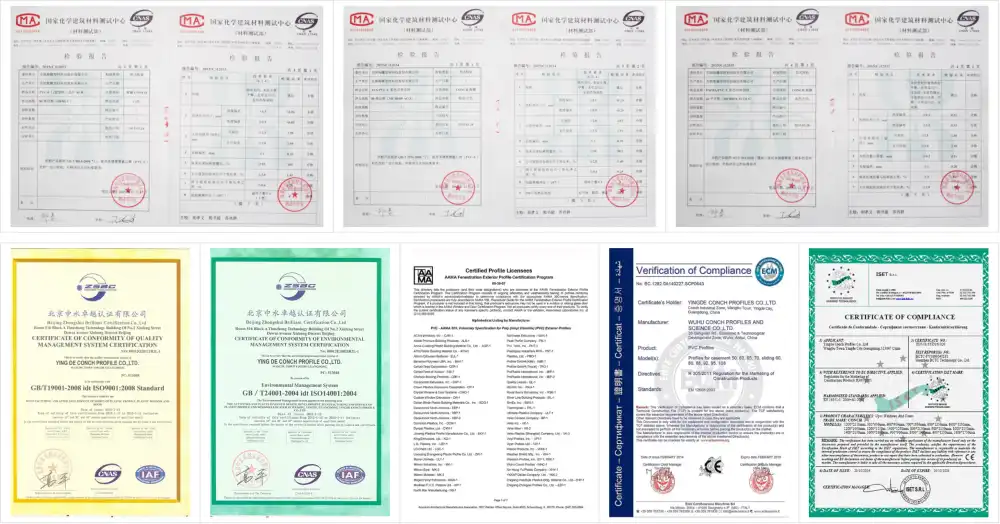
The American Architectural Manufacturers Association (AAMA) says that UPVC shapes offered in the US should meet certain standards for how well they work with materials, how well they keep heat in, and how stable they are structurally. Getting a CE label means that the product meets European standards for safety, health, and the environment. Getting an ISO 9001 label means that the quality of the manufacturing process is always the same. For projects that need certain levels of fire safety, security, or accessibility, it is important to make sure that the profiles meet all building codes and insurance requirements.
Glazing Compatibility and Energy Efficiency
The profile's shape needs to work with the window system, and the rebate's depth and width need to match the glass and edge gaps' thickness. If you live in a warm area, double windows with low-emissivity coatings will save you energy. Triple glass is better for places where temperatures vary a lot. With argon or krypton gas fills, the insulation is better, and warm edge gaps make it less likely that fog will form around the sides of the glass. The shape and glass system of a window affect how well it works overall, so they need to be defined together.
Customization for Project Requirements
Sash and frame parts can be switched out on standard profile systems so they can work with casement, tilt-turn, sliding, and fixed window types. Custom extrusion dies let you make parts that don't come in standard sizes. You can also add your own metal lines and draining features to make them fit your building plan. For big orders, it's usually worth it to pay more for tooling for project-specific profiles. But for smaller jobs, it's better to stick with what the maker gives you to keep costs low and delivery times on track.
Installation, Maintenance, and Longevity of UPVC Profiles
Professional Installation Procedures
Once you know the rough hole is square, straight, and level, you can put something in the right way. Make sure the conditions are within the limits. With structural pins, profiles are connected to framing sections. Shimming keeps the gaps even and stops the frame from warping. Flashing layers, sealing gaps, and draining holes are all used in weatherproofing to keep water out. It is important for projects to have construction teams with a lot of knowledge because any standard quality won't work as well if it isn't put together right.
Sealing Systems and Weather Tightness
When you press two or three EPDM (ethylene propylene diene monomer) plugs between the sash and the frame of a UPVC window, air and water stay out. Over time, these synthetic rubber seals don't harden or crack. They stay flexible even when it's very hot or very cold. When you weld the corners of frame parts together, you get areas that are joined together without any mechanical connections. This eliminates any leak paths. When the hardware compression is set up right, the seal always touches the hardware while it is working.
Routine Maintenance Best Practices
To keep the machine in good shape, you should grease the tools, clean the drainage lines, and check the seals. Every six months, silicone-based oils should be put on doors, locks, and other moving parts to keep them working well. Taking things out of drainage holes that hold water keeps it from building up and staining the frame. You can tell the seals need to be changed if they are squished or broken by looking at them. You can keep the finish's look by cleaning the surface with mild cleaners that don't damage the co-extruded or layered layers.
Warranty Considerations and Long-Term Performance
Most companies that make UPVC door & window profiles offer warranties that last between 10 and 25 years and cover flaws in the material, changes in color, and failure of the structure. The terms of coverage rely on the finish, the temperature, and how well the work was done. To get a guarantee backed up, you usually have to show proof that it was installed by a professional and that you've been following the upkeep plans. If you take good care of your profiles and only use them within their intended limits, they will usually last longer than the guarantee period.
Disclaimer: Actual performance characteristics should be verified against product testing reports and project-specific engineering calculations. Values cited represent typical ranges and may vary based on specific product lines, configurations, and environmental conditions.
Making Informed Procurement Decisions: Practical Insights
Balancing Cost and Performance
Shapes made of UPVC are in the middle of cheap wood-clad systems and expensive metal curtain walls. For every square foot of building space, the cost of materials changes based on the number of rooms, the wall width, the need for support, and the outside finish. For lifecycle cost analysis, it's important to think about how much energy is saved, how much maintenance is cut down, and how often the goods need to be changed. While you can talk about prices when you buy a lot, it takes longer to ship items that are made to your exact specifications.
Supplier Evaluation Criteria
Providers you can trust consistently meet project dates by having ISO certification, providing technical paperwork like test results and installation directions, and making sure they have enough inventory on hand. If you have shipped before, you know how to deal with shipping to other countries, filling out customs forms, and following rules for packing your goods. Respondent technical support helps throughout the lifetime of the project with writing specs, putting together submittals, and fixing issues in the field.
Testing and Quality Verification
Independent testing labs use standard methods to make sure that products live up to their performance claims. They do this by checking the structure's bending, resistance to forced entry, heat transmission, air leaks, and water penetration. The National Fenestration Rating Council (NFRC) gives windows and doors standard marks based on how well they keep heat in or out. For projects with high performance standards, things being made may need to be inspected or tested in front of witnesses to make sure they are of good quality before they are shipped.
Emerging Technologies and Sustainability Trends
Passive cooling designs that use thermal mass, better opening ratios that let in more light, and smart windows that work with building control systems are some of the new ideas. To lower the amount of gasoline in their goods, companies are working on bio-based chemicals and better ways to take things apart at the end of their useful lives so that materials can be reused. As building rules get stricter on performance, staying up to date on these changes can help you make sure that the things you buy will still work in the future.
Conclusion
When picking the right window profile systems, you need to think about how well they work, how much they cost, and when the job needs to be finished. In many kinds of buildings and regions, UPVC door & window profiles have been shown to keep heat in, stand up to the weather, and not need much maintenance. You can make smart buying decisions that meet technical needs and don't break the bank if you know about the design of the chamber, the different types of reinforcements that can be used, the fit of the glass, and the licensing standards. For an implementation to go well, it needs to be professionally set up, maintained regularly, and have good relationships with suppliers that support project goals from planning to use.
FAQ
Q1: What profile thickness should I specify for commercial projects?
A: For most business uses, the wall thickness of a shape should be between 2.5 mm and 3 mm. In places that get a lot of wind or need to handle a lot of weight, 3.0 mm walls with steel supports may be needed. Shapes that are smaller may use less material, but they may not be as strong or last as long.
Q2: How do multi-chamber profiles improve energy efficiency?
A: This is because each cell that is full of air stops heat from going through the frame. Low U-values are found in systems with 5 to 7 rooms because there is less heat flow between the inside and outside surfaces. In other words, it takes less energy to heat and cool.
Q3: Can UPVC profiles accommodate triple glazing?
A: Modern profile systems can work with glass that is up to 36 mm thick and can fit triple-pane panels that are filled with gas to insulate and have low-emissivity finishes. Make sure that the depth of the frame's notch and its ability to hold up against weight and thickness meet the glass's standards.
Q4: What certifications should I require from suppliers?
A: Ask for an ISO 9001 quality control certificate, a CE mark that shows the product meets European safety standards, and proof that it has been tested by the American Automobile Association (AAA). For projects that need to meet certain safety or energy standards, they may need extra permits that follow the rules for building in their area.
Partner with Haolv Building Materials for Your UPVC Profile Needs
For 18 years, Haolv Building Materials has been making specialty building materials that can help you with your window jobs. They use cutting edge extruder technology and keep a close eye on the quality. We sell UPVC door & window profiles systems that can work with glass up to 36 mm thick and have multi-chamber designs with anywhere from 3 to 7 chambers. Stainless steel support is an option. We work with builders, developers, and wholesalers all over North America who need reliable UPVC profile suppliers for both home and business use. We have CE and ISO certifications.
Because we know how to make things, we can customize everything from store items to extrusions made just for a project. We also keep enough stock on hand to fill large orders in 25 to 30 days. Free technical support services can help you write requirements, figure out performance, and get ready to submit. You can email our team at kristin@haolvwindows.com to talk about your project, get free samples, or get all the detailed information you need to decide what to buy.
References
1. American Architectural Manufacturers Association. (2021). AAMA/WDMA/CSA 101/I.S.2/A440: North American Fenestration Standard/Specification for Windows, Doors, and Skylights. Schaumburg, IL: AAMA.
2. National Fenestration Rating Council. (2020). NFRC 100-2020: Procedure for Determining Fenestration Product U-factors. Greenbelt, MD: NFRC.
3. Passive House Institute. (2019). Criteria for the Passive House, EnerPHit and PHI Low Energy Building Standard. Darmstadt, Germany: Passive House Institute.
4. Szokolay, S.V. (2014). Introduction to Architectural Science: The Basis of Sustainable Design (3rd ed.). Oxford: Routledge.
5. Carmody, J., Selkowitz, S., Lee, E.S., Arasteh, D., & Willmert, T. (2004). Window Systems for High-Performance Buildings. New York: Norton & Company.
6. Herzog, T., Krippner, R., & Lang, W. (2017). Facade Construction Manual (2nd ed.). Munich: Detail Business Information GmbH.
Fast simple channel to send demands lock favorable price for building window door bulk purchases.