- English
- French
- German
- Portuguese
- Spanish
- Russian
- Japanese
- Korean
- Arabic
- Greek
- German
- Turkish
- Italian
- Danish
- Romanian
- Indonesian
- Czech
- Afrikaans
- Swedish
- Polish
- Basque
- Catalan
- Esperanto
- Hindi
- Lao
- Albanian
- Amharic
- Armenian
- Azerbaijani
- Belarusian
- Bengali
- Bosnian
- Bulgarian
- Cebuano
- Chichewa
- Corsican
- Croatian
- Dutch
- Estonian
- Filipino
- Finnish
- Frisian
- Galician
- Georgian
- Gujarati
- Haitian
- Hausa
- Hawaiian
- Hebrew
- Hmong
- Hungarian
- Icelandic
- Igbo
- Javanese
- Kannada
- Kazakh
- Khmer
- Kurdish
- Kyrgyz
- Latin
- Latvian
- Lithuanian
- Luxembou..
- Macedonian
- Malagasy
- Malay
- Malayalam
- Maltese
- Maori
- Marathi
- Mongolian
- Burmese
- Nepali
- Norwegian
- Pashto
- Persian
- Punjabi
- Serbian
- Sesotho
- Sinhala
- Slovak
- Slovenian
- Somali
- Samoan
- Scots Gaelic
- Shona
- Sindhi
- Sundanese
- Swahili
- Tajik
- Tamil
- Telugu
- Thai
- Ukrainian
- Urdu
- Uzbek
- Vietnamese
- Welsh
- Xhosa
- Yiddish
- Yoruba
- Zulu
Why Best Vinyl Casement Windows Suit High Humidity Housing Projects
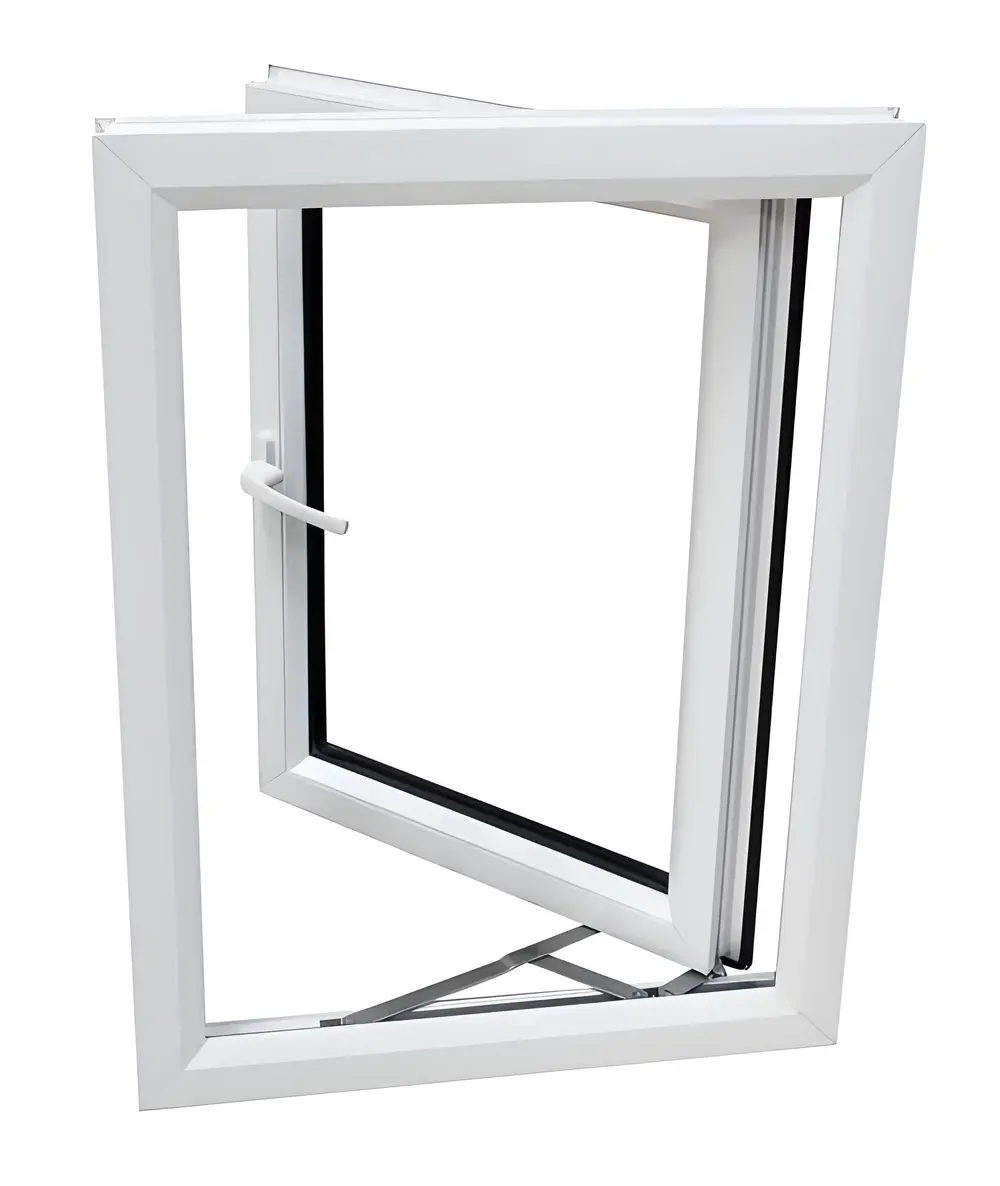
In a high humidity housing project the window is judged by what happens in the third rainy season, not by how it looks on the handover day. best vinyl casement windows earn their place in that climate for a structural reason: a multi-chamber PVC-U profile does not corrode, it insulates without a thermal break, and a casement sash compresses its seal in one direction against a fixed frame, which is easier to keep watertight than a sliding joint. Four variables decide whether a container of them performs: the chamber and reinforcement design, the sealing stack, the drainage path, and the glazing build. For trade buyers and procurement teams supplying coastal estates, rented apartments and volume housing, those four are also what separate a window that lasts from one that is replaced inside a decade.
Understanding Best Vinyl Casement Windows: Key Features and Benefits
What Does A Multi-Chamber Profile Actually Buy You?
Chambers are the air pockets inside the profile, and each one adds a resistance layer between the warm inner face and the cold outer face. A single chamber is a hollow box; a multi-chamber section breaks that box into smaller cells and stops the internal air from circulating, which is why a PVC-U window reaches a whole-window U-value of roughly 1.2 to 1.6 W/m2K with a standard double unit without any thermal break in the frame.
The number of chambers also sets how much steel will fit inside. On this range the profiles are multi-chamber with steel reinforcement, quoted across 60, 70 and 80 series with inward or outward casement opening, tempered, laminated or 5+12A+5 double glazing, EPDM double and triple sealing, hidden drainage, and a multi-point locking system as standard.
Why Does A Casement Beat A Slider In A Wet Climate?
A casement closes onto a compression gasket, so the seal is loaded by the lock rather than by gravity and clearance. A slider has to move, which means a brush or a wipe seal and a track that collects water and grit. In a market with driving rain and high dust load, the compression joint is the simpler mechanism to keep airtight after five years of use.
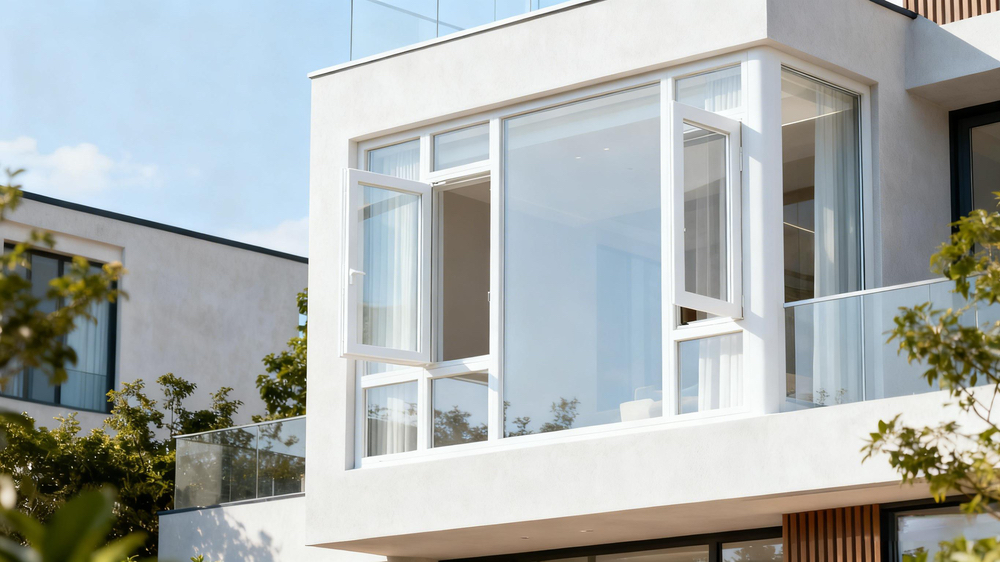
The geometry also drains better. A casement sill can be built with a fall and a weep path behind the sash, and the hidden drainage design on this range puts that path out of sight rather than through a visible slot on the face. Outward opening is the usual choice where external space allows it, because the sash then sheds water away from the room; inward opening suits high-rise work where a projecting sash is not permitted.
Bulk Procurement Considerations for Trade Buyers
Volume housing is won on consistency, not on a single sample. Fix the colour as a system rather than a word, because white, wood grain and custom RAL are three different production routes, and a project that starts white and later adds a wood grain block will not match at the elevation. Fix the reinforcement specification in writing, since the steel inside the profile is invisible at handover and is the first thing a value-engineered batch removes.
Mixed containers work well here: the same profile serves casement, fixed light and screens, and the 60, 70 and 80 series can travel together for different facade zones. Initial orders of 10 to 20 units are accepted with neutral packaging or OEM branding, samples let a distributor check the weld quality and the seal before the container is released, and standard production runs on a 25 to 30 days lead time from order confirmation.
Climate Considerations: How Weather Conditions Affect Vinyl Casement Performance
Hot and Humid Climate Adaptations
Humidity is a materials problem before it is a comfort problem. PVC-U does not rust, but it does move: its coefficient of thermal expansion is several times that of aluminium, so a long sash in a sun-exposed facade grows and shrinks more across the day. That movement is why the steel reinforcement and the weld quality matter more in a hot market than the colour does.
Ultraviolet exposure is the second half. A UV stabiliser system, usually titanium dioxide in the compound, is what keeps a white profile from chalking and a coloured one from fading. Ask which stabiliser system is used and whether the colour is co-extruded cap stock or a coated surface, because a coated surface in strong sun is a maintenance item and a cap stock is not.
Cold Climate Requirements and Thermal Engineering
In a cold climate the same profile works from the other direction: the multi-chamber section holds the inner surface above dew point, and a 5+12A+5 unit with a warm edge spacer keeps the glass edge from becoming the cold spot that runs water onto the sill. A triple unit takes the whole-window figure towards 0.8 to 1.2 W/m2K, which is where a heating-dominated market starts to notice the difference on the energy bill rather than on the specification sheet.
Two details decide whether the number survives installation. The first is the reinforcement: a steel or aluminium insert keeps the section straight so the gasket stays compressed through the winter. The second is the installation seal, which is outside the factory's scope and inside nobody's budget until a complaint arrives.
Coastal and High-Wind Zone Specifications
Salt air does not attack PVC-U, which is the main reason vinyl is specified on coastal housing in the first place. What it does attack is the hardware, so the hinge and lock specification has to be named rather than assumed, and the metal parts should be checked for the exposure class of the site rather than for an inland default.
Wind load is the other coastal variable. The product page rates the range for mid to high-rise applications, and that rating is a starting point, not a project approval. On an exposed elevation the sash width, the reinforcement and the number of locking points have to be checked against the design pressure, because a wide sash with two lock points will flex away from its gasket long before the profile itself fails.
Comparing Best Vinyl Casement Windows to Other Materials
Performance Analysis Against Traditional Frame Materials
Against aluminium, PVC-U wins on thermal performance per unit of cost and on corrosion, and it loses on section strength. An aluminium section at 1.4 to 2.0 mm carries a larger sash without internal reinforcement, and it holds a slimmer sightline. A vinyl profile needs steel at the same span, which is why the reinforcement specification is the line that separates a good vinyl window from a cheap one.
Against timber, vinyl wins on maintenance: no repainting cycle, no rot at the sill, no reaction to a bathroom's humidity. Timber still wins on the interior face and on heritage work. A wood grain vinyl sits between the two and is the usual answer for a market that wants the look without the upkeep, provided the grain is specified as a finish system with a batch reference.
Glazing Options and Energy Performance
The range offers tempered glass for safety, laminated glass for security and sound, a 5+12A+5 double unit as the standard thermal build, and a low emissivity coating as an option. In a humid climate the laminated option earns its cost twice: it holds the pane together after impact in a storm, and it takes the edge off street noise, quoted at 30 to 40 dB reduction on the product page.
The glass build has to match the series. A 5+12A+5 unit fits the 60 series, a thicker or laminated build suits the 70, and a triple unit belongs in the 80. Write the two together on the order, because a glass schedule issued on its own is where a substitution quietly happens between the quotation and the production release.
Procurement Factors: Making Informed Purchase Decisions
Technical Verification and Compliance Standards
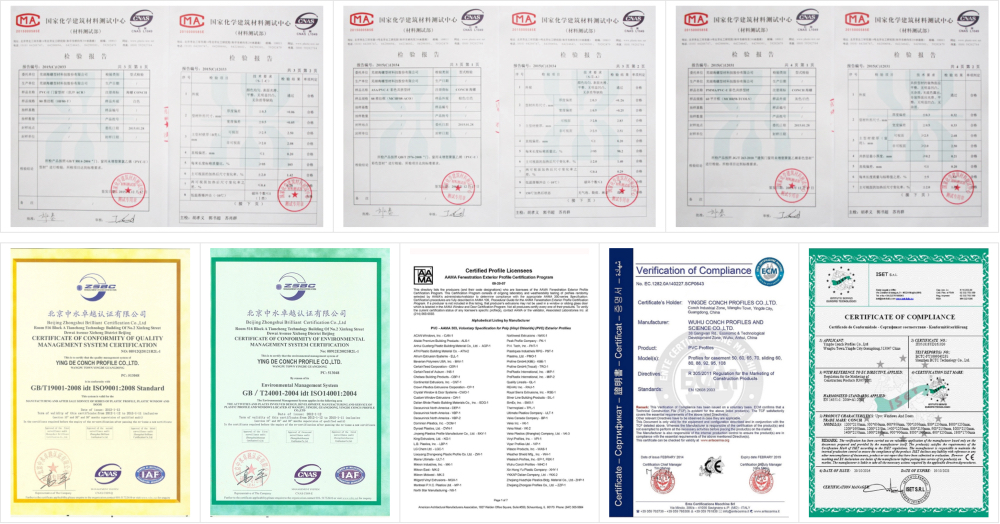
For a vinyl order, ask for the certification documentation that applies to the product family, the test reports behind the air, water and wind claims, and the profile datasheet that states chamber count, wall thickness and the reinforcement section. Then check that the report describes the series and the glass build you are buying, because a report written for a 70 series section says nothing about the 60 series in the container.
Customization Capabilities and Order Flexibility
The customization that matters on volume housing is dimensional: sizes cut to the opening, white, wood grain or custom RAL, single, double or configuration mixes across a facade, inward or outward opening, and a screen where insects are a problem. OEM and ODM work is available, so a distributor can carry its own label, and a sample can be approved for weld quality and seal before the production slot is committed.
Logistics and Installation Support
Vinyl is lighter than aluminium and that changes the packing logic: the risk in transit is distortion rather than weight, so frames need to be braced square and stacked on edge, not laid flat. Ask how the frames are crated, whether they ship glazed or glazed on site, and whether the reinforcement is fitted at the factory, because a frame that arrives out of square will not be pulled straight by the fixings.
Installation is where a vinyl window is most often failed. The frame has to be packed and fixed so it is not under load, and the seal has to be continuous behind the frame, because a PVC-U section is less forgiving of a void than a timber one. Ask for the fitting instructions and the recommended foam and sealant in writing at order stage, and keep one installation drawing per elevation on site.
Maintenance and Longevity: Protecting Your Investment Value
Climate-Specific Maintenance Protocols
The routine is a wash and a drain check. Clear the weep path and the drainage channel at the start of the wet season, wash the profile with fresh water and a mild detergent rather than a solvent, and on a coastal site rinse the hardware and the hinges so salt does not sit in the mechanism. A white profile in strong sun will hold its colour far longer if the surface is washed rather than left to collect dust.
Early Warning Signs and Component Replacement
Water on the inner sill after driving rain points at a blocked drain or a gasket that has lost compression, not at the glass. A sash that needs a push before it latches is telling you the hinges have dropped or the frame has moved, and the lock is being asked to pull the sash back to square. Both are cheap to fix early and expensive to ignore, because a lock forced against a misaligned sash wears out the gearbox rather than the keep.
Gaskets and hinges are the parts that age first. EPDM has a long service life but it hardens, and a hardened gasket stops recovering, which shows as a draught or as water tracking past a corner. On a housing block, replacing gaskets is a scheduled item rather than a repair, so keep the gasket profile reference with the building documents and order the replacement with the original window batch.
Performance Enhancement Options
An installed window can still be improved: a solar control film where cooling load dominates, a brush or supplementary seal at the opening edge on an exposed elevation, and an adjustable hinge set to restore compression on a sash that has dropped. None of these replaces a correct original specification, but on a refurbishment they are a sensible second step before replacement is considered.
Disclaimer: Actual performance depends on the test reports for each specific product and on the quality of installation. Results in different climates depend on correct specification and on following the manufacturer instructions.
Conclusion
Vinyl casement windows suit high humidity housing because the material does not corrode, the multi-chamber profile insulates without a thermal break, and a compression seal is easier to hold tight than a sliding joint. What separates a good order from a bad one is not the material but four lines of specification: the chamber and reinforcement design, the sealing stack, the drainage path, and a glass build written against the series. Pin those down, keep the colour and finish as one system across the project, and a vinyl window will outlast the mortgage on the building it sits in.
FAQ
Q1: Why choose vinyl casement windows over aluminium?
A: Thermal performance per unit of cost and corrosion resistance. A multi-chamber PVC-U section insulates without a thermal break, while aluminium needs a polyamide break to do the same job. Aluminium wins on section strength and sightline, so the choice follows the sash size and the climate rather than a general preference.
Q2: How important is the steel reinforcement?
A: It is the line that decides how long the window stays square. The insert keeps the section straight so the gasket stays compressed, and it resists the thermal movement a long sash sees in a sun-exposed facade. Ask for the reinforcement section in writing, because it is invisible at handover.
Q3: Can the windows be customized to a project?
A: Yes. Sizes, colour (white, wood grain or custom RAL), glass build, inward or outward opening, hardware and screens can all be specified, and OEM or ODM labelling is available for distributors. A sample can be approved for weld quality and seal before production.
Q4: What are the lead time and the minimum order?
A: Standard delivery is 25 to 30 days from order confirmation, and initial orders of 10 to 20 units are accepted with neutral packaging or OEM branding. Samples are available so a distributor can check the profile and the seal before committing to a full container.
Partner with Haolv Building Materials for Vinyl Casement Window Supply
Haolv Building Materials Co., Ltd. has been manufacturing windows and doors for 19 years, and supplies procurement teams who need a dependable vinyl casement window supplier. Our factory in Hunan Province works from ISO, CE and AAMA certification documentation, works with CONCH to keep raw material quality consistent, and runs a 25 to 30 day delivery schedule supported by integrated supply chain management.
We accept initial orders of 10 to 20 units with neutral packaging or OEM branding, which makes it practical for building material sellers in Africa, South Asia and Eastern Europe to enter the market without committing to a full container. Our engineering team works from your drawings and specifications to configure the profile series, the reinforcement, the glazing build, the opening direction and the finish, and provides application guidance and project based technical support. Email us at kristin@haolvwindows.com to discuss your market requirements and request quotes matched to your container plan.
References
1. European Committee for Standardization. (2016). EN 14351-1: Windows and doors - Product standard, performance characteristics.
2. European Committee for Standardization. (2000). EN 12207: Windows and doors - Air permeability - Classification.
3. European Committee for Standardization. (2003). EN 12208: Windows and doors - Watertightness - Classification.
4. European Committee for Standardization. (2003). EN 12210: Windows and doors - Resistance to wind load - Classification.
5. American Architectural Manufacturers Association. (2022). AAMA 101: Voluntary Standard for Aluminum, Vinyl (PVC) and Wood Windows and Glass Doors.
6. International Organization for Standardization. (2015). ISO 9001: Quality management systems - Requirements.
Fast simple channel to send demands lock favorable price for building window door bulk purchases.