- English
- French
- German
- Portuguese
- Spanish
- Russian
- Japanese
- Korean
- Arabic
- Greek
- German
- Turkish
- Italian
- Danish
- Romanian
- Indonesian
- Czech
- Afrikaans
- Swedish
- Polish
- Basque
- Catalan
- Esperanto
- Hindi
- Lao
- Albanian
- Amharic
- Armenian
- Azerbaijani
- Belarusian
- Bengali
- Bosnian
- Bulgarian
- Cebuano
- Chichewa
- Corsican
- Croatian
- Dutch
- Estonian
- Filipino
- Finnish
- Frisian
- Galician
- Georgian
- Gujarati
- Haitian
- Hausa
- Hawaiian
- Hebrew
- Hmong
- Hungarian
- Icelandic
- Igbo
- Javanese
- Kannada
- Kazakh
- Khmer
- Kurdish
- Kyrgyz
- Latin
- Latvian
- Lithuanian
- Luxembou..
- Macedonian
- Malagasy
- Malay
- Malayalam
- Maltese
- Maori
- Marathi
- Mongolian
- Burmese
- Nepali
- Norwegian
- Pashto
- Persian
- Punjabi
- Serbian
- Sesotho
- Sinhala
- Slovak
- Slovenian
- Somali
- Samoan
- Scots Gaelic
- Shona
- Sindhi
- Sundanese
- Swahili
- Tajik
- Tamil
- Telugu
- Thai
- Ukrainian
- Urdu
- Uzbek
- Vietnamese
- Welsh
- Xhosa
- Yiddish
- Yoruba
- Zulu
Aluminum Folding Sliding Door Benefits for Commercial Buildings
When commercial space designers and building material distributors search for door solutions that balance cost efficiency with design flexibility, aluminum folding sliding doors emerge as a compelling answer. These systems transform rigid barriers into adaptable architectural elements, allowing restaurants, hotels, and retail spaces to reconfigure their layouts based on daily needs.
The folding mechanism opens entire wall sections, creating seamless transitions between interior dining areas and outdoor terraces or merging separate meeting rooms into unified event spaces. For procurement managers overseeing projects across Southeast Asia, the Middle East, and Africa, these doors deliver 30-50% cost savings compared to local suppliers while maintaining the structural integrity and aesthetic quality demanded by discerning clients.
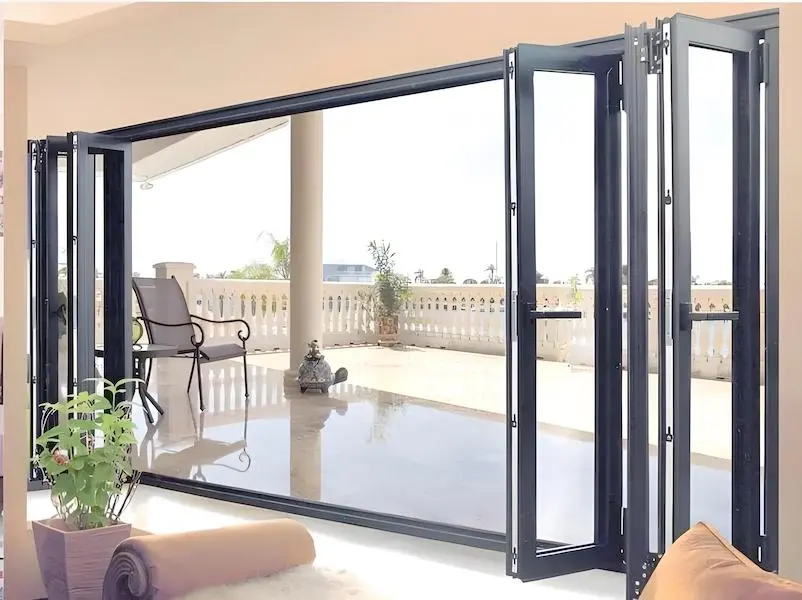
Understanding Aluminum Folding Sliding Doors and Their Core Benefits for Commercial Use
There are some problems that only happen in commercial settings that aren't common in residential ones. Door systems need to be strong because they are exposed to a lot of foot traffic, frequent operation cycles, and different weather conditions. Aluminum Folding Sliding Doors meet these needs with better-performing materials and design innovations compared to other options.
Material Advantages Over Alternative Door Systems
Commercial-grade folding doors are made of a 6063-T5 aluminum alloy that is very strong while still being very light. This aerospace-grade material doesn't rust in humid coastal areas and doesn't warp or break down when the temperature changes. Aluminum doors and frames don't change size over time like wooden doors do when they soak water or PVC frames do when they are exposed to UV light. The multi-chamber profile structure makes the frame stronger and each sash can hold up to 150 kg, which is enough for big glass panels that let in lots of natural light.
The folding process itself changes the way business spaces are used in a big way. When traditional hinged doors are opened, they take up valuable floor space and make it harder to move furniture and people. Sliding doors need wall gaps, which make fitting harder and limit your options. Folding systems stack panels close together on one or both sides, making spaces up to 3500 mm high that aren't blocked. This design is perfect for restaurants that want to add more seats when the weather is nice or for shops that want to blur the line between indoor displays and sidewalk ads.
Operational Efficiency in High-Traffic Environments
Commercial areas need to be able to run smoothly and reliably through thousands of rounds every day. Heavy-duty nylon parts and precision-engineered stainless steel rollers keep the track system from rubbing together and spread the weight equally. Top-hung configurations get rid of the floor tracks that collect dirt and dust, which makes maintenance easier in sandy or dusty places like Middle Eastern projects. Bottom-rolling options make installations along the coast more stable when wind loads need extra support for the structure.
The weather seal system has many contact points between the panels and the frames, which makes it Class 8A watertight and Class 4 airtight. These ratings make sure that wind-driven rain and moisture stay outside and conditioned air stays inside climate-controlled areas. Rubber gaskets compress evenly around the edges, keeping the seals tight even when the temperature changes and the metal expands or shrinks. This care for environmental isolation lowers HVAC operating costs directly, which is a very important thing for buying managers to think about when they are looking at lifecycle costs.
Tenants in commercial spaces with sound insulation levels between 30 and 40 dB can make quiet areas in busy areas. Folding doors can be put up in a hotel hallway to split a quiet lounge from the street next to it without blocking the view. These systems are used to separate shared workspaces from private meeting rooms in office buildings that still want to keep the architecture open. The choices for laminated and double-glazed glass improve soundproofing beyond what single-pane installations can do. This addresses noise concerns without sacrificing the clearness that is a hallmark of modern business design.
Energy Efficiency and Sustainability Advantages
As utility costs rise and environmental rules get stricter, building owners are putting more emphasis on energy efficiency. Through thermal engineering that reduces heat transfer between the interior and exterior environments, Aluminum Folding Sliding Doors help reduce operational costs.
Thermal Break Technology and Performance Metrics
Polyamide PA66 thermal breaks stop the flow of electricity through aluminum frames, making a barrier that keeps the metal surfaces inside and outside from conducting electricity. This engineering detail lowers the U-value to less than 1.8 W/m²K, which is a requirement for strict energy codes in North America, Europe, and emerging markets. When U-values are low, less energy exits through the building shell during heating seasons and less heat comes in during cooling seasons. This means that HVAC loads are lower.
Double-glazed glass systems with thicknesses between 5 and 28 mm improve thermal insulation even more. Air or argon gas trapped between the panes adds to the insulation, and low-emissivity coatings send infrared radiation back into spaces that are already heated or cooled. Procurement teams can choose glazing setups that are best for the climate in each area. For example, bigger parts with better coatings can be used in areas with high temperatures, while lighter choices can be used in temperate areas where reasonable thermal performance standards are still met.
In terms of ecology, aluminum is more than just a good way to save energy. The material can be recycled over and over again without losing any of its quality, so old frames can be used as raw materials for new goods. This closed-loop possibility lowers the amount of carbon that is built into materials compared to materials that need to be made from scratch. Aluminum systems have a long life—often more than 30 years with proper maintenance—so they don't need to be replaced as often, which cuts down on the waste from construction. These lifecycle benefits help companies that are keeping track of Scope 3 pollution or trying to get green building certifications show that they care about the environment.
Cost-Benefit Analysis Across Product Lifespan
The initial costs of buying something are only one part of the total costs of ownership. Aluminum folding doors don't need much maintenance other than being cleaned and having their hardware oiled every so often. They don't need to be refinished like wooden doors do or have their seals replaced like cheaper systems do. Powder-coated and PVDF surface finishes are long-lasting and don't fade or chalk, so they keep their good looks without needing to be painted over or touched up.
Less HVAC use means lower power bills over the life of the building, so the energy saves add up every year. Depending on energy prices and climate, a typical commercial installation can recover the cost of the door system within 5 to 7 years by saving 15-20% on heating and cooling costs. This payback period is especially appealing for building owners who want to keep their assets for a long time instead of speculatively developing them in the short run.
Installation and Maintenance: Practical Considerations for Commercial Procurement
Understanding installation needs and long-term care procedures is key to completing a job successfully. Aluminum Folding Sliding Doors come in modular assemblies that are easy to put together on-site, but the right technique is still needed to get the desired results.
Modular Assembly and Logistics Optimization
Shipping door systems that are already put together adds to the cost of shipping and makes customs steps more difficult for foreign orders. Modular delivery cuts bulk weight by 30–40%, which lowers transportation costs and makes it easier to load containers. The parts come with precisely cut profiles and holes that have already been drilled in them. This lets the installation teams put together the frames on-site by following the detailed instructions provided.
This method works especially well for wholesalers who are in charge of many projects in different parts of the world. Shipments can be combined and sent to central stores using small packaging. From there, inventory can be sent to busy job sites as needed based on schedules. The smaller amount of shipping also means less carbon emissions from transportation, which is another factor that is becoming more important for companies to include in their sustainability reports.
Disclaimer: Actual performance specifications should be checked against the product test reports and the conditions at the site. The performance numbers given are averages; actual results may be different depending on the quality of the system, the environment, and the way it is maintained.
Installation Process and Technical Support
A professional installation starts with accurate measurements and an analysis of the structure. Commercial openings need to be able to handle the weight of multi-panel systems, which means they need to have enough header support and track sections that are properly grounded. Installers make sure that the whole opening is level because even small differences can make things less smooth and speed up the wear and tear on the hardware.
Manufacturers who offer complete assembly tools greatly lower problems that can happen on-site. Video tutorials show how to put things together, what fasteners are needed, and how to make adjustments. The measurements and space needs are made clearer on technical models. Writing installation instructions in more than one language gets rid of communication problems that can slow down projects. These support materials are very helpful for installation crews that are working with aluminum folding systems for the first time. They lower the number of mistakes and warranty claims.
Maintenance Protocols for Extended Service Life
Regular maintenance keeps things working well and makes hardware last longer. On a monthly basis, the tracks should be cleaned to get rid of dust and other waste that has built up, the roller sections should be checked for signs of wear, and the weather seals should be made sure to stay in place. Hinge and pivot points should be oiled every six months with formulas recommended by the maker to ensure smooth movement and keep parts from breaking too soon.
The multi-point locking system needs to be adjusted every so often to keep all of the contact points properly engaged. The lock mechanisms should work smoothly and not require too much force, which means that the panels and frames are lined up correctly. Anti-lift devices built into the track system stop it from being taken off without permission, but these safety features need to be checked regularly to make sure they work.
Glass panels need to be cleaned in a way that doesn't use rough materials or strong chemicals that could damage the coats or seals. Neutral pH solutions mixed with microfiber cloths get rid of fingerprints and other environmental buildups without scratching surfaces or breaking down gasket materials. There are safety features built into both tempered and laminated glass, but installers should check for edge chips or surface damage that could weaken the structure.
Market Comparison and Choosing the Right Aluminum Folding Sliding Door
When looking at different door system options, procurement professionals should know how different technologies fit with the needs of the project. For business use, solutions must strike a balance between initial prices, operational efficiency, and long-term value.
Comparative Analysis of Commercial Door Systems
Wooden folding doors look traditional, but they are hard to keep their shape in humid or temperature-changing places. Cycles of expansion and contraction mess up alignment, so it needs to be fixed often to keep things running smoothly. The higher upkeep cost includes polishing every so often to stop UV damage and water absorption. While wooden systems work well for climate-controlled interior walls, they don't hold up as well for openings that are exposed to the weather on the outside.
Glass sliding doors are the clearest option, but they aren't as flexible for use as folding doors. Fixed panel arrangements limit the width of openings, which makes it harder for places like hotels and stores to have smooth flow between indoor and outdoor areas. Since the system is easier and needs less upkeep, glass sliders are good for situations where ease of use is more important than adaptability. But because you can't fully open the wall pieces, they aren't very useful in places that need to be rearranged from time to time.
Aluminum Folding Sliding Doors have the clearness of glass systems, the adaptability of folding mechanisms, and the strength of man-made materials. Their balanced performance across a number of factors is one reason why they are being used more and more in business projects like corporate campuses and luxury hotels. Because panel configurations can be changed, solutions can be made to fit any opening, from two-panel installations for balcony decks to six-panel systems that cover the front of restaurants.
Supplier Evaluation Criteria and Certification Standards
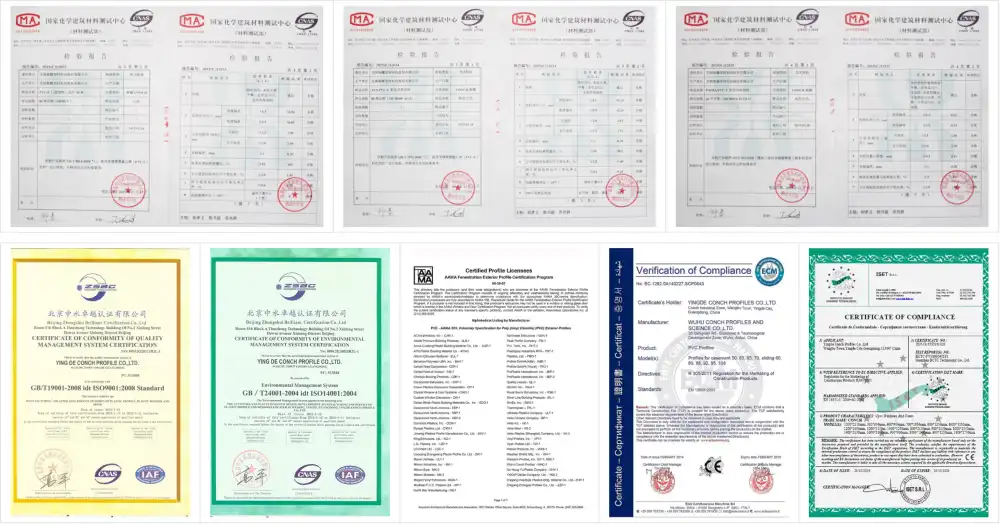
When choosing manufacturing partners, you need to make sure they have the right technical skills and quality control methods in place. Getting ISO approval shows that you follow standard ways of making things and checking the quality of those things. The CE mark shows that a product meets European safety and performance standards, which are being accepted more and more by markets outside of the EU. AAMA approval proves that tests were done according to North American building standards. This gives projects that need US-equivalent performance peace of mind.
Production capacity has a direct effect on project timelines, especially for developments that need multiple units with different delivery dates. Manufacturers can keep lead times stable by keeping enough raw materials on hand and building relationships with suppliers. Partnerships with reliable material suppliers ensure that the quality is the same across all production runs. This gets rid of batch-to-batch differences that can make installation and guarantee management more difficult.
After-sales support is what sets premium makers apart from commodity sellers. Getting technical advice during the specification phase helps the buying team choose the right options for each job. Respondent customer service answers questions about installation and fixes problems with how the product works, keeping small problems from turning into expensive guarantee claims. Throughout the lifecycle of a building, project teams are helped by detailed documents such as CAD files for design integration, installation manuals, and upkeep rules.
Logistical Considerations for International Procurement
Lead times of 25 to 30 days work with production schedules and let procurement managers schedule deliveries around important construction milestones. Shorter cycles may mean lower quality, while longer timelines may cause the project to take longer to finish and cost more. Clear communication about the status of production and shipping plans makes it possible to manage schedules proactively.
Different target markets have very different customs procedures and import rules. Suppliers who have dealt with foreign trade before can provide business bills, packing lists, and certificates of origin to help with the clearance process. When you use harmonized tariff numbers to classify things correctly, you can keep tax costs low and avoid delays in the administrative process. When distributors are working on projects in more than one country, it's easier to get things done when they work with manufacturers who know the local compliance requirements.
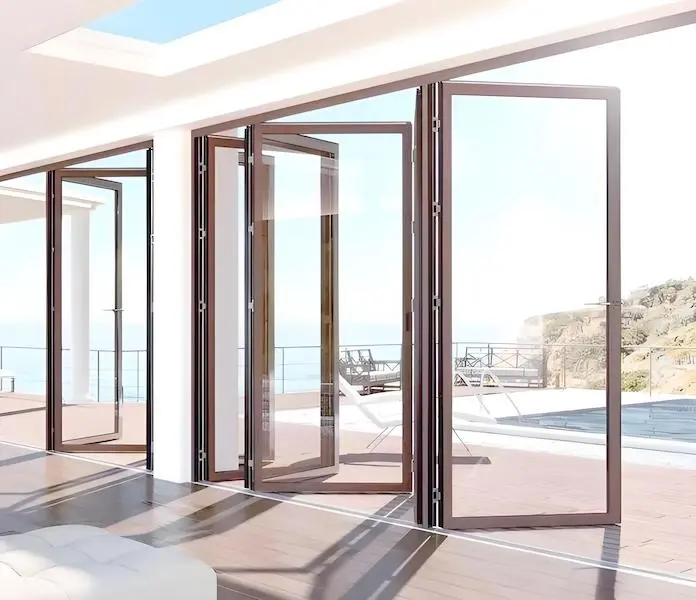
Commercial Use Cases and Design Inspirations
Real-life examples show how Aluminum Folding Sliding Doors can be used to solve problems and improve the look of buildings. Knowing about these implementations helps people who work in procurement picture what their own projects could look like.
Hospitality and Food Service Applications
By putting folding doors along the walls that face the street, restaurants and bars can increase their capacity based on the weather. When the weather is nice, fully opened panels connect indoor dining areas with outdoor seating, making the room twice as useful without having to make any lasting changes to the structure. This feature is especially useful in tourist spots where demand changes a lot throughout the year because of the seasons.
Hotel conference rooms have folding walls that can be used to change the layout of meeting rooms based on the needs of the event. By pulling back the door panels, a ballroom that is split into three parts for simultaneous seminars can be turned into a single space for big parties. When private is needed, the sound insulation keeps the sounds apart, and the transparency keeps the visual connections that keep areas from feeling closed off.
Retail and Commercial Office Environments
Folding doors are used in stores to remove barriers between product displays and foot traffic. This makes the storefronts more inviting, which draws customers inside. When the store is closed, luxury brands hide their goods behind glass walls. This keeps the products safe while still letting people look around after hours. The flexible panel layouts can be changed to fit different storefront widths, making them suitable for both small cities and large suburban areas.
Companies that want to give their employees a lot of options for how they work put up folding doors between areas where people can work together and areas where they can be alone without blocking natural light. In today's workplace design, operational agility (the ability to change how spaces are set up as team sizes grow or project needs change) is becoming more and more valued. Powder-coated finishes in custom RAL colors make it possible to incorporate company branding, which strengthens the character of the organization in all of its physical spaces.
Design Customization and Brand Expression
Functional coatings aren't the only surface finish choices. Wood-grain laminates and metallic textures that go with a variety of building styles are also available. Anodized treatments make the color uniform and make the surface less likely to scratch, making them perfect for high-contact situations where keeping the look in good shape is important. When installed near the coast, where salt spray speeds up corrosion on less durable materials, PVDF coats work better in harsh weather.
You can choose hardware that is either simple and hidden, like concealed hinges, or fancy, like handles that are the focal point of the design. Architects can make sure that the look of all the building systems is consistent by choosing visible parts like door hardware that goes with window treatments, railing designs, and other architectural elements. With these customization options, building parts that are meant to be useful can be turned into design statements that support brand positioning and project personality.
The strategic value that Aluminum Folding Sliding Doors offer goes beyond simple environmental separation, as demonstrated by their diverse applications. The systems allow architectural strategies that improve the user experience, operational efficiency, and business viability. This is what procurement professionals have to do with tight budgets and tight deadlines.
Conclusion
Material science, motor engineering, and building design have come together in Aluminum Folding Sliding Doors. These systems give commercial space planners and building material suppliers who have to deal with competitive markets real benefits in terms of saving money, being able to change how they work, and protecting the environment.
The mix of being lightweight, long-lasting, good at keeping heat in, and the ability to be customized meets the complex needs of modern commercial construction while giving purchasing managers reliable options backed by years of manufacturing experience. Knowing how technical factors affect performance in different climates and uses is important for choosing the right specifications, such as panel layouts, glazing choices, surface finishes, and hardware systems.
FAQ
What determines the appropriate panel configuration for a commercial opening?
How many panels you need depends on the size of the hole and how you want to stack them. For openings smaller than 2.4 meters, two to three panels are usually enough. For spans longer than 4 meters, four to six panels are better because they spread out the weight and keep the looks equal. Stacking direction (single-side vs. double-side) changes the amount of clear space that is available, and you should think about how furniture is placed next to it or how people move around.
How does aluminum performance compare to UPVC in coastal environments?
Aluminum doesn't rust as easily as UPVC does in salty air environments, where it can break down over time. The powder-coated and anodized finishes on the body protect it even more from external damage. When it comes to moderate climates, UPVC works fine, but aluminum is still the best choice for coastal installations that need to last the longest.
Can these systems accommodate security requirements for commercial applications?
Multi-point locking devices connect in three to five places around the frame's edge, spreading the force and stopping attempts to break in. Even when the panels are opened, anti-lift devices keep them from being taken off the tracks. Some types of glass come in laminated assemblies that stay together even if they break, giving security more time to respond. For most business uses, these features meet the insurance standards.
Connect with Haolv Building Materials for Your Commercial Door Projects
We at Hunan Haolv Building Materials Co., Ltd. have been making high-quality Aluminum Folding Sliding Door systems for 19 years. Our ISO, CE, and AAMA certifications show that our automated production facilities meet high quality standards. Our partnership with CONCH guarantees that the quality of our raw materials will always be the same for projects that need to be strong. We offer factory-direct pricing that saves distributors and commercial contractors 30 to 50 percent on costs compared to local suppliers, without lowering the quality your clients expect.
Whether you're looking for doors for a small hotel renovation in Bangkok, a retail development in Dubai, or the growth of a restaurant chain in Southeast Asia, our expert team is happy to help you find the right system configurations for your needs. We provide detailed parameter sheets, installation videos with step-by-step instructions, and complete assembly manuals. These are all meant to help with efficient integration on-site and reduce the number of problems that arise during installation. Our modular shipping method cuts logistics costs by about 30% and speeds up the clearance process for international orders.
Contact our team at kristin@haolvwindows.com to talk about your upcoming projects. We'll give you reasonable prices, technical details, and sample arrangements so you can check the quality before you place a full order. Find out how working with an experienced Aluminum Folding Sliding Door manufacturer can make the buying process easier and improve the results of your project.
For detailed information about our complete product range and manufacturing capabilities, visit haolvbuilding.com.
References
1. Chen, W., & Zhang, L. (2021). Thermal Performance of Aluminum Window and Door Systems in Commercial Buildings. Building Science Press.
2. International Aluminum Institute. (2022). Sustainability Advantages of Aluminum in Construction Applications. IAI Technical Report Series.
3. Kumar, R. (2020). Architectural Hardware Systems: Design and Performance Standards. Construction Technology Publications.
4. Martinez, S., & Thompson, J. (2023). Energy Efficiency in Commercial Building Envelopes. Journal of Building Engineering, 45(3), 234-251.
5. National Fenestration Rating Council. (2022). Certification Standards for Commercial Door Systems. NFRC Technical Guidelines.
6. Wong, K. (2021). Material Selection for Tropical Climate Construction. Asian Institute of Architectural Research.
Fast simple channel to send demands lock favorable price for building window door bulk purchases.