- English
- French
- German
- Portuguese
- Spanish
- Russian
- Japanese
- Korean
- Arabic
- Greek
- German
- Turkish
- Italian
- Danish
- Romanian
- Indonesian
- Czech
- Afrikaans
- Swedish
- Polish
- Basque
- Catalan
- Esperanto
- Hindi
- Lao
- Albanian
- Amharic
- Armenian
- Azerbaijani
- Belarusian
- Bengali
- Bosnian
- Bulgarian
- Cebuano
- Chichewa
- Corsican
- Croatian
- Dutch
- Estonian
- Filipino
- Finnish
- Frisian
- Galician
- Georgian
- Gujarati
- Haitian
- Hausa
- Hawaiian
- Hebrew
- Hmong
- Hungarian
- Icelandic
- Igbo
- Javanese
- Kannada
- Kazakh
- Khmer
- Kurdish
- Kyrgyz
- Latin
- Latvian
- Lithuanian
- Luxembou..
- Macedonian
- Malagasy
- Malay
- Malayalam
- Maltese
- Maori
- Marathi
- Mongolian
- Burmese
- Nepali
- Norwegian
- Pashto
- Persian
- Punjabi
- Serbian
- Sesotho
- Sinhala
- Slovak
- Slovenian
- Somali
- Samoan
- Scots Gaelic
- Shona
- Sindhi
- Sundanese
- Swahili
- Tajik
- Tamil
- Telugu
- Thai
- Ukrainian
- Urdu
- Uzbek
- Vietnamese
- Welsh
- Xhosa
- Yiddish
- Yoruba
- Zulu
Vinyl Tilt Turn Windows Factory Checklist for Multi Unit Residential Procurement
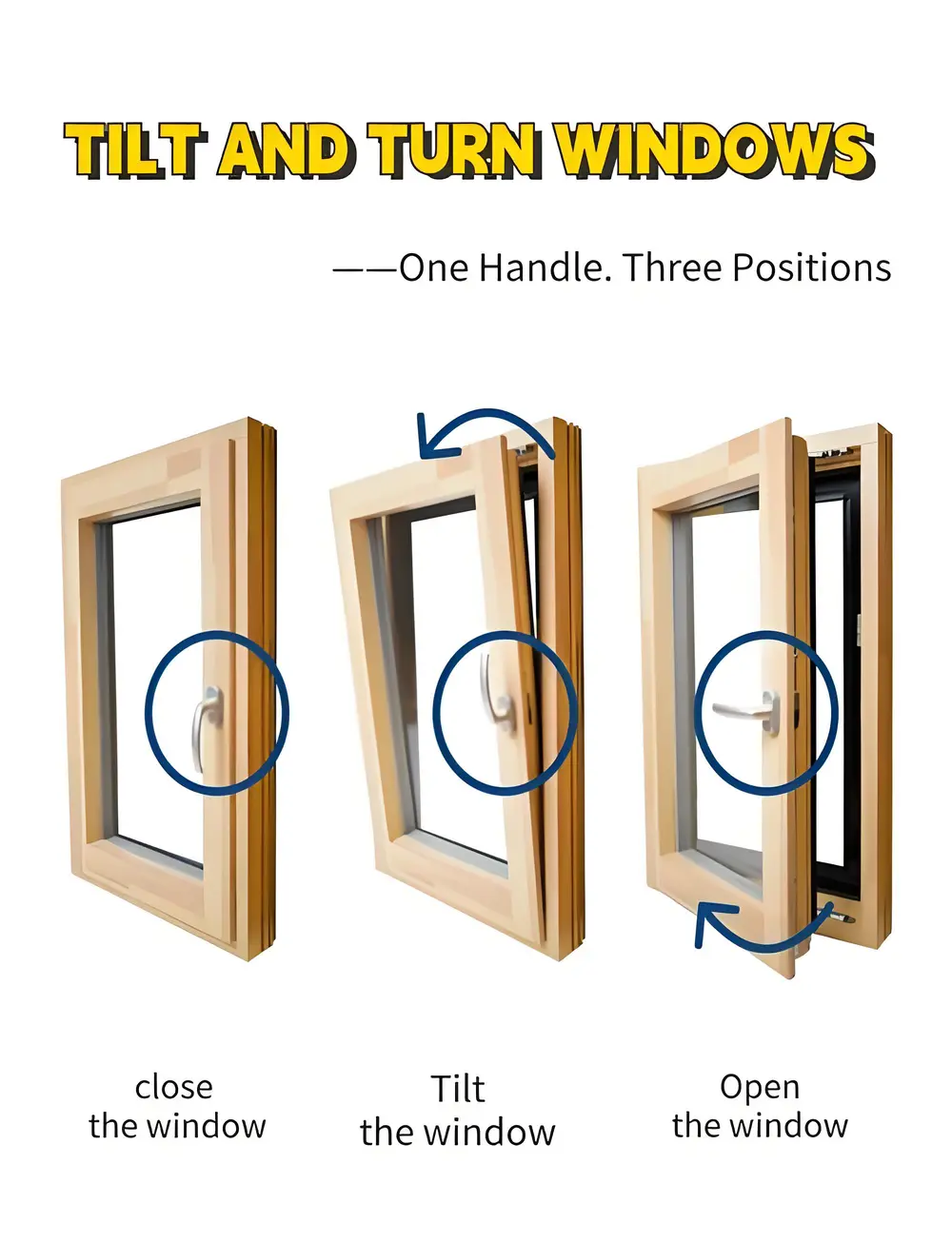
Qualifying a China vinyl tilt turn windows factory for a multi unit residential program takes more than a price list, because the window that fails on a 200 unit site is almost never the one that failed in the sample room. A Vinyl Tilt Turn Windows is a dual action unit: the handle in the tilt position opens the sash a few centimetres at the head for ventilation with the window still locked, and in the turn position the sash swings inward on side hinges so the outside glass can be cleaned from inside the room. That second movement is what makes it the standard choice for apartment blocks, student housing and hotels, where nobody is going to hang out of a window on the eighth floor. This checklist covers what to audit at the profile, hardware, glazing and packing stages, written for developers, main contractors and importers placing volume orders.
In this guide:
Short answer: audit four things on a vinyl tilt turn window order: the chamber count and reinforcement of the 70 or 80 mm profile, the multi point lock with an anti misoperation device, the triple EPDM seal over a concealed drainage path, and the glass build per sash written on the schedule.
| Parameter | Typical value | Note |
|---|---|---|
| Profile system | 70 / 80 mm multi chamber vinyl | Chamber count slows convection inside the frame |
| Reinforcement | Steel or aluminium insert in sash and frame | Required on long sashes, PVC-U expands more than aluminium |
| Opening action | Tilt for ventilation, turn for inward cleaning | Handle sequence must be interlocked |
| Locking | Multi point lock plus anti misoperation device | Prevents tilt while the sash is open on turn |
| Sealing | Triple EPDM strip with concealed drainage | Air seal and a drained path are separate items |
| Sound reduction | 30 to 38 dB for the assembly | Follows the glass build and the cavity width |
Profile Chambers and Hardware a Vinyl Tilt Turn Window Factory Must Prove
What the Chamber Count and Reinforcement Actually Do
A multi chamber vinyl profile works because still air trapped between the walls is a better insulator than solid PVC-U. Three chambers is the practical minimum for a cold climate, five is where the frame stops being the weak point in the assembly, and the number has to be stated per profile rather than per window. Ask for the section drawing with the chambers marked, because the same nominal 70 mm depth is sold in three and five chamber versions at different prices and the outside of the profile looks identical.
Reinforcement is the second item nobody photographs. PVC-U expands roughly seven times more than aluminium with temperature, so a long tilt turn window sash has to carry a steel or aluminium insert in both the sash and the frame to hold its shape through a summer facade and a winter night. The insert has to be continuous at the corners and fixed, not loose inside the chamber. On a multi unit order, ask for the reinforcement schedule per sash size, and check that the largest size in the schedule is the largest size in the order.
Hardware Sequence and the Anti Misoperation Device
The mechanics of a tilt turn window live in one gearbox, and the anti misoperation device is the part that keeps it alive. Without it, a user can turn the handle toward tilt while the sash is already open on the turn setting, and the corner drive shears. That single failure accounts for most warranty call outs on cheap vinyl tilt turn windows, and it is invisible in a quotation because both versions are described as multi point locking.
The rest of the hardware set should be read as a system: a corner drive at each corner, a tilt latch at the head, keeps that pull the sash evenly into the gasket, and a handle with a defined sequence. Hinge sets rated for the sash weight matter more than the brand on the handle, and on a coastal or high humidity site the finish should be stainless rather than zinc plated. Ask for the cycle test figure the hardware was approved against.
Glass Build and the Spacer Detail
The glazing schedule decides both the U-value and the sound figure, and it should be written per elevation rather than per project. A double unit with a Low-E coating and an argon fill gives a PVC-U window a whole assembly U-value in the 1.2 to 1.6 W/m2K band; a triple unit moves it to roughly 0.8 to 1.2 W/m2K. Warm edge spacers matter at the perimeter, where the glass meets the frame, because that is the coldest point in the assembly and the first place condensation appears.
Why Hot Humid and Cold Zone Sites Both Specify Vinyl Tilt Turn Windows
Humid Coastal and Tropical Programs
PVC-U does not corrode, which is why coastal housing programs in humid regions specify vinyl over aluminium. The material also tolerates salt air without the coating maintenance an aluminium frame needs. What it does not tolerate is UV without stabilisation, so the profile should be confirmed as containing a titanium dioxide UV stabiliser, and a co-extruded cap stock is worth the small premium on a facade that faces the sun for most of the day.
In tropical programs the drainage path deserves a site visit rather than a drawing check. A concealed drainage channel that exits onto a tiled sill with no fall will back up in the first monsoon and show as a damp patch inside the reveal. Confirm where the weep holes exit and whether the sill detail gives them a path away from the wall.
Cold Climate and Condensation Control
In a cold climate the tilt turn window is chosen for the same reason it is chosen in Europe: it can be left on tilt through the night without the room losing its heat, and it can be opened fully for cleaning without the user going outside. The specification that matters is the U-value and the psi value at the frame to glass junction, since a good centre pane figure with a poor edge detail still produces condensation on the first cold morning.
Air tightness is the other half. A tilt turn window seals on a compression gasket around the full perimeter when closed, which is why it can reach EN 12207 Class 4 rather than the lower class a sliding sash manages. On a cold climate program that class is the difference between a comfortable room and a draught the tenant will complain about all winter.
Wind Load and Upper Floor Exposure
A tilt turn sash hangs on two hinges and locks on the opposite stile, so wind load produces a different stress pattern from a casement. Above roughly six storeys the hinge set and the number of lock points have to be recalculated against the design wind pressure, and the tender should state the EN 12210 class expected. A factory that quotes the same hardware for a bungalow and a tower has not done that calculation.
The practical audit question is simple: which sash size in this order is the largest, and what is the hardware set on it. If the answer is the same set as the smallest size, the order is being priced on an average rather than engineered per opening.
Vinyl Against Aluminium Tilt Turn and Against an Inward Opening Casement
Thermal Performance and Cost
Vinyl wins on thermal performance per unit of cost, because the profile is a poor conductor by nature and does not need the thermal break an aluminium frame does. An aluminium tilt turn window needs a polyamide thermal barrier, usually PA66 GF25, to reach a comparable U-value, and that barrier plus the extrusion cost sits in the price. A German tilt and turn windows specification built on vinyl therefore lands cheaper than the aluminium equivalent at the same glass build, which is the main reason volume residential programs in Europe are vinyl.
Aluminium wins back on sightlines and on structural capability. A slim aluminium section carries a larger sash and a heavier glass unit at the same visual weight, so a facade with full height glazing usually ends up in aluminium regardless of the U-value argument. On a multi unit residential job the normal split is vinyl for the standard apartment windows and aluminium for the entrance screens and the full height units.
Vinyl Tilt Turn Against an Inward Opening Casement
Both open inward, so both can be cleaned from inside, which is why they are often compared for the same elevation. The difference is the ventilation mode. A casement is either open or closed; a tilt turn window adds the tilt position, which gives secure ventilation at night and in rain. That single function is what sells the product into apartments, and it costs less than adding a separate restrictor to a casement.
The casement still wins where the opening is small, where the budget is tight, and where the client wants a simple product to maintain. A sash casement tilt turn windows comparison at the drawing stage usually ends with tilt turn on bedrooms and living rooms and casement on bathrooms and service rooms, which keeps the hardware range small and the price predictable.
Factory Audit Points on a Multi Unit Vinyl Window Order
What to Verify Before the Deposit
On a multi unit order the factory audit is about consistency, not capability. Ask for the profile section drawing with chambers marked, the reinforcement schedule per sash size, the hardware cycle test figure, and a glass schedule per elevation. Then ask which of those documents will be attached to the purchase order, because the ones that are not attached are the ones that drift between the first and the last container.
The European market is the useful reference point here, since a tilt and turn windows in Europe specification has been standardised for decades and the expectations are well documented. A factory that already supplies that market will have the documents ready; one that does not will produce them only after being asked, which tells you something about the production file.
Minimum Quantity Colour Range and the 25 to 30 Day Window
Production starts at 10 to 20 units, and orders ship within 25 to 30 days of confirmation, so a multi unit program can be phased rather than placed in one block. The item that stretches that window is colour: standard white and woodgrain laminate run continuously, anthracite and custom RAL colours need a lamination or coating run and should be scheduled first. A program that mixes four colours across ten floors is a scheduling exercise before it is a manufacturing one.
Packing Sequencing and Site Logistics
Vinyl frames are lighter than aluminium and that is exactly why they need better packing: the frame flexes, and a flexed frame arrives with the sash out of square and the gasket pinched. Ask for corner protection, a rigid separator between units and a stacking limit per crate. Sequence the packing by floor and by elevation so the site can install in one pass instead of sorting a mixed delivery.
Handles, restrictors and screens should travel in a labelled carton per unit rather than loose in the container, because a missing handle on a 200 unit site stops that window from being handed over. A packing list keyed to the shop drawing reference is the cheapest risk control on the whole order.

Handover Support Commissioning and Spare Parts
What the Factory Should Supply After Delivery
A tilt turn window needs a short commissioning step that most sites skip: the handle sequence has to be demonstrated, and the sash has to be adjusted so it compresses the gasket evenly without being forced. Supply a one page adjustment guide per unit and a short video for the site team. The call out rate on the first hundred windows falls sharply when the installer knows which screw moves the sash in which direction.
Spare parts should be planned per hundred units: handles, corner drives, tilt latches and a gasket roll. These are cheap at the factory and hard to match locally, and a program that runs for two years will need them. A vinyl tilt turn window is a repairable product, and the repair only stays simple if the parts are the same ones the factory used.
Cleaning and Long Term Care
PVC-U needs no repainting, which is the maintenance argument that sells it, but the gasket and the drainage channel still need attention twice a year. A mild soap solution and a soft cloth are enough; solvent based cleaners attack the profile surface and should be excluded in the handover manual. Lubricating the hinge points with silicone once a year keeps the tilt action light and reduces the load on the corner drive.
Disclaimer: actual performance depends on the specified glass build, the installation detail, the exposure of the facade and the maintenance regime on site. Values quoted here describe typical configurations in this product range and are not a guarantee for a specific opening.
Conclusion
A multi unit residential program is won or lost on documents, not on the sample. The workable route is a 70 or 80 mm multi chamber profile with a stated reinforcement schedule, a hardware set with an anti misoperation device and a cycle figure, triple EPDM sealing over a drainage path that exits somewhere sensible, and a glass build written per elevation. Choosing a China vinyl tilt turn windows factory then comes down to whether those four documents are attached to the purchase order before the deposit leaves, because that is the only point at which they still influence what gets produced.
FAQ
Q1: What is the MOQ for bulk vinyl tilt turn windows from a China factory?
A: Production starts at 10 to 20 units, so a single floor of a project can be ordered before the full program is released. Mixed sizes and colours can load together provided the packing list is confirmed before production.
Q2: How long does a vinyl tilt turn window order take to ship?
A: Orders ship within 25 to 30 days of confirmation. Standard white and woodgrain run continuously; anthracite and custom RAL colours add a lamination or coating step and should be scheduled at the front of the program.
Q3: Can the same hardware set be used on every sash size in the order?
A: Not safely. Lock point count and hinge rating follow sash weight and height, and the largest size in the order should have its own hardware schedule. Buyers should ask for that schedule by size rather than accept one specification for the whole range.
Q4: What price factors should a procurement team compare between vinyl window suppliers?
A: Compare chamber count, reinforcement schedule, hardware cycle rating, glass build and whether screens and handles are included. A per unit price without those five lines cannot be compared with another quotation, because the cheapest offer is usually the one with the thinnest reinforcement.
Partner with Haolv Building Materials for Vinyl Tilt Turn Window Programs
Haolv Building Materials Co., Ltd. has been manufacturing windows and doors for 19 years and supplies tilt turn, casement and sliding systems in vinyl and aluminium. Frames, glass, hardware and screens come from one supplier, orders ship within 25 to 30 days, and production starts from 10 to 20 units. Certification documents are available on request. Email us at kristin@haolvwindows.com with the window schedule and the target market, and we will return a specification and a quotation against your drawings.
This guide is maintained by Haolv's engineering team and reviewed against EN 14351-1 and EN 12207 as standards change.

References
1. European Committee for Standardization. (2016). EN 14351-1: Windows and doors - Product standard, performance characteristics.
2. European Committee for Standardization. (2000). EN 12207: Windows and doors - Air permeability - Classification.
3. European Committee for Standardization. (2003). EN 12208: Windows and doors - Watertightness - Classification.
4. European Committee for Standardization. (2003). EN 12210: Windows and doors - Resistance to wind load - Classification.
5. General Administration of Quality Supervision, Inspection and Quarantine of China. (2019). GB/T 7106: Graduations and test methods of air permeability, watertightness and wind load performance for building external windows and doors.
6. International Organization for Standardization. (2015). ISO 9001: Quality management systems - Requirements.
标题(Title):Vinyl Tilt Turn Windows Factory Checklist for Multi Unit Residential Procurement 核心词(core_words):China vinyl tilt turn windows factory 长尾词(long_tail_keywords):vinyl tilt turn windows manufacturer; bulk UPVC tilt and turn windows price; wholesale vinyl tilt turn windows supplier; China UPVC tilt turn window factory URL 路径(path):/knowledge/vinyl-tilt-turn-windows-factory-checklist-for-multi-unit-residential-procurement
Fast simple channel to send demands lock favorable price for building window door bulk purchases.