- English
- French
- German
- Portuguese
- Spanish
- Russian
- Japanese
- Korean
- Arabic
- Greek
- German
- Turkish
- Italian
- Danish
- Romanian
- Indonesian
- Czech
- Afrikaans
- Swedish
- Polish
- Basque
- Catalan
- Esperanto
- Hindi
- Lao
- Albanian
- Amharic
- Armenian
- Azerbaijani
- Belarusian
- Bengali
- Bosnian
- Bulgarian
- Cebuano
- Chichewa
- Corsican
- Croatian
- Dutch
- Estonian
- Filipino
- Finnish
- Frisian
- Galician
- Georgian
- Gujarati
- Haitian
- Hausa
- Hawaiian
- Hebrew
- Hmong
- Hungarian
- Icelandic
- Igbo
- Javanese
- Kannada
- Kazakh
- Khmer
- Kurdish
- Kyrgyz
- Latin
- Latvian
- Lithuanian
- Luxembou..
- Macedonian
- Malagasy
- Malay
- Malayalam
- Maltese
- Maori
- Marathi
- Mongolian
- Burmese
- Nepali
- Norwegian
- Pashto
- Persian
- Punjabi
- Serbian
- Sesotho
- Sinhala
- Slovak
- Slovenian
- Somali
- Samoan
- Scots Gaelic
- Shona
- Sindhi
- Sundanese
- Swahili
- Tajik
- Tamil
- Telugu
- Thai
- Ukrainian
- Urdu
- Uzbek
- Vietnamese
- Welsh
- Xhosa
- Yiddish
- Yoruba
- Zulu
Aluminum Sliding Door Profile Price Factors and the Offcut Nobody Quotes
A tonne of aluminum sliding door profile holds 435 metres at a nominal 2.30 kg per metre, and the same tonne delivers 483 metres when the wall runs to the thin side of tolerance. That swing of 11 per cent moves the price of a door further than the alloy price has moved in a year.
Three numbers on one tonne
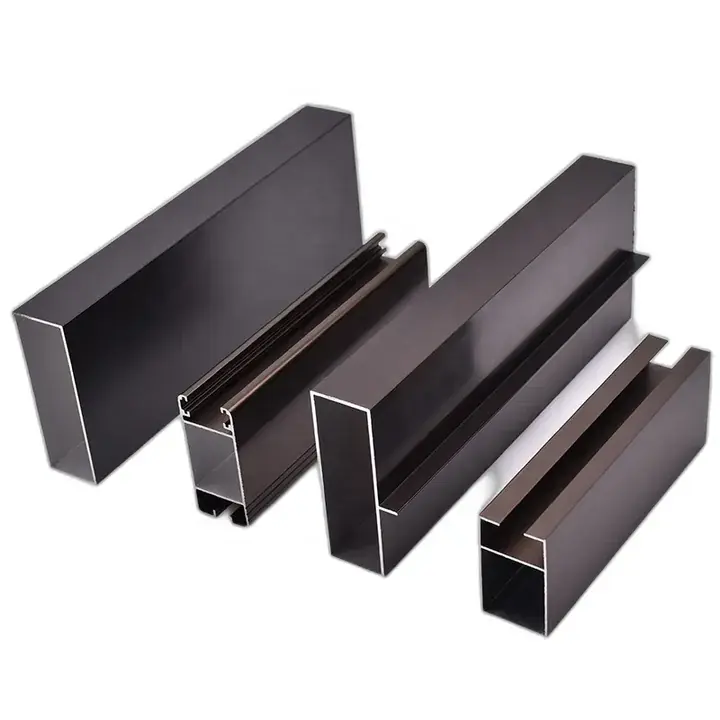
A frame section of 850 mm² at 2.70 g/cm³ weighs 2.30 kg/m, so 1,000 kg is 435 m. A wall at 1.26 mm against a nominal 1.40 mm cuts the metre weight to 2.07 kg and lifts the same tonne to 483 m. A 6.0 m bar cut into 2,150 mm pieces leaves 740 mm that no door on the order can use.
In this guide:
What does one tonne of aluminum sliding door profile actually buy?
A tonne is a weight and a door is a length, so the two only meet through the section. The outer frame on a 2,000 by 2,200 mm double slider carries 850 mm² of metal, which is 2.30 kg per metre at the density of 6063-T5. Divide one tonne by that and the answer is 435 m of aluminum sliding door profile before a single cut is made.
One door of that size consumes 8.4 m of frame at 2.30 kg and 12.4 m of sash section at 1.90 kg, which is 19.3 plus 23.6 and rounds to 43 kg. So a tonne is about 23 doors on paper. Freight, packing and the cutting loss all come out of the same tonne, and the cutting loss is the largest of the three.
This is why two quotes for patio sliding doors can differ by 8 per cent with the same alloy on the same day. One supplier prices the finished set against a cutting plan, the other prices a nominal weight and leaves the offcut with the buyer. Ask which one is on the table before comparing the number.
How does a tenth of a millimetre change a tonne price?
A 1.4 mm wall is accepted anywhere between roughly 1.26 and 1.54 mm under the dimensional tolerances of EN 12020-2, and most mills run the thin side because aluminium is sold by weight. At 1.26 mm the frame section drops from 850 to 765 mm², the metre weight from 2.30 to 2.07 kg, and a tonne goes from 435 to 483 m.
The direction of that tolerance decides who wins. On a tonne basis the buyer gains, because the same money buys 11 per cent more metres. On a metre basis quoted at nominal weight the buyer loses exactly the same 10 per cent of metal per metre, and nothing on the invoice shows it. Neither basis is dishonest; they place the tolerance in different hands.
The check costs one kitchen scale. Cut 1 m of each section off the first bar, weigh it, and compare with the nominal figure on the drawing. Within 2 per cent is normal mill variation. A frame section that comes in at 2.05 kg against a claimed 2.30 kg is a 1.26 mm wall, and the rest of the container will match it.

Why does bar length beat wall thickness on the cutting table?
Run the cutting plan for that 2,000 by 2,200 mm door. The vertical members are 2,150 mm, and a 6.0 m bar takes two of them for 4,300 mm, leaving 1,700 mm. That remainder carries one 960 mm transom and 740 mm of scrap. The bar yields 5,260 mm of useful metal out of 6,000, which is 87.7 per cent.
A 6.5 m bar takes three 2,150 mm pieces for 6,450 mm and leaves 50 mm, which is 99.2 per cent. On an order of 200 doors the difference is 296 m of aluminum sliding door profile, about 0.68 tonne, and it costs a phone call to the extruder to confirm the longer cut length.
Compare that with thickening the wall from 1.4 to 1.6 mm, which adds 14 per cent to every metre on the order. The longer bar gives back 12 per cent of the metal at no cost per kilo, and the wall change costs 14 per cent before it buys anything. The cutting aluminium profile sequence decides which of the two a buyer actually needs.
Where do the extrusion ends and the anodising contacts go?
Every bar loses both ends. An extrusion run is cut back roughly 150 mm at the head and 150 mm at the tail, because the front and back of a billet carry oxide and a rougher surface. Anodising then holds the bar on a jig at both ends, and 100 mm at each contact is unusable because the current density is wrong there.
That is 500 mm out of 6,000, or 8.3 per cent, before the saw touches the cutting plan. Add the 12.3 per cent of offcut and 20.6 per cent of the metal bought as aluminum sliding door profile never reaches a door. The number is worth knowing when a supplier claims a scrap allowance of 5 per cent.
Two clauses keep the ends out of the finished product. The first asks for a cut-back of 150 mm minimum at both ends before packing. The second bans anodising contact marks on any face that stays visible after assembly, which pushes the jig to the face that goes into the track. Both are free to write and expensive to fix later, and the overseas sliding door cost picture changes by more than the alloy price once they are written in.
Which numbers belong on a purchase order for aluminum sliding door profile?
Six lines, each one measurable on arrival: alloy and temper, section area with the face that was measured, metre weight, wall thickness with its tolerance, finish with film thickness, and cut length. Everything else on a profile drawing is a preference, and preferences are what quotes get rewritten over.
| Parameter | Typical value | Note |
|---|---|---|
| Product | aluminum sliding door profile, 6063-T5 | frame, sash, track and interlock sections |
| Frame section | 850 mm², 2.30 kg/m | outer frame and track on a 2,000 mm opening |
| Sash section | 700 mm², 1.90 kg/m | two leaves, 960 mm wide |
| Wall thickness | 1.4 mm, 1.26 to 1.54 mm accepted | measure the face named on the drawing |
| Mass per door | 43 kg | 8.4 m frame plus 12.4 m sash |
| Bar length | 6.0 m standard, 6.5 m on request | 87.7 per cent against 99.2 per cent yield |
| Cut-back | 150 mm each end | head and tail of the extrusion run |
| Finish | anodised 15 to 20 microns, powder 60 to 80 microns | no contact marks on visible faces |
| Tolerance | EN 12020-2 | dimensional and form, checked on arrival |
| Minimum order | 10-20 units | lead time 25-30 days from approved drawing |
Section areas and masses are for the profile family on a 2,000 by 2,200 mm double slider and are calculated from the drawing at 2.70 g/cm³. Wall, bar length and finish are confirmed per order; the per door mass is arithmetic on a cutting plan, not a weighed figure from a delivered set.
How do a tonne basis and a metre basis compare on one order?
Four bases turn up in real quotes, and each one parks the risk somewhere different. Write the basis next to the price before the price is compared, because 43 kg per door and 18.7 m per door are the same material described two ways and they never produce the same total.
Send the cutting list with the opening sizes to kristin@haolvbuilding.com and the bar count, the metre count and the per door mass come back on one sheet, checked against the cutting plan the factory would actually run.
| Basis | What is fixed | Where the risk sits | Verdict |
|---|---|---|---|
| Per tonne, cut to drawing | metal weight | wall tolerance works for the buyer | cleanest on large orders |
| Per metre at nominal weight | metres | buyer carries 10 per cent less metal per metre | needs a weight check on arrival |
| Per 6.0 m bar | bars | buyer carries the 740 mm offcut | adds 12 per cent of metal to the order |
| Per finished set | doors | supplier carries scrap and cut-back | the number to compare first |
The tonne basis needs a weighing clause; the metre basis needs a section drawing. All four settle at the same total once the offcut and the cut-back are priced, and the per set figure is the only one that already contains both.
What changes when the same profile is thermally broken?
The aluminium content goes down and the price goes up. A thermal break splits the frame into two extrusions joined by a 24 mm polyamide strip of PA66 GF25, and the two halves together carry 620 mm² against 850 mm² in the solid version. That is 1.67 kg of aluminium per metre plus 0.08 kg of strip, so the thermal version is the lighter one.
Everything above the aluminium is where the money sits: two extrusion runs, a knurling and rolling step, the strip itself, and the labour to thread it. Ask for the price broken into aluminium, strip and processing, and the difference between two suppliers stops looking like a negotiation and starts looking like a process. Thermal break profiles are quoted on that split.

Frequently asked questions
What is the minimum order for aluminum sliding door profile? Minimum order is 10-20 units and lead time is 25-30 days from an approved drawing. A standard die ships sooner; a new section, a new cut length or a colour outside the stock range adds a tooling step before the run starts.
Is the price per tonne or per metre? Ask for both, and for the section area behind them. At 2.30 kg per metre a door takes 18.7 m and 43 kg, so a wholesale order of 200 doors reads 3,740 m or 8.6 tonne and only one of those two figures survives a wall tolerance check.
Can the bar be supplied at 6.5 m? Yes on a scheduled run, and it is worth asking on any order above 100 doors. The cutting plan for 2,150 mm members goes from 87.7 to 99.2 per cent yield, and on 200 doors that is 296 m of aluminum sliding door profile returned to the order.
Will a powder coat hide a thin wall? No. Powder goes on at 60 to 80 microns and a 1.26 mm wall stays 1.26 mm under it. What the coating does change is the metre weight, and that is why a coated bar weighs slightly more than the bare figure on the drawing. Weigh bare samples if the wall is in question.
Ordering from Haolv
Haolv Building Materials Co., Ltd. has been extruding and assembling doors and windows for 19 years, and the aluminum sliding door profile on a set is cut from 6063-T5 billet on the same line as the frame it carries. Certification for the profiles and the glazing is available on request with the quotation. Minimum order is 10-20 units and lead time is 25-30 days.
Send the opening sizes and the cutting list to kristin@haolvbuilding.com, or start from Haolv Building Materials Co., Ltd. and the tonne, the metre and the per door figure come back together with the price.
What this guide claims and what it does not: the 2.30 kg, the 435 m, the 87.7 per cent and the 20.6 per cent are arithmetic on a stated section, a stated density and a stated cutting plan, and any reader can redo them with a calculator. They are calculated, not measured. The wall thickness of a delivered bar belongs to that melt, and the yield of an order is confirmed against the factory cutting plan for the actual specification.

References
- EN 12020-2:2022 — Aluminium and aluminium alloys. Extruded precision profiles in alloys 6060 and 6063. Tolerances on dimensions and form.
- EN 755-2:2016 — Aluminium and aluminium alloys. Extruded rod, bar, tube and profiles. Mechanical properties.
- EN 573-3:2019 — Aluminium and aluminium alloys. Chemical composition and form of wrought products.
- ISO 7599:2018 — Anodizing of aluminium and its alloys. Method for specifying decorative and protective anodic oxidation coatings.
- EN ISO 10077-2:2017 — Thermal performance of windows, doors and shutters. Numerical method for frames.
- EN 14351-1:2006+A2:2016 — Windows and doors. Product standard. Performance characteristics.
Metre weight, tonne yield, cutting yield and scrap allowance in this guide are arithmetic on a stated section, the density of 6063-T5 at 2.70 g/cm³ and a stated cutting plan. They are calculations from a drawing, not measurements of a delivered bar, and the yield of any order is confirmed against the factory cutting plan.
Fast simple channel to send demands lock favorable price for building window door bulk purchases.