- English
- French
- German
- Portuguese
- Spanish
- Russian
- Japanese
- Korean
- Arabic
- Greek
- German
- Turkish
- Italian
- Danish
- Romanian
- Indonesian
- Czech
- Afrikaans
- Swedish
- Polish
- Basque
- Catalan
- Esperanto
- Hindi
- Lao
- Albanian
- Amharic
- Armenian
- Azerbaijani
- Belarusian
- Bengali
- Bosnian
- Bulgarian
- Cebuano
- Chichewa
- Corsican
- Croatian
- Dutch
- Estonian
- Filipino
- Finnish
- Frisian
- Galician
- Georgian
- Gujarati
- Haitian
- Hausa
- Hawaiian
- Hebrew
- Hmong
- Hungarian
- Icelandic
- Igbo
- Javanese
- Kannada
- Kazakh
- Khmer
- Kurdish
- Kyrgyz
- Latin
- Latvian
- Lithuanian
- Luxembou..
- Macedonian
- Malagasy
- Malay
- Malayalam
- Maltese
- Maori
- Marathi
- Mongolian
- Burmese
- Nepali
- Norwegian
- Pashto
- Persian
- Punjabi
- Serbian
- Sesotho
- Sinhala
- Slovak
- Slovenian
- Somali
- Samoan
- Scots Gaelic
- Shona
- Sindhi
- Sundanese
- Swahili
- Tajik
- Tamil
- Telugu
- Thai
- Ukrainian
- Urdu
- Uzbek
- Vietnamese
- Welsh
- Xhosa
- Yiddish
- Yoruba
- Zulu
Custom Heavy Duty Sliding Patio Doors Where the Word Heavy Actually Applies
On heavy duty sliding patio doors the glass build moves a leaf by 45 kg and the wall thickness moves it by 4.5 kg. The duty rating follows the glass, the rollers follow the mass, and neither has anything to do with wind load.
Three builds, one leaf
On heavy duty sliding patio doors a 1,200 by 2,300 mm leaf carries 2.26 square metres of glass. At 2.5 kg per square metre per millimetre, 4-16-4 is 45.2 kg, 5-9-5 is 56.4 kg and 8-12-8 is 90.3 kg. The sash section adds 10.4 kg in every case, so the same door is 55.6, 66.8 or 100.7 kg before a single roller is chosen.

In this guide:
What does heavy duty mean on a sliding patio door?
It means the hardware. A heavy duty set carries rollers, carriages and a track rated for a leaf mass that a standard set cannot move for years without sagging, and that rating is a number in kilograms per leaf. Everything else on the door, the profile, the glass and the interlock, is chosen around that number.
The confusion starts because sellers apply the word to the profile. A 2.0 mm wall on a 600 mm squared section is stiffer than a 1.4 mm one, and it adds about 4.5 kg to a leaf that already weighs between 55 and 100 kg. Stiffness in the frame is worth buying on a wide opening; it does not turn a standard set into a heavy duty one.
So a specification that says heavy duty and stops there has said nothing. It has to say 100 kg per leaf, two rollers, and a track section that carries that load at the fixing spacing on the drawing. The rest of the aluminium patio sliding doors in the same range share the frame and differ in exactly these parts.
How much does a leaf weigh once the glass is chosen?
On heavy duty sliding patio doors glass is the whole answer, and the constant is 2.5 kg per square metre per millimetre of thickness. A 1,200 by 2,300 mm leaf holds a sealed unit of about 1,050 by 2,150 mm inside the frame, which is 2.26 square metres. Multiplying by the glass thickness in millimetres gives the mass before any frame metal is counted.
That gives 45.2 kg for a 4-16-4 unit, 56.4 kg for 5-9-5, and 90.3 kg for 8-12-8. Add the sash section at 6.4 m of perimeter and 1.62 kg per metre, which is 10.4 kg, and the three leaves read 55.6, 66.8 and 100.7 kg. Two of those are one product and the third is another.
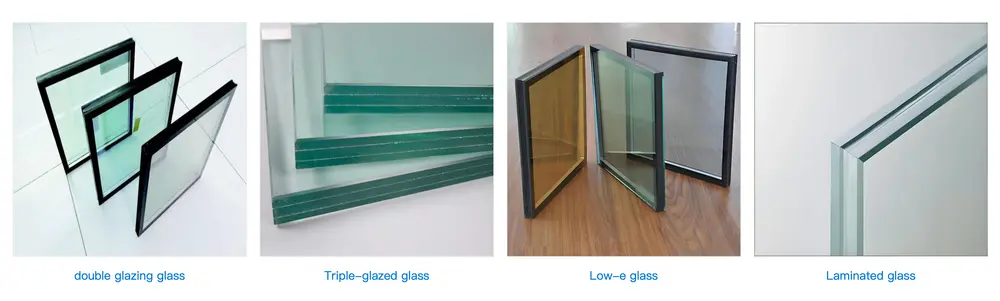
Laminated glass shifts this again. A 6.4 mm laminated pane weighs more than a 6 mm monolithic one because of the interlayer, and a 33.1 laminate in place of an 8 mm pane adds roughly 4 kg to the leaf. On a 100 kg threshold that is the difference between one roller class and the next.

Which roller class covers a 100 kg leaf?
Two rollers share the load, so a 100 kg leaf puts 50 kg on each. Rollers are sold at 40, 60 and 80 kg nominal per unit, and the usable rating sits well below the nominal one once the track is not perfectly level. A 60 kg roller pair carries 120 kg on paper and about 90 kg on a track with 2 mm of fall across a 2,400 mm opening.
| Leaf mass | Rollers needed | Track note | Typical build |
|---|---|---|---|
| 55 to 70 kg | two at 40 kg | standard 3 mm wall track | 4-16-4 or 5-9-5, 1,200 mm leaf |
| 70 to 90 kg | two at 60 kg | 3 mm wall, 600 mm fixings | 5-9-5 with laminate, 1,200 mm leaf |
| 90 to 120 kg | two at 80 kg | 4 mm wall, 500 mm fixings | 8-12-8, 1,200 mm leaf |
| 120 to 160 kg | four at 60 kg | 4 mm wall, twin carriage | 8-12-8, 1,600 mm leaf |
Roller ratings are nominal per unit at a level track. The 30 per cent allowance for track fall and debris is a planning figure, and the class a supplier quotes is confirmed against the hardware datasheet for that set.
On heavy duty sliding patio doors the step from a 60 kg to an 80 kg roller is small in money and large in service life, and the step from two rollers to four is the other way round: more parts, more adjustment, no gain in load per unit. Above 120 kg the answer is a wider leaf with more rollers, and the heavier single leaf is the wrong direction.
Does wind load belong to the same rating?
No, and treating it as one is how a project buys a heavy set that still rattles. Wind acts sideways on the leaf, so it loads the interlock, the lock points and the head and sill guides. At 2,400 Pa on 2.26 square metres the leaf takes 5,424 N, which is 553 kgf pushing it into the fixed panel.
On heavy duty sliding patio doors that load is shared by the lock points along the interlock. Four points take 1,356 N each, and the interlock section has to resist that without deflecting enough to open the seal. A roller that carries 100 kg vertically says nothing about this, which is why the wind rating sits in the EN 12210 class and the mass rating sits in the hardware datasheet.
Two lines in the specification keep them apart and both are cheap to write: the EN 12210 class for the opening, and the hardware mass rating per leaf. A quote that answers one of the two has answered half the question, and the overseas sliding door cost of getting it wrong lands on the first warranty claim.
What belongs in the specification before the price?
Five numbers decide the set: leaf mass, roller class, EN 12210 class, track wall and fixing spacing. Send the opening sizes, the glass build and the site wind load to kristin@haolvbuilding.com and the leaf mass, the roller class and the track section come back on one sheet, checked against the hardware the factory would actually fit.
Where the opening sits in a cold climate, the same mass is carried by a thermally broken frame so the track does not become the path for heat. The thermal break sliding doors in the range keep the 4 mm track and add a 24 mm polyamide strip in the frame, and the leaf mass and roller class stay exactly as calculated above.
Why does a heavier leaf slide straighter?
Heavy duty sliding patio doors slide straighter because the rollers stay in contact. A light leaf on a track with 2 mm of fall lifts off the low side under a hand push and lands again, which is the knock a buyer hears in the showroom. A 100 kg leaf keeps both rollers loaded, so the leaf tracks along the rail and the seal stays in compression.
The same mass that keeps it steady is what wears the track. At 50 kg per roller and two opens a day, a nylon tyred roller in an anodised track loses about 0.05 mm a year, so a 4 mm wall track lasts beyond the glazing unit. On a commercial opening at thirty cycles a day the same track is a fifteen year item.
Which glass build turns a standard door into a heavy one?
The one that crosses 90 kg per leaf on a 1,200 mm width, which is 8-12-8 or an equivalent double laminate. Thermal performance is not the reason. A 5-9-5 unit reaches 1.4 W per square metre kelvin with a low e coating and argon, and it keeps the leaf at 66.8 kg and the standard roller.
Buyers go heavy for the other three reasons: acoustic, security and span. An 8-12-8 unit with one laminated pane lifts the glass Rw to about 38 dB, a laminated inner pane holds a broken leaf in the frame, and the mass is what keeps a 1,600 mm leaf from chattering in a gust. Those are the honest arguments for the heavy set, and the sliding door questions buyers ask most often land on exactly these three.
| Parameter | Typical value | Note |
|---|---|---|
| Product | heavy duty sliding patio doors | 6063-T5, thermally broken on request |
| Leaf size | 1,200 by 2,300 mm | 1,600 mm available on the heavy carriage |
| Glass area | 2.26 square metres per leaf | 1,050 by 2,150 mm inside the sash |
| Leaf mass | 55.6 to 100.7 kg | follows the glass build, calculated |
| Sash section | 600 mm squared, 1.62 kg/m | 10.4 kg per leaf |
| Rollers | two at 60 or 80 kg | four at 60 kg above 120 kg |
| Wind load | 2,400 Pa, EN 12210 class 4 | 5,424 N on a 2.26 square metre leaf |
| Track | 3 mm wall standard, 4 mm heavy | fixings at 500 to 600 mm |
| Glazing | 4-16-4 to 8-12-8, low e and argon | U-value 1.3 to 1.8 W per square metre kelvin |
| Minimum order | 10-20 units | lead time 25-30 days from approved drawing |
Leaf masses are calculated at 2.5 kg per square metre per millimetre of glass plus a 600 mm squared sash section at 2.70 g per cubic centimetre, and are not weighed on a delivered set. Roller and wind classes are confirmed per order against the hardware datasheet and the test report.
Frequently asked questions
What is the minimum order for heavy duty sliding patio doors? Minimum order is 10-20 units and lead time is 25-30 days from an approved drawing. A stock size on standard rollers ships from an existing schedule; an 80 kg roller set or a 4 mm track adds a hardware lead time.
Is heavy duty worth the extra cost on a residential job? Ask what the mass is for. Acoustic, security and a 1,600 mm leaf justify it. Thermal performance does not, because a 5-9-5 unit with low e and argon reaches 1.4 W per square metre kelvin at 66.8 kg and standard rollers.
Can the same frame take a heavy leaf later? Sometimes. The frame does not change, and the track and rollers do, so a set built on a 4 mm track can be rehung with heavier leaves. A set built on a 3 mm track cannot, which is the one upgrade worth paying for at the start.
How are heavy duty sliding patio doors tested for wind load? To EN 12210, at a pressure the class defines, with the leaf closed and locked. At 2,400 Pa the leaf on a 2.26 square metre opening takes 5,424 N, and the class states whether the door held that without permanent set or a seal that opened.
Ordering from Haolv
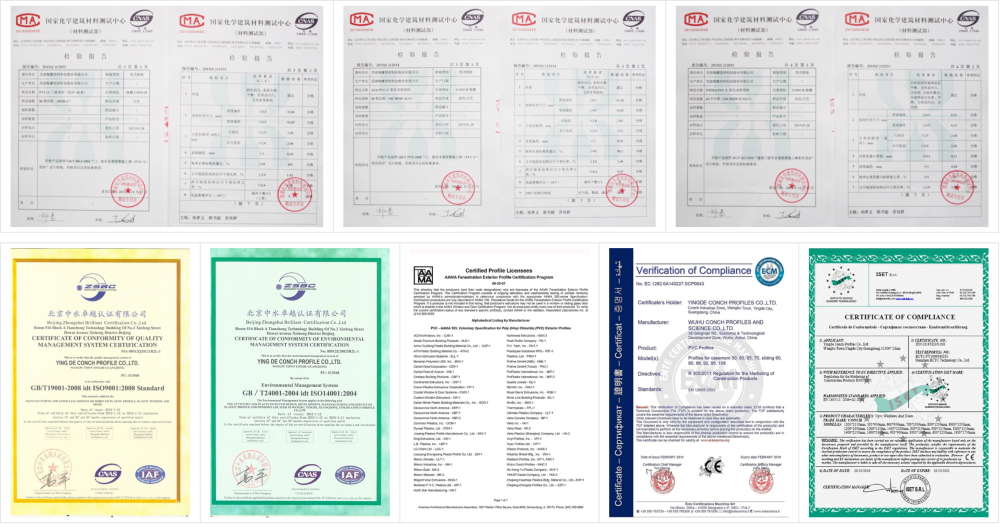
Haolv Building Materials Co., Ltd. has been making doors and windows for 19 years, and the heavy duty sliding patio doors on a set are cut from 6063-T5 billet and assembled on the same line as the frames that carry them. Certification for the profiles and the glazing is available on request with the quotation. Minimum order is 10-20 units and lead time is 25-30 days.
Send the opening sizes, the glass build and the site wind load to kristin@haolvbuilding.com, or start from Haolv Building Materials Co., Ltd. and the leaf mass, roller class and track section come back with the price.
What this page claims and what it does not: the 45.2 kg, the 100.7 kg, the 5,424 N and the 0.05 mm a year are arithmetic on a stated opening, a stated glass weight of 2.5 kg per square metre per millimetre and a published 63 micron anodised layer. They are calculated, not measured. The mass of a delivered leaf belongs to its glass and sash, and the classes are confirmed by the hardware datasheet and the test report.
References
- EN 12210:2016 — Windows and doors. Resistance to wind load. Classification.
- EN 12207:2017 — Windows and doors. Air permeability. Classification.
- EN 12208:1999 — Windows and doors. Watertightness. Classification.
- EN 14351-1:2006+A2:2016 — Windows and doors. Product standard. Performance characteristics.
- EN 12150-1:2015 — Glass in building. Thermally toughened soda lime silicate safety glass.
- ISO 7599:2018 — Anodizing of aluminium and its alloys. Method for specifying decorative and protective anodic oxidation coatings.
Leaf masses, wind loads and roller loads in this guide are arithmetic on a stated leaf size, the standard glass weight of 2.5 kg per square metre per millimetre and a 600 mm squared sash section. They are calculations from a drawing, not measurements of a delivered door, and the classes of any set are taken from the hardware datasheet and the test report for that specification.
Fast simple channel to send demands lock favorable price for building window door bulk purchases.