- English
- French
- German
- Portuguese
- Spanish
- Russian
- Japanese
- Korean
- Arabic
- Greek
- German
- Turkish
- Italian
- Danish
- Romanian
- Indonesian
- Czech
- Afrikaans
- Swedish
- Polish
- Basque
- Catalan
- Esperanto
- Hindi
- Lao
- Albanian
- Amharic
- Armenian
- Azerbaijani
- Belarusian
- Bengali
- Bosnian
- Bulgarian
- Cebuano
- Chichewa
- Corsican
- Croatian
- Dutch
- Estonian
- Filipino
- Finnish
- Frisian
- Galician
- Georgian
- Gujarati
- Haitian
- Hausa
- Hawaiian
- Hebrew
- Hmong
- Hungarian
- Icelandic
- Igbo
- Javanese
- Kannada
- Kazakh
- Khmer
- Kurdish
- Kyrgyz
- Latin
- Latvian
- Lithuanian
- Luxembou..
- Macedonian
- Malagasy
- Malay
- Malayalam
- Maltese
- Maori
- Marathi
- Mongolian
- Burmese
- Nepali
- Norwegian
- Pashto
- Persian
- Punjabi
- Serbian
- Sesotho
- Sinhala
- Slovak
- Slovenian
- Somali
- Samoan
- Scots Gaelic
- Shona
- Sindhi
- Sundanese
- Swahili
- Tajik
- Tamil
- Telugu
- Thai
- Ukrainian
- Urdu
- Uzbek
- Vietnamese
- Welsh
- Xhosa
- Yiddish
- Yoruba
- Zulu
Multi Panel Folding Door Factory Checklist for Daily Opening Loads
A multi-panel folding door in a family home cycles about 2,920 times a year, and the same door in a cafe cycles 21,900. That 7.5 times difference decides the hardware class, and it costs less than the third pane of glass most buyers add first.
Three numbers per leaf
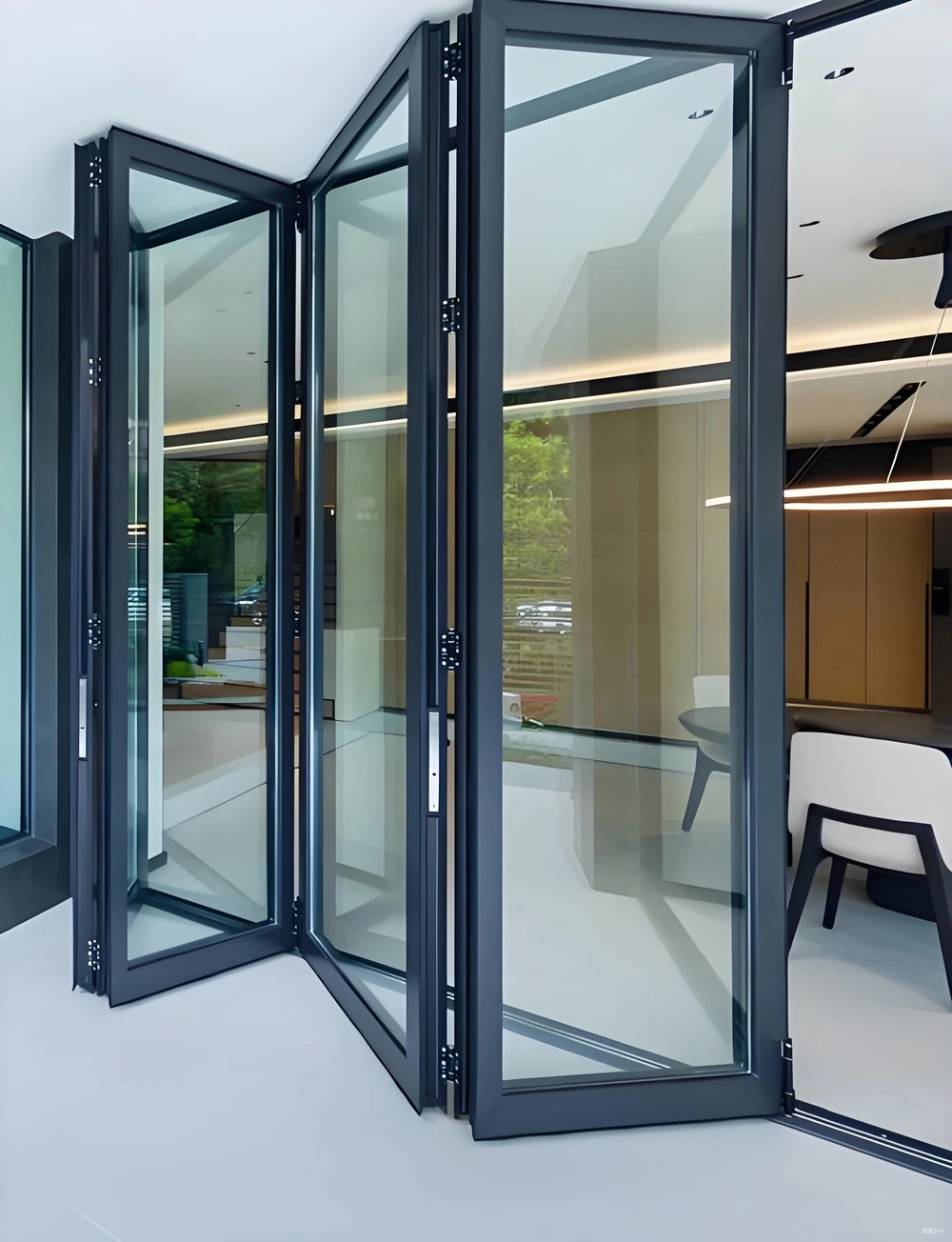
A 900 by 2,100 mm leaf with 6/12/6 glazing carries 56.7 kg of glass and 5.4 kg of aluminium, so 62 kg hangs on two hinges. Static share is 31 kg each; at 1.5 times dynamic that is 47 kg, against a common 40 kg hinge rating. Five such leaves are 311 kg moved every time the set is opened fully.
In this guide:
How many cycles does a multi-panel folding door open in a year?
Count the people and the trips. Four people leaving and returning twice a day is 16 movements, and each movement is one open plus one close, so 32 cycles a day. Add garden use on weekends and the year lands near 2,920 cycles for a multi-panel folding door in a house.
A cafe with a terrace does the same arithmetic on a different base. Sixty openings a day over 365 days is 21,900 cycles, and a shopfront with a delivery door adds more on top. Both numbers are ordinary duty, and only one of them fits a domestic hardware grade.
This is why the same drawing prices differently for a house and a shop. Nothing about the aluminium changes; the carriages, the hinges and the lock points move up a class, and the bifold vs folding door difference in panel count changes the cycle load per carriage as well.
What weight does each hinge carry on a 900 mm leaf?
On a multi-panel folding door the glass dominates. At 2.5 kg per square metre per millimetre, a 6/12/6 unit carries 12 mm of glass and weighs 30 kg per square metre, so a 1.89 m² leaf holds 56.7 kg of glass. The aluminium frame around it adds about 5.4 kg, which puts the leaf at 62 kg before handles and glazing beads.
Two hinges per leaf give 31 kg each in static share, and a folding leaf does not see static share. Every open swings the leaf out of plane and back, so the hinge sees roughly 1.5 times the static figure, which is 47 kg. A 40 kg hinge on a 900 mm leaf is therefore outside its rating on the first day, before wear is counted.
Two answers work: a 60 kg rated hinge, or a third hinge that takes the share to 21 kg static and 31 kg dynamic. The third hinge is usually cheaper and it also shortens the unsupported span, which is what stops the leaf dropping at the lock side after a few seasons.
Which hardware class does that cycle count require?
EN 12400 sorts mechanical durability into 10,000, 20,000 and 50,000 cycle classes, and on a multi-panel folding door the class is a property of the assembled door. Take the annual figure and divide, and a house at 2,920 cycles a year reaches 10,000 in 3.4 years, 20,000 in 6.8 and 50,000 in 17.
| Duty | Cycles per year | 10,000 class | 20,000 class | 50,000 class |
|---|---|---|---|---|
| House, 4 people, 8 trips a day | 2,920 | 3.4 years | 6.8 years | 17 years |
| Terrace flat, 2 people, 4 trips | 1,460 | 6.8 years | 13.7 years | 34 years |
| Cafe with terrace, 60 openings | 21,900 | under 6 months | 11 months | 2.3 years |
| Shopfront, 120 openings | 43,800 | under 3 months | under 6 months | 14 months |
Cycles are openings plus closings on the whole set. Class intervals follow EN 12400; the years are arithmetic on those intervals and the stated daily rate, calculated, not measured.
The table is the piece a buyer cannot get from a photograph. A 50,000 cycle set is the safe order for anything above 20,000 cycles a year, and a 20,000 set on a shopfront is a repair booked inside the first year. Ask for the class in writing on the order, since it is the one number that never appears in a quotation.
How much of the traffic uses the whole set?
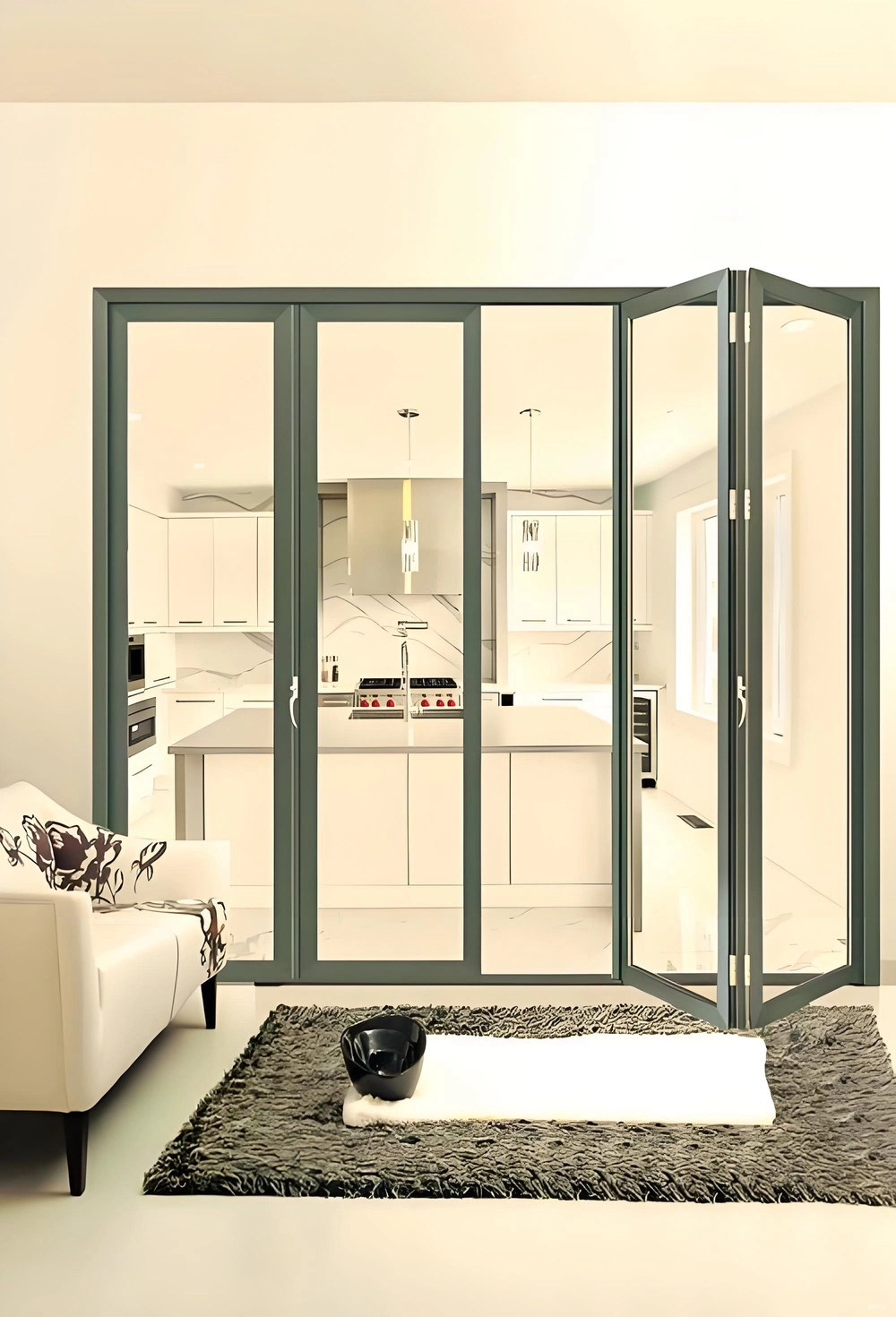
About one opening in six on a multi-panel folding door. Everyday movement goes through the end leaf while the others stay stacked, which is why a set of five is opened fully a handful of times a week and part opened dozens of times a day. The end leaf is doing most of the work and the four behind it are doing almost none.
That matters to the hardware because pushing five leaves is five times the work of pushing one. Rolling resistance of about 2 per cent on 311 kg is 62 N, and 62 kg on one leaf is 12 N, which sits under the 25 N that EN 12217 treats as light operation. A set that must always open fully is above that line on every trip.
The fix is a traffic leaf: one panel with its own multipoint lock and its own hinges so it works as a door while the rest stay stacked. It adds hardware to one leaf and removes most of the daily load from the other four. Multipanel sliding glass doors solve the same problem by never stacking, which is the other way to keep daily effort down.
What belongs on the factory checklist before shipping?
Eight lines, and each one is a measurable number: leaf width and mass, glazing build, hinge rating and count, carriage rating per leaf, hardware cycle class, operating force, stack width, and the lock points on the traffic leaf. A checklist that reads good quality and strong hardware checks nothing.
| Parameter | Typical value | Note |
|---|---|---|
| Product | multi-panel folding door, 6063-T5 aluminium | top hung, five leaves on a 4,500 mm opening |
| Leaf size | 900 by 2,100 mm | five leaves with 5 mm overlap per joint |
| Leaf mass | 62 kg | 56.7 kg glass plus 5.4 kg frame |
| Glazing | 6/12/6 double, low-e and argon | U-value 1.2 to 1.6 W/m²K; triple reaches 0.8 to 1.2 |
| Hinge rating | 60 kg, or 40 kg with a third hinge | 31 kg static share per hinge at two hinges |
| Hardware class | EN 12400, 20,000 or 50,000 cycles | match the class to the annual cycle count |
| Operating force | 12 N for one leaf, 62 N for five | EN 12217 light operation sits at 25 N |
| Stack width | 5 leaves folded to one side | confirmed on the drawing with the jamb detail |
| Lock points | multipoint on the traffic leaf | one leaf works as a door on its own |
| Minimum order | 10-20 units | lead time 25-30 days from approved drawing |
Leaf mass and operating force are arithmetic on a stated glazing build, a stated leaf size and a rolling resistance of 2 per cent. They are calculated, not measured on a hung set.
The checklist is also the handover sheet. A buyer who receives the eight numbers can check the hinges on arrival and know whether the set matches the duty it was ordered for, which is the part of a folding door track systems conversation that usually gets skipped.
How does a shopfront duty differ from a home duty?
In the cycle count and in the abuse, not in the aluminium. A shopfront sees 21,900 to 43,800 cycles a year, gets pushed with a shoulder when someone is carrying stock, and is expected to keep its threshold line for a decade. The same drawing with a 10,000 cycle carriage fails inside two years.
Send the duty to kristin@haolvbuilding.com with the opening size and the traffic count per day, and the hardware class, the hinge count and the operating force come back against that duty, checked against the traffic figure you sent.
Where does the money go between glass and hinges?
On a 4,500 mm multi-panel folding door the third pane adds roughly 4 kg to each leaf and buys 0.4 W/m²K. A hardware class step buys no thermal performance at all and it decides whether the door still closes in year eight. For a set that is opened dozens of times a day, the class step is the better spend and the glass step can wait.
The glass still matters, and the order in which it is added matters more. Low-e and argon are inside the unit and cost nothing in weight; the third pane is the step that adds mass to every hinge on the set. Aluminum folding sliding door sets are usually specified in that order for the same reason.

Frequently asked questions
What is the minimum order for a multi-panel folding door? Minimum order is 10-20 units and lead time is 25-30 days from an approved drawing. Leaf width, stack direction and the hardware class are fixed on that drawing, and the class is what the cycle count is checked against.
How do I compare a wholesale price between two hardware classes? Divide the difference by the years each class is expected to last at your daily rate. A 10,000 class in a cafe lasts under six months and a 50,000 class lasts 2.3 years, so the cheaper set is replaced four times over the same period.
Is one hinge enough on a 900 mm leaf? No. Two hinges carry 31 kg each in static share and about 47 kg under the swing, so a 40 kg hinge is on its limit at the start. Go to a 60 kg hinge or add a third, and the third is the cheaper of the two.
Can the whole set open with one hand? A single leaf at 12 N, yes; five leaves at 62 N, from a standing start, no. That is why the traffic leaf exists: it keeps daily operation under the 25 N line while the full opening stays available for the few times a year it is wanted.
Ordering from Haolv
Haolv Building Materials Co., Ltd. has been making doors and windows for 19 years, and a multi-panel folding door is assembled with the hardware class written on the drawing so the cycle count can be checked against it. Certification for the profiles and the glazing is available on request with the quotation. Minimum order is 10-20 units and lead time is 25-30 days.
Send the opening, the glazing build and the traffic count to kristin@haolvbuilding.com, or start from Haolv Building Materials Co., Ltd. and the hardware class, the hinge count and the operating force come back with the price.
What this guide claims and what it does not: the 62 kg, the 47 kg and the 2,920 cycles are arithmetic on a stated glazing build, a stated leaf size and a stated daily rate, and any reader can redo them with a calculator and a tape. They are calculated, not measured. The cycle class of a delivered set belongs to that assembly and is confirmed by test, and the dynamic factor of 1.5 is a design allowance agreed on the drawing.

References
- EN 12400:2002 — Windows and pedestrian doors. Mechanical durability. Requirements and classification.
- EN 12217:2015 — Doors. Operating forces. Requirements and classification.
- EN 13126-8:2017 — Building hardware. Hardware for windows and door height windows. Requirements and test methods.
- EN 12604:2017 — Industrial, commercial and garage doors and gates. Mechanical aspects. Requirements and test methods.
- EN 14351-1:2006+A2:2016 — Windows and doors. Product standard. Performance characteristics.
- EN ISO 10077-1:2017 — Thermal performance of windows, doors and shutters. Calculation of thermal transmittance.
Leaf mass, hinge share, operating force and annual cycle counts in this guide are arithmetic on a stated glazing build, a stated leaf size and a stated daily rate. They are calculations from a drawing, not measurements of a hung set, and the durability class of any order is confirmed by test on the finished assembly.
Fast simple channel to send demands lock favorable price for building window door bulk purchases.